

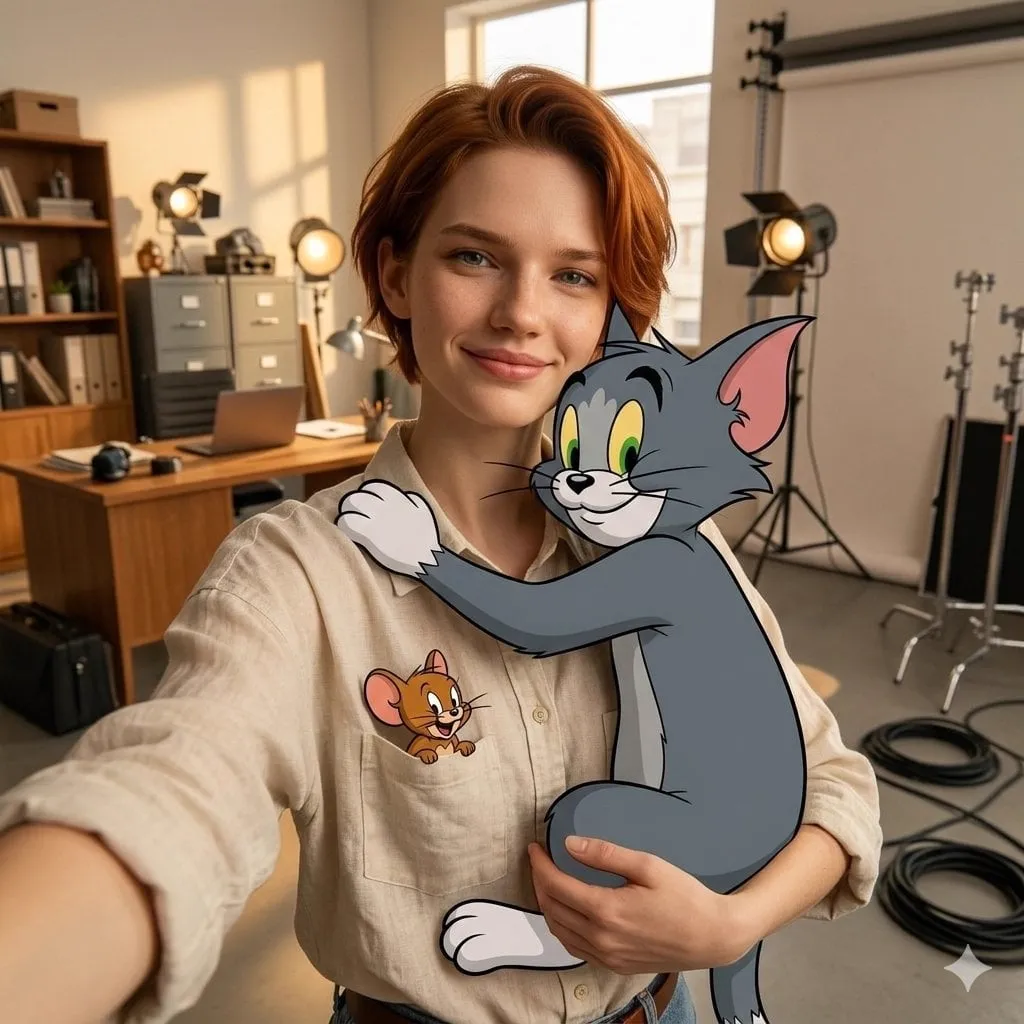
Ask any AI video creator what breaks a project and most will name the same problem: the character looks right in scene one, then subtly — or catastrophically — changes in scene two. The nose is different. The jacket has a new pattern. The hairline shifted. Character consistency is the hardest quality bar in AI video production, and it gets harder the more scenes you add.
The good news is that consistency is now an engineering problem with repeatable solutions. This tutorial covers the techniques that actually work: building a strong reference set, using multi-reference modeling, controlling motion and pose, choosing the right model, and assembling it all into a reliable multi-scene workflow.
Why avatars drift between scenes
Before fixing drift, it helps to understand where it comes from. Most video generation models are stochastic: given the same prompt, they can produce different interpretations of the same subject. When a scene description mentions "the woman in the red coat," the model invents an appearance from its training distribution. Unless the prompt pins down dozens of details, the next scene invents a slightly different woman.
Compounding this, many models have weak memory across longer generations. A model built for short clips has no reason to carry a character's identity from one clip to another. The result is the classic failure: great individual shots, incoherent story.
That is why prompt-only workflows fail. You cannot type your way to consistency when the model treats every scene as a fresh creation. You need to hand the model the identity itself — as images, references, and structured controls — rather than describing it in words.
Building a strong reference set
Everything downstream depends on your reference material. Treat it like a casting call: the model will copy what you give it, so give it the right person, from the right angles, in the right conditions.
Create a character sheet first
A character sheet shows the same avatar from multiple angles: front, three-quarter, side, and ideally back. It should also show a range of expressions and a couple of poses. This gives the model a stable 3D-ish understanding of the character instead of a single flat photo.
If you are working with a real person, gather consistent photos with the same clothing and lighting as the video. If you are creating a fictional avatar, generate the sheet first with an image model, then fix any inconsistencies before moving to video.
Standardize lighting and palette
Reference images with wildly different lighting teach the model to be inconsistent. Keep the key light direction, color temperature, and background style similar across references. Lock the character's palette — hair color, skin tone, main clothing colors — and do not let a single frame violate it.
Keep the outfit locked
The fastest way to break a scene sequence is changing the wardrobe between references. One reference in a hoodie and another in a suit produces a character that can barely hold still. Decide the costume once, use it in every reference, and only add variations deliberately later.
Multi-reference modeling explained
Multi-reference modeling means feeding the model several images of the same subject at once instead of one. Instead of asking the model to infer identity from a single photo, you give it a small library: face close-up, full body, style reference, maybe a specific pose.
Why does this help? A single image is ambiguous. The model cannot tell which features are essential to the identity and which are incidental. Multiple images let the model separate the stable identity — face shape, proportions, palette — from the scene-specific details.
In practice, the quality of the references matters as much as their quantity. Five carefully chosen images beat twenty random screenshots. Use images that are sharp, correctly exposed, and representative of the character across the scenes you plan to shoot.
Style injection
Besides the character itself, you can reference the style: the color grade, the film stock, the art direction. Injecting a style reference alongside character references keeps every scene looking like the same production even when the location changes. This is how you get both character consistency and visual world consistency at once.
Controlling motion and pose
Face consistency is only half the battle. If the avatar's movement and posture are interpreted differently in every scene, the narrative coherence collapses. Motion control tools exist for exactly this.
Pose guides and reference poses
Many pipelines accept a pose skeleton or a reference image for the desired posture. Use them for scenes where the avatar must strike a specific stance — standing at a doorway, pointing at an object, sitting at a desk. A pose guide constrains the composition while the identity references keep the face and costume stable.
Keyframing across scenes
For multi-scene sequences, plan the keyframes first: what is the avatar doing at the start of each scene, and how does the camera move? Consistency does not mean the avatar is frozen; it means the avatar moves like the same person. Write the motion language down — "walking pace, camera at chest height, soft dolly-in" — and reuse the same language across scenes so the model behaves predictably.
Watch the transitions
The most fragile moments are scene transitions. If a cut lands mid-motion or mid-expression, drift becomes visible instantly. Keep transitions simple: end a scene on a stable pose and start the next on a stable pose. Let the model handle small in-between movements, not identity-critical close-ups.
Choosing the right model for consistency
Not all video models are equally good at holding a character. Model choice is often the difference between a project that takes hours and one that takes days.
What to look for
Test for identity retention specifically: generate the same character across multiple clips and compare faces frame by frame. Some models are excellent at visual fidelity but weak at identity memory; others are built around reference conditioning and hold a face remarkably well. Read the documentation: if a model supports image-to-video with multiple reference inputs, it is a better fit than a text-only model.
Comparison notes from the field
In 2025, the field splits roughly into two camps. Narrative-focused models understand complex scene descriptions and can handle large context shifts, but they may reinterpret a character unless references are strong. Control-oriented models with explicit reference conditioning keep visual identity stable at the cost of less cinematic freedom. Neither is universally better — match the tool to the scene. For identity-critical close-ups, lean on the control-oriented model; for sweeping narrative moments, the flexible one may serve better.
Stick to one model per sequence
Switching models mid-sequence is a consistency killer. Even excellent models interpret references differently. If a sequence must use two models, generate each scene in the same model first, then composite and regrade rather than mixing raw outputs.
Step-by-step workflow: from base image to multi-scene video
Here is a repeatable pipeline that covers most avatar-driven projects.
Step 1: Lock the identity
Create or choose the definitive character sheet. Generate front, three-quarter, side, and full-body references with consistent lighting, palette, and wardrobe. Fix anything inconsistent before continuing — do not let a bad reference poison the whole project.
Step 2: Write the scene plan
List every scene, the location, the camera move, and the avatar's action. Keep the motion language consistent. Decide which scenes are identity-critical (close-ups, dialogue) and which are wide or atmospheric.
Step 3: Build per-scene reference bundles
For each scene, assemble the character sheet plus a style reference. Add a pose guide for scenes with specific stances. The bundle stays the same across scenes except for the pose and scene-specific style cues.
Step 4: Generate, then compare
Generate every scene. Do not fix scenes one by one yet — first, assemble a rough sequence and compare the avatar across all of them. Drift is easier to spot in sequence than in isolation. Make a list of what changed and where.
Step 5: Regenerate the failures
For each drifting scene, return to the reference bundle. If the face changed, strengthen the face references or crop the shot to reduce reinterpretation. If the outfit changed, verify the wardrobe references are identical across bundles. Regenerate only the failing scenes, then re-compare.
Step 6: Composite and final grade
Once identity holds, handle color and sound. A final grade over all scenes hides small palette differences, and consistent audio design pulls the sequence together. Do not skip this: post-production is where "almost consistent" becomes "visibly consistent."
Managing GPU and time budgets
Consistent multi-scene production is compute-hungry. Multi-reference conditioning keeps the identity vector active in memory, and longer sequences multiply generation time. Plan budgets in advance.
The practical lever is iteration discipline. Regenerating a single failing scene costs a fraction of regenerating the whole sequence, so the compare-early workflow above saves real money. Batch your generations during off-peak pricing when you use metered services, and cache reference bundles so the same conditioning is reused rather than recomputed.
For large projects, generate at a lower resolution or shorter length for the first pass, validate consistency, then regenerate the final cut at full quality. Most inconsistency is visible at preview resolution; you rarely need full-res renders to catch a wrong nose.
Troubleshooting common consistency failures
Face drift between scenes
Cause: weak face references, or a model that reinterprets identity in new contexts. Fix: add close-up face references to every bundle, keep the same lighting, and prefer control-oriented models for these shots.
Clothing changes across cuts
Cause: inconsistent wardrobe across references, or style references overriding the character. Fix: lock the outfit, remove style images that contain conflicting clothing, and caption or tag the wardrobe explicitly.
Lighting shifts that break the look
Cause: reference images with different key light directions. Fix: standardize lighting in the reference set, then rely on a final grade to unify the scenes.
The character looks right but moves wrong
Cause: motion language differs between scenes or pose control is missing. Fix: write the motion plan once, reuse the same verbs and camera language, and add pose guides for signature moments.
Frequently asked questions
How many reference images do I need per character? A solid character sheet of three to five images — front, three-quarter, side, full body — covers most projects. Add pose and expression references only when a scene demands them.
Can I keep an avatar consistent across completely different locations? Yes, if the identity references are strong and the style reference is stable. The character travels; the background changes. That is exactly what multi-reference conditioning is designed to support.
Why does my avatar change when the camera angle changes? Single-angle references teach the model one view. Multiple angles in the reference set give it the information to reconstruct the character from new angles without inventing details.
Is consistency easier with a real person's footage? Often yes, because real footage contains natural multi-angle information. But the same rules apply: consistent lighting, wardrobe, and reference selection.
Do I need to use the same model for every scene? Within a sequence, yes. Mixed models reintroduce drift even with perfect references. If you must mix, composite and grade afterwards.
How long does a consistent multi-scene project take? With a locked identity and disciplined workflow, a five-scene sequence can go from references to a validated cut in a focused session. The variable is how many scenes need regeneration — which is exactly what this workflow minimizes.
The bottom line
Avatar consistency is not a gift of expensive models; it is the product of a disciplined pipeline. Lock the identity before you generate, hand the model references instead of descriptions, control motion with poses and keyframes, and compare across scenes before you polish any single shot.
The workflow looks slow the first time. It is not — it replaces the endless loop of regenerating scenes and hoping the next roll matches. Once you have a locked character sheet and a scene plan, every subsequent project compounds: the same reference discipline, the same motion language, the same grading pass. That is how consistent avatars become routine instead of luck.
