
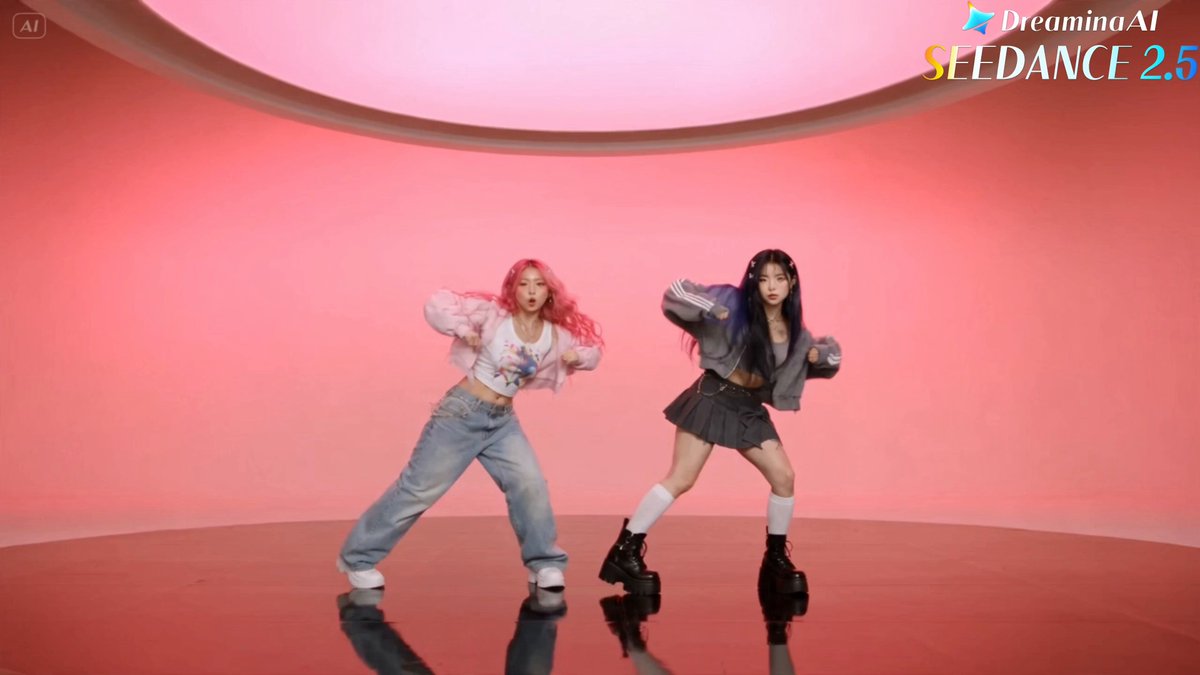

Ask any AI video creator about their biggest frustration and you will get the same answer: the character changes. The face shifts between shots, the hair behaves differently scene to scene, the wardrobe gains and loses details for no reason. This problem — identity drift — is the single largest obstacle between AI video and professional storytelling.
The good news is that 2025's tools have real solutions. This guide explains why characters drift, what the new reference-based techniques do about it, and how to build a repeatable workflow that keeps your characters consistent across any number of scenes.
Why character consistency is the bottleneck
Text-to-video models generate from descriptions. A description like "a young woman with short brown hair and green eyes" is informationally thin — it leaves dozens of visual decisions open, and the model fills every one of them differently each time it runs. That is why characters change between shots even when the prompt is identical.
The problem compounds across a production. One drift per shot seems tolerable, but audiences watch films in sequence. A character who looks like a different person every scene destroys immersion faster than any other flaw. This is why consistency, not raw visual quality, is what separates professional AI productions from curiosities.
The stakes grew higher as AI storytelling matured. Serialized shows, character-driven marketing, and virtual influencers all depend on the audience recognizing the same face across episodes, campaigns, and platforms. Recognition is the foundation of attachment — without it, there is no character, only a series of unrelated images.
What makes a character look like "the same person"
Consistency is not one thing; it is a bundle of dimensions, and each can drift independently.
Face and features come first: bone structure, eye shape and color, nose and mouth proportions, skin texture. These are the identity core, and drift here is fatal.
Wardrobe is second. A character's clothes are a large share of visual identity. If a jacket changes color between scenes, viewers notice even when the face is perfect.
Lighting behavior is third. The same face under warm and cold light should still read as the same face. Models that cannot separate identity from lighting will subtly "recast" the character when the scene changes.
Motion and mannerisms are fourth and most advanced. How a character moves — posture, gestures, walk — is part of identity. This dimension is hardest to control and least understood.
A good consistency workflow addresses all four dimensions, not just the face.
Multi-reference approaches: more than one anchor
The biggest single improvement in consistency technology is multi-reference generation: giving the model several images of the character instead of one.
A single reference image tells the model how the character looks from one angle in one light. Everything else is invented. Multiple references tell the model what stays constant across angles, expressions, and lighting conditions. From those examples, the system builds a stable identity representation and anchors every generated scene to it.
Building a strong reference set follows simple rules:
Cover angles. Include front, three-quarter, and profile views. Models invent what they never saw.
Cover expressions. Neutral, smiling, serious, and one high-emotion state. Identity must survive emotion.
Cover lighting. Natural light, artificial light, indoor, outdoor. The model needs to learn which features are stable under changing conditions.
Keep the design fixed. If one reference has a beard and another does not, the model will merge them unpredictably. Lock the character design before generating references, and keep intentional variations — like a costume change — explicit and separate.
Use clean, high-quality images. Blurry or small references produce weak anchors.
Six to twelve well-chosen references beat fifty random ones.
Prompt engineering for stable features
References carry the visual identity; prompts carry the situational intent. The two must work together.
The first rule is vocabulary discipline. Always describe the same feature with the same words: "short brown hair" in every prompt, never "brown short hair" or "auburn cut" mid-production. Small wording changes introduce small visual changes.
The second rule is explicit anchoring. When a scene changes the character's situation, state what is constant: "wearing the same dark jacket as the previous scene" or "same green eyes, same short brown hair". Redundancy in prompts is cheap insurance.
The third rule is limiting scope per shot. Ask the model to change few things at once. A shot that changes location, lighting, expression, and wardrobe simultaneously is a drift magnet. Split complex moments into smaller shots.
The fourth rule is negative prompts. If the model repeatedly adds or alters something — an earring that does not exist, a beard that keeps appearing — describe the unwanted element in a negative prompt. This is one of the most underused controls in AI video.
Keyframe control and video fusion workflows
For movement-heavy scenes, prompt discipline alone is not enough. Keyframe control is the structural solution.
Keyframing means defining explicit frames at the start, middle, and end of an action — with the character's identity clear in each — and letting the model generate the motion between them. Keyframes act like load-bearing posts: as long as the posts hold the identity, the in-between motion stays anchored.
This works especially well for complex actions: a character walking into a room, turning, and reacting. Without keyframes, the model improvises the whole sequence. With keyframes, the character's appearance is enforced at critical moments, and the improvisation is constrained to motion.
Video fusion workflows combine reference sets with keyframed generation. The character identity stays active across shots, and each shot's keyframes carry the action. Together, they cover the two failure modes of AI video: identity drift across shots and motion collapse within shots.
Handling gradual changes: aging, costumes, emotions
Not all consistency is about staying the same. Sometimes the story requires change — a character ages, changes outfits across chapters, or transforms emotionally.
The rule for intentional change is: one change at a time, with its own reference set.
For aging, create a separate reference set for each age phase. Do not expect the model to interpolate ten years of aging from a single reference. Two clean sets — young and old — generate far more convincing results than one vague attempt.
For costume changes, create sub-sets per look, keeping the facial references constant. A character with three outfits needs three costume reference sets sharing the same face anchors.
For emotional arcs, treat expression states as controlled variables rather than improvisation. Keyframe the emotional high points and let the model fill transitions.
The principle behind all of this: define the change explicitly and give the model the information to execute it. Never rely on inference for changes that matter.
Choosing models for consistency work
Model selection matters less than reference quality, but it still matters.
Image models with strong style fidelity — the Flux family is the clearest example — are the right choice for building reference sets. Their output becomes the identity contract for the entire production.
Video models with strong prompt adherence, such as Kling, reduce drift when the scene conditions change. Models with strong narrative context, like the Sora series, hold identity better over long continuous sequences. Models known for cinematic control, like Runway Gen-4, give you the composition tools to set up shots that do not strain the identity.
Test before committing. Run the same reference set through two or three candidate models with identical prompts and compare the drift. The model that keeps the character closest across your actual scene types is the one for your project.
Building a repeatable production workflow
Consistency is a system property, not a one-time fix. A production workflow that preserves it looks like this:
Design phase: define the character on paper — features, wardrobe, personality, voice. This document is the contract.
Reference phase: generate and validate the reference set. Test the anchor with a simple scene before proceeding.
Shooting phase: generate shots in dependency order, keeping the reference set active and the vocabulary consistent.
Review phase: check shots in sequence, comparing each against its neighbors. Fix drift early, when it is cheap.
Archive phase: save the reference set, prompts, and settings. The same character can return in sequels, spin-offs, or campaigns without rebuilding anything.
The archive phase is the most overlooked and the most valuable. Every consistent character you build is an asset that compounds across projects.
Common mistakes and how to avoid them
Skipping the reference set. Without anchors, consistency is luck. This is the root cause of most drift complaints.
Changing references mid-production. Freeze the set before generation. Mid-project changes create a new character.
Inconsistent prompt vocabulary. Standardize wording. Write a style guide page and reuse it.
Reviewing shots one at a time. Drift lives between shots. Always review in sequence.
Overloading shots. Too many simultaneous changes guarantees drift. Reduce the variables per shot.
Ignoring the between-scene connection. When a scene starts, reconnect the identity explicitly in the prompt rather than assuming the model remembers.
A worked example: one character across five scenes
Theory is easier to trust when you see it run end to end. Here is a compact production example: a three-minute short with one main character across five scenes.
The character: Mara, a marine biologist in her forties, gray-streaked hair in a ponytail, round glasses, olive-green field jacket. The logline: "Mara records a signal from the deep ocean and must decide whether to answer it."
The reference set: ten images. Three angles (front, three-quarter, profile), four expressions (neutral, focused, worried, resolved), three lighting conditions (lab fluorescents, dusk on the deck, deep blue monitor glow). Design locked before generation: ponytail always tied, glasses always round, jacket always olive-green.
Scene order and prompting: Scene one establishes the lab — environment reference first, then Mara at her console with neutral-to-focused expression. Scene two is the deck at dusk — new lighting condition, same wardrobe, same vocabulary. Scene three is the moment she hears the signal — keyframed reaction: start frame listening, mid frame eyes widening, end frame reaching for the console. Scene four is the decision — the reference set's "resolved" expression, close-up. Scene five is the shot out over the water — Mara's back, jacket, and ponytail, tied to the same references.
Two failures happened and both were diagnosed quickly. In scene three the glasses changed shape — the fix was a negative prompt for "no different glasses" and a re-check that the reference set was active. In scene five the ponytail was loose — the prompt had said "hair" instead of "tied ponytail". Vocabulary discipline, exactly as described earlier, was the correction.
The whole project — references, five scenes, review, and two regenerations — ran in two days. The archived character folder contains the reference set, the style block, all prompts, and the negative-prompt list. A sequel or a marketing spin-off can start from that folder without rebuilding anything.
Consistency as a competitive advantage
Consistency is not only a technical fix; it is a market position. Audiences attach to characters they can recognize. A virtual influencer, a serialized AI show, or a brand mascot that stays visually stable across episodes and campaigns builds recognition, and recognition builds trust. The inverse is brutal: one drift-filled production teaches audiences that the project is amateur, and that impression is hard to reverse.
The teams that win the AI-content wave treat consistency as an asset to be managed, like a brand book or a character bible. They invest the early hours in references, freeze the design, standardize the vocabulary, and archive everything. Their sequels, spin-offs, and campaign extensions start from assets, not from scratch. The teams that skip this pay the tax forever: every new project is a gamble, every character is a stranger.
In a market where the technology is available to everyone, consistency is one of the few durable differentiators. It is also the most measurable one: watch a character across five scenes and you know in seconds whether the production is professional. Make that test pass every time, and you have built something competitors cannot copy by renting a better model.
FAQ
How many reference images do I need?
Six to twelve, chosen for coverage: angles, expressions, and lighting. Quality and coverage matter far more than quantity.
Can I use the same character across different projects?
Yes, if you keep the reference set and prompts archived. This is how studios build recurring characters and shared universes with AI.
Why does my character still drift even with references?
Check the three most common causes: inconsistent reference design, changing reference sets mid-production, or prompting the same features with different words. Fix those before blaming the model.
Do I need a separate reference set for each outfit?
For meaningful costume changes, yes. Keep the facial references constant and vary only the wardrobe. Mixing outfits inside one set blurs the identity.
Is consistency easier with a single powerful model?
Not necessarily. A strong model helps, but the system — references, keyframes, prompts, review — determines consistency. A disciplined workflow with a mid-tier model beats a chaotic one with a top-tier model.
