


Why Character Consistency Makes or Breaks an AI Video Series
Generative video tools are brilliant at producing a single striking frame. Ask them for forty frames across eight shots that all read as the same person, and the illusion usually collapses somewhere around shot three. The jawline softens. The eye color shifts half a shade. Hair grows two centimeters, the jacket changes from charcoal to navy, and a scar that anchored the character in the first shot quietly disappears.
For a one-off clip, that drift is a curiosity. For a series, it is fatal. Audiences build attachment to faces, not to prompts. When a recurring character changes appearance between episodes, viewers lose the thread of who they are watching, and the emotional investment that keeps them returning evaporates. The practical consequences show up in retention graphs long before they show up in comments.
The economics reinforce the same lesson. Re-generating a shot because the lead suddenly has a different nose is wasted time, and wasted time compounds across an episode. A creator who can hold a face steady across twenty shots ships faster, publishes more consistently, and builds a recognizable visual identity that viewers can spot at thumbnail size.
The good news is that consistency is not a single setting you enable. It is a system: a written character definition, a controlled reference set, a prompt architecture, a generation pipeline, and a review process that catches drift before publishing. Build the system once and it pays for itself across every episode that follows.
This guide walks through that system step by step, with concrete examples, decision criteria, and the mistakes that cost the most time.
What Consistent Actually Means in Practice
Consistent is a fuzzy word, and fuzzy goals produce fuzzy results. Break it into four measurable layers before you touch a generation tool.
Facial identity
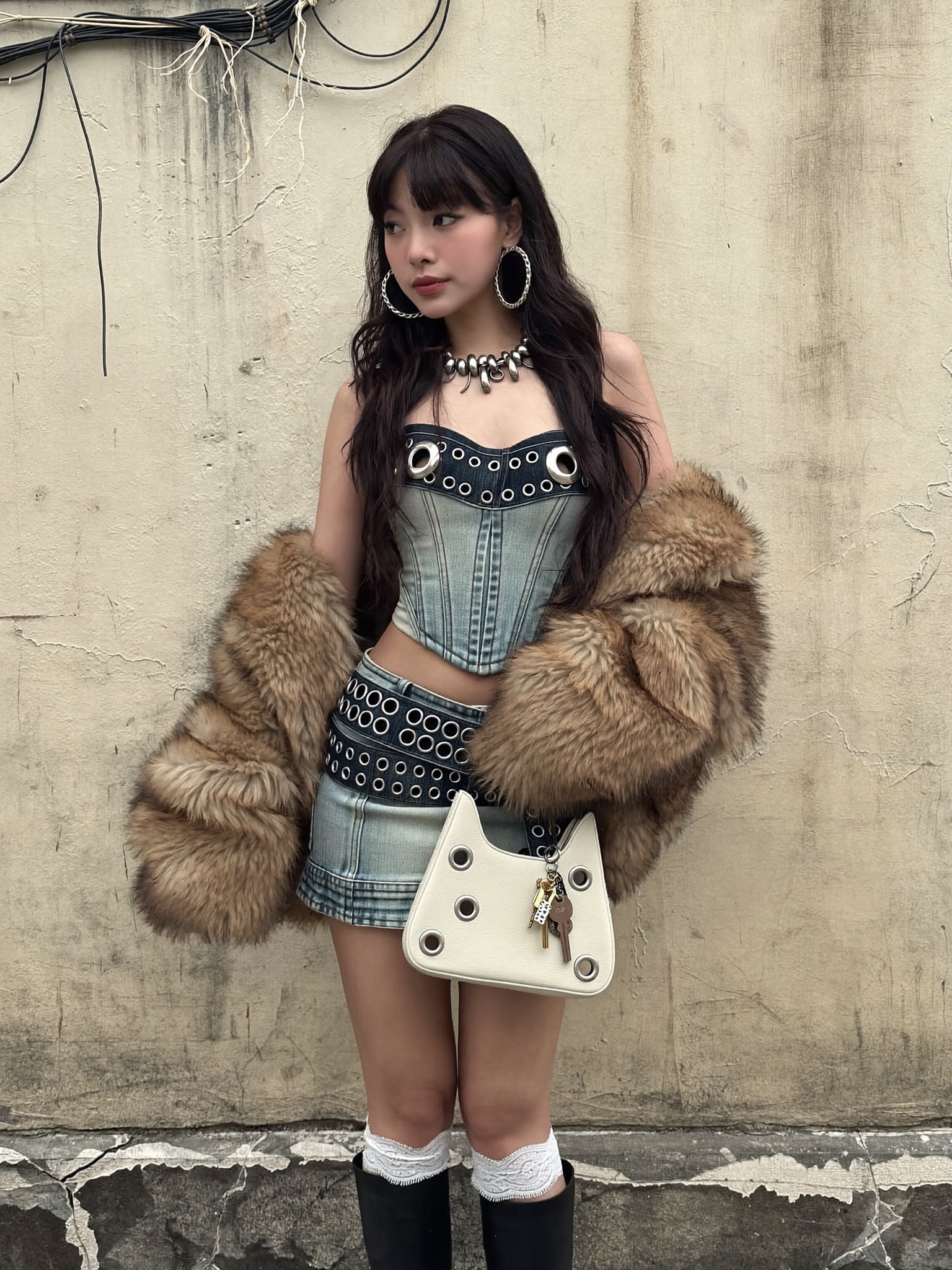
This is the layer audiences notice instantly. Anchor points worth locking: face shape and proportions, eyebrow shape and thickness, eye color and spacing, nose bridge and tip, lip fullness, hairline, hair length and parting, skin tone, and any distinguishing mark such as a scar, mole, or freckle pattern. Write these down as sentences, not as vibes. A description such as a woman in her early thirties with warm mid-brown skin, an oval face with a defined jaw, thick dark eyebrows, deep-set dark brown eyes, a straight nose, medium lips, black hair cropped close at the sides with a longer sweep on top, and a small scar above the left eyebrow is reusable. Attractive person in their thirties is not.
Wardrobe, props, and color
Costume is the cheapest consistency cue you own, and the one most often lost. Define a base outfit and two or three sanctioned variations, each with hex codes for the dominant colors. Note accessories: a specific watch, a pendant, a bag, a pair of glasses. Props travel between shots far more reliably than faces do, so use them as continuity anchors. If your character always carries a battered leather satchel, that satchel does quiet continuity work in every frame it appears in.
Motion and body language
Two characters can look alike and still feel like different people. Gait, posture, gesture speed, and resting hand position all carry identity. Define them: shoulders slightly forward, walks with a long stride and minimal arm swing, tends to tilt the head left when listening, uses both hands when explaining something.
Voice and manner of speech
If your video has dialogue or narration, define pitch range, pace, accent, and verbal tics. Keep a single voice reference sample and reuse it rather than regenerating a voice each session, which reintroduces randomness you do not need. Verbal habits such as starting sentences with a soft connector or ending them with a rising note do more for perceived character continuity than most visual tweaks.
Write all four layers into one document. That document, not the prompt box, becomes your source of truth.
Build a Character Bible Before You Generate Anything
A character bible is a short document that any collaborator, human or automated, can read and produce a recognizable version of your character. Keep it boring and specific.
Include these fields:
- Canonical name and any aliases
- Age range and apparent build
- Facial description, written in the same order every time
- Hair description including length, texture, parting, and color
- Wardrobe base plus sanctioned variations
- Palettes with hex codes for skin, hair, primary garment, secondary garment, and accent
- Two to four props with descriptions
- Movement notes
- Voice notes and a stored reference sample
- A do-not list: glasses, hats, beards, tattoos, color changes, and anything else that must never appear
The do-not list matters more than most people expect. Generative models fill gaps with plausible detail, and plausible detail is exactly what breaks continuity. If your character must never wear a hat, say so explicitly, because an unsupervised model will eventually decide that a hat suits the scene. The same logic applies to jewelry, facial hair, and dramatic eye makeup.
Version the bible. When you intentionally change a hairstyle between story arcs, record the change and the episode where it happens, then update the canonical reference set so future generations inherit the new look instead of fighting it.
Keep the bible in a plain text file that lives next to your project files. PDFs and slide decks look impressive and are miserable to copy-paste from at two in the morning. A flat markdown file also diffs cleanly, which means you can see exactly what changed between episode four and episode nine when a viewer complains that something looks off.
Create a Reference Set That Survives Any Camera Angle
Prompts describe; references demonstrate. A well-built reference set is the single highest-leverage investment in character consistency.
Aim for six to nine images:
- Neutral front-facing portrait, even lighting, plain background
- Three-quarter view, left
- Three-quarter view, right
- Full profile
- Full-body standing shot, neutral pose
- Expression sheet: neutral, smiling, concerned, angry
- Wardrobe variation A
- Wardrobe variation B
- Optional: dramatic lighting version to test robustness
Generate these references in a single session with the same seed, the same model, and the same lighting description. Changing models midway through a reference set is the most common reason a character ends up looking like two different people.
Practical rules that save hours:
- Use a plain, mid-gray or soft beige backdrop. Busy backgrounds bleed texture into the subject and complicate later compositing.
- Keep lighting flat and even for identity references. Save dramatic lighting for the shots, not the reference.
- Standardize the frame: same headroom, same crop ratio, same resolution.
- Save references as lossless PNGs with descriptive filenames such as character_elena_front_neutral_v3.png. Naming discipline is not bureaucracy; it is how you find the right reference at midnight.
- Keep a contact sheet that shows all references in one grid so drift is visible at a glance.
- Reject any reference where the face is partly obscured, blurred, or turned more than forty-five degrees from the intended angle.
If your tool supports reference conditioning, this set feeds it directly. If you are fine-tuning a small character model, this set is your training data, and eight clean, consistent images beat two hundred noisy ones.
One more habit worth adopting: keep the reference set frozen once a project ships. It is tempting to regenerate a prettier version later, but swapping references mid-series is the fastest way to introduce a quiet reboot that audiences feel without being able to name.
Write Prompts That Lock Identity Without Freezing Emotion
A prompt is a contract. If the contract changes between shots, the character changes with it. The fix is a fixed subject block that never varies, surrounded by variable blocks that carry the creative decisions.
A workable order:
- Shot type and framing
- Subject block (identical every time, copied from the bible)
- Wardrobe block
- Environment
- Lighting
- Lens and camera language
- Motion instruction
- Style grade
Example subject block, reused verbatim across an entire episode:
a woman in her early thirties, oval face with a defined jaw, warm mid-brown skin, thick dark eyebrows, deep-set dark brown eyes, straight nose, medium lips, small scar above the left eyebrow, black hair cropped close at the sides with a longer sweep on top
Example variable wrapper for one shot:
medium close-up, followed by the subject block exactly as written, charcoal wool blazer over a slate turtleneck, small silver pendant, standing in a rain-lit parking garage, cool overhead fluorescent light, 50mm lens with shallow depth of field, slow turn toward camera, muted cinematic grade with fine grain
The next shot changes the framing, environment, and motion, and keeps everything else identical, character for character. This is not laziness; it is engineering. Copy-paste is a consistency tool.
Describing emotion without rewording identity
Emotion should be a modifier, never a rewrite. Add a phrase such as calm and composed or tense, jaw set after the subject block rather than replacing descriptive words with moody synonyms. Rewriting identity lines to sound more emotional is the fastest way to produce a different face. If you feel the urge to describe a character as fierce and haunted, stop and ask whether you are trying to change the lighting and posture instead.
Negative prompts and drift prevention
Negative prompts are your safety net. A reasonable baseline: a different person, face morphing, inconsistent eye color, changed hairstyle, extra fingers, distorted jaw, plastic skin, heavy makeup, hat, glasses, beard. Adapt it to your do-not list. If a specific artifact keeps appearing, add it as a negative rather than fighting it in the positive prompt. Artifacts that appear in a single shot are noise; artifacts that appear in three shots are a prompt problem, and negatives are the cheapest fix available.
Keeping a prompt ledger
For every approved shot, store the full prompt, the seed, the model, and the reference images used. This costs a minute and saves an afternoon. When the tenth episode needs a reshoot, the ledger is what makes a match possible instead of a guess. A simple spreadsheet with one row per shot is entirely sufficient.
Choose the Right Pipeline and Settings for Your Shot Type
Not all shots need the same level of rigor. Match the technique to the shot.
Image-to-video versus text-to-video
Text-to-video is convenient and unpredictable. Image-to-video anchors the first frame, which means identity is largely decided by a still you can inspect, reject, and regenerate at low cost. For any shot where the face is visible for more than a second, generate the keyframe first, approve it, then animate it. Reserve pure text-to-video for wide shots, silhouettes, hands, and environmental inserts.
Seeds and samplers
Lock the seed for stills within a scene. Changing the seed while keeping the prompt is a legitimate way to explore, but treat each seed as a separate candidate that must pass a face check before it enters the shot list. Keep sampler and step settings documented per project so a re-render months later has a chance of matching.
Reference conditioning and lightweight fine-tunes
If your pipeline supports reference-image conditioning or adapter layers, use them. For a recurring character appearing across many episodes, training a small character model on your reference set produces the largest consistency gain available, at the cost of a setup session and some iteration. The decision rule is simple: one or two videos, use references and prompts; a series with a returning lead, train the model.
Upscaling, interpolation, and restoration order
Order of operations matters. Generate at native resolution, repair identity problems at the still level, then upscale, then interpolate to a higher frame rate. Upscaling a shot with a drifting face makes the drift more visible, not less. Face restoration tools are powerful and easy to overuse; a light touch preserves the texture that makes a face feel real, while an aggressive pass produces a waxy, uniform surface that reads as a different person.
Matching the aspect ratio to the destination
Decide early whether you are delivering vertical, horizontal, or square. A reference set generated in one ratio and cropped into another distorts facial geometry subtly, and subtle distortion is exactly what makes a familiar face feel unfamiliar. If you genuinely need both formats, build two reference sets or frame generously and crop deliberately.
Plan Shots Like a Storyboard Editor, Not a Prompt Gambler
Most identity failures are storyboard failures. If you write shots that your pipeline cannot support, no prompt engineering will rescue them.
Rules that hold up in practice:
- Favor medium shots and medium close-ups for dialogue. They carry identity well and hide the weaknesses of full-body generation.
- Treat extreme profiles and unusual angles as expensive. Use them only when you have a profile reference and have tested that angle already.
- Break long sequences into shorter shots. Three four-second shots with clean faces read better than one twelve-second shot with a melting jaw.
- Build a coverage library: hands, over-the-shoulder frames, environment inserts, prop close-ups. These cutaways buy you room to hide a weak frame and make edits feel intentional.
- Keep eyelines consistent. Even a perfect face reads as a different character if the character is suddenly looking the wrong way for the scene.
- Storyboard the wardrobe switches deliberately. If a character changes jacket between shots, that change should be a story beat, not an accident.
- Plan the reveal order. Introduce a new angle in a low-stakes moment before you use it in a dramatic close-up, so you learn what the model does with it.
A simple shot list with columns for shot number, framing, subject block version, wardrobe, environment, seed, and status will save you more time than any single prompt trick. Mark each shot as approved only after viewing it at 100 percent and at thumbnail size. A frame that passes at full size and fails at thumbnail size will fail on a phone in a feed, which is where most viewers will actually meet it.
Control Quality in Post-Production and Repair Drift
Review is where a series is won. Build a review pass that is fast and ruthless.
Step one: contact sheet. Lay out one representative frame from every shot in a grid. Identity drift becomes obvious when faces sit side by side. Do this before you spend time on color or sound, because discovering a face problem after a final mix means redoing work.
Step two: full-speed playback pass. Watch the cut end to end and note any moment where your eye catches. Then step through the flagged sections frame by frame.
Step three: thumbnail pass. Shrink the video to the size of a phone grid tile. If the character is unrecognizable at that size, the consistency is not working where it matters most.
Repairs, in order of cost:
- Recut around the problem. A cutaway or a tighter framing often removes the bad frames entirely.
- Swap in a repaired still. If a single frame drifts, generating a corrected still and replacing that moment can be nearly invisible at speed.
- Re-render one shot. Usually cheaper than repairing five.
- Rebuild the shot from a new approved keyframe. The honest fallback when the model simply failed.
Then unify the sequence: a shared grade, matched black levels, matched grain, and consistent sharpness across shots. Identity is partly a function of texture. If one shot is crisp digital and the next is soft and noisy, faces will read as different even when the geometry matches. Color management is continuity work, and it belongs in the same pass as face checks.
Finally, keep a continuity log of intentional changes: a new jacket in episode three, a haircut in episode seven. Intentional variation documented in advance is storytelling. The same variation discovered later by an audience is a continuity error.
Common Mistakes, Decision Criteria, and Quick Fixes
Mistakes worth naming, because almost everyone makes them early:
- Changing the subject block between shots for variety. Variety belongs in framing and lighting, not in the description of the face.
- Using different models for references and shots. Every model has its own facial prior. Mixing them guarantees a family resemblance that never quite matches.
- Skipping the plain-background reference. Textured backgrounds contaminate the subject and complicate reuse.
- Training on a small, inconsistent reference set. Eight consistent images outperform forty that disagree with each other.
- Chasing emotion by rewriting identity. Mood words belong in modifiers.
- Ignoring aspect ratio and resolution consistency. Cropping a horizontal reference into a vertical shot changes the geometry of the face.
- Over-relying on face restoration. Aggressive restoration flattens skin texture and creates an uncanny, waxy look that changes the character as much as drift does.
- Keeping no record of settings. If you cannot reproduce a shot, you cannot fix a series.
Decision criteria for the common choices:
- One video, one appearance: prompts plus a reference set, no training.
- Series with a recurring lead: train a small character model, plus a locked prompt block and a frozen reference set.
- Client work with approval cycles: freeze the keyframes first and get sign-off before animating anything.
- Fast social turnaround: build the coverage library and lean on cutaways instead of perfect full-body shots.
- Limited time and a long shot list: prioritize face-visible shots for careful treatment and let wides and inserts move faster.
Quick fixes for the most frequent failures. Eye color drift: add explicit eye color to the positive prompt and a color-related negative. Hairstyle changes: add length, parting, and texture words, and keep a hair reference image in the conditioning set. Wardrobe shifts: name the garment, material, and color, and never abbreviate. Jawline softening in motion: shorten the shot and cut before the drift begins. Flickering between frames: reduce motion intensity and interpolation strength. Background bleeding into the face: regenerate the keyframe with a cleaner plate. Skin tone shifts under colored light: neutralize the lighting description or correct the grade per shot rather than applying one global adjustment.
Frequently Asked Questions
How many reference images do I actually need?
Six is workable, nine is comfortable. Cover front, both three-quarter views, profile, full body, and expressions. More images only help if they agree with each other.
Do I need to train a model for a single video?
No. Reference conditioning plus a locked subject block is enough for a short piece. Training makes sense when the same face must appear across many episodes and you want to stop re-checking every keyframe.
Why does my character look right in stills and wrong in motion?
Motion models interpolate, and interpolation invents detail. Shorten shots, reduce motion strength, and approve keyframes before animating. Drift is usually a function of duration, so the most reliable fix is to cut sooner.
Can I fix consistency in editing alone?
Partly. Cutting around weak frames and inserting repaired stills solves most single-shot problems. It cannot fix a character who looks like a different person in every shot; that requires rebuilding the reference set and the prompt block.
Should I use the same seed for every shot?
Use the same seed within a scene for stills you want to resemble each other. Do not expect the seed to carry identity across radically different framings; the prompt and the reference do that work.
How do I keep a consistent voice?
Generate or record one clean reference sample, store it with the character bible, and reuse it rather than rolling a new voice each session. Match pace and pitch in the edit, and keep background music levels steady so the voice sits in the same space every time.
What is the most common reason a series fails visually?
Inconsistency is usually a planning failure, not a model failure. Weak shot lists, mixed models, and untracked settings cause more damage than any single generation tool. Fix the process before you shop for another model.
How do I handle a character who must age or change across a season?
Treat each version as its own canon entry with its own reference set, and make the transition a visible story beat so the audience reads it as intentional. Document the switch in the bible so future shots inherit the correct version.
How do I brief a collaborator or an assistant?
Hand them the bible, the reference folder, the prompt ledger, and one approved shot as a benchmark. Ask them to reproduce that benchmark shot before they produce anything new. If their reproduction matches, the documentation is working.
Start with the bible. Build the reference set in one careful session. Lock the subject block and copy it everywhere. Approve keyframes before you animate, review contact sheets before you grade, and log every intentional change. None of these steps is glamorous, and together they are the difference between a pile of attractive clips and a series with a face audiences remember.
