
Why character consistency is the hardest problem
Ask any filmmaker who has worked with generative video, and they will name the same pain point: keeping characters consistent. A single character is already difficult, because most models generate every shot from text and random noise, with no memory of who that character is. Keeping two, three, or five recurring characters consistent across a full scene multiplies the difficulty.
Yet multi-character scenes are where storytelling lives. A conversation between two people, a hero and a sidekick, a brand mascot interacting with a presenter — these are the moments that carry narrative weight. When characters drift visually between shots, the illusion collapses and the audience loses trust in the production.
This article explains how multi-image fusion solves the identity problem, how to manage several characters at once, and how to build a workflow that produces cohesive cinematic scenes instead of a pile of beautiful but disconnected clips.
How multi-image fusion works under the hood
Multi-image fusion is the technical foundation of modern character consistency. Instead of a single text prompt, the creator supplies a set of reference images for each character. The system analyzes those images, extracts identity vectors — facial structure, eye color, hair style, skin texture, distinctive features — and applies them as conditions to every subsequent generation.
Think of it as a digital casting process. The reference set defines who the actor is; the prompt describes what the actor does. This separation is what makes serialized production possible. Once a character identity is locked, you can place that character in any setting, outfit, or action while keeping the face and style intact.
Under the hood, the quality of this process depends on the backend: how the system stores character metadata, how it normalizes references from different angles and lighting, and how it merges identity constraints with the generative model. Good systems let you update references over time, so the character can evolve without breaking.
Building a reference set for your characters
The quality of your reference set determines the quality of your characters. For a single character, prepare:
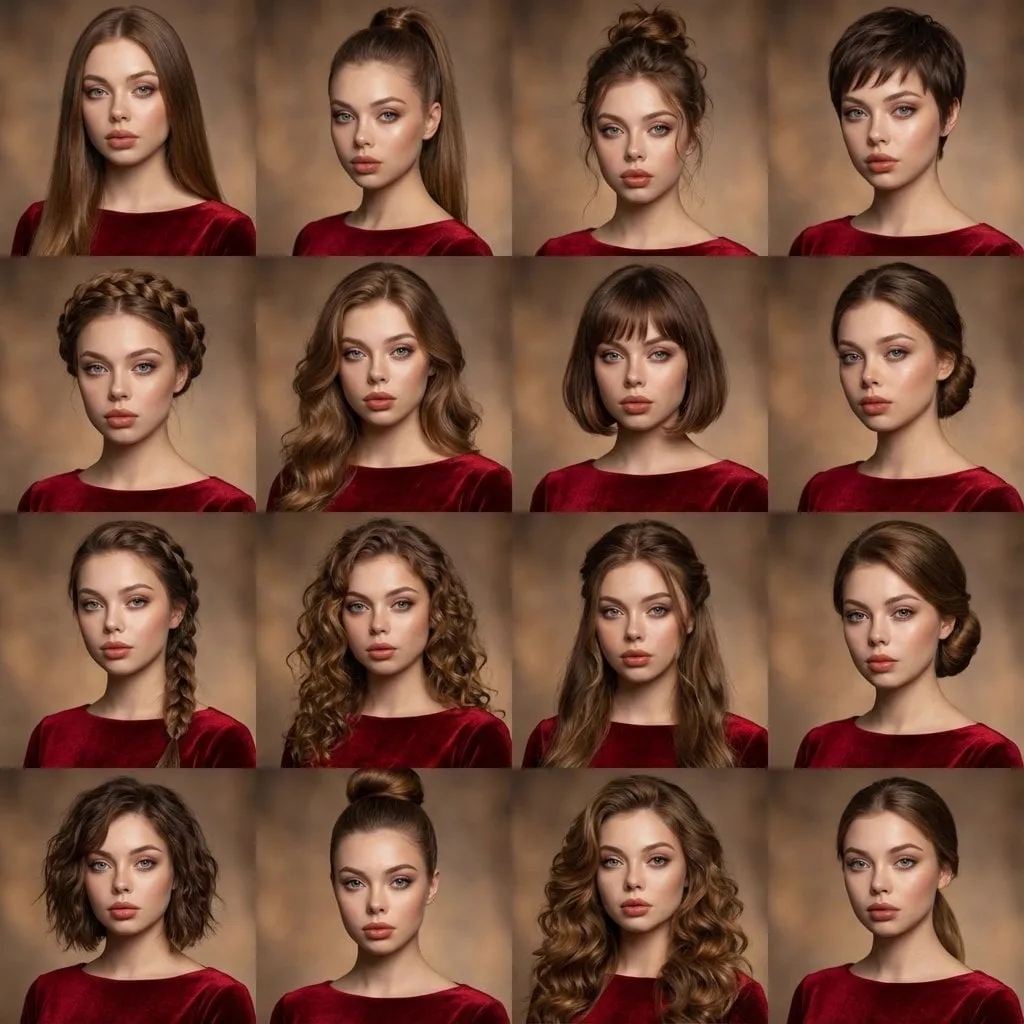
- Three to six images from different angles: front, profile, three-quarter;
- One neutral expression shot as the identity baseline;
- Variations in lighting, so the model understands facial structure rather than just color;
- Full-body shots for action scenes;
- Consistent style: if the character is an illustration, every reference must be an illustration in the same style.
For multiple characters, add two rules. First, keep every character's references in a separate, clearly labeled set. Mixing characters confuses the system. Second, generate characters in the same visual language: same rendering style, same color grading, same level of detail. Characters that look like they come from different movies will never feel like they share a scene, no matter how consistent each one is individually.
A useful practice is to create a "character bible" for each project: a document with every character's references, personality notes, costume details, and voice. It serves the same role as a production bible in traditional filmmaking, and it makes collaboration with other creators much easier.
Choosing models for unified output
Not every model handles multi-image fusion equally well. Some are exceptional at maintaining identity over time; others drift after a few seconds. The right approach is to test models specifically for multi-character stability before committing to a project.
A good test is simple: generate a two-character conversation scene using both characters' reference sets, then generate a second scene in a different location. Compare whether both characters remain recognizable. Models that pass this test are your production candidates; the rest are exploration tools.
Two practical rules help regardless of model:
- Keep the same model for the whole scene. Switching models mid-scene invites drift, because different models interpret identity vectors differently.
- Keep camera and lighting language consistent. Even a perfect model produces mismatched shots if the scene design changes arbitrarily.
High-realism models
For photorealistic multi-character scenes, premium models deliver the strongest results. Models in the Sora family and Runway's Gen-4 line handle complex prompts and produce footage with cinematic motion and physical plausibility. If your scene involves two realistic characters interacting in a believable environment, these are the models to test first.
High-realism models also respond well to reference conditioning. Combined with a strong reference set, they can hold identity across multiple shots — although they remain sensitive to extreme angles and fast motion, so plan coverage accordingly.
Use high-realism models for hero scenes: the moments the audience will remember. For volume shots, cheaper models may be perfectly adequate, and the budget saved can fund more iterations on the scenes that matter.
East Asian model strategies
Models from East Asia — including the Kling series and Tencent's Hunyuan Video — have become serious contenders for character work. They are known for strong prompt adherence and professional control modes, often at a significantly lower cost than premium Western models.
For multi-character scenes, their practical advantage is iteration speed. Because generation is cheaper, you can test blocking, angles, and interactions freely before locking the final version. That freedom translates directly into better results: more explored options, fewer compromises.
Some of these models also handle stylized and animated characters exceptionally well, which makes them a strong choice for branded series, explainer videos, and anime-inspired content where character identity is the centerpiece.
Specialized and frame-end control models
Beyond the mainstream categories, a set of specialized tools solves niche but important problems. Frame-end control models, for instance, let you specify the first and last frame of a sequence explicitly, which is invaluable when a scene must begin and end in precise compositions.
Other specialized capabilities include:
- Keyframe and pose control, for blocking character movement exactly;
- Masking and regional editing, to fix a single element without regenerating the scene;
- Style transfer, to keep visual language uniform across heterogeneous source material;
- Interpolation, to smooth transitions between key moments.
These tools are not replacements for the main generators; they are precision instruments for the moments where standard generation falls short. A professional workflow integrates them at the points of highest control need.
The AI director as consistency supervisor
A growing layer of tooling acts as a consistency supervisor across the whole pipeline. AI director assistants take your scene descriptions and produce structured production plans: shot lists, framing, lighting, camera moves, and style parameters. Their real value for multi-character work is that they enforce the same parameters across every shot.
When you direct manually, small variations creep in: one prompt mentions warm light, the next says soft light, the third forgets lighting entirely. The model interprets each prompt independently, and the scene drifts. A director assistant carries the style brief forward automatically, so every shot starts from the same visual contract.
This does not remove creative control. You decide the story, the tone, and the blocking; the assistant handles the repetition and the bookkeeping. For multi-character productions, that division of labor is worth a lot, because the bookkeeping is exactly where consistency is won or lost.
Infrastructure: queues, GPU management, and data safety
Behind every reliable generation workflow is infrastructure that most creators never see: task queues, GPU scheduling, and data management. These matter more than they appear to, because they determine speed, cost, and safety.
Task queues optimize the use of expensive compute. Instead of each generation competing for resources, requests are scheduled intelligently, and the system routes each job to the most efficient model for the request. For the creator, this shows up as predictable turnaround times and controlled costs.
Data safety is the non-negotiable part. Character references are assets, and in commercial work they are often confidential. Work with platforms that encrypt data in transit and at rest, and that let you control who has access. Authentication and access control are not optional features; they are requirements for professional production.
A practical habit: keep local backups of every reference set and every final generation. Platform outages and account issues happen, and your library is the asset that makes you productive.
Step-by-step cinematic workflow
Here is a workflow that produces cohesive multi-character scenes:
- Write the scene brief: who is in the scene, what happens, where, and what mood the scene needs.
- Prepare character bibles: separate reference sets for every character, in a consistent visual language.
- Block the scene: decide positions, interactions, and camera angles. A rough sketch or list is enough.
- Generate hero shots on your best model, using all character references. Check identity carefully.
- Generate fill shots and transitions on cost-efficient models, keeping the same style brief.
- Assemble in an editor: cut for rhythm, add sound and music.
- Grade the whole piece: one color world across all shots hides small inconsistencies.
- Review with the character bible in hand: any drift that survived is fixed here, shot by shot.
The workflow looks long on paper, but each step becomes fast with practice. The crucial discipline is steps 1 through 3: scene brief and character preparation decide most of the final quality.
Common pitfalls
The most common pitfall is inconsistent reference quality. If one character's references are studio portraits and another's are casual snapshots, the models will not produce characters that share a visual world. Standardize the reference production for every character.
The second pitfall is changing models mid-project without testing. Identity vectors do not transfer perfectly between models. If you must switch, generate a control shot with all characters and compare it to earlier output first.
The third pitfall is overloading prompts. A prompt that tries to describe two characters, a location, action, lighting, and camera in one sentence rarely works. Break complex scenes into shots, and let each prompt do one thing well.
The fourth pitfall is skipping post-production. Small color and texture differences between generated shots are normal; grading exists precisely to unify them. Without a grading pass, even consistent characters feel disjointed.
Example: directing a two-character scene
To make the workflow concrete, imagine a short scene with two recurring characters, Maya and Leo, having a conversation in a café at golden hour.
Step one, character bibles: you have five reference images for Maya and five for Leo, each in the same illustrated style. Step two, blocking: you decide Maya sits left of frame and Leo right, with a medium two-shot first, then over-the-shoulder singles. Step three, hero shots: you generate the two-shot and both singles on your most stable model, using both reference sets and the same lighting language. Step four, fill material: you generate a close-up of Maya's coffee cup and a wide establishing shot on a cheaper model, using the same style brief. Step five, assembly: you cut the shots together in an editor, add café ambience and soft music, and grade everything to the same warm palette.
The result is a scene that holds together: the characters stay recognizable, the lighting matches, and the coverage feels deliberate. Without the character bibles and the shot list, the same scene would be a gamble on whether either character survives a single generation intact.
Frequently asked questions
How many reference images per character do I need? Three to six well-made images are usually enough. Quality and angle variety matter more than quantity.
Can I add a new character mid-project? Yes, but prepare the new character's reference set in the same visual language as the existing ones, and test a control shot before adding them to scenes.
Why do my characters look different in every scene? Usually because the reference set is weak or inconsistent, the model is changed mid-project, or the prompts vary in style language. Fix the references first; that solves most drift.
Do I need a different model for animated vs. realistic characters? Often yes. Some models specialize in photorealistic output, others in stylized animation. Match the model to the character style.
Is multi-character generation more expensive? Yes, because more identity constraints make generation harder and require more attempts. Budget for iterations, and use cheaper models for exploration.
Conclusion
Consistent multi-character scenes are no longer a distant goal; they are achievable with the right combination of reference management, model selection, and disciplined workflow. The technology keeps improving, but the fundamentals remain: build a strong character bible, test models for identity stability, and never skip the post-production pass that unifies everything. Master those, and your AI productions will finally feel like films instead of collections of clips.
