

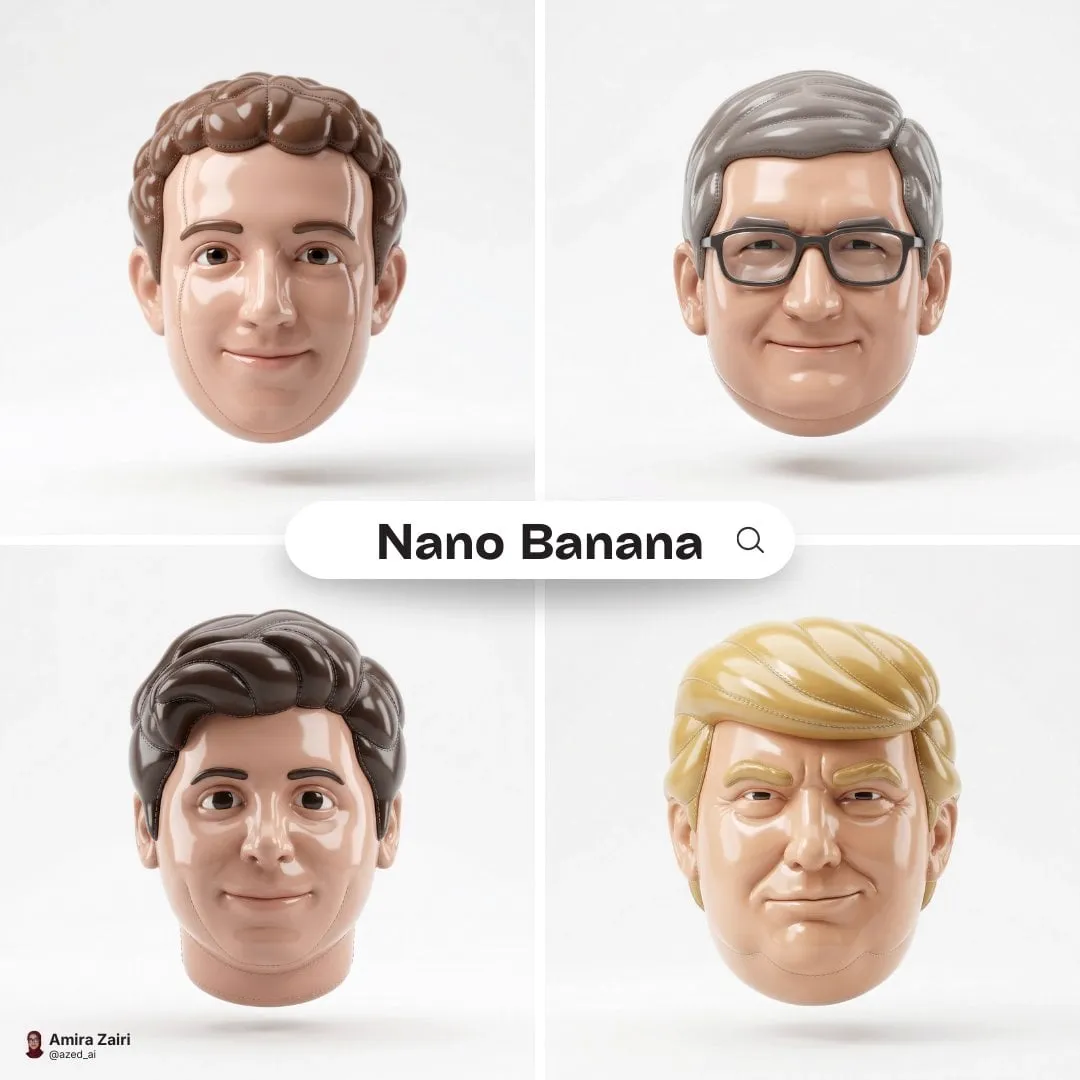
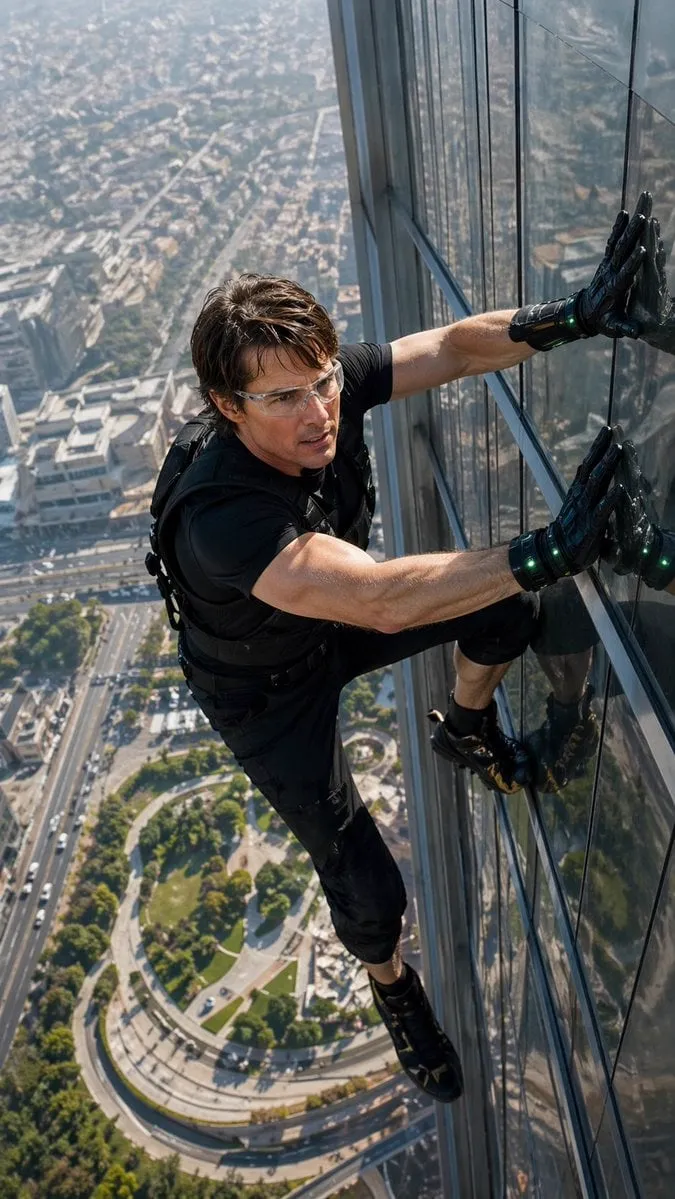
A single AI image can be breathtaking. Ten AI images that look like they come from the same production — same character, same palette, same art direction — are vanishingly rare. Yet that is exactly what professional work demands: not isolated beautiful frames, but a coherent visual language stretched across scenes, campaigns, and stories.
This guide is about style consistency in AI image fusion: the set of techniques that lets you generate many images that belong together. You will learn why style drifts, how multi-image fusion and control nets anchor a visual identity, how to manage drift across model boundaries, and how to build a pipeline that makes consistency the default instead of the exception.
What style drift is and why it happens
Style drift is the gradual — or sudden — divergence of generated images from the intended visual identity. The character's face shifts subtly between renders. The palette warms up in one image and cools in another. The texture language changes from painterly to photorealistic for no apparent reason.
The root cause is ambiguity. Generation models are probabilistic; they sample from a vast space of possible outputs. A text prompt is an under-specified instruction. "Neon cyberpunk city" leaves thousands of decisions to the model — and every decision is an opportunity to drift. The model is not disobeying you; it simply has more degrees of freedom than your words can constrain.
Consistency, therefore, is not about writing better prompts. It is about reducing the model's freedom where identity matters. You do that by giving the model the identity directly — through images, conditioning, and structure — instead of asking it to imagine the identity from text.
Foundations of style cohesion
Before the fancy tools, there is a discipline: define the style before you generate anything.
Style tokens versus images
Text can carry style: "studio lighting, teal and orange grade, 35mm film grain." Style tokens like these work, but they drift because different models interpret the same words differently. Images are more stable. A single reference image of the desired look constrains far more variables than a paragraph of description.
The professional approach combines both: a compact, specific style description paired with a canonical reference image. The words describe intent; the image locks the look.
The canonical reference
Every project needs a canonical reference — the one image that defines the visual identity. It should be generated or selected carefully, then treated as the source of truth. When in doubt, ask: does this output look like the canonical reference? If not, regenerate or adjust before you accept it.
Lock the palette early
Palette is the highest-leverage style variable. Decide the color story — dominant hues, accent colors, shadow treatment — and encode it in the reference and the prompt. Audiences read color as identity; a consistent palette does more for cohesion than any other single factor.
Multi-image fusion mechanics
Multi-image fusion is the technique of conditioning generation on several images at once. Instead of one reference, the model receives a bundle: a character image, a style image, a composition reference. It learns the relationship between them and applies it to the output.
How fusion works in practice
Think of the bundle as a briefing. The character image says who is in the scene, the style image says how it should look, the composition reference says how it should be framed. Fusion blends these constraints during generation, so the output inherits identity from one input and atmosphere from another.
The power of fusion is separation of concerns. You can change the background freely without touching the character, or restyle the whole scene without re-casting the subject. This is what makes series and campaigns feasible: the identity is anchored, and everything else is variable.
When to use multiple references
More references are not automatically better. Every extra image adds constraints, and too many constraints can confuse the model or create contradictions. Use multiple references when you need multiple stable properties: character plus style, character plus pose, style plus composition. If one reference already carries everything, keep it to one.
The quality of references decides everything
A fusion pipeline is only as good as its reference set. Blurry, badly lit, or internally inconsistent references produce confused outputs. Build references deliberately: sharp, well-composed, representative of the identity. This is the boring work that separates professionals from hobbyists.
Control nets and multi-reference inputs
Control nets are a class of conditioning tools that let you constrain specific structural properties of the output: edges, depth, pose, or segmentation. They are the precision instruments of the consistency toolbox.
Structure control
With an edge or depth control, you can force a scene's composition while letting the model fill in style and content. This is how you generate the same scene in multiple styles, or multiple scenes with the same composition — the structure stays locked while everything else varies.
Fine-grained conditioning
Beyond structure, fine-grained inputs can control color distribution, spatial layout, and even specific regions of the image. Combined with reference images, they let you hit a brief precisely: the character from the reference, the pose from the control, the palette from the style card, the composition from the layout.
The practical benefit is reproducibility. A control-net workflow can be saved as a template and rerun — with different prompts, different styles, different characters — while the structure stays consistent. That is the foundation of a repeatable design system.
Managing style drift across model boundaries
Real workflows rarely use one model. You may generate characters with one model, scenes with another, and final composites with a third. Every model boundary is a drift risk, because each model interprets references and prompts differently.
Build a testing matrix
Before a project, run a calibration pass: feed the same references and prompts to every model in your pipeline and compare. Note which models preserve the palette, which hold the character, which shift the mood. You cannot fix what you have not measured, and the matrix turns "this model feels off" into "this model shifts the grade by roughly two stops."
Standardize the handoff
When moving assets between models, standardize the intermediate: export references at consistent resolution, in a consistent color space, with a consistent framing. The fewer variables that change at a boundary, the less drift you introduce. Treat each handoff like an engineer treats an API contract.
Fallback strategy
Design a fallback for every critical step. If the stylization model drifts, regenerate with heavier reference weighting. If the character model fails on a complex pose, switch to a control-net workflow. Knowing the fallback before you need it keeps a project moving instead of stalling.
Engineering persistence into your pipeline
Consistency is not a one-time achievement; it is a property of the pipeline. Persistence means the identity survives project after project, iteration after iteration.
Asset standardization
Maintain a versioned asset library: canonical references, style cards, and palette definitions. Every new project starts from the library instead of rediscovering the style. Versioning matters — when you improve the style, old projects remain reproducible and new projects inherit the improvement.
Prompt lockfiles
A prompt lockfile is the full, frozen specification of a generation: the prompt, the references, the model version, the settings, the seeds. When a project is approved, lock it. Lockfiles make regeneration exact, troubleshooting specific, and iteration honest — you can always see what changed between versions.
The style gate
Add a review step dedicated to style: every output must pass the canonical-reference test before it is accepted. This is not about taste; it is about the defined identity. A style gate turns drift from a silent quality leak into a caught defect.
Document the style brief
One more practice pays off disproportionately: write the style down. A short brief — palette hex codes, lighting direction, texture language, composition rules, and a do-not-do list — turns a style from an intuition into a spec. New collaborators, new models, and future-you all benefit from the brief. Styles that exist only in someone's head cannot be enforced; styles that exist in a document can be reproduced by anyone at any time.
Pixel-level control: beyond prompting
At the highest level of control, you stop trusting the model entirely for certain details and intervene at the pixel level.
Masking and inpainting
When a generated image has the right composition but wrong details — a costume that changed, a background that leaked — inpainting fixes the region instead of regenerating the whole image. Mask the offending area and regenerate only that part with tight constraints. This preserves everything that worked and repairs only what did not.
Color grading as a final layer
No pipeline is perfectly consistent out of the generator. A final grade over the whole set — matching exposure, contrast, and color balance — is the glue that hides small residuals. Professionals never skip it: the grade is where "nearly consistent" becomes "visibly consistent."
The economics of consistency
Consistency costs compute, and the costs compound across projects. Plan the budget deliberately.
Budgeting generations
Iteration is the biggest hidden cost. A pipeline with strong references and control nets converges in fewer generations than a prompt-only workflow, and fewer generations means lower spend and faster delivery. Measure generations per accepted output; that number is the real price of your consistency.
Choosing models by stage
Use cheap models for exploration and expensive ones for final renders. Generate rough style variants with the fast model, lock the direction, then produce the final set with the high-end model. The same discipline that saves money also produces better results, because the expensive model is used only where its quality matters.
A worked example: building a consistent character set
Consider a brand that needs a mascot across twelve scenes. Step one: generate and lock the canonical character reference — front view, neutral pose, brand palette. Step two: build a style card from the brand guidelines and a composition template. Step three: run a calibration matrix across the pipeline models. Step four: generate each scene with fusion — character reference plus style card plus scene-specific composition — and control nets where poses must be exact. Step five: pass everything through the style gate, fix drift with inpainting, and finish with a single grade across all twelve images.
The result is not twelve good images. It is twelve images that read as one production — which is the entire point.
Frequently asked questions
How many reference images should I use? Use the minimum that anchors the identity: usually one character reference and one style reference. Add more only when a scene requires a distinct stable property.
Can style consistency be achieved with prompts alone? Sometimes, for narrow styles, but it is fragile and model-dependent. Reference images and control nets are dramatically more reliable.
Why does my style drift when I change models? Every model interprets references differently. Run a calibration matrix before mixing models and standardize the assets at every handoff.
What is the fastest improvement I can make? Lock a canonical reference and a palette before generating anything, and add a style gate to your review process. Both are free and immediately effective.
Is consistency more important than quality? For professional work, yes. A consistent set at 8 out of 10 quality beats a scattered set with a few 10s. Consistency is what makes work look intentional.
How do I fix drift in an already-generated set? Do not regenerate everything. Identify the failing property, adjust the reference bundle or control conditioning, regenerate only the failures, and unify the set with a final grade.
Should I keep multiple versions of a style? Yes, within reason. Maintain one canonical style per project plus a small set of approved variations. Too many competing style versions recreate the drift problem at the system level — the identity itself becomes ambiguous.
The bottom line
Style consistency in AI image fusion is a system, not a skill. Define the identity first, anchor it with canonical references and palettes, constrain it with fusion and control nets, and protect it with lockfiles, style gates, and final grading.
The first project will feel slow — there is real setup cost. The third project will feel like the machine you always wanted: the same identity, generated on demand, scene after scene. That is the payoff of treating consistency as engineering instead of hoping for it.
