
Anyone can generate a passing-fair AI video clip these days. The hard part is making one that does not look like everyone else's output — a clip with its own lighting, its own camera voice, its own consistent character, and a concept worth watching. That distinction is rarely a matter of more compute or a fancier prompt. It is a matter of knowing which model fits which job, how to control motion and composition deliberately, and how to keep a recognizable world alive from one clip to the next. This guide walks through the practical craft of creating unique short clips with AI video models, from choosing the right tool to building a repeatable, stylistically consistent process.
Why your clips look generic (and how to fix it)
The generic look has a clear cause: most creators type a vague prompt, accept the model's default framing and lighting, and move on. The model's defaults are built for the average user, so the average result is exactly what everyone else gets. Breaking away takes deliberate direction.
The levers that control uniqueness
- Lighting — the single strongest mood-setter. Golden hour, harsh noon, moody practical light, or neon scatter change everything.
- Camera voice — whether the frame is locked, slowly pushing in, handheld, or tracking changes the feel dramatically.
- Color and style targets — anchoring the clip to a reference look ties it to a specific aesthetic.
- Composition — where the subject sits in the frame and what the background does.
- Character and prop consistency — a world in which the same person reappears recognizably is inherently more distinctive.
Each of these is a choice you can direct rather than accept, and each pulls the result away from the crowd.
Matching the right model to the clip
Different AI video models have different strengths, and the craft of unique clips is largely the skill of choosing the correct tool for the mood you want. Generalizing a few common profiles helps you decide fast:
Photorealism and cinematic control
When you need footage that reads as a real shot — a brand spot, a moody narrative scene, a commercial-grade visual — reach for a model tuned for photorealism and fine control. These models give you the framing, depth, and lighting detail that suggest a real camera and a real set, which is the opposite of the flat generative look.
Style and artistic variation
For animation, illustration, or stylized content, different models offer different artistic voices. Regional and stylistic variations matter meaningfully — some models carry a distinct aesthetic influenced by their training data — so a given tool may give you a certain painterly, anime, or conceptual look that another simply will not produce. Knowing the signature style of each model is how you build a varied, surprising feed.
Motion and referential control
Some clips live or die on precise motion — a product rotating, a character walking a specific path, a camera tracking a subject. Models that support strong motion and reference control (including multi-reference input to lock a character) are the key to clips that behave as directed rather than drifting into chaos.
Composition and cinematic direction in a short clip
Even in six seconds, you can direct like a cinematographer. Decide the establishing logic for the shot rather than letting the model fill the frame randomly.
Directing the camera
- Use an establishing wide to set place before cutting.
- Push in slowly for intimacy or tension.
- Hold a locked frame for a clean, graphic composition.
- Add a gentle dolly or pan for gentle dynamism.
- Use implied handheld movement for urgency.
Directing the light
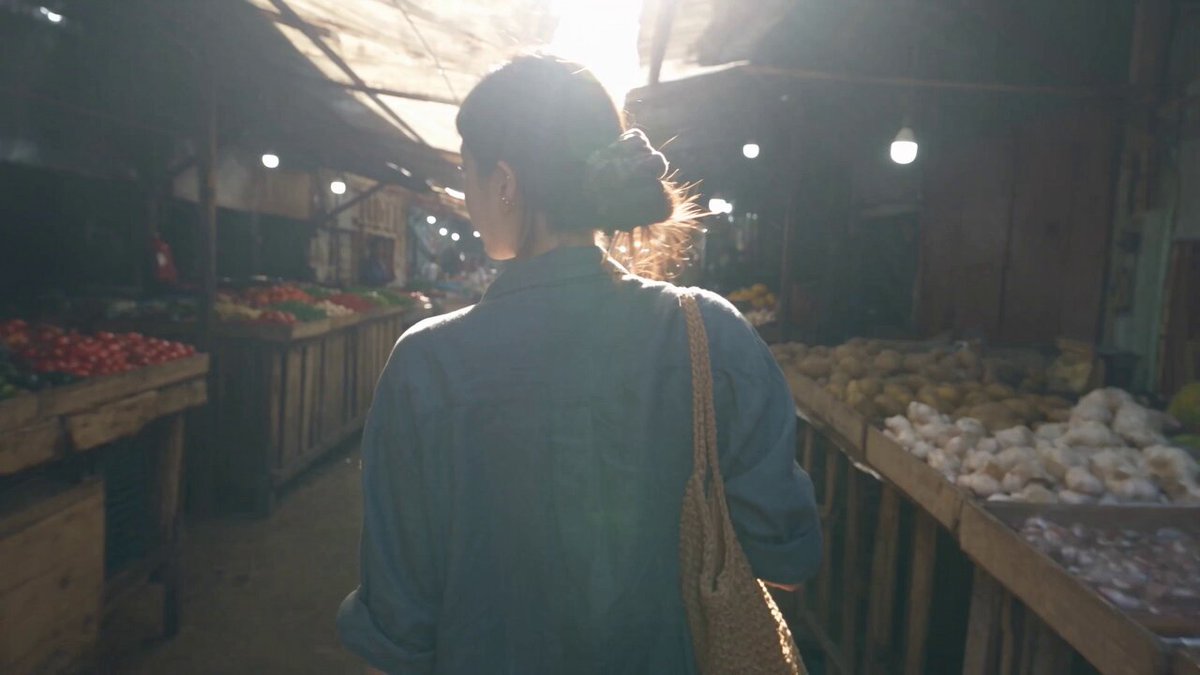
Describe the light source, its color temperature, and its mood explicitly. "Low warm key light from the left, deep soft shadows, a cool cyan rim light from behind" produces a far more intentional image than "good lighting." Lighting is often what separates a clip that feels designed from one that feels generated.
Directing the subject
Know what the subject is doing, and name the action concretely. Vague verbs like "walking" invite sloppy motion; specific ones like "stride slowly across the frame, then stop and look over the right shoulder" give the model a target worth hitting.
The power of a consistent character world
A single unique clip can catch attention, but a consistent world keeps it. When the same recognizable character, costume, and setting return across several clips, you create a signature — a visual brand the audience learns to expect. This is where reusable reference assets become your most valuable creative resource.
Building and reusing reference assets
- Keep clean reference images of each recurring character in a few key poses.
- Preserve style presets for the overall look you want across the project.
- Reuse the same negative prompt list to block the recurring artifacts.
- Save the prompts that worked so a proven look is reproducible.
With these assets, every new clip starts from a locked design instead of from scratch, which makes a whole library of unique-but-coherent content possible.
A practical workflow for short-clip creators
Putting it together into a repeatable process keeps quality high and effort low:
- Lock the concept. One sentence — the shot, the mood, the payoff.
- Choose the model for the look you need (photo-real, stylized, motion-heavy).
- Gather references — character images, style targets, light references.
- Write the directed prompt — composition, light, camera, and specific action.
- Generate with a negative prompt to block artifacts.
- Review critically — lighting, face, edges, motion.
- Retake or refine the weak spots rather than accepting a flawed pass.
- Store the winners — refs, presets, and prompts for reuse.
Run the same sequence for every clip and you get consistency without sacrificing variety, because the concept and model still change the product each time.
Escaping the artifact trap
Every model has predictable failure modes, and a director who knows them saves a lot of wasted generations:
- Deformed hands and faces — block with negative prompts, keep motion subtle.
- Warping edges and objects — avoid extreme camera moves on complex subjects.
- Character drift — pin identities with reference images every time.
- Flickering background — favor simple or well-defined settings.
- Blur under motion — keep action moderate for stable frames.
Preventing a problem is cheaper than regenerating around it, so writing a small, permanent negative prompt list for your common artifacts is a fast win.
Directing color and palette for a recognizable look
The fastest way to make a channel feel like a brand is to control the color, not just the subject matter. A deliberate palette keeps every clip visually connected even when the topics vary wildly. Choose a few recurring elements to fix:
- A signature color temperature — consistently warm, consistently cool, or a recognizable contrasting pair.
- A dominant key color that appears in costumes, props, or backgrounds across clips.
- A consistent contrast and saturation profile so clips never feel accidentally bright or washed out.
- Matching text and caption styling that borrows from the same palette.
When the palette is locked, generation becomes easier to direct, since every prompt can reference the same color intent. Viewers who follow the channel start to recognize it from a thumbnail alone, which is the deepest form of brand consistency in a short-clip feed.
Deciding when not to generate
A good director also knows when the generated clip is the wrong tool. Sometimes authenticity, speed, or subject matter demands a different route:
- People with a real, public identity — a real face that viewers must trust is better shot than synthesized.
- Live, timely events — a current scene you can film beats a generated approximation.
- Legal-sensitive material — trademarks, real people, and certain products create license and defamation exposure that generation only complicates.
- Sheer realism of a specific place — a documentary or testimonial reads better with genuine footage.
Generative video is a tool in a larger toolkit, not a replacement for it. The strongest creators decide case by case, reaching for generation when it is faster, cheaper, or more imaginative, and reaching for the camera when reality matters more.
Building variety into a consistent feed
A worry with any stylistic recipe is that every clip starts to feel the same. The way to keep a recognizable style without falling into repetition is to change the variables that are cheap to change while holding the anchor constant:
- Vary the subject and topic while holding the palette and character look.
- Vary the camera move while holding the lighting model.
- Vary the mood and tone while holding the overall visual identity.
- Bring in real footage, animation, and generative elements in different proportions per clip.
The anchor — the palette, the character, the voice — is what makes the feed feel cohesive; the variables are what make each clip feel fresh. Deliberately mixing those two keeps an audience both comfortable and curious.
Turning individual clips into a reusable library
Unique clips compound in value when they become part of a reusable library rather than isolated uploads. Save every strong generation, along with its prompt, references, and settings, so a winning look can be revisited and recombined later. A content library lets you:
- Reuse a proven character or scene in a new activation.
- Repurpose a successful clip into a different aspect ratio or format.
- Rebuild a seasonal variant from an existing foundation instead of starting fresh.
- Keep a history of what your signature style looked like as it evolved.
The library turns your best individual work into ongoing assets. Over time, generating unique short clips is no longer a series of one-off experiments but the steady production of one distinctive, accumulated body of work.
A practical first exercise
If you are new to directing unique clips, run one small, contained exercise rather than trying to master everything at once. Take a single subject you care about — a product, a place, or a character — and generate three short clips of it, changing only one deliberate variable between them, such as the lighting or the camera move. Compare the results side by side and write down which choice moved the feel the most. That one exercise teaches you the levers within your own toolchain and gives you a reusable baseline for the clips you will actually publish.
FAQ
Why do my AI clips all look alike?
Because you are accepting the model's default framing, lighting, and composition. Directing the light, camera, and subject explicitly — and choosing models with different styles — is what breaks the identical look.
How can I make a character consistent across clips?
Maintain reference images of the character and reuse them, lock costumes and props, and keep style presets consistent. The more references you feed, the more stable the character stays.
Should I always use the most realistic model?
No. Match the model to the mood and content. Realism suits brand and narrative video; animation and artistic styles often need an entirely different model with its own signature.
How long should a single AI-generated clip be?
A few seconds per clip produces the most stable, controllable results. Build longer pieces by generating several short clips with shared references and assembling them rather than stretching one generation.
Is a negative prompt really that important?
Yes. It is the cheapest way to block the artifacts the model would otherwise produce by default, saving you regeneration time and greatly improving your hit rate.
Final thoughts
Unique short clips are not the product of a magic model; they are the product of deliberate direction. Choosing the right model for each mood, controlling light and camera explicitly, and anchoring characters with consistent references all pull your output away from the generic and toward the distinctive. By turning those choices into a repeatable workflow, you can produce a library of short clips that is both varied and unmistakably yours — the combination that makes an audience stop, watch, and remember.
