
Why AI Has Rewritten the Rules for One-Person Productions
A decade ago, a solo filmmaker who wanted a broadcast-looking advertisement or a festival-ready short film needed a crew, a location permit, a lighting package, and a week of shooting. Today, a laptop, a clear script, and a disciplined stack of generative tools can produce footage that would have required a rental house. The barrier has not disappeared — it has moved. Instead of fighting logistics, you now fight consistency, taste, and structure.
What actually changed is worth naming precisely, because vague enthusiasm leads to vague projects:
- Shot generation. Models can produce plausible motion, camera moves, and lighting from a text description or a single reference frame.
- Reference control. Character sheets, depth maps, and pose references let you steer a generation instead of gambling on it.
- Audio synthesis. Voice, ambience, and music can be generated or cleaned up to broadcast-adjacent quality without a studio.
- Assembly assistance. Shot matching, rough cuts, subtitle generation, and dialogue cleanup are now semi-automatic.
The new bottleneck is not equipment. It is decision-making. A filmmaker who can write a tight beat sheet, define a visual language, and reject weak shots quickly will outperform someone with better tools and no plan. That is the entire premise of modern DIY filmmaking: you are no longer a crew of one, you are a director with a very fast, very literal, and slightly unreliable team.
The Toolchain: What Each Stage Actually Needs
Most failed AI film projects happen because the creator picks one tool and asks it to do everything. Professional workflows are modular. Each stage has a job, and you should be able to swap any single stage without rebuilding the whole pipeline.
Script and previsualization
Start with a beat sheet, not a prompt. Beat sheets force you to answer the questions models cannot: whose story is this, what changes, and why does the audience keep watching? A useful beat sheet for a 60-second ad has four to six beats; a five-minute short film has twelve to twenty.
From there, expand into shot descriptions. Write each shot as a single sentence with four ingredients: subject, action, camera, and light. "A courier runs through a rain-soaked alley, handheld camera tracking behind her, sodium streetlights backlighting the rain" is workable. "Cinematic scene of a woman running" is not.
Storyboards and reference frames
Generate or photograph still frames before you generate video. Stills are cheap, fast, and easy to revise. A storyboard of 15 to 25 frames will save you dozens of wasted video generations later, because you will catch composition problems while they are still inexpensive to fix.
Video generation models
Treat video models like lenses, not like cameras. Different models have different personalities: some excel at photoreal faces, others at stylized motion, others at long camera moves or physics-heavy action. Build a shortlist of two or three you trust for specific shot types, and label them in your notes ("best for product macro," "best for handheld dialogue").
Motion, camera, and performance control
This is the layer that separates amateur output from work that reads as intentional. Look for control over camera movement direction, shot duration, subject motion intensity, and pose or depth references. When a model offers a motion strength slider, use it. Restraint usually looks more expensive than spectacle.
Upscaling and finishing
Generated footage often arrives at lower resolution than your delivery spec. An upscaling pass, a light grain layer, and a subtle film emulation can unify shots from different models into a single visual world. The goal is not perfection; it is coherence.
Audio
You need four audio categories: dialogue, foley, ambience, and music. Generate or record each separately. Mixing them as one blob is the fastest way to make AI-assisted footage feel artificial.
Editing and assembly
Any modern editor works. What matters is your organization: bins per scene, consistent naming, and a cut that prioritizes rhythm over shot beauty. A gorgeous shot that breaks the pace is a bad shot.
A Practical Pipeline: From Idea to Export
Here is a repeatable seven-stage pipeline that works for both commercial spots and narrative shorts.
- Write the beat sheet. One page, no visuals. If the story does not work on paper, it will not work on screen.
- Build a look bible. Three to five reference images, a color palette, a lens preference, and two sentences describing the mood. Every creative decision afterward answers to this document.
- Storyboard to stills. Generate frames until the sequence reads visually. Number them and write the intended duration next to each.
- Generate in blocks per scene. Generate all the shots for one scene together, with the same reference material loaded. This dramatically improves continuity.
- Select ruthlessly. For every shot, pick the best of several generations and delete the rest. Do not keep material "just in case" — it slows down editing and tempts you into compromises.
- Assemble a silent cut. Edit picture first with temp sound or none at all. If the silent cut holds attention, the film works.
- Layer audio and finish. Add dialogue, foley, ambience, and music. Do a color and grain pass. Export at delivery spec.
Two habits make this pipeline durable. First, version your prompts alongside your project files so you can reproduce a shot months later. Second, keep a running "problem log" — every time a model misfires, write down the pattern. Within a week you will have a personal rulebook that saves hours per project.
Designing Ad Videos That Hold Attention
Advertising is the most demanding format in AI filmmaking because it is measured, not admired. A short film can win on mood; an ad has to earn its next second.
Win the first two seconds
Most viewers decide whether to keep watching almost instantly. Open on motion, a face, or an unresolved question — not a logo, not a wide establishing shot, and not a slow fade. If your product needs an establishing context, deliver it as a detail inside a moving shot instead of a separate static frame.
Build an iteration loop, not a final answer
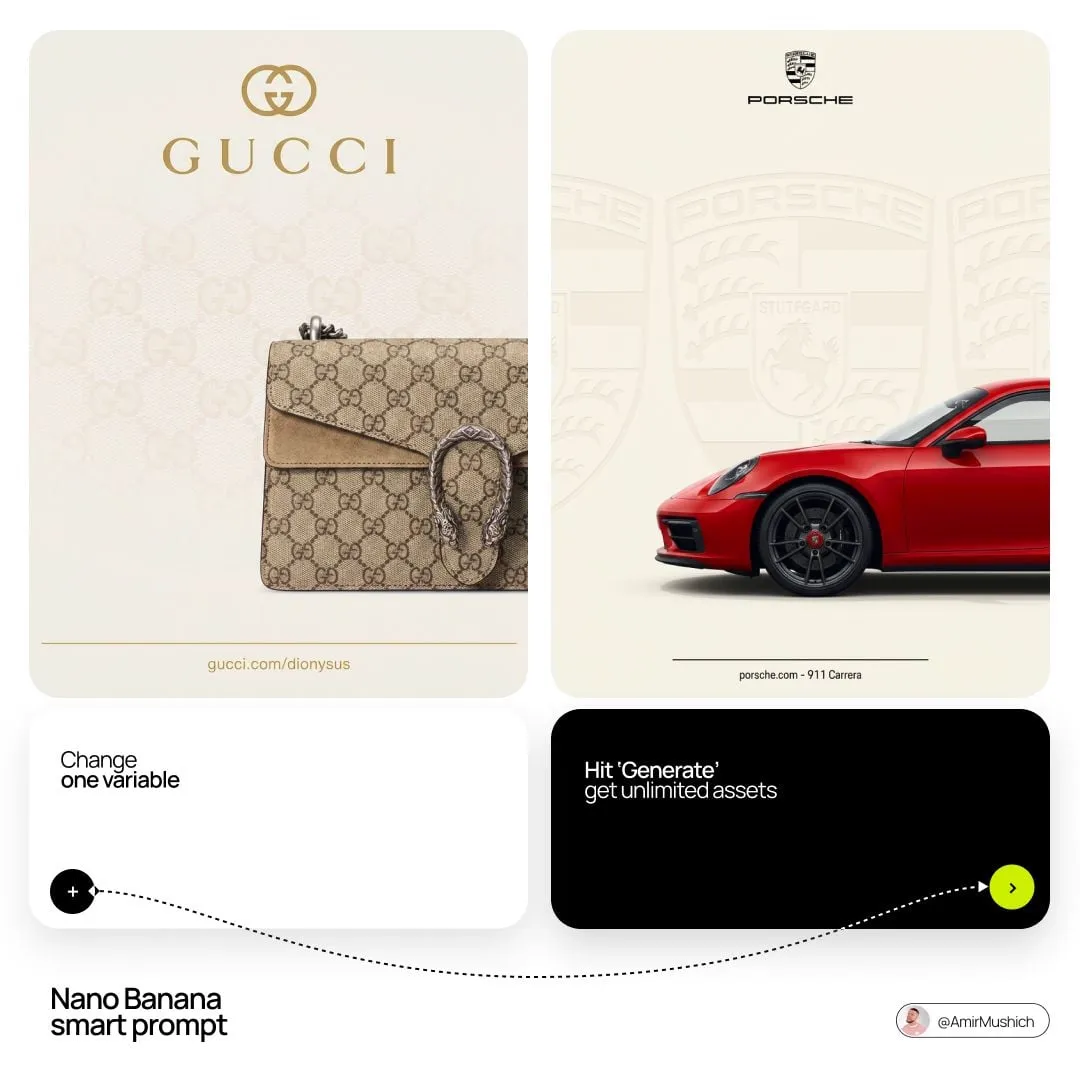
The advantage of generative production is that a new variant costs minutes, not days. Produce three distinct creative directions for the same script, show them internally, then produce variants of the winner. Change one variable at a time: hook, pacing, voice, or music. Changing everything at once teaches you nothing.
Keep the brand recognizable across styles
Brand integrity in AI video comes from three anchors: a consistent color treatment, a recognizable product representation, and a consistent tone of voice in narration. If stylized shots threaten legibility of the product, shift to a cleaner, more photographic treatment for the hero moments. Style can flex; the product cannot.
Cut for each placement
Deliver vertical, square, and horizontal versions from the same source material. Reframe rather than crop blindly: a vertical version needs its own compositions, often tighter, with text placed where platform interfaces will not cover it. Budget time for this — it is a real edit, not an export setting.
Structuring Short Films When the Model Only Gives You Seconds
Generative video is naturally short-form. Narrative is not. The bridge between them is structure.
Work in beats, not scenes
A scene might run three minutes; a model-friendly beat runs five to fifteen seconds. Break each scene into beats that each carry one idea: a discovery, a refusal, a decision, a reversal. When you edit beats together with clean cuts and consistent framing, the audience reads them as a continuous scene.
Plan continuity before you generate
Write a continuity sheet listing wardrobe, time of day, weather, props, and location for every beat. Then generate each group of beats in a single session with the same references loaded. Continuity is mostly a scheduling problem, not a model problem.
Let silence do the work
Short films built from generated clips tend to over-explain. Trim dialogue, let a look carry a beat, and use sound design instead of narration. A quiet two-second hold on a face frequently does more storytelling than an additional line of voiceover.
Solving the Hardest Problem: Consistency
Consistency is where most AI-assisted projects visibly fail. Attack it at three levels.
Character consistency
Build a character sheet: front, three-quarter, and profile views, plus a wardrobe detail. Use image references wherever the model supports them, and describe characters with specific, repeatable language — age range, hair, build, clothing, and one distinguishing feature. Avoid adjectives that change between prompts. "Weathered olive jacket" is repeatable; "cool outfit" is not.
Environment and prop consistency
Generate a location once as a wide reference and reuse it. For products, photograph the real object and use that image as the anchor rather than generating it from text. Real reference images are almost always more consistent than purely imagined ones.
Color and lighting continuity
Even with consistent characters, mismatched color temperature will make a sequence feel stitched together. Apply a global grade and a shared grain layer across all shots. If a shot refuses to match, do not fight it — reshoot or cut it.
Audio Is Half the Film
The fastest way to make competent footage feel amateur is weak sound. Approach audio as a separate production:
- Dialogue. Generate or record clean lines, then treat them with light compression and room reverb that matches the shot's implied space.
- Foley. Footsteps, cloth movement, object handling. This is what makes generated motion feel physical.
- Ambience. A continuous bed per location — rain, traffic, room tone — glues cuts together.
- Music. Choose or generate a track that leaves space in the midrange for dialogue. Duck it rather than lowering the whole mix.
Mix in mono first to check clarity, then widen. If a mix only works in headphones, it will fail on phone speakers, which is where most short-form video is watched.
Budgeting Attention Instead of Money
When production cost drops, the scarce resources become time, judgment, and compute. Plan for all three.
| Resource | Where it disappears | How to protect it |
|---|---|---|
| Time | Regenerating shots without a clear brief | Write shot descriptions before generating |
| Judgment | Endless variant comparison | Set a decision deadline per shot |
| Compute | Long, high-resolution tests | Test at low resolution, finish only winners |
A useful rule: spend the first 20 percent of your schedule on preproduction and look development. That investment typically removes more than half of the rework later.
Mistakes That Sink AI-Assisted Projects
- Starting with spectacle. Beautiful establishing shots with no story drain momentum.
- Generating without a shot list. You end up with footage you cannot cut.
- Mixing models casually within one scene. Each switch introduces a new visual signature.
- Ignoring frame rates and durations. Mismatched timing creates judder that reads as amateur.
- Neglecting text and titles. Overlay design is part of the film, not an afterthought.
- Skipping the silent cut. If the picture does not work muted, audio is masking a structural problem.
- Settling for the first acceptable take. The tenth generation is often the one that feels alive.
FAQ
How long should an AI-assisted short film be?
Three to six minutes is the sweet spot for a first project. It is long enough to prove you can sustain tone and continuity, and short enough that you can finish it. Feature-length ambitions usually collapse under consistency problems before they collapse under budget.
Do I still need a camera?
For many projects, no. But real footage is extremely useful for plates, product hero shots, and reference images. A phone camera plus generated backgrounds is a legitimate, efficient hybrid approach.
How do I keep a character's face stable across shots?
Use a consistent reference image, keep the descriptive language identical, generate related shots in one session, and avoid extreme angles on the same character unless you have a strong reference. Where a model struggles, favor framing that partially obscures the face — over-the-shoulder, profile, or wide — and save the frontal close-up for the moment that matters most.
What is the ideal shot length?
For ads, 1.5 to 3 seconds per shot in fast sections and 4 to 6 seconds for hero moments. For narrative work, 3 to 8 seconds is comfortable. Longer generated shots tend to drift, so cut before the model does.
How many generations should I expect per usable shot?
Plan on five to fifteen attempts for a complex shot and two to four for simple ones. Reducing variables — fewer subjects, simpler motion, stronger references — is the most reliable way to lower that number.
Can I sell work made this way?
Generally yes, but check the licensing terms of every model and asset you use, keep records of your source material, and be transparent with clients about your process. Documentation protects both you and the client.
What should a beginner build first?
A 30-second product piece with a single location, one character, and no dialogue. It teaches shot description, consistency, pacing, and sound design in one manageable package. Then scale up to a two-minute narrative short.
The craft has not changed. Story, rhythm, and clarity still decide whether anyone watches to the end. What changed is that you can now be the entire production — as long as you treat your toolchain as a crew that needs direction rather than a magic box that supplies answers.
