

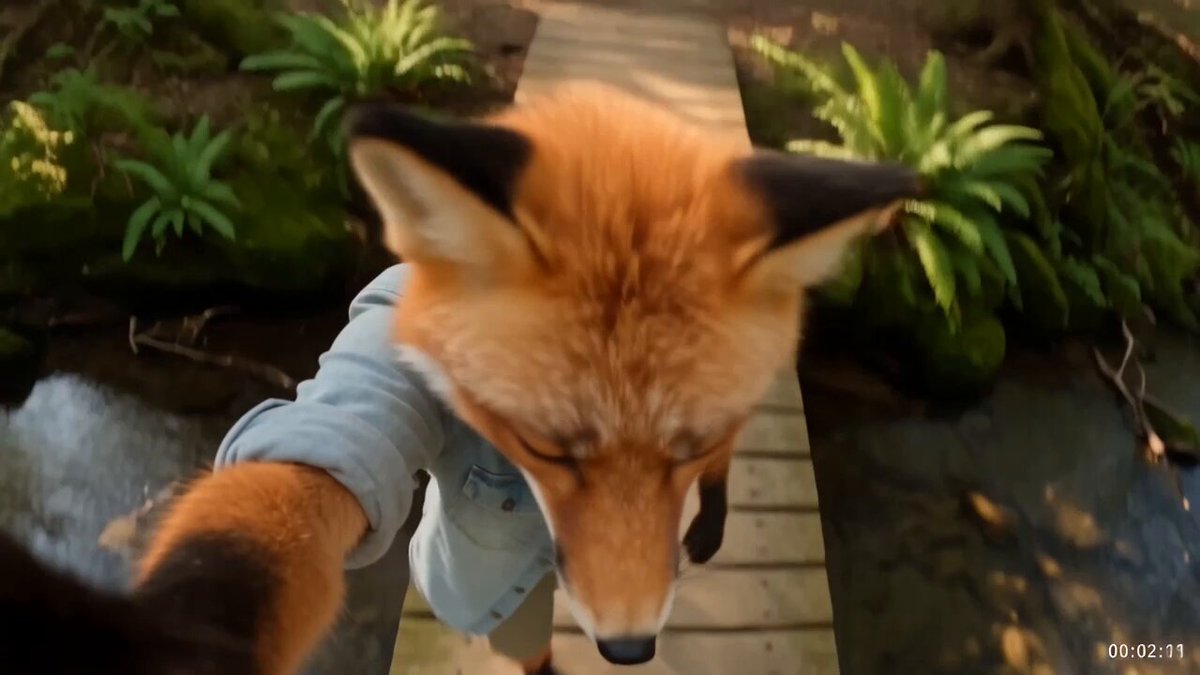

Why Relationship Emotion Translates So Well Into Video
Every short-form feed is a competition for recognition. A viewer scrolls past a beach, a gym set, an unboxing, and then stops dead on a clip that names something they have felt but never heard described out loud. Relationship emotion is one of the last categories where that recognition is nearly guaranteed, because the underlying question never really changes: does this person actually care, and how would I know? That question is searchable, saveable, and deeply personal, which makes it a durable video subject rather than a passing trend.
Three properties make this niche unusually strong. First, universality. The feeling of reading small signals in someone else's behavior crosses languages, cultures, and age groups, so the same core idea can be adapted for many audiences without rewriting the premise. Second, a low barrier to entry that is now even lower. Generative video tools let a single creator produce intimate, cinematic imagery that used to require a crew, a location, and a lighting package. Third, high engagement depth. Advice content in this space generates saves, shares, and long personal comments, because viewers treat it as a tool they might return to rather than pure entertainment.
The genre also punishes laziness. A stock montage of hands touching over a slow piano loop will not hold anyone, because the audience has seen it a thousand times and can sense within two seconds whether the creator has actually thought about the subject. What separates a video that travels from one that dies in the feed is a framework underneath the visuals. This guide walks through that framework in the order it should be built: psychology first, story and script second, AI generation third, and sound and editing last.
Build the Psychology Framework Before You Touch a Tool
The most common production mistake is opening a video generator before deciding what the video is claiming. When you generate first, you end up writing narration to fit random footage, and the result feels vague. Decide the claim, then generate the images that prove it.
Separate observation from interpretation
Relationship questions get muddy because people mix what they saw with what they concluded. A good video keeps those layers distinct. Show the observable behavior, then name a reasonable interpretation, then remind the viewer that only a conversation confirms it. Group behaviors into four families you can reuse across many videos:
- Consistency: following through on small promises, replying in a similar rhythm over time, showing up when it is inconvenient.
- Inclusion: using we and us about future plans, introducing you to people who matter, asking for your opinion on decisions that affect both of you.
- Repair: how conflict ends. Does the person return, apologize specifically, and change one behavior, or does the argument simply get buried?
- Attention: remembering details you mentioned once, noticing a mood shift before you say anything, adapting plans to your energy level.
Turn the signal into a three-act arc
Every video in this space should move, not just list. A three-act structure keeps it from feeling like a checklist:
- Act one, the doubt. Put the viewer inside the uncertainty. A specific scene, not a generality: the message that took six hours to answer, the dinner where the conversation stayed on the surface.
- Act two, the evidence. Introduce two or three observable signals from the families above, ideally ones the viewer has not already seen in a hundred other clips.
- Act three, the reframe. Land on agency. The answer is not mind-reading; it is noticing patterns and being willing to ask a direct question. End with something the viewer can actually do tonight.
Write a one-page research note
Before scripting, write a single page containing the audience, the one claim the video makes, the three signals it shows, the emotional arc, and the closing takeaway line. This page becomes your quality control. Every clip you generate either supports the claim or it gets cut. Creators who skip this step usually discover halfway through editing that they have beautiful footage and no argument.
Scripting for Honesty and Retention
Hooks that earn attention without fear
Fear hooks work, and they also hollow out the channel. A hook that implies the viewer is being betrayed will get the first three seconds and lose the follow. Prefer hooks that promise clarity:
- The specific scene: It was never the big gestures that told me. It was a Tuesday.
- The reframe: Stop looking for a confession. Start watching how arguments end.
- The counterintuitive claim: The loudest sign of care is usually the one people ignore because it is boring.
- The permission hook: If you keep asking whether someone loves you, here is what to check first.
Avoid absolutist phrasing. Words like always, never, and definitely read as clickbait in a topic where nuance is the entire value.
Write for the ear, not the page
Narration moves at roughly two and a half words per second when delivered with pauses. That means a 50-second script is about 125 words. Short sentences. One idea per line. Read the script out loud before you approve it, and delete anything that makes you stumble; your audience will stumble in the same place. If a line needs a comma and a breath to survive, split it into two lines.
Voiceover or on-screen text
Voiceover creates intimacy, but it also raises the production bar because the vocal performance has to be good. On-screen text is more forgiving on a phone with the sound off, which is how a large share of viewers will encounter the video. The strongest format is usually both: a restrained voiceover plus short caption cards of three to five words that carry the key phrases. Keep captions inside safe areas and away from the platform UI strip at the bottom.
A short script skeleton
- Line 1: the scene. One sentence, present tense.
- Line 2: the question the viewer has been afraid to ask.
- Lines 3 to 6: three signals, each one sentence of behavior plus one sentence of meaning.
- Line 7: the reframe about patterns versus mind-reading.
- Line 8: the action. One direct question the viewer can ask this week.
Storyboard and Shot List Before You Generate Anything
The five-shot emotional sequence
Emotional scenes do not need many shots, but they need the right ones. A reliable sequence:
- Context. A wide or medium shot that establishes place and time of day. Keep it moving slightly so it does not look like a still.
- Detail insert. An object that carries meaning: a phone face down on a table, two cups, a jacket left on a chair. Inserts do more emotional work than faces in many scenes.
- Character close-up. The emotional center of the video. This is where micro-expression matters most.
- Interaction beat. Two people in frame, or a composition that implies the second person without showing them.
- Resolution. A softer shot, drifting focus, movement toward or away from camera. It signals the video is landing.
Mood board and reference frames
Collect six to ten still images before generating. Note color temperature, lens feel, grain, light direction, and contrast. Generative models respond far more predictably to concrete visual language such as window light from the left or 50mm lens with shallow depth of field than to abstract words like melancholic. Build the mood board for the lighting and lens, not for the plot.
Keep a continuity sheet
One short list per scene: wardrobe, time of day, location, lens, color palette, and any prop that appears twice. Consistency across a series is what turns a single video into something viewers can recognize in a feed.
Choosing the Right AI Tools for Emotional Scenes
Match the tool to the job
Different generators behave differently, and emotional close-ups expose those differences quickly. Text-to-video is best for exploration, establishing shots, and environments where character identity does not need to survive across cuts. Image-to-video is the workhorse for emotional content: you generate a controlled still where you can inspect the face, the light, and the framing, then animate it with small motion. Talking-head and lip-sync tools handle narration shots when you need a person speaking. Upscalers and frame interpolation tools give you clean slow motion without the mush.
A workable stack
- Stills: Midjourney, Stable Diffusion or SDXL, Flux, or any generator with strong portrait control.
- Video generation: Runway, Pika, Kling, Luma Dream Machine, Veo, and similar systems. Test the same prompt across two or three and keep the one that handles faces best.
- Voice: ElevenLabs, PlayHT, or a human narrator. Synthetic voices need slower pacing and light processing.
- Music: Suno, Udio, or a licensed library. For intimate scenes, sparse is almost always better.
- Editing: DaVinci Resolve, Premiere Pro, or CapCut depending on your speed and budget needs.
- Captions and cleanup: Descript or your editor's built-in captioning, plus Topaz Video AI for upscaling.
Decision criteria that actually matter
- Character consistency across multiple shots. If a tool cannot hold a face, limit it to inserts and establishing shots.
- Camera language control. You want to specify lens, framing, and movement, and have the model respect it.
- Micro-expression quality at close range. Test with a neutral face and a slight smile, not with dramatic emotion.
- Clip length and resolution relative to your export targets.
- Licensing and commercial usage terms, which vary wildly and matter if you monetize.
- Iteration speed. A tool that produces a usable generation in two attempts beats a slower one that occasionally produces a masterpiece.
Prompting for Subtle Emotion: A Practical Framework
The anatomy of an emotional prompt
Build prompts from six slots: subject, small action, physical emotional cue, camera, light, and finish. The physical cue is the one people forget, and it is the one that determines whether the output feels human.
Subject: a woman in her late twenties, natural skin texture, minimal makeup
Action: sitting on the edge of a bed, looking down at a phone
Emotional cue: a small slow smile appearing, eyes narrowing slightly, no exaggerated expression
Camera: medium close-up, 50mm lens, shallow depth of field, gentle handheld drift
Light: soft morning window light from the left, warm neutral grade
Finish: subtle film grain, quiet color palette, minimal motion
The critical habit is to describe what the body does instead of naming the feeling. Models interpret happy, sad, and in love as performance instructions, which is why generated characters so often look like they are acting. A slight smile with narrowed eyes and a two-second delay reads as real.
Failure modes and fixes
- Plastic, uncanny faces. Lower motion strength, shorten the clip, add natural skin texture to the prompt, and animate from a strong still instead of generating from text.
- Theatrical emotion. Remove emotion adjectives entirely and replace them with micro-actions and timing cues such as after a brief pause.
- Character drift between shots. Lock one reference image, reuse the same camera language, and avoid radical angle changes that force the model to invent a new face.
- Warped hands and props. Keep hands out of frame or occluded, generate props separately, and cut around complex interaction.
- Flicker and texture crawl. Generate longer takes and trim the unstable head and tail, or run interpolation to smooth motion.
Sound, Music, and Pacing: Where the Feeling Actually Lives
Viewers forgive imperfect visuals far more readily than bad audio. In emotional content, sound is not decoration; it is the delivery mechanism.
Music selection
Choose sparse instrumentation: a single piano line, a muted guitar, a low pad. Avoid build-and-drop structures, which turn intimacy into a trailer. Duck music 12 to 18 decibels under narration, and automate that curve by phrase rather than track. If the music tells the viewer how to feel before the narration does, you have given away your ending.
Foley and silence
Add small real sounds: a phone buzzing on a table, a mug set down, a door, footsteps in a hallway. These ground the scene in a physical world. Then use silence deliberately. Cutting music for one beat before the reframe line is one of the cheapest and most effective emotional tools available.
Narration performance
Record several takes and choose the one with the most restraint. Slower, lower, and slightly breathy beats louder and brighter in almost every case. Light noise reduction only; heavy processing creates the robotic edge that makes synthetic voices obvious. Watch for rising pitch at the end of sentences, which turns statements into questions and weakens authority.
Pacing and shot length
Emotional sequences breathe more slowly than hype edits. Two and a half to four seconds per shot is a comfortable range, with one longer hold on the close-up. Cut on meaning rather than on the musical beat, and allow one cut to land slightly late; the small pause is what makes an audience lean in.
Editing, Assembly, and Testing
Assembly order
- Lay the narration first and mark where each signal begins.
- Select shots by emotional accuracy, not technical polish. A softer take with the right expression beats a sharp take with the wrong one.
- Build the sound bed, then the foley, then the music.
- Grade for consistency across shots rather than for a dramatic look.
- Add captions and check them at phone size, not on a monitor.
- Export vertical, square, and widescreen variants from the same timeline.
Variants and the metrics worth reading
Publish two or three hook variants of the same body and compare them. The numbers that matter:
- Three-second hold rate: whether the hook earns the next moment.
- Average watch time and completion: whether the structure holds.
- Saves and shares: the strongest signal for advice content, because it means the viewer intends to return or send it to someone.
- Comment quality: personal stories indicate the video hit a real nerve; arguments indicate the framing was too absolute.
- Follows per thousand views: whether the video converted recognition into a relationship with your channel.
If views are high and saves are low, the video entertained but did not help. The fix is almost always a more concrete closing action.
Repurpose the research, not the file
One research note can support a 50-second vertical video, a three-minute explainer, a carousel of the three signals, and a follow-up answering the top comment question. Reusing the thinking instead of re-uploading the same file keeps each format native while compounding your production effort.
Ethics, Boundaries, and Common Questions
Keep the frame honest
- Do not pathologize normal behavior or imply that ordinary habits are red flags.
- Do not encourage surveillance: no checking phones, tracking locations, or testing people without their knowledge.
- Present observations as conversation starters, never as verdicts about another person's feelings.
- Include a brief, non-alarmist note that the content is not therapy, and point anyone in persistent distress toward a professional.
- Get consent before using footage of real people, and avoid identifiable private material.
- Disclose synthetic media where platforms or local rules require it.
The line to hold is simple: your video should make the viewer more capable of a direct conversation, not more anxious about a partner they have not spoken to.
FAQ
Can AI video tools really render subtle emotion? Yes at close range with limited motion. A quiet expression in a medium close-up is now achievable in a handful of attempts. Full-body shots with complex interaction and two speaking characters remain the weakest area, so design your shot list around the strengths.
Do I need a real narrator? No, but a synthetic voice needs slower pacing, shorter sentences, and minimal processing. Test one full script with the synthetic voice before committing to a series.
How long should these videos be? Forty-five to ninety seconds for signal-based content, and two to four minutes for explainer versions. Longer formats only work when the research note contains enough genuine depth to fill them.
How many shots does a one-minute video need? Eight to fourteen, counting inserts. Below eight the edit feels static; above fourteen the pacing starts to feel frantic for an emotional topic.
What if the AI output looks fake? Reduce motion, shorten the clip, and switch to image-to-video from a still you have already approved. Add film grain, natural window light, and slight imperfection in framing. Perfection is what reads as artificial.
How do I keep one character consistent across a series? Lock a single reference image, save your prompt template, and keep wardrobe, palette, and lens identical. Introduce variation through location and lighting rather than through the person.
Is this topic too crowded? Broadly, yes. But specific angles remain underserved: long-distance rhythms, quiet partners who show care through logistics, repair after conflict, and how care changes after a hard season. Narrow the angle and the competition drops sharply.
Can I use these videos commercially? Check each generator's licensing terms individually, avoid recognizable real people, and keep a record of what was generated with which tool. Rules differ across platforms and change over time, so verify before you publish anything sponsored.
Build one video end to end using this sequence, from the single-page research note to the caption check at phone size. The workflow is not complicated, but it is ordered, and the order is what separates a clip that gets saved from one that gets scrolled past.
