
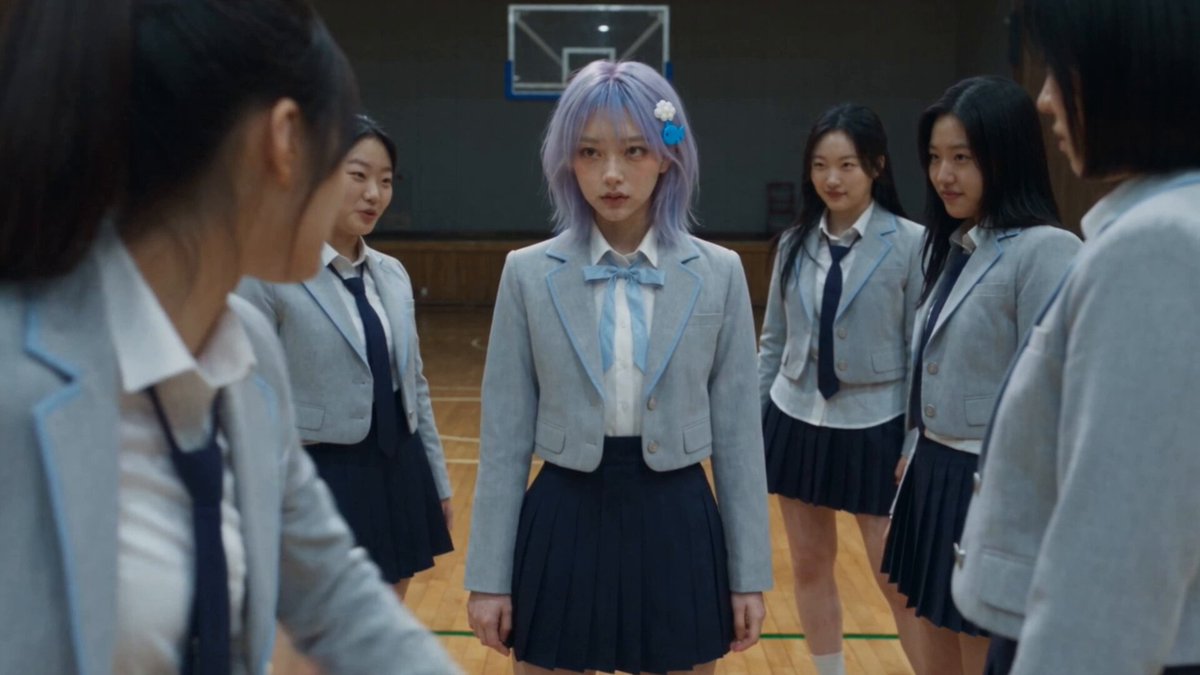
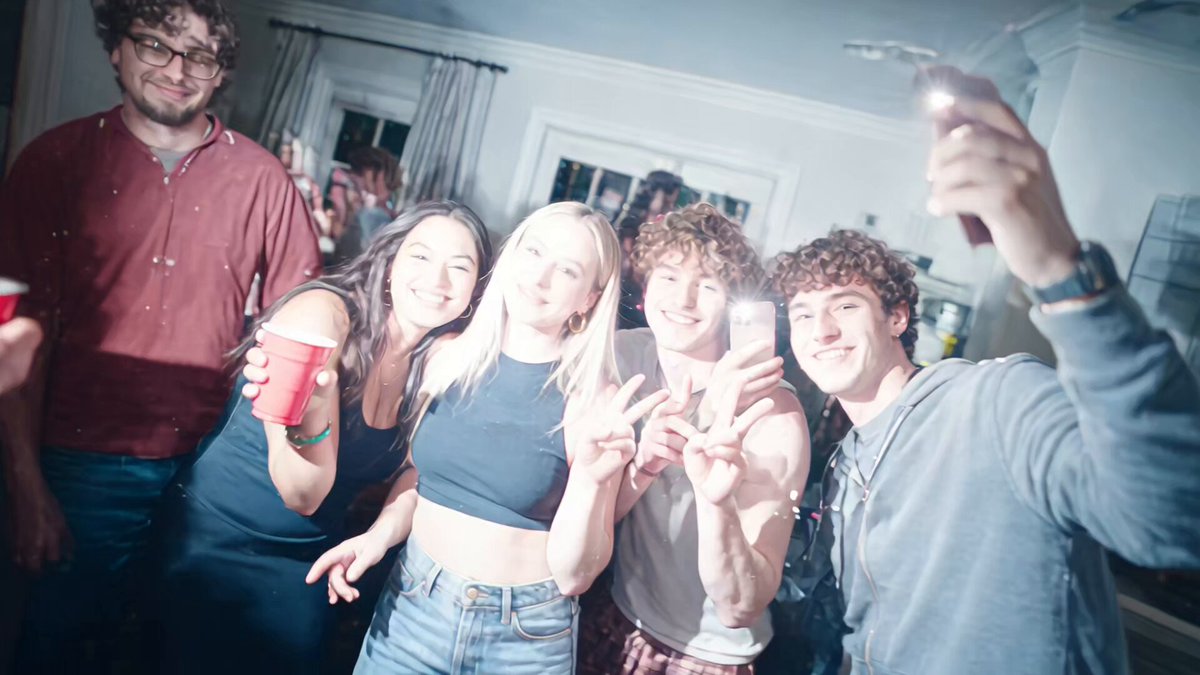


Generative video has crossed the line from experiment to everyday production tool. Marketing teams storyboard with it, musicians cut visuals with it, trainers animate procedures with it, and small studios deliver client work with it. The same capability that renders a luminous dance sequence can also be aimed at material nobody should publish. The practical question for anyone building a repeatable pipeline is not whether the technology can do something, but whether the workflow makes the right outcome the easy one.
An ethical video workflow is not a moral essay bolted onto a render farm. It is production design: a set of defaults, checkpoints, and documentation habits that keep a project defensible from first prompt to final export. This guide walks through how to build one, section by section, with the kind of detail you can actually implement on a Monday morning.
Why Ethical Guardrails Belong in Every AI Video Workflow
Teams that treat safety as a separate department tend to discover it the hard way. A distributor flags a clip. A platform removes an upload. A client asks where a synthetic performer came from, and nobody has an answer. Each of those moments is expensive not because the model failed, but because the process had no gate where the problem could be caught cheaply.
Three forces make guardrails a production concern rather than a legal afterthought.
Distribution risk. Platforms and ad networks enforce their own content rules. A clip that violates them can be removed, demonetized, or flagged against the whole account. Recovering from that is slower than preventing it.
Legal and rights exposure. Likeness, publicity rights, and defamation law apply to synthetic media in most jurisdictions. A realistic face that resembles a real person without permission is a problem regardless of intent.
Reputation. Audiences forgive technical imperfection far more readily than they forgive a brand that published something cruel, exploitative, or creepy. The internet does not forget the screenshot.
Guardrails also have a positive effect. When a team knows what is off-limits, they stop spending review cycles arguing about edge cases and start investing in craft. Constraints are a creative accelerant when they are stable.
What "Not Allowed" Actually Means: Defining Content Boundaries
Vague policy produces inconsistent decisions. "We do not make inappropriate content" means three different things to three different reviewers. The fix is to translate principles into named categories with concrete examples, so a reviewer can classify a clip in seconds.
Categories worth naming explicitly
| Category | Typical rule | Examples of red flags |
|---|---|---|
| Non-consensual intimate imagery | Hard ban | Any sexualized depiction of a real, identifiable person without documented consent |
| Minors | Hard ban | Youthful faces in romantic, sexualized, or violent framing, including stylized or animated versions |
| Impersonation | Hard ban without authorization | A synthetic version of a public figure speaking words they never said |
| Sexual content involving realistic people | Hard ban in most commercial pipelines | Explicit choreography or framing applied to photoreal human figures |
| Graphic violence | Review required or ban | Injury detail, gore, or cruelty played for spectacle |
| Hate and harassment | Hard ban | Content targeting protected groups or a named individual |
| Real brands and logos | Review required | Trademarks appearing without permission in commercial contexts |
Notice that two columns are doing different work. The rule column says what happens. The red-flag column tells a reviewer what to look for in a frame. That second column is what makes a policy operational.
Policy versus taste
Not everything uncomfortable is prohibited. A horror short with stylized fear, a documentary reenactment of a difficult historical event, a dance film with adult themes handled artistically, and a satirical sketch all sit in different places depending on context, audience, and platform.
A workable three-tier model:
- Green: publish freely. Everyday commercial and artistic work with no sensitive elements.
- Amber: review required. Sensitive themes, real-world references, non-default likeness, or anything targeted at a younger audience.
- Red: prohibited. The hard bans above, with no exceptions carved out for artistic intent.
The value of tiers is speed. Most work stays green and moves fast. Reviewers spend their attention on amber. Nobody argues about red.
Building a Layered Moderation Stack
Single-layer moderation fails because every layer has a blind spot. Text filters miss visual context. Visual classifiers miss intent. Human reviewers miss volume. The answer is overlap: several imperfect checks arranged so that each catches what the previous one let through.
Layer one: pre-generation screening
Before a prompt reaches a model, screen it. This is the cheapest possible intervention because nothing has been rendered yet.
- Blocklist matching on explicit terms and known evasion spellings.
- Named-entity checks against a list of protected public figures and client-restricted individuals.
- Prompt templates that nudge writers toward descriptive, non-explicit language by default.
- A required field for project type, so the same prompt can be judged differently for a children's channel versus an art installation.
This layer catches careless mistakes, not determined abuse. That is fine. Most incidents in professional settings are careless.
Layer two: model-level controls
The generation stage should enforce boundaries independently of the prompt. Depending on the tool, this can include negative prompts, style presets that constrain subject matter, safety classifiers that run during sampling, and configurable content filters that cannot be disabled by an individual operator.
The key organisational rule: safety settings should be set by policy, not by whoever happens to be at the keyboard. If any team member can quietly turn off a filter to get a shot, you do not have a control; you have a suggestion.
Layer three: post-generation review
Output review is where visual context finally becomes visible. Machine classifiers can flag likely issues across a batch, but a human should interpret anything ambiguous. Typical checks:
- Frame sampling at intervals plus a scan of any flagged segments.
- Face recognition against a consent registry of approved performers and clients.
- Audio review, since lyrics and dialogue carry their own compliance weight.
- Metadata capture: who generated it, with what prompt, under which project code.
That last item is boring and enormously valuable. When a question arrives six weeks later, metadata is the difference between a five-minute answer and a two-day investigation.
Prompt Design That Keeps You Inside the Lines
Most policy breaches in professional work are not deliberate. They come from prompts that were vague, metaphorical, or borrowed from a tutorial written for a different context. Writing prompts with boundaries in mind is a skill, and it is learnable.
Describing performers without impersonation
Instead of referencing a real person, describe attributes: build, wardrobe, movement quality, lighting, camera style. "A dancer in a loose linen shirt, mid-thirties, low-key side light" gives the model everything it needs and creates no likeness issue. Avoid names of real people as style shortcuts. If a client genuinely wants a synthetic version of themselves in the video, get written authorization, store it with the project, and flag the asset as likeness-approved in your system.
Choreography, movement, and dance the safe way
The interesting thing about dance in AI video is that the emotional impact usually comes from motion, rhythm, and light, not from explicitness. That gives you a lot of room.
- Specify movement vocabulary: turns, extensions, floor work, contact improvisation, gesture sequences.
- Specify wardrobe in full: silhouette, fabric, layering, coverage.
- Use lighting and camera language to build tension: hard shadows, long lenses, slow push-ins.
- Define the camera's relationship to the body. A waist-up framing is a creative decision with compliance consequences, and it is easy to state.
This approach produces more interesting footage than an unfocused prompt, because it forces you to think about what the shot is actually communicating.
Cultural and religious sensitivity
Synthetic video makes it trivially easy to depict ceremonies, symbols, and garments from cultures you have no relationship with. That is not automatically wrong, but it deserves a review step. Ask whether the depiction is respectful, whether it flattens a living tradition into decoration, and whether anyone with relevant expertise has looked at it. Add a note to your amber tier for anything involving sacred imagery or ritual practice.
Consent, Likeness, and the Right to Your Own Face
Consent is the single most useful organising principle in synthetic media. If a reasonable person would be surprised to see themselves in your video, you need permission.
Build a lightweight consent system:
- A registry. One document listing approved individuals, the scope of approval, the expiry date, and the specific project.
- A scope line. Approval for a training video is not approval for a billboard. Write down the use.
- A revocation path. People change their minds. Make it easy for them to say so and make sure you can remove assets.
- A storage rule. Consent documents live with the project files, not in someone's inbox.
For paid talent, this fits naturally into existing contracts. For employees appearing in internal content, a short signed note is usually enough. For bystanders caught in a reference photo, do not use them at all.
The same logic applies to voices. Audio cloning has become easy enough that a casually uploaded sample can become a convincing imitation. Treat voice as likeness, with the same registry and scope rules.
Review Gates: A Practical Production Checklist
A gate is a moment where work cannot proceed until a specific check passes. Four gates cover most pipelines.
Gate 1 — Concept. Before any generation: does the idea itself sit in green, amber, or red? Who owns the risk decision? A one-line sign-off in the project brief is enough.
Gate 2 — Prompt. Before rendering: does the prompt reference a real person, brand, or sensitive category? Is the required content tier recorded?
Gate 3 — Footage. After rendering: does any frame contain a likeness, symbol, or element that needs authorization? This is the human review step, and it should be done by someone other than the person who wrote the prompt.
Gate 4 — Publish. Before delivery: does the final cut still match the approved concept? Edits have a way of drifting. Confirm the version number, the platform rules, and the required disclosures.
Four gates sound heavy. In practice they add minutes, not days, because three of the four are one-line confirmations.
Roles, Escalation, and Documentation
Someone has to be accountable. In a small team, one person can hold the role, but it should be a named role rather than an assumption.
- Prompt author writes and documents prompts, records intent.
- Reviewer evaluates outputs against the tier rules and can send work back.
- Policy owner maintains the tier list, approves exceptions, and updates rules when a platform changes course.
- Escalation contact handles anything that feels genuinely uncertain, including legal questions.
Documentation does not need to be a bureaucracy. A shared project log with five fields — project, prompt, model, tier, reviewer sign-off — covers the vast majority of questions that ever arise. If you want to go further, keep versioned copies of approved outputs so you can prove what was actually shipped.
Escalation matters more than documentation when things go wrong. Give people an explicit permission slip to stop and ask. Teams that punish hesitation get incidents; teams that reward it get early warnings.
Does Quality Suffer? No — Artistic Direction Beats Shock Value
There is a persistent myth that constraints make AI video bland. The opposite tends to happen. When you cannot lean on provocation, you have to invest in composition, lighting, sound design, pacing, and story. Those are the things that make a clip memorable anyway.
Consider a dance film. A lazy approach generates a generic body in a generic space. A constrained approach forces decisions: what is the room, what time of day, what is the camera doing, what is the dancer trying to express, where does the cut land. The second version looks like it was directed. The first looks like it was prompted.
Constraints also make collaboration easier. Clients approve faster when the direction is specific. Editors have more usable coverage. Marketing can describe the piece in a sentence. Ethics and craft converge more often than people expect.
Troubleshooting Common Friction Points
The model refuses a legitimate shot. Usually the prompt contains a trigger word that is fine in context but flagged out of context. Rewrite with explicit wardrobe, framing, and setting language. If it still refuses, treat it as an amber case and route it to review rather than trying to work around the filter.
Review takes too long. Your tiers are probably too broad. Look at what reviewers actually approve and move the routine cases to green.
Someone turns off a safety setting. Make settings policy-controlled and keep an audit trail. A control that cannot be observed is not a control.
A platform rejects the finished piece. Read the rejection carefully. Most rejections relate to metadata, thumbnails, or audio rather than the visuals you spent weeks on.
No one remembers why a decision was made. This is a metadata problem. Five fields in a shared log solve it.
A team member is uncomfortable with a brief. Treat that as signal, not obstruction. The people closest to the work often notice the problem first.
FAQ
Do I need a written policy for a small team?
A one-page tier list with three examples per tier is enough to start. The value is in having a shared reference, not in the document's length.
Is it acceptable to use AI-generated people at all?
Yes. Fully synthetic, non-identifiable performers are common in commercial work. The rules concern identifiable real people, minors, and sexualized or defamatory framing.
How do I handle a client who asks for something in the red tier?
Say no early and offer an alternative direction in the same conversation. Vague refusal invites negotiation; a concrete alternative usually ends the discussion.
What about stylized or animated content?
Stylization is not a loophole. If a depiction is clearly recognizable as a real person, or clearly depicts a minor in a prohibited context, the same rules apply.
How often should the tier list change?
Review it when a platform updates its rules, when a new project type appears, or after any incident. That is typically a few times a year.
Does documenting prompts slow down production?
Structurally, no. If prompts live in your generation tool already, exporting or logging them is a small step. The time saved during review and client questions is substantial.
What is the biggest mistake teams make?
Treating safety as a filter on the model instead of a property of the workflow. Filters catch what they are trained to catch. A workflow catches everything else.
Putting It Together
Start with boundaries, make them concrete, and place checkpoints where corrections are cheap. Screen prompts before rendering, enforce controls at the model level so no individual can quietly disable them, review outputs with a second pair of eyes, and write down enough to answer questions later. Add a consent registry for likeness and voice. Name the person accountable.
None of this is glamorous, and none of it is complicated. It is the same discipline any production house applies to permits, releases, and insurance. The teams that build it early move faster later, because they stop relitigating the same decisions and start spending their energy on the work that actually reaches an audience.
