
What Flux AI Image Generation Means in Practice
Flux is one of those names that gets thrown around in creative meetings without anyone stopping to define it. Strip away the marketing and it means something fairly specific: Flux is a family of generative image models that turn written descriptions into finished visuals with unusually high fidelity. Instead of a single monolithic tool, it is a lineage of related models that share an architectural approach and differ in speed, precision, and the kind of control they offer.
When someone says they are "using Flux" for image generation, they usually mean one of three things. They may be generating a still image from a text prompt, editing or extending an existing image with instructions, or producing a high-quality reference frame that will later be animated into video. All three are part of the same production chain, and understanding where each one fits saves a lot of wasted effort.
The practical appeal is straightforward. Older text-to-image systems were good at producing something that looked vaguely like your idea. Flux-class models are better at producing the specific thing you described: the right number of objects, the right spatial relationships, readable text on a sign, and lighting that behaves like a real scene. That shift from "plausible" to "directable" is what made it a production tool rather than a novelty.
This guide covers what the model family actually is, how to prompt it, how to build a repeatable workflow around it, where it fits in a video pipeline, and when you should reach for something else entirely.
The Flux Model Family, Explained Without Jargon
Flux is not one model with one setting. It is a set of variants, each optimized for a different stage of work. Knowing which one to pick at which moment is more valuable than memorizing any single benchmark.
The base architecture in plain language
Most image generators work by starting with random noise and gradually cleaning it up until an image appears, guided by your text. Flux uses a refined version of that idea, built on a transformer backbone with strong language understanding. The practical consequence is better instruction following. You can describe a scene with multiple clauses — a subject, an action, an environment, a camera angle, a lighting condition — and the model tends to honor more of those clauses at once instead of collapsing them into a generic average.
The main variants and what each is for
- Schnell-class models are tuned for speed. They produce usable results in very few steps, which makes them ideal for exploring thumbnails, storyboard frames, and composition options before you commit to a direction.
- Dev-class models are the open, tunable branch. If you plan to train a custom style or character into the model, this is usually where that work happens.
- Pro-class models push fidelity and text rendering to their highest level. Use them for final deliverables where every edge matters.
- Redux-style models work from a reference image rather than a prompt alone. They are how you carry a look, palette, or character identity from one image to the next.
- Fill-style models handle inpainting and outpainting: replacing a region, removing an object, or extending a frame beyond its original borders.
- Kontext-style models follow editing instructions in natural language, so you can ask for a change — swap the jacket, change the time of day, remove the background clutter — without rebuilding the prompt from scratch.
The rule of thumb: choose by production stage, not by which one sounds most impressive. Draft fast, refine carefully, finish at the highest quality you can afford in time and compute.
What actually changed compared to earlier generators
Three improvements matter most in day-to-day work. Prompt adherence is tighter, so you spend less time rerolling. Text rendering inside images is finally reliable enough for posters, packaging mockups, and interface concepts. And anatomical and structural coherence — hands, limbs, architecture, repeated patterns — is markedly better, which cuts down on the tedious cleanup that used to define AI image work.
Core Capabilities and Where Flux Excels
Understanding the strengths and the ceiling of the model family prevents both disappointment and overreach.
Photorealistic rendering and believable light
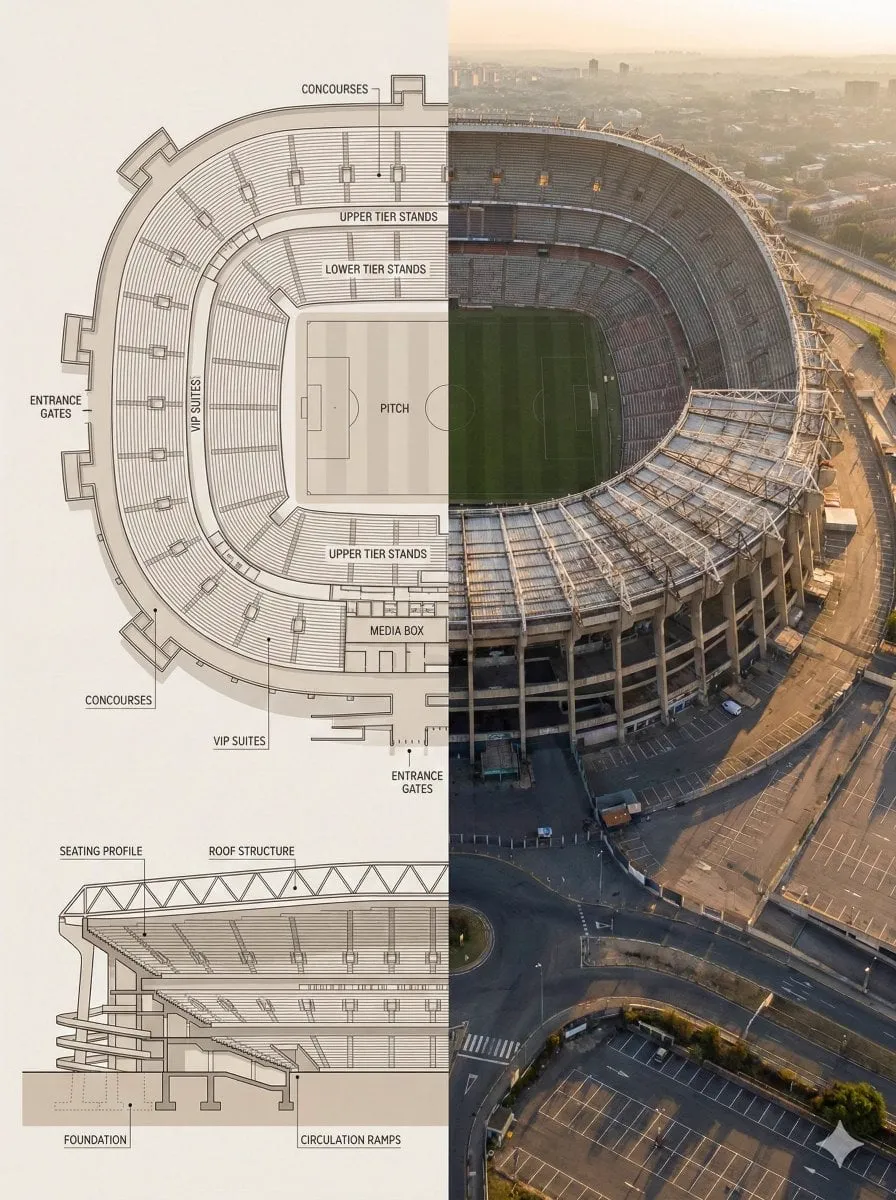
Flux handles lighting like a photographer thinks about it: key light, fill, rim, falloff, reflections. Ask for window light at golden hour with soft shadows and you tend to get something that reads as a real photograph rather than a plastic render. This is why it became popular for product scenes, lifestyle photography substitutes, and cinematic look development.
Legible text inside images
Text has historically been the weak point of image models, and it is where Flux stands out. Short strings — headlines, labels, signage, button text, packaging copy — usually render correctly on the first or second attempt. For anything longer than a couple of lines, expect to generate the layout and then set the final typography in a design tool.
Character and product consistency
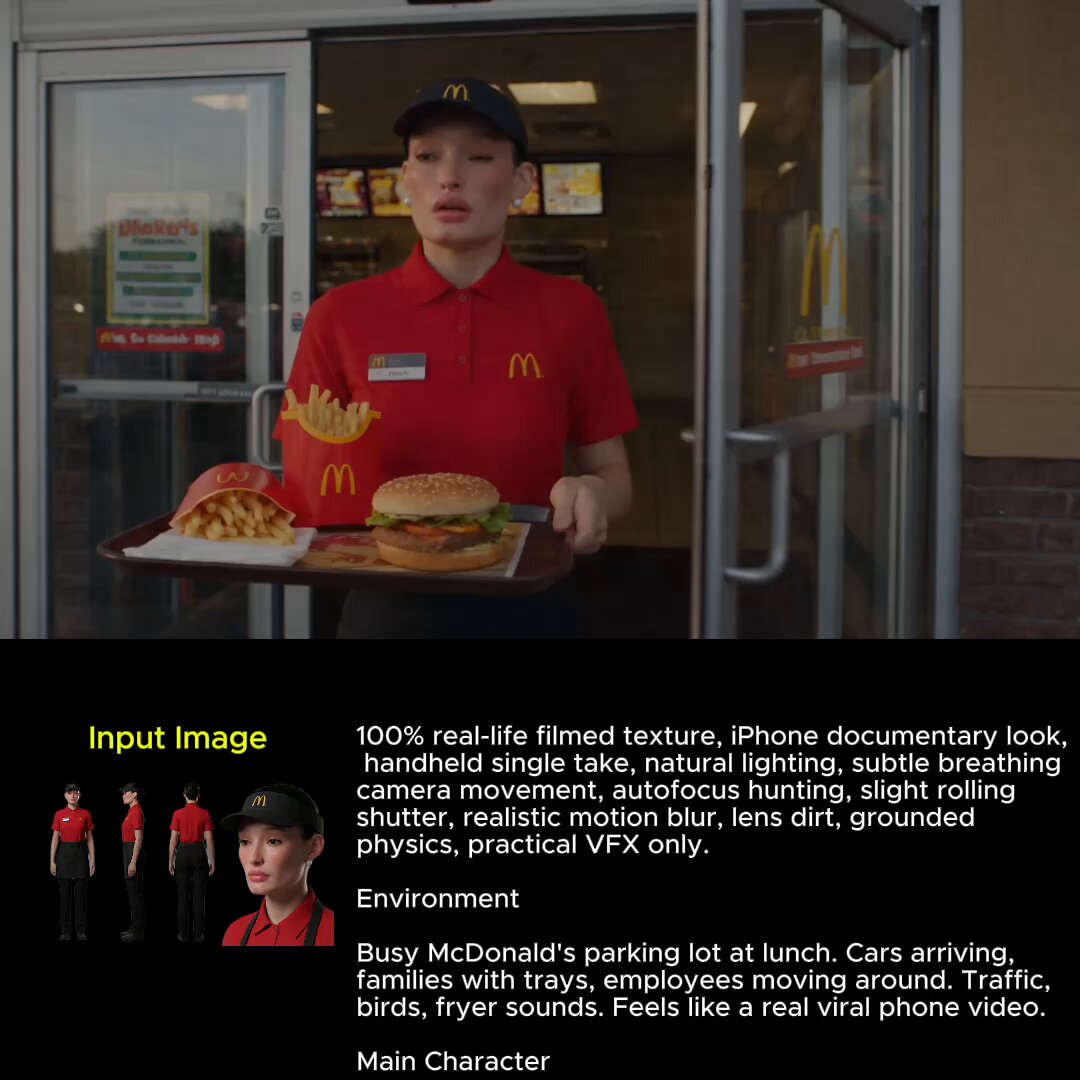
With reference images or a trained adapter, the same character can appear across dozens of frames with a stable face, wardrobe, and silhouette. This is the capability that makes AI stills useful for series, campaigns, and narrative work rather than one-off illustrations.
Instruction-based editing
Rather than regenerating and hoping, you can point at a region and describe the change. This turns image generation into a revision process, which is how professional work actually happens: iterate on the part that is wrong, keep everything else intact.
Where the model still struggles
Exact brand logos, precise technical diagrams, factual maps, very long text blocks, uncommon cultural detail, and anything requiring verified accuracy. Treat generative output as visual material to be composited and checked, not as an authoritative source.
A Prompting Framework That Works With Flux
Prompting is a skill, but it is a learnable one. The most reliable approach is to write prompts in slots rather than as a stream of adjectives.
The five-slot prompt
Use this order: subject, action or pose, environment, light and lens, style and rendering. For example: a mid-thirties ceramics artist in a linen apron, hands shaping a bowl on a wheel, inside a sunlit studio with shelves of unfinished pots, warm morning light through a large window, shot on a 50mm lens at f/2.0, natural color grading and fine clay dust in the air.
That prompt works because each clause is doing distinct work. Compare it to the common alternative — a pile of words like "beautiful, masterpiece, ultra detailed, 8k, cinematic" — which gives the model almost no actionable information.
Use sentences, not tag soup
Flux responds well to natural language. Write the way you would brief a photographer: describe what is in frame, how it is lit, and how it should feel. Short, declarative sentences usually beat comma-separated keyword lists.
Add structural control when composition matters
If the layout is non-negotiable — room for a headline, a specific product angle, a subject on the left third — supply structural guidance such as a depth map, pose skeleton, or edge map alongside the prompt. Text alone gives the model freedom; structure removes the freedom you do not want.
Tune steps and guidance deliberately
Low step counts and low guidance produce loose, painterly, sometimes surprising results. Higher values tighten adherence but can flatten texture and invite artifacts. Changing both at once makes it impossible to learn what caused the difference. Move one variable at a time and keep notes.
Prompt mistakes that cost the most time
- Contradictory instructions: "harsh midday sun" plus "soft moody shadows."
- Too many subjects: five characters in one frame will lose detail on every one of them.
- Vague style references: name an actual visual tradition, medium, or era instead of "stunning."
- Overloaded camera jargon: three lens references in one prompt confuse more than they specify.
- Forgetting the negative space: if you need room for text, say so.
A Repeatable Text-to-Image Workflow
Ad hoc generation feels fast and is slow. A staged workflow produces better results in less total time.
Step 1: Write a visual brief, not a wish list
Decide the deliverable first: aspect ratio, where the image will appear, whether it needs copy space, whether it must match existing brand assets. A one-paragraph brief for each image prevents the endless drift that plagues unplanned sessions.
Step 2: Draft wide with a fast model
Generate eight to twelve low-cost variations of the composition. You are not looking for a final image; you are looking for the one thumbnail that makes you stop scrolling. Speed matters more than polish at this stage.
Step 3: Lock composition with structural control
Take the winning draft and re-render it with a pose, depth, or edge reference so the framing stays fixed. From this point on, every version shares the same skeleton.
Step 4: Refine details with inpainting
Fix hands, eyes, edges, and props one region at a time. Mask tightly. Small, targeted edits preserve everything you already liked.
Step 5: Lock identity with a reference or adapter
If the image is part of a series, apply the character or product reference now, not earlier. Doing it at the end of a single image is fine; doing it at the start of a batch guarantees consistency across the whole set.
Step 6: Final render, upscale, export
Run the finished composition through the highest-quality model, upscale to the required resolution, then export in the format the destination needs. Keep the prompt, seed, and reference files together with the export so the image can be reproduced or revised months later.
A quick quality checklist before you ship
Inspect hands and eyes, verify every rendered word, check that shadows agree with the light source, look for repeating patterns or texture smearing, confirm the subject is not merging into the background, and compare the frame against neighboring frames in the same series for continuity.
From Still Frames to Motion: Flux in Video Pipelines
Image generation and video generation are often treated as separate hobbies. In practice, the strongest pipelines use stills as the foundation for motion.
The keyframe-first approach
Generate the exact frame you want to see at the most important moment of a shot, then animate from it. Starting with a still gives you total control over composition, wardrobe, and lighting before motion is introduced — the opposite of prompting a video model blindly and hoping the first frame looks right.
Keeping consistency across shots
Reuse three things across every shot in a sequence: the seed, the reference image or adapter, and a shared prompt skeleton where only the action clause changes. This is the difference between a sequence that reads as one story and a sequence that reads as a series of unrelated images.
Motion prompts that behave
Describe camera behavior and subject action separately. "Slow push in, subject turns to look at the camera, steam rising from the cup" works. "Epic cinematic dynamic movement" does not. Keep motion modest — small, believable movements survive upscaling and interpolation far better than dramatic ones.
Handoff checklist before animating
Confirm the still has no rendering flaws that will be magnified in motion, that the aspect ratio matches the video output, that the subject is fully inside the frame with room to move, and that lighting direction is consistent with any live-action plates you plan to composite.
Hybrid pipelines win
Most professional results are not fully generated. Generate the still, animate a short clip, then composite it against real footage, add real typography, and grade the result in a normal editing suite. The generated material supplies what would be expensive to shoot; the rest supplies realism and brand accuracy.
Style Control, Adapters, and Custom Finetunes
Once you like a look, you want it again next month. That is when customization becomes worth the setup cost.
When a custom adapter makes sense
If you need a recurring character, a proprietary illustration style, a specific product photographed identically across campaigns, or a house visual language that no prompt reliably reproduces, train a small adapter. If you need five images for one blog post, do not — prompts and references are enough.
Dataset basics
Fifteen to forty well-chosen images usually outperform several hundred sloppy ones. Vary pose, angle, and background while keeping the identity constant. Caption consistently. Exclude images with heavy compression artifacts or watermarks, because the model will learn them.
Train small, test wide
Start with conservative settings and evaluate across many prompts, not just the ones in your dataset. Overcooked adapters produce a signature look that infects everything, including subjects it should have no opinion about.
Versioning and rights
Name every adapter with a version number and store the dataset with it. Also settle the rights question before training: if you did not create or license the source images, you do not have a usable custom style, no matter how good the output looks.
Use Cases and Decision Criteria
Marketing and advertising assets
Generate campaign key visuals, lifestyle scenes, and background plates, then test multiple variants against each other. The advantage is breadth: twenty on-brand compositions in an afternoon instead of two.
Film, series, and previsualization
Storyboards, mood boards, look development, and concept frames. Directors get a visual conversation in hours instead of weeks, and the same frames feed directly into animatic or animated shot creation.
Product and e-commerce visuals
Place a real product photo into generated environments, build seasonal background variants, and produce lifestyle context shots without a location shoot. Keep the product itself photographic and generate only the surroundings.
Editorial, publishing, and education
Illustrations, covers, and conceptual imagery with short embedded text. Verify anything factual and keep diagrams out of the generative step.
Game, XR, and world-building
Environment concepts, prop sheets, and UI mockups. Generate wide exploration sets, then refine the two or three directions that survive review.
When not to use it
Regulated claims, medical or legal accuracy, maps and technical schematics, real identifiable people without consent, and anything requiring a legally precise logo or trademark. In these cases, use generative material as reference and finish in a tool designed for accuracy.
A simple selection matrix
Draft exploration: fast model, low steps, low guidance, many variations. Composition lock: fast model plus structural reference. Detail work: editing model with tight masks. Series consistency: reference model or custom adapter. Final delivery: highest-quality model plus upscaling and a design pass for typography.
Common Mistakes and Troubleshooting
- Faces look plastic or waxy. Lower guidance slightly, add skin texture and natural light language, and avoid stacking multiple beauty descriptors.
- Text comes out garbled. Keep rendered strings short, specify the exact words in quotes, increase quality tier, and plan to set longer copy in a design tool anyway.
- The same character drifts across a batch. You are relying on prompt wording alone. Add a reference image or a trained adapter and lock the seed.
- Everything looks over-saturated. Remove words like "vibrant" and "hyperreal," and describe grading directly: natural color, muted palette, filmic contrast.
- Composition keeps changing. You have no structural control. Add a pose, depth, or edge reference.
- Results look flat and over-smoothed. Step count is too high or guidance too strong. Pull both back and compare side by side.
- Props merge into the subject. Increase separation in the prompt, describe the gap between objects, and inpaint the boundary region.
- Generation feels slow. You are using a high-fidelity model for exploration. Switch to a fast variant until the composition is locked.
The general pattern: almost every recurring problem traces back to under-specification, mixed signals, or using the wrong stage model for the job.
Frequently Asked Questions
Is Flux a single model or a family?
A family. Different variants trade off speed, fidelity, editing capability, and reference control. Most production workflows use at least two of them.
Do I need a powerful local machine?
Not necessarily. Open variants can run locally if you have a capable GPU, while hosted platforms handle the heavier models. Local gives you privacy and control; hosted gives you convenience and access to the largest models.
How is Flux different from older image models?
Better instruction following across multiple clauses, dramatically improved text rendering inside images, and stronger structural coherence. It also needs fewer negative prompts because the base understanding is more precise.
Can I use the same character across many images?
Yes, with a reference image or a trained adapter. Text prompts alone will not hold identity reliably over long sequences.
Is it good enough for client work?
For visual material — yes, with review. For factual, legal, or trademark-sensitive content — treat it as a starting point and finish elsewhere.
What resolution should I aim for?
Generate at the model's native range for best quality, then upscale to the delivery size. Generating far beyond native resolution tends to add artifacts rather than detail.
How do I keep a whole campaign visually consistent?
Fix four things: one prompt skeleton, one reference image or adapter, one seed family, and one grading description. Change only the subject-specific clause between images.
Can generated stills be animated later?
Yes, and animating from a strong still is usually more controllable than prompting video directly. Keep motion small and describe camera and subject movement separately.
What should I learn first?
The five-slot prompt structure and the draft-refine-finish workflow. Those two skills improve output more than any setting.
How do I avoid repetitive-looking work?
Vary lighting and lens language more than you vary adjectives. Most AI sameness comes from everyone describing the same light the same way.
Building a Durable Visual Pipeline
Flux AI image generation is best understood not as a button that makes pictures, but as a production stage with distinct phases: explore cheaply, lock composition deliberately, refine surgically, and finish at the highest quality you can justify. Teams that internalize that rhythm stop chasing single perfect prompts and start producing consistent volume.
The other half of the equation is discipline around process. Save your prompts, seeds, references, and adapter versions alongside every final asset. Document which model variant you used for each stage. Review generated material with the same checklist you would apply to a photograph. And keep a clear boundary around what generative tools should not decide for you — facts, rights, and anything with legal weight.
Done that way, image generation stops being a gamble and becomes a reliable part of how you make things: fast enough for exploration, controlled enough for clients, and consistent enough to build a recognizable visual identity across everything you publish.
