
Why AI Ad Video Is Now Table Stakes for Small Teams
A decade ago, a small business that wanted a professional-looking commercial had two options: pay a production crew, or accept a slideshow made of stock photos. Today there is a third path. Generative image and video models let a two-person marketing team produce a polished 30-second spot in an afternoon, on a laptop, without renting a camera or hiring actors.
The economics changed because the expensive parts of video production moved from the physical world into software. Lighting, camera movement, set design, wardrobe, and even the voiceover can now be synthesized. That does not mean craft disappeared. It means the bottleneck shifted from budget to judgment: knowing what makes a viewer stop scrolling, and knowing how to describe that in a prompt and a timeline.
This guide is a practical workflow. It covers what "free" honestly means in an AI video pipeline, how to structure a short ad, how to prompt each shot, which tools pair well together, and which mistakes waste hours of generation time.
What "Free" Really Means in an AI Video Pipeline
Before you plan anything, be clear about where free tiers end. Most AI video tools offer a no-cost entry level with three common restrictions:
- A generation allowance. You get a fixed number of renders per day or per month, often measured in seconds of finished video rather than number of clips. A five-second render may consume more of that allowance at higher resolution.
- Output limits. Free tiers typically cap resolution at 720p or 1080p, shorten maximum clip length, or add a subtle watermark.
- Licensing differences. Some tools grant commercial rights on paid plans only. If the video will run as a paid ad, read the terms before you generate, not after.
The good news is that the rest of the pipeline is genuinely free or close to it: stock footage libraries such as Pexels, Pixabay, and Mixkit; music from YouTube Audio Library or Free Music Archive; captioning inside CapCut, DaVinci Resolve, or Shotcut; and system or open-source text-to-speech voices. You can assemble a complete ad using a mix of free tiers and free assets without paying for a subscription — as long as you plan your renders carefully.
A useful mental model: treat each generation as a scarce resource. Sketch first, generate second.
The Anatomy of a 30-Second Ad
Short ads fail most often because they try to say four things. A working 30-second structure says one thing, four times, in different ways.
- Hook (0–3 seconds). A visual surprise, a blunt problem statement, or a result shown before anything else. This segment decides whether the rest of the ad is ever seen.
- Problem (3–8 seconds). One sentence of tension the viewer recognizes from their own life.
- Solution (8–18 seconds). Your product or service doing its job. Show, do not narrate.
- Proof (18–24 seconds). A review, a number, a before-and-after, or a demonstration.
- Call to action (24–30 seconds). One action. Not "follow, like, visit, and subscribe" — pick one.
Design for sound-off viewing from the start. Roughly half of social video is watched muted, so every key claim should appear as on-screen text within the first two seconds of the relevant shot. Vertical 9:16 is the default for short-form feeds; keep 1:1 for some placements and 16:9 for websites and YouTube pre-roll.
Script and Hook First: The Cheapest Way to Improve Output
Writing a 70–90 word script costs nothing and saves you the most expensive resource in the pipeline: renders. A tight script also produces a clean shot list, because each sentence maps to exactly one visual.
Write the script in three passes:
- Pass one, the offer. In one sentence: who is this for, what do they get, and what changes for them? If you cannot fit it in one sentence, the ad is not ready.
- Pass two, the hook. Write five hooks and throw away four. Useful hook patterns include the contradiction ("Everyone tells you to post more. Stop."), the result-first (open on the finished outcome), the number ("Three minutes, four steps."), and the mistake ("This is why your ads get ignored.").
- Pass three, the shot list. Convert each line into a visual instruction. "Fast, gentle cold brew" becomes "close-up of ice dropping into a glass, slow motion, warm backlight."
Keep brand constraints in the brief too: exact hex colors, font names, logo clear-space, and the tone you want (clinical, playful, premium, plainspoken). The models cannot guess your brand; you have to describe it in every prompt that matters.
A Step-by-Step Production Workflow
The workflow below assumes a single 30-second vertical ad with six to eight shots. Expect two to four hours for a first pass once you know the tools.
Step 1: Lock the brief and the offer
Write down the audience, the single promise, the proof, the CTA, and the brand constraints. This document becomes your reference when a generated clip looks beautiful but off-message.
Step 2: Build a storyboard as a shot list table
For each shot, record duration, subject, environment, camera move, lighting, action, and on-screen text. Example row: Shot 3 — 2.5s — hands opening a delivery box — bright kitchen — slow push in — soft daylight from a window — lid lifts to reveal product — text: "arrives assembled."
A table forces decisions that would otherwise be made accidentally during editing.
Step 3: Generate still frames before you generate motion
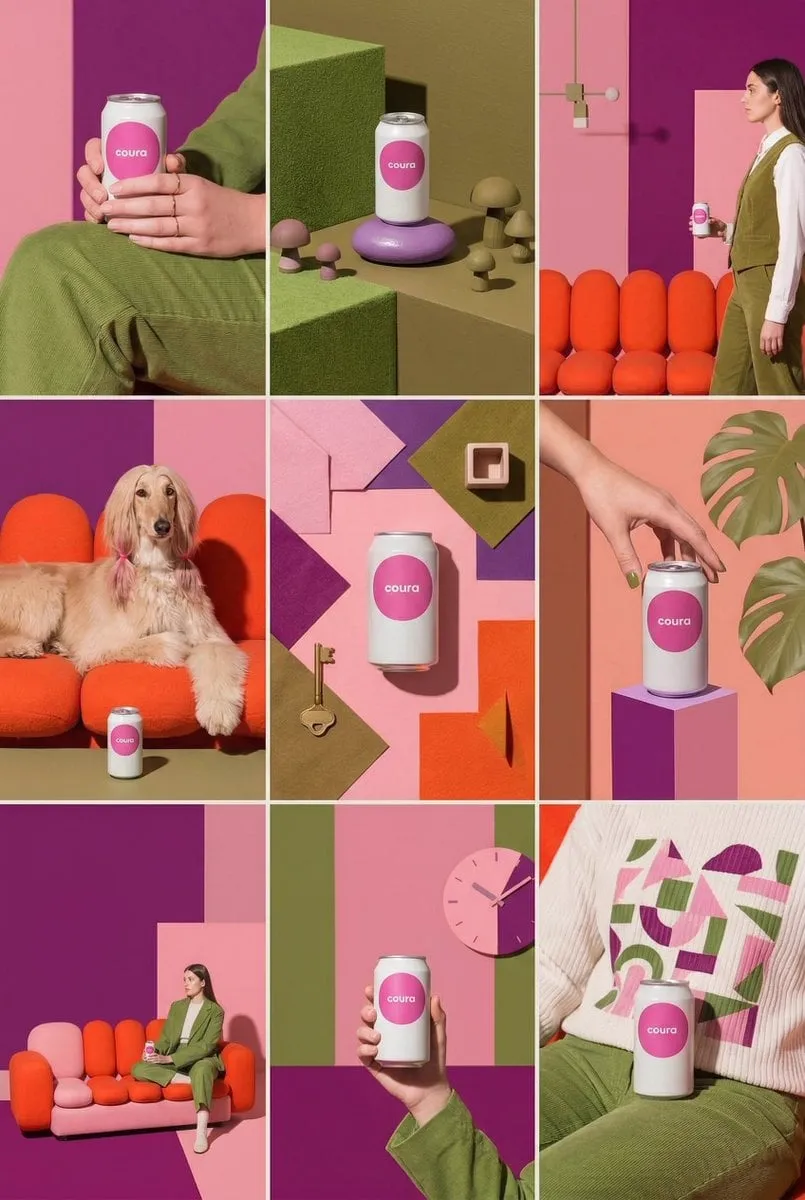
Image-to-video consistently beats text-to-video for brand work, because you approve the composition, product shape, and color before spending any video allowance. Generate a still for every shot, review them side by side as a contact sheet, and regenerate only the ones that fail.
If you need a recurring character or a specific product, use the same reference image in every prompt. Describe wardrobes and props in identical wording across prompts. Consistency comes from repetition, not from the model remembering your intent.
Step 4: Animate the stills, one motion idea per clip
Give each clip a single camera instruction — slow push in, gentle handheld drift, static with subject motion. Clips that ask for three simultaneous movements wobble, warp, and melt. Keep generations short (three to five seconds) and cut them together; short clips look intentional, long ones look synthetic.
Step 5: Assemble and cut to rhythm
Cut every one and a half to two and a half seconds in the first ten seconds. Trim the first and last few frames of each generated clip, because models often drift at the edges. Match motion direction between cuts — if a hand moves right in one shot, cut to something else moving right. This simple edit trick makes unrelated clips feel like one film.
Step 6: Add voice, music, and captions
Record the voiceover yourself if you can; authentic human read is still the hardest thing to fake. If you need synthetic narration, read the sentence aloud for timing first, then paste it into a text-to-speech tool and adjust speed to match. Bed music under the whole spot at a low level, then duck it two to four decibels under the voice. Target roughly -14 LUFS integrated for social platforms.
Add captions in the editor rather than letting the video model render text — baked-in generated text is still frequently misspelled and gives away the process.
Step 7: Export versions, not a version
Export 9:16, 1:1, and 16:9 masters, plus a silent cut, plus a six-second bumper of the hook and CTA. One well-planned ad should generate a week of posts without new renders.
Prompt Patterns That Produce Usable Shots
A reliable prompt template for advertising footage:
Subject + action + environment + camera + lens + lighting + style + constraint
For example: "A ceramic coffee cup on a wooden counter, steam rising, slow dolly right, 50mm lens, warm morning light from the left, muted natural color grade, shallow depth of field, no text, no people."
Three rules make this work more often:
- Name the absence. Add "no text, no logos, no extra fingers, no reflections of people" when those artifacts would break the illusion.
- Separate look from content. Keep a written shot vocabulary of phrases you reuse: "soft daylight," "handheld micro-movement," "editorial muted grade." Reusing vocabulary produces a consistent look across a campaign.
- Change one variable at a time. If a shot fails, adjust lighting or camera, not both. Otherwise you cannot tell what fixed it.
When a clip is 80 percent right, try a different seed before rewriting the prompt. When it is 40 percent right, rewrite the prompt. When it is 10 percent right, change the reference image.
Tool Choices and Sensible Combinations
No single tool does everything well. Think in layers.
Image generation
Midjourney excels at stylized, cinematic frames. DALL·E and Ideogram handle text inside images better than most. Stable Diffusion or Flux running locally costs nothing per generation if you have a capable GPU, which makes them ideal for the many stills a storyboard requires. Use whichever gives you the most control over composition and product accuracy.
Video generation
Runway, Pika, Luma, Kling, Hailuo, and open models such as Wan or LTX each have strengths: some are better at camera moves, others at human motion or photoreal product shots. Test a single still across three tools before committing a whole campaign to one. Prioritize whichever gives you control over duration, motion strength, and seed.
Voice and music
ElevenLabs and comparable services produce convincing narration; system voices work for internal or test cuts. For music, generate a custom bed or pull from a free library, and always check that the license covers paid advertising.
Editing
CapCut is fast for vertical social work, DaVinci Resolve is free and offers professional color and audio tools, Descript is convenient when your ad is script-driven, and Canva covers text-heavy overlays and static variants.
Decision criteria, in order: does it produce the shot type I need, does it give me commercial rights, can I keep the look consistent, and only then — how fast is it?
Quality Control, Publishing, and Repurposing
Before you publish, run a checklist over the whole spot at full speed, then frame by frame on any shot with hands, faces, or text.
- Faces: eyes aligned, teeth intact, no extra ears
- Hands: five fingers, natural joints
- Product: correct label, logo, and color
- Motion: no flicker, no rubbery warping, no loop seam
- Audio: voice intelligible on phone speakers, music not clipping, captions in sync
- Brand: correct fonts, safe-zone margins, logo legible at thumbnail size
Then repurpose aggressively. From one 30-second ad you can cut three hook variants, six vertical cutdowns, a silent loop for display placements, a carousel from your still frames, and a GIF of the strongest two seconds. Test hooks against each other with small budgets and let the data pick the winner.
Measure three numbers: hook rate (three-second views divided by impressions), hold rate (through-views divided by three-second views), and click-through rate. If hook rate is low, the opening frame is weak. If hold rate is low, the middle sags. If clicks are low, the CTA or offer is unclear. Fix one variable per iteration.
Common Mistakes and How to Avoid Them
- Making a film instead of an ad. Beautiful drone shots do not sell a service. Every second should carry information or emotion that points at the offer.
- Burning your free allowance on exploration. Storyboard with stills, approve compositions, then animate. Renders should confirm decisions, not make them.
- Ignoring audio. Muted viewers still respond to rhythm and captions; viewers with sound respond to music and voice tone. Weak audio makes good visuals feel cheap.
- Baking text into generated frames. Add text in the editor where you can fix spelling and reposition for each aspect ratio.
- Skipping the licensing check. Confirm commercial-use rights, avoid real celebrity likenesses, and disclose synthetic media where regulations or platform rules require it.
- Polishing shot one forever. Get a complete rough cut first. You will only know which shots actually need another pass once the ad exists end to end.
- One CTA, four asks. Choose a single action and repeat it visually and verbally.
FAQ
Can I run AI-generated video as a paid ad? In most cases yes, but rights come from the tool's terms, not from the fact that you made it. Check commercial-use clauses on every tool in your stack, keep records of the assets you used, and avoid generating recognizable people or trademarks you do not own.
Do I need editing experience? Not much, but you need rhythm. Cutting to a beat and trimming the first and last frames of each clip are the two skills that separate amateur from credible.
How long does one 30-second ad take? Two to four hours for a first rough cut, roughly double that for a version you would happily pay to promote.
Will viewers know it is AI? Sometimes, but far less often than creators assume. Subtle camera moves, strong voiceover, and clean captions disguise more than photorealistic detail does. Obvious tells are warping hands, jittery background motion, and misspelled on-screen text.
Text-to-video or image-to-video? Image-to-video for anything with a product, a person, or brand colors. Text-to-video for abstract backgrounds, textures, and b-roll.
How many generations should one shot take? Plan for three to five attempts per approved shot, and keep stills as your cheap iteration layer so those attempts stay manageable.
How do I keep characters consistent across shots? Use a single reference image, repeat identical wardrobe and feature descriptions in every prompt, and lock the seed where the tool allows it.
What is the best fully free stack? A local image model or a free image tier for stills, an open video model or a limited video tier for motion, a free editor such as DaVinci Resolve or CapCut, a free music library, and captions generated in the editor. It is slower than a paid stack, but the output can be indistinguishable when the script and edit are strong.
The pattern that matters most is not the tool list. It is sequence: offer, script, storyboard, stills, motion, edit, captions, versions. Follow that order and even a no-budget ad looks deliberate — which is exactly what a viewer needs to trust the business behind it.
