
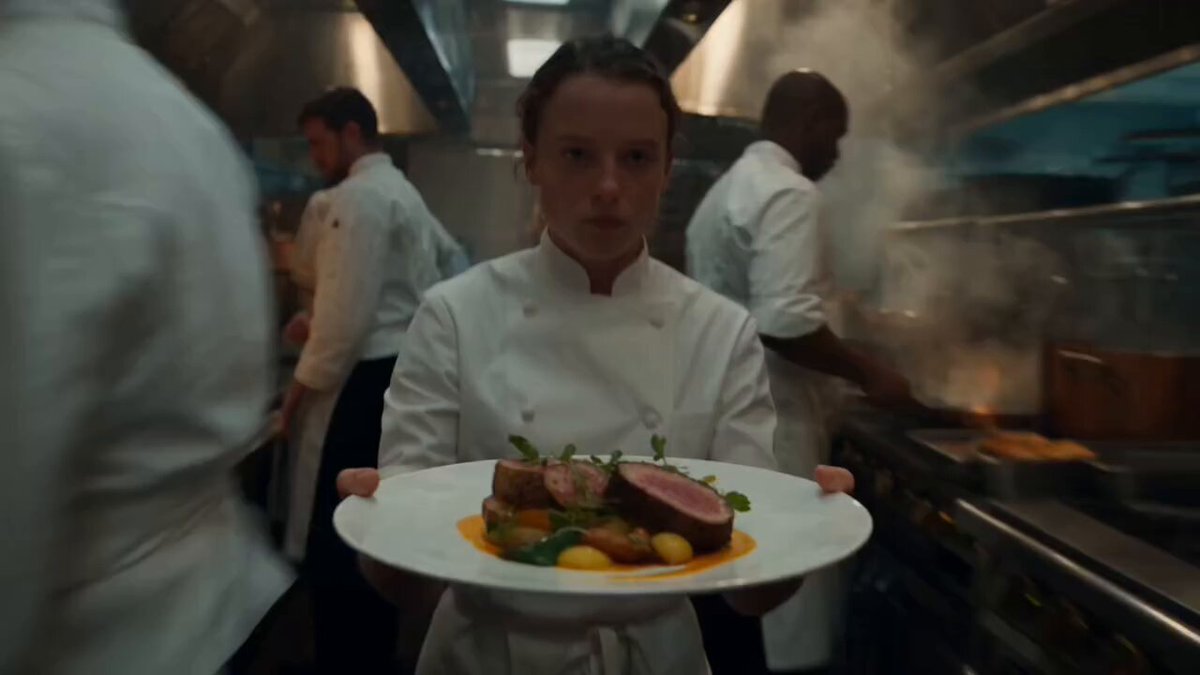
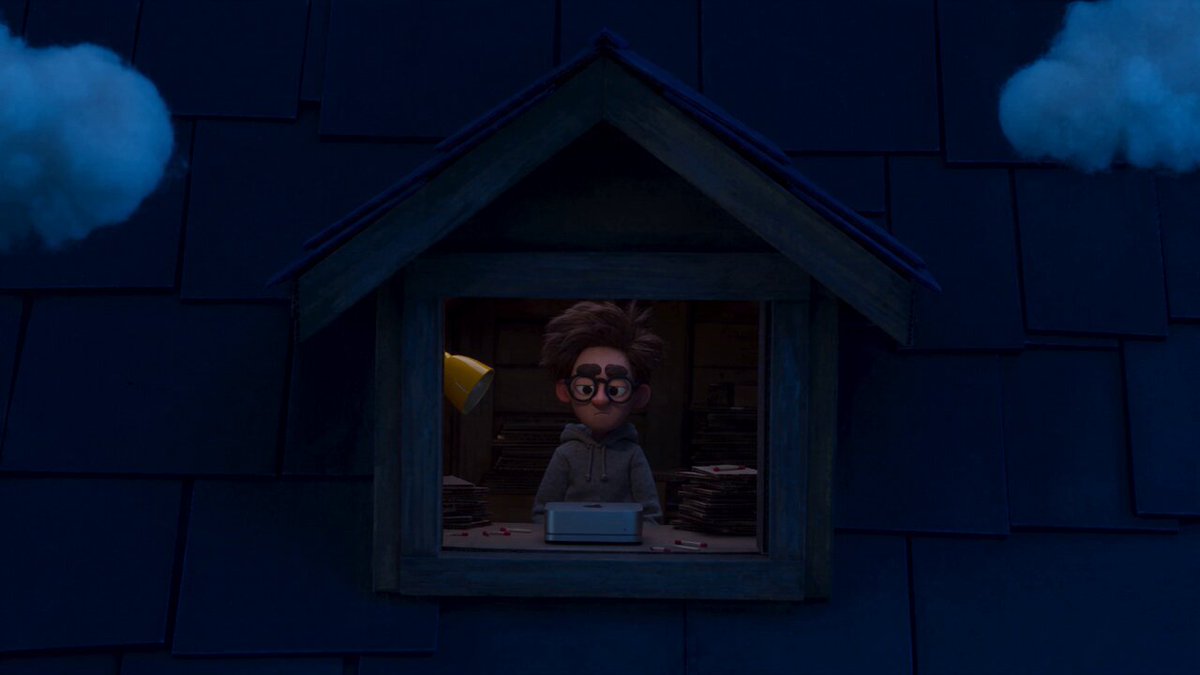

Why Free AI Video Generation Changed the Production Math
For most of the last two decades, video was the most expensive content format a small team could produce. A single product explainer meant a camera, lighting, a location, a voice artist, an editor, and a revision cycle measured in weeks. That math pushed video toward agencies and brands with real budgets. Free AI video generation tools have rewritten the equation by collapsing the most expensive steps — shooting and re-shooting — into a text box and a render queue.
The result is not that video became effortless. It is that video became iterative. You can now test five different openings for the same script in an afternoon, see which one holds attention, and only then invest effort in polish. That shift matters more than any single model release, because iteration speed is what separates content that improves from content that simply exists.
At the same time, "free" carries real trade-offs: watermarks, short clip limits, queue delays, restricted commercial rights, and inconsistent output. This guide walks through how to build a genuinely useful free-first workflow, what to evaluate before committing to a tool, and when paying for capacity actually saves you time.
How AI Video Generators Actually Work
Understanding the pipeline helps you predict where free tools will let you down and where they will surprise you.
From prompt to moving image
Modern generators combine two systems: a language model that interprets your prompt, and a diffusion or transformer-based renderer that produces frames. The language layer decides what matters in your sentence — subject, setting, action, style — and translates it into conditioning signals. The renderer then produces a sequence of frames that should be coherent with each other.
Free tiers usually limit the second stage hardest. The language interpretation is cheap to run; rendering seconds of high-resolution video is not. That is why free plans tend to cap clip length, resolution, or the number of generations per day rather than the quality of the prompt parsing.
Temporal consistency: the hard part
A single beautiful frame is easy. Keeping a character's jacket the same colour across four seconds, with hands that don't melt and a camera move that doesn't stutter, is the actual engineering problem. Free models often handle static or slow-moving shots well and fall apart during fast motion, crowd scenes, or anything involving fine detail like fingers, text, or reflections.
A useful heuristic: if the shot would be hard to describe to a human camera operator in one sentence, it will probably be hard for a free model too. Simplify the shot, not the ambition of the video.
The hidden cost of "free"
Free access is usually subsidised by one of four mechanisms: watermarks, lower resolution, limited generation counts, or data and brand exposure. None of these are scams — they are simply the terms. Read them before you build a workflow around a tool, because discovering a watermark after editing twenty clips is an expensive lesson in time.
Decision Criteria for Choosing a Free AI Video Tool
Rather than chasing whatever tool is trending, evaluate candidates against the constraints of your actual project. Six criteria cover most decisions.
Watermarks, resolution, and aspect ratios
A watermark on the final export immediately disqualifies a tool for client work but is perfectly fine for internal drafts or storyboard animatics. Likewise, a tool that only outputs 16:9 is useless for a vertical-first social strategy unless you plan to crop — and cropping a generated frame often cuts out the subject the model centred.
Clip length and daily allowances
Free tiers differ enormously here. Some allow a handful of long clips per day; others allow many very short ones. For narrative content, longer single clips reduce editing pain. For social cuts and B-roll, short clips are fine and often preferable because they generate faster and fail cheaper.
Rights and commercial use
This is the criterion people skip and later regret. Check whether the terms permit commercial use, whether attribution is required, and whether you retain ownership of outputs. If you are producing for a client, put the answer in writing in your project notes.
Input flexibility
Some tools accept only text. Others accept a still image, a reference video, a depth map, or a sketch. Image-to-video is frequently the highest-value free feature, because it lets you lock composition and character design with a still you already trust.
Controllability and repeatability
Can you fix a seed? Can you request the same shot again with a small change? Can you upload a style reference? A tool that produces one lucky great clip and nothing reproducible is a toy. A tool that produces consistent, slightly less impressive clips on demand is a production asset.
Export and handoff
Finally, look at the boring part: codecs, frame rates, alpha channels, and whether the file drops cleanly into your editor. Free tools that export only low-bitrate H.264 at odd frame rates create avoidable problems in post.
A Practical Free-First Video Workflow
The following workflow assumes no budget, one creator, and a target of a 60–90 second finished piece. It scales up cleanly when you do have a budget.
1. Write for the edit, not for the page
Start with a script that already implies its visuals. Instead of "we help teams collaborate," write "three people, same document, no meeting." Every sentence should suggest a shot. This single habit reduces wasted generations more than any prompt trick.
2. Build a shot list before generating anything
Divide the script into 6–12 shots. For each, note the subject, action, camera behaviour, lighting, and mood. Keep each shot to one idea. If a shot contains two ideas, split it — free models handle one idea far more reliably.
3. Generate in short, single-idea clips
Generate the hardest or most important shot first. If the tool cannot deliver your hero shot, you want to know in the first ten minutes, not after you have built everything around it. Save the easy environmental shots for later; they are forgiving.
4. Handle audio separately
Almost every free generation tier is weaker on audio than video. Record your own voiceover on a phone in a quiet room; sample-based music libraries and free synthesised speech are adequate for drafts. Treat the generated video as picture only, even when the tool offers sound.
5. Assemble in a real editor
Do not try to finish inside the generator. Export your clips and cut in a free editor where you control pacing, captions, transitions, and loudness. Generated clips rarely land on the beat by themselves; the edit is what makes them feel intentional.
6. Quality-check on the smallest screen
Watch the finished piece on a phone with the sound off, then again with sound. If the story reads without audio, your captions and visual sequence are working. If it does not, no amount of prompt refinement will fix it — the structure needs work.
Prompt Patterns That Survive Free Tiers
Free tiers reward clarity and punish complexity. These patterns consistently produce usable results.
Subject, action, camera, light, style
A reliable prompt order is: who or what, doing what, filmed how, lit how, rendered in what style. "A ceramic mug on a wooden desk, steam rising, slow push-in, warm window light from the left, soft documentary look" gives a renderer five independent constraints it can satisfy. A poetic paragraph of mood language gives it none.
Describe motion explicitly
Generation models are frame predictors. Naming the movement — "slow dolly forward," "hand reaches into frame," "fabric ripples" — gives them something to predict. Videos feel static largely because the prompt described a photograph.
Keep style references short
One or two style anchors work better than five. "Warm cinematic colour grade, shallow depth of field" is enough. Stacking "anime, noir, watercolour, 80s VHS, Pixar" produces mush in every tier.
Budget your iterations
Give yourself three attempts per shot. If the third attempt is not close, the problem is the shot description, not the seed. Simplify the composition, remove one element, or convert it to an image-to-video task where you control the first frame.
Image-to-Video, Avatars, and Other Free Shortcuts
Not every shot needs to be generated from scratch. Free tools offer several shortcuts that raise quality without raising cost.
Animating stills
Image-to-video is the single most useful free capability. Generate or photograph a still, confirm the composition is perfect, then animate a small motion. Because the model starts from a strong frame, results are more stable and the aesthetic stays consistent across shots.
Talking-head and presenter tools
Presenter tools that animate a portrait or avatar are excellent for explainers, onboarding, and internal training where polish matters less than clarity. They are weaker for anything requiring genuine emotion or physical action. Use them for the sentences in your script that are pure information delivery.
Screen recordings and hybrid edits
Some of the best "AI video" is 70% screen recording with generated inserts. If your topic involves software, interfaces, or data, capture real footage and use generated clips for transitions, abstract concepts, and opening hooks. This hybrid approach sidesteps the weaknesses of generation entirely.
Stock footage as a safety net
Keep a small library of free stock clips for moments where generation keeps failing. A two-second real shot of rain on a window will always beat a fourth attempt at a synthetic one.
Audio, Captions, and Accessibility Basics
Audio quality is the fastest way to make a free production look expensive — or a polished one look amateur.
Record voiceover with the microphone close and the room soft. Blankets, closets, and cars are legitimate studios. Normalise levels so dialogue sits around −16 to −12 LUFS for web delivery and peaks stay below −1 dB. Add a light noise reduction pass, but stop before voices sound metallic.
Captions are non-negotiable. A large share of viewers watch without sound, and captions make your content searchable and accessible. Burn in captions for social cuts; provide a subtitle file for long-form. Keep lines under about 42 characters, hold each caption long enough to read aloud, and never let text sit over a busy region of the frame.
Finally, keep contrast high and text large. Generated backgrounds are often detailed and low-contrast, which makes white captions vanish. Add a subtle dark gradient behind caption areas, or place text on a solid band.
Seven Mistakes That Waste Free Generations
- Generating before writing. Without a script and shot list, every clip is a guess.
- Asking for complex action. Crowds, fights, and dance sequences are the first things to break.
- Ignoring aspect ratio at generation time. Cropping later ruins carefully centred compositions.
- Mixing styles across shots. Consistent colour and lens language matters more than per-shot beauty.
- Over-relying on generated audio. It is usually the weakest element of a free tier.
- Editing inside the generator. You lose pacing control and often export quality.
- Skipping rights checks. Free for personal use is not the same as free for a client deliverable.
When to Move Beyond Free Tools
Free tools stop being economical at a predictable point: when your time spent working around limits costs more than the limits themselves. Watch for three signals.
First, repeated failures on a specific shot type you need regularly. Second, a project that requires commercial rights or watermark-free output. Third, volume — when you are producing several videos a week and queue times start dictating your schedule.
At that stage, a hybrid approach usually beats a full switch. Pay for the one capability that blocks you most, whether that is longer clips, higher resolution, or image-to-video control, and keep free tools for drafts, B-roll, and experiments. Budgeting for a single bottleneck is far more efficient than subscribing to everything.
FAQ
Are free AI video makers good enough for published content?
For short-form social, explainers, and draft cuts, yes — especially when combined with real voiceover, captions, and a good edit. For broadcast or high-end brand work, they are best used for previsualisation rather than final output.
How long should a generated clip be?
Two to five seconds per shot is the sweet spot. Shorter clips hide inconsistencies and give you editing flexibility; longer clips are harder to keep coherent and slower to re-render when something is wrong.
Do I need a powerful computer?
No. Most generation happens on remote servers, so a laptop or even a phone can drive the workflow. Local rendering only matters if you run models on your own hardware.
What is the fastest way to improve output quality?
Switch from text-to-video to image-to-video. Locking the first frame removes most composition and consistency problems in one step.
Can I mix clips from different tools in one video?
Yes, and it often produces better results. Unify them in the edit with a shared colour grade, consistent caption style, and matching music. The grade is what makes a mixed-source video feel like one piece.
How do I keep characters consistent across shots?
Generate a character reference image first, reuse it as the starting frame, and keep lighting descriptions identical. Mentioning the same wardrobe, lens, and colour temperature in every prompt does more for consistency than any single setting.
Bringing It Together
The practical advantage of free AI video makers is not that they replace a production team. It is that they let you rehearse. You can storyboard in moving images, test hooks, and discover what your script actually needs before spending money or time on a shoot.
Build the workflow in the order this guide laid out: script, shot list, generate the hero shot, record audio, edit outside the generator, caption thoroughly, then quality-check on a phone. Do that consistently and the difference between a free pipeline and a paid one shrinks to a handful of technical limits — none of which will matter if the story underneath is weak, and none of which will save a video that has no story at all.
