

Why Free Video AI Still Deserves a Serious Test
Every week another text-to-video tool opens its doors with a generous-sounding free tier. The pitch is seductive: type a sentence, wait ninety seconds, download a cinematic clip. Then you actually try it, and the result is a melting face, a camera that drifts sideways for no reason, and a watermark sitting over the most interesting part of the frame. The obvious conclusion is that free AI video is a demo, not a tool. That conclusion is only half right.
Free tiers are not charity. They are evaluation environments, and if you treat them as such they become genuinely useful. A well-run free tier lets you learn how a model interprets prompts, how much control you get over camera movement, whether characters stay recognizable between shots, and how long the whole loop takes from idea to exported file. That knowledge is worth real time, because it tells you whether paying for anything at all makes sense for your project.
The trap is treating free access as a production pipeline. It is not. It is a lab bench. The creators who get the most out of it run structured tests instead of random experiments, keep notes, and know exactly which limitations are dealbreakers for their format. This guide walks through that process end to end: what free access really includes, how to test a generator in half an hour, how to build a small video using only free tools, and the decision criteria that tell you when it is time to move on.
What "Free" Actually Means on Video Platforms
The word "free" hides at least four different business models. Knowing which one you are dealing with saves hours of confusion.
Daily allowances and one-time trial grants
Some platforms give you a recurring daily allowance: a handful of generations that refresh each morning, usually at a lower resolution or shorter duration. Others give you a single lump of trial generations that never refill. The difference matters enormously. A daily allowance is a rehearsal space; you can practice prompting for weeks without spending anything. A one-time grant is an exam. Blow it on nonsense prompts and you have learned nothing.
Check three things before you start: how many generations refresh, how fast they refresh, and whether failed generations count against you. On some platforms a rejected or errored render still consumes your allowance, which punishes experimentation badly.
Watermarks, resolution, and clip length
Free output typically lands somewhere in the 480p to 720p range with clips capped between three and ten seconds. Some tools remove the watermark only on paid plans; others allow watermark-free downloads at reduced resolution. For social formats like vertical short video, a clean 720p export is often perfectly usable. For anything destined for a large screen or a client deliverable, a corner watermark ends the conversation immediately.
Clip length is the more serious constraint. Ten seconds is enough for a single beat but not for a scene with a beginning, middle, and end. That means your free-tier workflow has to be built around cutting between short clips rather than relying on long takes.
Commercial usage in the fine print
This is where most creators get burned. Free tiers frequently restrict output to personal, non-commercial use, or they grant commercial rights only if you attribute the platform visibly. A few tools allow commercial use but prohibit using the output to train competing models. Read the terms once, write down the answer in your notes, and revisit when you start monetizing. Guessing here can invalidate an entire project after the work is done.
A 30-Minute Test Protocol for Any Generator
You can evaluate a new video model in about half an hour with four short exercises. Do them in order, and write down what happens.
Step 1: Run a baseline prompt
Start with a simple, unambiguous shot: a medium close-up of a person walking through rain at night, neon reflections on wet pavement, slow push-in. No stylistic flourishes. The goal is to see the model's default behavior — how it handles skin, fabric, reflections, and text-free backgrounds.
Compare against a second prompt that adds one constraint: "camera locked off, no movement." If the model ignores the constraint, you know prompt adherence is weak and you will fight it constantly.
Step 2: Stress-test motion and physics
Now ask for something hard. A hand pouring coffee into a cup. A dog jumping into water. Someone tossing and catching a ball. These prompts reveal whether the model understands object permanence and contact physics, or whether it just produces plausible-looking motion blur that falls apart on a second viewing.
Watch for the classic failure modes: limbs that duplicate, objects that pass through each other, fluid that moves upward, and background elements that mutate between frames. Note which failures are consistent — consistent failures are predictable and therefore manageable in editing.
Step 3: Test consistency across shots
Generate the same character description twice with different actions and compare. If the face, clothing, and hair color shift noticeably, you cannot build a multi-shot narrative without extra help. Some tools offer reference images or character locking; if the free tier includes that feature, test it specifically, because it is often the single most valuable capability for storytelling.
Step 4: Do the time accounting
Finally, measure the real cost. Start a timer when you begin writing a prompt and stop when the file is exported. Include queue waits, regeneration attempts, download time, and the editing you do to make the clip usable. A generation that takes forty seconds but requires six attempts and five minutes of cleanup is effectively a five-minute clip. Multiply that by the number of shots in your video and you will see whether a paid plan's faster queue and higher success rate is worth more than the sticker price suggests.
Quality Checklist: What Free Tiers Do Well
Free models are not uniformly worse. They tend to excel in specific areas and collapse in others. Use this checklist to sort the useful from the unusable.
Strengths you can usually count on:
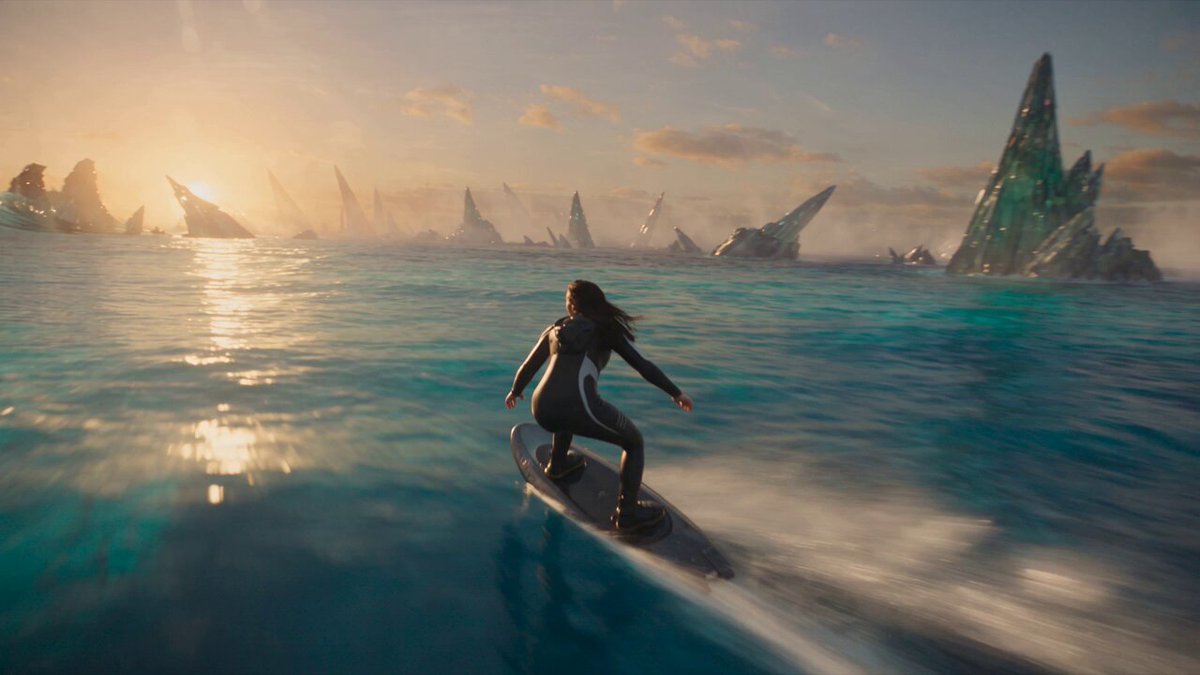
- Ambient and nature shots — fog, waves, clouds, forests, city skylines at dusk
- Slow camera moves over static or semi-static subjects
- Abstract backgrounds and texture plates for titles and transitions
- Product beauty shots where the object is simple and the lighting is controlled
- Establishing shots used for a second or two before a cut
Weaknesses you should expect:
- Faces in motion, especially speaking or turning quickly
- Hands interacting with small objects
- Multiple characters in the same frame
- Text rendering of any kind
- Long continuous takes with complex camera choreography
- Consistent lighting across a series of shots
The practical implication is that free tiers work best as a B-roll factory. You generate atmosphere, texture, and transitions, then carry the narrative with voiceover, on-screen text, live-action footage, or still images animated in an editor. That hybrid approach produces genuinely watchable results without spending anything.
A Free-First Production Workflow for Short Video
Here is a repeatable workflow for a 30- to 60-second vertical video using only free-tier resources.
Phase 1: Script and shot list
Write the script first, then convert it into a shot list where every shot is describable in one sentence and lasts no more than four seconds. A thirty-second video therefore needs roughly eight to ten shots. That sounds like a lot, but short shots are exactly what free tiers are good at, and fast cutting hides individual imperfections.
For each shot, note: subject, action, camera behavior, lighting, and mood. Keep the list in a spreadsheet with a column for status so you can track which shots are done.
Phase 2: Generate stills before motion
If the platform supports image-to-video, generate or source a still frame first and animate it. This single habit improves output quality dramatically, because the model only has to add motion rather than invent composition, color, and subject simultaneously. It also makes consistency easier: you can reuse the same reference image across several shots to keep a look coherent.
When generating stills, batch your attempts. Write ten variations of the same prompt in one sitting, pick the two best, and move on. Chopping between tasks wastes far more time than the generations themselves.
Phase 3: Assemble, sound, and caption
Drop the clips into an editor timeline, trim each to its strongest half-second, and cut on motion where possible. Add sound design — footsteps, room tone, a subtle riser — because audio does more for perceived quality than resolution does. Add captions, since most viewers watch muted.
This is the phase where free-tier weakness becomes invisible. A slightly wobbly three-second clip with strong sound design and a clean cut reads as intentional style. The same clip held for eight seconds with no audio reads as a mistake.
Where Free Access Breaks Down — and When to Move On
Free tiers fail predictably in four situations. Recognising them early prevents weeks of frustration.
Client deadlines. When someone else is waiting, queue times and retry loops become unacceptable risk. If you cannot guarantee a usable shot within a defined window, you need a plan with faster throughput.
Character-driven narrative. If your video depends on the same person appearing in twelve shots, free-tier consistency will break. Either restructure the story so the character is seen in silhouette, from behind, or in brief glimpses — or accept that you need a tool with stronger reference conditioning.
Iteration-heavy creative work. Advertising and music-video style projects require dozens of variations of the same idea. Free allowances are sized for exploration, not for volume.
Rights-sensitive work. Broadcast, paid advertising, and anything requiring clear chain of title usually need explicit commercial licensing that free tiers do not provide.
Decision criteria for upgrading
Ask these five questions before spending anything:
- Does the free tier's quality ceiling block the project, or is it just slower?
- How many hours per week would faster queues and higher success rates return to me?
- Do I need commercial rights for this specific deliverable?
- Does the project need consistent characters or products across many shots?
- Can I earn back the cost within one or two projects?
If you answer "no" to all five, stay free. If two or more are "yes," a paid tier is a rational business decision rather than an impulse.
Mistakes That Burn Your Free Allowances
Most wasted generations come from a short list of avoidable habits.
- Writing paragraphs instead of shots. Models respond better to a single clear action plus camera and lighting notes than to a story synopsis.
- Chasing one perfect clip. Set a hard cap of three attempts per shot. If it still fails, change the approach — simplify the action, shorten the duration, or convert it to a still.
- Ignoring aspect ratio. Generating widescreen footage for a vertical video means cropping away half your composition. Set the ratio before you generate.
- Skipping the negative space. Prompts that mention what you do not want — no text, no extra people, no fast camera movement — clear up far more problems than adding more adjectives.
- Generating before you have a shot list. Without a list you generate randomly, collect unusable fragments, and start over.
- Forgetting to download. Some platforms expire free output after a set period. Save files locally the moment they are good.
Tool Landscape at a Glance
It helps to know the broad families of tools and what each is normally good at.
General-purpose text-to-video models handle a wide range of subjects and are the default starting point. They vary mostly in motion realism, prompt adherence, and how gracefully they fail.
Image-to-video tools animate a supplied still. These are the most reliable free-tier option for anyone who cares about composition, because you control the frame before the model touches it.
Avatar and talking-head tools animate a portrait or a scripted voice track. Free allowances tend to be tight, but the output is often usable for explainer content and short social clips.
Editing suites with built-in AI features offer background removal, auto-captions, object tracking, and short generative inserts. Their free plans are frequently the best value in the entire space, because the AI features sit inside a real editing workflow.
Open-source models you run yourself remove usage caps entirely but trade them for hardware requirements and setup time. Worth considering if you generate frequently and already own a capable GPU.
The sensible strategy is to combine two or three of these rather than expecting one platform to do everything.
FAQ
Is free AI video good enough to publish?
Yes, for B-roll, backgrounds, abstract visuals, and short social clips — especially when combined with real footage, strong sound design, and captions. It is usually not good enough for dialogue-driven scenes or work requiring consistent characters.
How long does it take to learn prompting for video?
Most people reach a usable level within a week of daily practice, which is exactly what a daily allowance is designed to support. The learning curve is less about vocabulary and more about learning to describe one action at a time.
Can I monetize videos made with free tools?
It depends entirely on the platform's terms. Some allow it, some require attribution, and some prohibit it. Check before you publish, and keep a record of which tool produced which asset.
What resolution should I aim for?
Match the target platform. For vertical social video, 1080 by 1920 is ideal, but a clean 720p export that is well lit and well edited will outperform a soft 1080p one.
Do free models use my prompts to train?
Policies vary. If that concerns you, look for an opt-out setting or avoid uploading sensitive material such as unreleased products or personal footage.
Should I use several free platforms at once?
Yes, and it is often the best approach. Each model has different strengths — some handle motion better, some lighting, some stylisation. Rotating between two or three free accounts gives you more range than any single free tier.
What is the biggest time sink?
Regenerating the same failing shot. Set attempt limits, and when a shot fails repeatedly, change the shot rather than the phrasing.
Building a Repeatable Evaluation Habit
The value of free tiers is not the clips they give you. It is the information they give you about how a model thinks. Treat each new tool as a short experiment: run the four-step protocol, log the results in a single document, and note which shot types it handles well. Within a month you will have a personal map of the landscape, and every future project will start with the right tool instead of a guess.
Keep the evaluation cheap. Generate stills before motion, cap your attempts, edit tightly, and let sound and pacing carry the polish. Free access will not replace a paid pipeline for demanding work, but used deliberately it can produce finished, publishable video — and it will tell you exactly when paying is worth it.
