


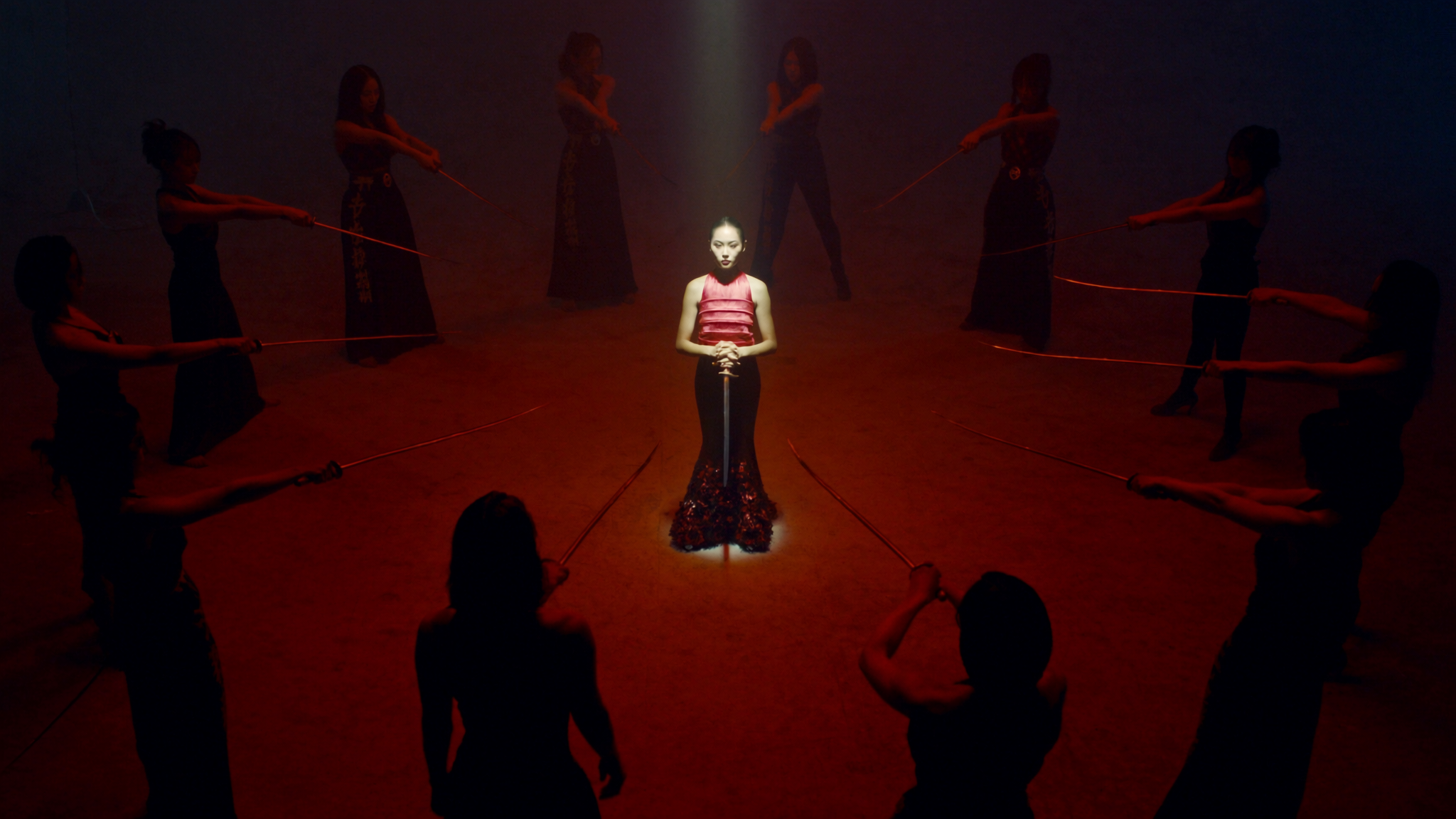
The tipping point for most creators usually arrives on the same day. You finish a video, you export it, you watch it back, and you can name exactly what is wrong: the cut is fine, the pacing is fine, but the footage itself looks generic. The shot inserts are all stock-style filler, the subject floats in an uncanny void, and nothing matches the reference stills you worked hard to make. That small gap between "I can edit video" and "I can produce video that feels designed" is exactly where most free tools stop helping.
This guide is a practical comparison between two very different lanes: the collection of free editing applications every creator already knows, and the newer class of AI-first video platforms. It is not a ranking that pretends one is universally better. It is a decision framework. By the end, you should know which lane serves your project, your budget, and your deadlines, and when it genuinely makes sense to shift between them.
Why the comparison is worth your time in the current landscape
Video generation stopped being a laboratory curiosity and became a working tool for marketing, education, and entertainment. That shift did not arrive with one dramatic release. It arrived quietly, through hundreds of incremental changes: better lip sync, steadier characters, faster renders, saner pricing, and a gradually wider set of camera moves that look natural.
The consequence is that almost nobody asks "does AI make video anymore?" any more. The real question has become "does the tool I choose make the video I actually need, at the cost I can actually afford, within the time I actually have?" Free tools answer that question in one particular way. Dedicated AI platforms answer it in another. Understanding both answers, honestly and without marketing filters, is the entire point of this article.
It is also important to be clear about what "efficiency" means here. Efficiency is not merely speed. It is the ratio of useful finished output to the total time, money, and attention you invest. A tool that renders fast but forces you to rebuild every shot by hand can be far less efficient than a slower tool that keeps your characters recognizable across an entire sequence. Keeping that metric in mind will prevent a lot of confusion later.
The honest case for free tools
Let us give free editors their due. Applications like CapCut, DaVinci Resolve, and the free tiers of several online editors remain genuinely useful every single day. They are fast to learn, they run on modest hardware, and they give you total control over the final cut. For social clips, repurposed talking-head content, and straightforward timelines, they are often entirely enough.
The deeper argument for free tools is creative latitude. When you edit by hand, every decision is yours. You choose the trim, the transition, the color grade, the pacing, the music hit points. No model decides what looks "good enough" and stops. That control matters enormously when your brand has a strong visual identity and you need every frame to match a specific look.
Free tools also offer predictable output. There is no stochastic quality lottery. What you place on the timeline is what renders. For deadline-critical work where you cannot tolerate surprises, that determinism is worth a great deal. If you are cutting a client commercial that has to match a storyboard beat-for-beat, you want software that never improvises.
There is also the matter of cost structure. Free has a very low bar to entry. You can learn, experiment, and produce a surprising amount of finished work before you ever spend a cent. For students, hobbyists, and early-stage channels, that barrier-free start is genuinely valuable. Many of today's top editors began that way, and mastering the fundamentals of a real timeline editor is not wasted even if you later add AI tools.
Where free options start to strain
The advantages above are real, but they come with hard limits that surface precisely when you try to scale volume, quality, or consistency.
The quality ceiling of stock and basic generation
Most free editors either pull video from stock libraries or include a very small set of baseline AI generators. The models behind those generators are typically the least capable ones available. They are adequate for abstract backgrounds and simple motion, but they struggle with the thing creators care about most right now: a consistent human subject across multiple shots.
Stock footage has a different problem. It looks like stock footage. Audiences have become extremely good at recognizing it, and using it too often signals low production value no matter how clean the cut is. There is also a practical ceiling on stock: you can only repurpose a finite library so many ways before your channel starts to repeat itself visually.
The queue problem when you need volume
Efficiency is not just about output quality. It is about throughput. Free tiers almost always place you behind paying customers in the render queue. When your schedule demands dozens of variants a day, hour-long waits for each generation make the tool effectively unusable. What looked free in terms of price starts to cost you in time, and time is the one asset you can never buy back.
The math is straightforward. Ten renders that each take an hour is a ten-hour day spent waiting. A tool with faster, priority access to the same generation could turn that into a morning. For channels that publish daily, weekly, or across multiple platforms simultaneously, those erased hours are the difference between thriving and merely surviving.
Little control over post-processing
A common middle step in modern video work is render a base, then clean it up. Free tools give you limited room for that cleanup. You cannot reliably fix blinking faces, morphing hands, or inconsistent wardrobe changes across shots. The tool hands you a finish and expects you to accept it, because the infrastructure to iterate simply is not present on the free side.
This is frustrating precisely because it is so close to being solvable. The generation itself may be only mildly off, but without reference-based control or multi-image fusion, there is no clean way to tell the model what to correct. You either reroll and hope, or you manually patch in an editor, which reintroduces the manual labor you were trying to escape.
What a dedicated AI video platform changes
A purpose-built AI video platform is not just a larger collection of generators. It changes the workflow in three structural ways that free tools do not.
Model access becomes a strategic choice
Instead of being locked to whatever model ships in the app, you get a library of models to select per project. Some models shine at photorealism. Others are better for stylized animation. Some render fast for quick drafts, and others are reserved for hero shots you intend to polish for days. The model library is a palette, not a single brush.
This matters because no single model is best at everything. The ability to match model to task, cheap and fast for iteration, premium for the final, is exactly the flexibility free tools lack. When you are storyboarding an idea, you do not want to burn your most expensive compute on a draft you will discard. When you are rendering the hero shot, you do not want your fastest but weakest model to be your only option.
Consistency becomes a feature, not a hope
The standout technical problem in AI video is keeping a character recognizable from one shot to the next. Modern platforms tackle this with multi-image fusion and keyframe reference. You feed a reference still or a set of images, and the model keeps the subject, lighting, and tone aligned across the sequence.
For anyone producing series content, ad creatives, or branded work, that consistency is the difference between "a video with AI in it" and "an AI-assisted production." Free generators, which usually accept a single text prompt and nothing else, simply cannot offer this. Once you have built a character or a world, the ability to carry it forward is what makes a body of work rather than a scatter of clips.
Production becomes a pipeline
The most under-appreciated advantage is architectural. A good platform is built to produce at scale: you can draft, iterate, review, and render within one environment rather than stitching together a dozen free apps with file exports and naming conventions. When you are producing for channels that demand daily output, that reduction in friction compounds quickly over weeks and months.
Thoughtful architecture also shows up in reliability. A well-constructed platform manages its compute, storage, and queues through a clean backend so that your project state survives reloads, your assets are versioned, and your long renders do not vanish. Free tools scattered across a desktop rarely offer that kind of structural patience.
A practical decision framework
Use the checklist below to decide which lane fits a given project.
- One-off clip, hand-edited, total control required? Stay with a free editor.
- Dozens of variants needed this week? You need a platform with fast models and batch workflow.
- Subject must stay identical across all shots? You need multi-image reference.
- Budget truly near zero and time is flexible? Free tools can work, accepting the queue.
- Reusing a brand character or IP across a series? A platform with referenced or fine-tuned models wins.
- Just experimenting, with no deadline? Either is fine; prefer free until you know what you need.
If you find yourself ticking the second, third, or fifth boxes repeatedly, the friction you feel is not because you are doing something wrong. It is because you have outgrown the lane. That is not a failure; it is a signal that the correct next step is a platform with the right controls.
Workflow that combines both lanes
The strongest producers rarely choose one lane exclusively. A realistic hybrid runs like this: use a dedicated AI platform to generate reference-consistent base footage and hero shots, then bring everything into a free editor for the final cut, titles, sound design, and color pass. Each tool does what it does best, and you keep full creative control over the finished deliverable.
This hybrid protects you in two directions. The platform handles the expensive, difficult generation work where its consistency features earn their keep. The free editor gives you the deterministic finishing environment where mistakes are cheap to undo, trims are instant, and the final polish is entirely in your hands. In practice, many professional producers settle into exactly this split and rarely deviate.
Cost means more than price
When people compare these lanes, they usually fixate on the sticker price. That misses the larger cost equation. Free tools cost you time in queues, time in hand-correcting bad generations, and time in assembling workarounds across scattered applications. A platform costs you money but saves those hours in a way that scales.
Do the math in hours, not dollars. Estimate the weekly hours you lose to waiting, rerolling, and stitching tools together. Multiply by your typical rate or by the value of your time. If a paying tool saves you ten hours a week, it stops being an expense and becomes the cheaper option almost immediately. The question "can I afford it?" is often really the question "can I afford the hours it would otherwise steal?"
Frequently asked questions
Can free tools ever produce professional results? Absolutely, for hand-edited work and simple generations. The limits appear at scale, consistency, and post-generation control.
What is the single biggest advantage of a dedicated AI platform? Consistency across shots, because reference- and keyframe-based control keeps a subject recognizable.
Do I need to switch if I am happy with CapCut or Resolve? No. Use them where they excel, and add a platform only when you hit a quality, volume, or consistency wall.
Is determinism still important? Yes. That is why most professionals keep a conventional editor in their pipeline for the final cut even if they generate with AI.
How do I know I am ready to pay? When the hours you currently waste exceed the price of the tool, you were ready some time ago.
Closing thoughts
Free editing tools and AI video platforms are not rivals fighting over one throne. They sit at different points on the same continuum of "get this idea into a finished file." Free tools win on control, price, and predictability. AI platforms win on consistency, throughput, and the ability to scale a single character or style across an entire body of work.
The efficient creator does not pledge loyalty to one lane. They map each project to the lane that serves it, and they switch freely. If a project needs a fast, consistent, reference-stable series render, that is a platform task. If it needs a hand-honed, fully controlled final cut, that is an editor task. Make the match, keep your hours, and ship more.
