
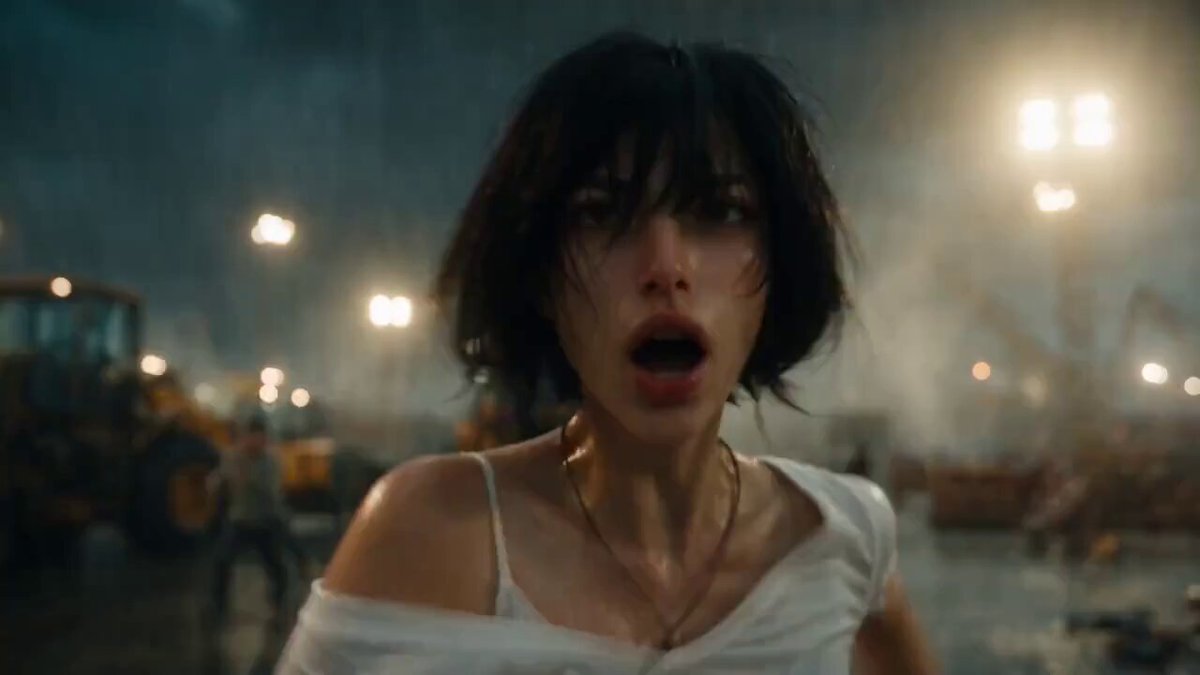

Generative video tools have changed the economics of production without changing its fundamental logic. A thirty-second brand film still needs a concept, a script, a look, a shot list, an edit, a sound pass, and a delivery specification. What has changed is that each of those stages can now be prototyped in hours rather than days — and that the most expensive decisions have quietly moved earlier in the process.
This guide is a practical walkthrough of an AI-assisted production pipeline, from brief to final master. It covers where generation genuinely helps, how to choose tools per shot instead of per project, how to keep characters and brand assets stable across dozens of clips, how to manage client expectations, and which mistakes reliably derail projects.
What AI Actually Changes in the Production Pipeline
Iteration cost collapses; judgement cost rises. When a shot takes a couple of minutes and a negligible amount of compute to generate, the bottleneck shifts from "can we make this?" to "which of these thirty versions is the right one?" Teams that struggle with generative video usually are not failing at generation. They are failing at selection, curation, and continuity.
Pre-visualisation becomes real visualisation. Storyboards used to be rough sketches that clients interpreted generously and then disputed at delivery. An animatic assembled from generated shots removes most of that ambiguity. When a stakeholder can see the pacing, the palette, and the camera language before the first final render, feedback becomes concrete instead of theoretical.
The shoot becomes optional rather than mandatory. For product explainers, abstract transitions, historical or speculative settings, and anything requiring a location permit, generation replaces capture entirely. For human performance, hands doing delicate work, food, and anything where micro-expression carries the message, traditional capture still wins more often than not. A healthy pipeline mixes both.
Versioning multiplies. A single campaign asset now needs a widescreen master, a vertical cutdown, a square social version, subtitle-burned variants, and often a silent loop for autoplay placements. Pipelines that treat delivery as an afterthought produce four disconnected edits instead of one adaptive master with intentional reframes.
The practical consequence: the value you deliver is no longer mostly in operating a camera. It is in taste, structure, and the ability to defend a creative decision.
The Six Stages of an AI-Assisted Video Workflow
Stage 1 — Brief, Concept, and Constraints
Before opening any tool, write down four things: the single message the video must land, the target runtime, the delivery formats, and the non-negotiables. Non-negotiables include logo lockups, legal claims, accessibility requirements, brand colours, and any imagery that must not appear. Everything downstream inherits these constraints. A concept developed without knowing that a vertical cut is required will be re-planned later at real cost.
Stage 2 — Script and Shot Planning
Convert the script into a shot table. Columns should include: shot number, target duration, subject, action, environment, camera move, lighting mood, intended model, and status. This table is the single most valuable artefact in an AI pipeline. It lets you generate shots in parallel without losing track, it lets an editor assemble without guessing intent, and it gives the client something specific to approve.
A useful rule of thumb: keep individual generated shots between two and five seconds. Longer clips compound instability, and audiences are already conditioned to fast cutting in most digital formats.
Stage 3 — Look Development
Build a reference pack before generating anything final. Include colour references, lens references, a mood board of stills, and — critically — a written look bible of ten to fifteen adjectives and technical descriptors. Terms like "low-contrast pastel grade," "35mm spherical, shallow depth of field," or "overcast diffusion, no direct sun" travel well between models. A shared vocabulary is what keeps a multi-model project from looking like a showreel compilation.
Stage 4 — Generation and Iteration
Generate in small batches, review against the shot table, and keep a running log of which prompts produced which results. Batch size matters. Three to five variations per shot is usually enough to reveal whether a prompt is working. If you find yourself generating twenty versions of the same shot, the prompt is probably not the problem — the shot concept is underspecified.
Generation should be parallelised by shot type, not by scene. Group all the wide establishing shots together, then all the close-ups, then all the inserts. Consistency is easier to police within a batch of similar shots than across an arbitrary chronological order.
Stage 5 — Assembly and Post-Production
Conform generated clips to a timeline and then treat them like any other footage. Stabilise where needed, colour match across shots, add sound design, add titles and motion graphics. Generated clips benefit disproportionately from good sound. Audiences forgive visual imperfection far more readily when the audio is confident and rhythmic.
Three post-production moves do the most work for the least effort: a unifying grade, a consistent grain or texture layer, and deliberate sound design under every cut. Skip them and even strong generation looks like a test render.
Stage 6 — Delivery and Adaptation
Reframe from a single master wherever possible, then check the reframes manually. Automatically cropped verticals routinely decapitate subjects or lose the visual punch line. Deliver a texted and a clean version, plus a thumbnail set. Archive the shot table alongside the project so a future campaign can reuse the visual language without re-deriving it from scratch.
Choosing a Generation Model Per Shot, Not Per Project
Agencies that standardise on one model for an entire production tend to get one look for every scene, whether it suits or not. A more durable approach is to categorise models by the job they do best, then match each shot in the table to a category.
Cinematic realism. These models handle depth, skin, and light falloff convincingly and reward detailed camera language. Use them for hero shots, product beauty shots, and anything that will occupy a full screen for more than three seconds. They are slower and less forgiving of vague prompts.
Fast iteration and concepting. Lighter models that generate quickly are ideal for animatics, internal review, and exploring camera moves before committing. Their output often will not survive final delivery, and that is fine — their job is to remove uncertainty.
Image-to-video conditioning. Starting from a still gives you much tighter control over composition, product appearance, and character likeness. This is the workhorse category for brand work, because the frame you approved is the frame you animate from.
Motion and performance transfer. When a specific movement or gesture must be reproduced, driving a character from reference footage produces far more believable results than describing the motion in words.
Stylised and graphic. Illustration, anime-adjacent, and graphic-design-driven models are excellent for explainer segments, transitions, and lower-thirds backgrounds where photorealism would feel heavy-handed.
A practical workflow: one primary model for the hero shots, one fast model for everything exploratory, and one conditioning path for any shot containing a recurring character or product.
Prompt Craft: The Anatomy of a Strong Shot Prompt
Video prompts are not prose. They are specifications. A reliable structure includes:
Subject and wardrobe. Be specific about age range, build, clothing, and what the subject is doing. "A cyclist in a matte grey rain shell" outperforms "a person."
Action and beat. Describe one clear action per shot. Two actions in one prompt usually produce a muddled compromise.
Environment and time of day. Weather, surface, background activity, and atmosphere.
Camera. Lens length, height, movement, and speed. "Slow dolly in at chest height, 50mm equivalent" is a usable instruction; "cinematic camera" is not.
Lighting and grade. Direction, quality, and colour temperature. Reference a grade rather than a movie title; titles produce inconsistent licensing-adjacent pastiche.
Style and texture. Film stock characteristics, grain, halation, or a flat digital look.
Negative constraints. List what must not appear: extra limbs, text artefacts, watermarks, lens flare, on-screen logos, specific colours that clash with brand.
Duration and motion intensity. State whether the motion is subtle or dramatic. Most models default to more movement than you want.
Keep a prompt template in a shared document and require every team member to fill it in. Uniformity across a project is worth more than individual flourish.
Keeping Characters and Brand Assets Consistent
Consistency is the hardest unsolved problem in generative video, and it is solved with process more than with prompts.
Build a character sheet. Front, three-quarter, and profile views, plus a wardrobe inventory and a colour palette. Approve it before any shot generation begins.
Condition rather than describe. Use image-to-video or reference-conditioned generation for every shot containing the character. Text descriptions drift; visual references drift far less.
Lock seeds and settings. Where a model allows it, keep the same seed and parameter set across a character's shots, and change only camera and environment.
Control the lighting per scene, not per shot. Consistency breaks most visibly when a character is lit from different directions between adjacent clips.
Accept editorial cheats. Cut away before a character turns fully; use insert shots of hands, products, or environments; keep the character's appearance on screen brief where possible. Editing is the oldest consistency tool there is.
Grade at the end, once. Applying one unifying grade across the whole timeline masks small colour inconsistencies between models far more efficiently than trying to fix them individually.
Working With Clients on AI-Assisted Productions
Clients rarely object to the technology. They object to uncertainty. Address it explicitly in the kickoff.
Set approval gates. Concept, script, look bible, animatic, picture lock, and final master. Six gates is a lot; four is usually workable. Each gate should require written approval.
Explain variability. State plainly that generated shots are not deterministic and that a percentage of the budget goes toward exploration. Framing this as a creative allowance rather than a defect keeps conversations constructive.
Define the revision scope. Agree on how many rounds of changes per gate are included, and what constitutes a new direction rather than a revision. Without this, an endless note loop is nearly guaranteed.
Show rough material deliberately. Reveal animatics as animatics — with timecode, watermarks, and a placeholder score — so nobody mistakes them for finals. Presenting a polished early cut invites nitpicking at the wrong level of detail.
Deliver source structure. A well-organised shot table, prompt log, and project archive is often more valuable to a returning client than the master file itself.
Common Mistakes That Derail AI Video Projects
No shot table. Without one, generation becomes aimless and the edit becomes archaeological.
Too many shots. Beginners plan thirty shots for a thirty-second piece. Fifteen well-chosen shots cut rhythmically beat thirty mediocre ones.
Chasing photorealism in every scene. Audiences accept stylisation instantly. They scrutinise photorealism relentlessly.
Ignoring audio until the end. Sound design is not a finishing step in generated work; it is a structural one.
Mixing frame rates and resolutions without a conform plan. Nondescript stutter at the delivery stage is almost always a mismatched timeline.
Single long takes. One continuous eight-second generated shot draws attention to every flaw. Three shorter shots cut together hide far more.
No rights review. Check the licensing terms of every model used, and keep a record of which model produced which shot. This matters enormously for broadcast and regulated industries.
No backup of generation settings. Losing the seed and prompt for an approved shot means regenerating a character that no longer matches.
The Human Roles That Matter More, Not Less
Generation cheapens footage and increases the value of direction. The roles that grow in an AI-assisted studio are the ones that make decisions under abundance.
The director or creative lead decides what the piece is about and kills good ideas that do not serve it.
The editor is now the primary author of rhythm. With unlimited footage, pacing becomes the main creative act.
The sound designer carries more weight than ever, because audio is what persuades an audience that a shot is real.
The colourist unifies output from multiple models into a single film.
The prompt designer or AI lead owns the shot table, the prompt library, and the model selection matrix.
The producer protects the schedule and the revision scope, which is harder when iteration feels free.
Studios that treat these as separate senior roles, even part-time, consistently outperform those that hand a single generalist a list of prompts and a deadline.
A Pre-Flight Checklist Before You Generate
Run through this list at the start of every project:
- The single message is written in one sentence.
- Runtime, aspect ratios, and delivery specs are confirmed in writing.
- The shot table is complete and reviewed.
- A look bible with colour, lens, and lighting descriptors exists and is shared.
- Character sheets are approved.
- Model selections are assigned per shot category.
- Prompt templates are in use and consistent.
- A naming convention for generated files is agreed.
- Sound references are collected before the edit begins.
- Licensing and rights requirements are documented.
Ten minutes here saves days later.
FAQ
Do I still need a camera if I use AI video?
For most commercial work, yes — selectively. Live capture remains strongest for human performance, real products in real hands, and any shot where authenticity is the point. Generation handles environments, transitions, impossible shots, and versioning.
How long should a generated clip be?
Two to five seconds per shot is the sweet spot. Shorter clips cut faster and hide more flaws; longer clips risk motion drift and continuity breaks.
How do I keep the same character across many shots?
Use a reference-conditioned workflow rather than text descriptions, lock seeds where possible, keep lighting consistent per scene, and rely on editing — inserts, cutaways, and brief appearances — rather than trying to force perfect consistency.
Which model should I standardise on?
Do not standardise on one. Categorise by job: cinematic realism, fast iteration, image conditioning, motion transfer, and stylised output. Assign per shot.
How many variations should I generate per shot?
Three to five for a normal shot. If you need twenty, rewrite the prompt or simplify the shot.
How do I price AI-assisted video work?
Price the outcome, not the render time. Scope by approval gates, define revision rounds, and include a defined exploration allowance so iteration is funded rather than absorbed.
Will clients accept generated footage?
Most will if you set expectations early and show work in progress honestly. Transparency about what is generated and what is captured prevents the trust problem that usually follows a surprise.
What is the biggest quality lever?
Post-production — grade, grain, sound, and pacing. A well-graded edit of average generations beats an ungraded edit of brilliant ones almost every time.
