
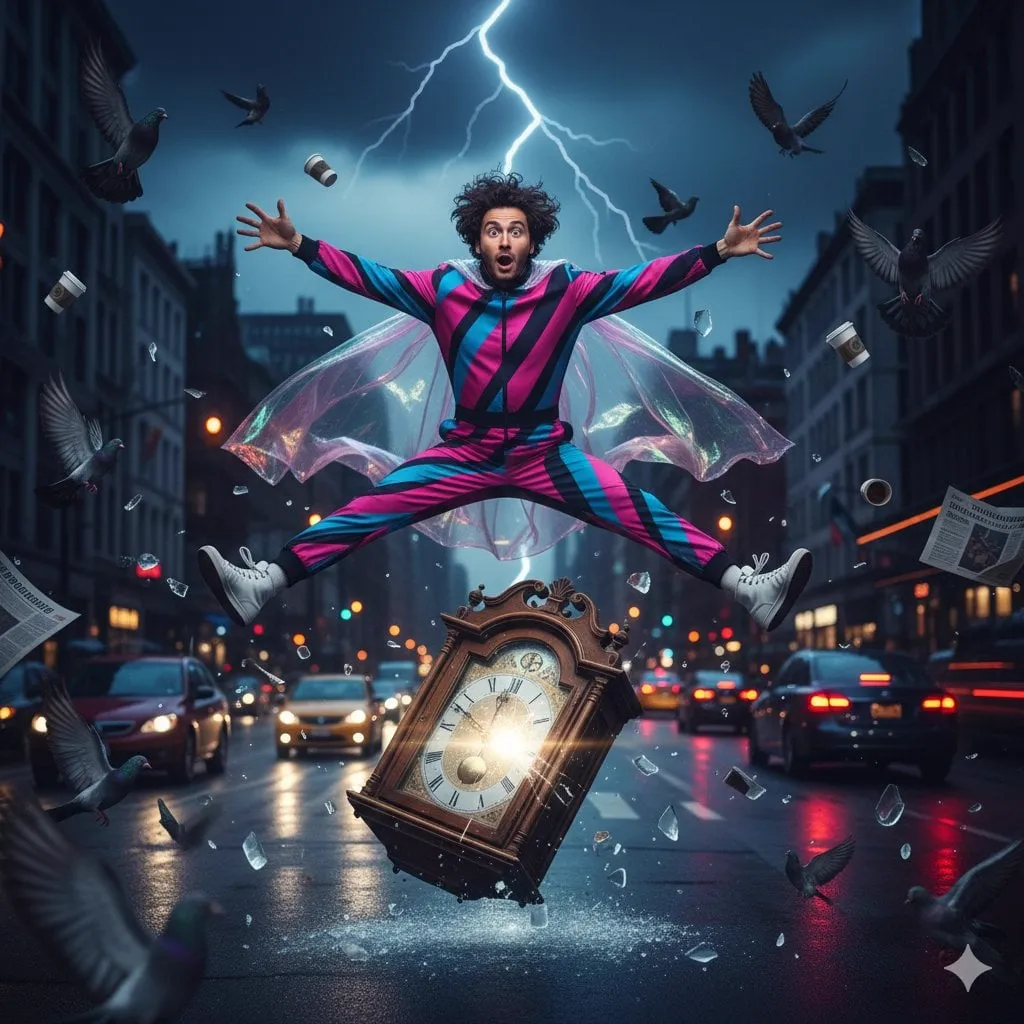
Every few months the generators we use to make images and videos seem to jump forward again. The tools that once produced wobbly, unreal approximations now hold together across multiple shots, hold a character's face steady, and respond to detailed direction about light, camera, and mood. For people who create for a living, the practical question is no longer "can AI make this?" but "which of these models do I trust, and how do I get the best out of them?"
This guide maps the current landscape of image and video generation models, explains how the main families differ, and lays out the techniques that turn a generic output into something distinct and reusable. It is written for creators who want useful guidance rather than marketing language.
A Landscape Defined by Model Families
It helps to stop thinking of "AI video" as one thing. What you are choosing between is a set of model families, each tuned for a particular strength. Understand the families and most decisions become straightforward.
The Realism-and-Stillness Family
Some models focus on producing extraordinarily realistic still images that you can later bring to life. They are excellent when you need a believable product shot, a photorealistic setting, or a detailed environment you can reuse. Their weakness is often motion: animating them convincingly can take extra care, because realism in a still does not guarantee realism in movement.
The Consistency Family
Other models were built around the hardest problem in AI video: keeping the same character and place recognizable from scene to scene. They accept reference images and try to honor them across shots, which matters enormously for anything with a recurring protagonist. They reward structure and patience. If your project depends on continuity, this family deserves the bulk of your attention.
The Motion and Camera-Control Family
A third family excels at expressive movement and camera work. These models understand terms like dolly, tracking, and slow push-in, and produce flowing, cinematic motion. They are a strong choice for content where the energy of the movement matters more than strict realism. Their trade-off is usually less rigorous character consistency.
The Open and Local Family
Finally, a growing set of open-source and locally runnable models gives you freedom over data, cost, and customization. They take more effort to set up and usually need serious hardware, but they offer reproducibility and the ability to fine-tune on your own style. For studios with a repeated, standardized look, that control can be exactly what is missing.
There is no single winner across all four families. The realistic play is to keep two or three tools that cover your main use cases and learn their personalities well.
Techniques That Distinguish Good Output
Model choice matters, but technique matters more. The same model in the hands of a disciplined creator and a casual one produces very different results, and the gap is in how the prompt and input are structured.
Give the prompt a skeleton
A prompt that reads like a list of adjectives produces a pile of pretty but disconnected images. Instead, structure your prompt so that separate phrases control the subject, the environment, the lighting, the camera, and the motion. Each part of the frame gets a clean signal, and the model can follow direction instead of guessing.
Move one variable at a time
When you are iterating on an image or shot, change exactly one thing between attempts. If you adjust the subject, the style, and the camera all at once, you can never tell which change caused the difference. Building a personal map of what each word does is worth more than any shortcut.
Use reference images as a contract
For a specific product, person, or place, text alone is unreliable. Provide a reference image and describe what should stay constant. The more references you give and the clearer your instruction about continuity, the better the model can honor your intent. Treat references as a binding contract, not an optional extra.
Separate the subject from the camera
State what the subject does and what the camera does as two independent instructions. Mixing them into one vague sentence is a common cause of mediocre motion. Adding a little camera vocabulary, like "slow approach" or "low angle," gives the output a cinematic feel that flat prompts cannot achieve.
Lean on conversion workflows
You do not have to generate everything from nothing. Image-to-video lets you animate a still you already like, keeping the composition intact. Video-to-video restyles or corrects an existing clip without regenerating it entirely. Both preserve the parts of your work you were happy with and only rework the parts that failed, which saves time and keeps results more consistent.
Building a Consistent Series
The biggest challenge in most video projects is continuity. Left to their own devices, models drift: a jacket changes color, facial features shift, a room rearranges. Consistency takes deliberate structure.
Start by defining the protagonist's look before you generate anything. Choose or create reference images from enough angles that the model can generalize. Then build a shot list that specifies the angles, the light, and the tone of each scene. Deciding this in advance stops the project from wandering.
For every new shot, feed the relevant references and restate the continuity contract in the prompt. If a character is wearing something specific, say so. If the lighting should not change, say so. Models do not assume continuity; you supply it.
When a shot turns out well, keep it. Use it as the reference for the next shot so continuity compounds. A chain of successful frames produces a far more coherent sequence than a set of independently generated ones.
Producing Distinctive Work
The trap of the modern generator is uniformity. Because everyone has access to the same tools and similar prompts, output can blur together. Distinctiveness comes from deliberately injecting your own identity.
Define a limited visual signature. Pick a consistent lighting style, a palette, or a recurring compositional device that appears across your work. That recognizable thread becomes your brand as surely as a logo.
Write for specificity over prettiness. Generic beats like "cinematic, highly detailed, 4k" add nothing. Replace them with concrete references: a specific time of day, a material texture, a mood, a framing choice. Specificity is what separates a distinctive piece from a wallpaper.
Curate ruthlessly. The model offers you many options, and your eye decides which survive. The consistency of your taste, applied across outputs, is the most durable source of distinctiveness, because it is the one thing a generic tool cannot do for you.
Managing Cost Without Crushing Quality
Generative work has a real budget, and the spend can climb fast if every attempt is treated as a full-price roll of the dice. A little discipline keeps costs reasonable without harming quality.
Draft cheap, then finish rich. Do your experimentation on fast, inexpensive models. When a prompt reliably produces what you want, run the higher-fidelity model only for the final output. This separates creative search from final render, which is where most of the cost lives.
Batch your jobs. Generating several shots together is easier to monitor and more efficient than running tasks one after another, and it makes validation of a consistent batch simpler.
Right-size every render. A throwaway test does not need the same resolution as a hero shot. Match the settings to the destination, and reserve maximum quality for the pieces that actually make it to publication.
Organizing a Real Project
Most people start with prompts and finish with clips, and that works fine for a single post. As soon as you are assembling a real series or a branded piece, a little organization pays off immediately.
Keep one working document per project. In it, record the arc of the piece in a single sentence, list the shots in order, and for each shot store the reference image, the delivered prompt, and the output you chose. This notebook becomes the map of the project and the fastest way to reproduce or rework a single scene.
Protect your good outputs. When an attempt works, copy it out of the tool and store it somewhere under a clear name. It becomes a reference for the next shot and a fallback if you need that look again. A chaotic library undercuts everything else.
If you deliver work for clients or teams, leave the project in a state someone else could continue. That practice feels professional now and saves you hours later when you want to extend a sequence or reuse a style.
Thinking in Series and Consistency
The tools reward a single excellent image, but real storytelling happens across many shots. A series is where the craft of continuity becomes visible, and it is worth treating consistency as a system rather than a hope.
Choose a visual signature for the series and defend it. That could be a fixed palette, a recurring type of camera movement, or a habitual lighting mood. When every shot in a piece shares that thread, the whole work reads as intentional even if individual shots vary.
Push consistency forward shot by shot. Once a frame is accepted, it naturally becomes the anchor for the next one. This compounding approach is far stronger than generating every shot from nothing and trying to reconcile them later.
Do not let a single stale formula own the series. Keep the signature stable, but vary structure and rhythm so the work does not feel repetitive. Audience attention rewards a recognizable voice that still finds new ways to speak.
Turning Models Into a Reusable Toolchain
As you settle on a model or two, build around them a small set of practices that travel with you, so that changing tools is cheap and learning a new one is fast.
Standardize your prompt skeleton. If every prompt starts with the same fields, subject, environment, light, camera, motion, it is easy to compare results and to port a prompt to a different tool. A consistent container makes edits predictable.
Document the inputs that are not obvious. Seeds, aspect ratios, and settings matter, but they are easy to forget. Keep them next to the prompts that use them. When a tool updates, you will know what to re-check.
Reuse through templates, not reinvention. Build a short set of prompt templates for your common formats and adapt them per project. This cuts the blank-page problem and keeps your output coherent across many pieces.
Frequently Asked Questions
Do these techniques apply to image generation too? Yes. Prompt structure, references, and the discipline of changing one variable at a time help whether you are generating stills, video, or a mix of both.
How do I choose between two close models? Run the same short project on both and compare the results side by side against criteria you wrote down before you started. The tie usually breaks on consistency, speed, or cost in your specific use case.
Is it worth maintaining an open-source stack? For teams with a fixed, repeated look and the compute to run it, the control can be worth the effort. For solo and fast-moving work, hosted tools tend to deliver more value per hour.
How long does it take to develop a consistent style? Weeks, not days, if you practice deliberately and document what changes your results. Consistency grows fastest when you review outputs against your own stated criteria.
What is the single most important habit? Keeping your good outputs as references for the next shot. It compounds continuity and distinctiveness faster than any other single change.
The Creative Discipline That Outlasts Tools
The most valuable thing you can build is not a library of favorite models; it is a stable way of working that survives any update. Decide the craft first, then let the tool serve it. A structured prompt, a reference you trust, and a consistent visual signature are portable skills. Models come and go, but the ability to direct a sequence, tell a continuous story, and make deliberate choices is what separates a creator who uses the technology from one who is shaped by it.
What It All Adds Up To
The future of AI video creation is not about finding one perfect tool. It is about learning the craft of direction: how to structure a prompt, how to anchor a character, how to separate motion from composition, and how to build consistency across a series. Those techniques survive any update, because they are about how you work rather than which model you call.
Start with one project and small scope. Generate a single short scene, push it through a few iterations, and annotate what changed your results. The feel for the medium grows fastest through hands-on iteration, and once you have produced one complete, consistent piece, everything that follows becomes a matter of refinement rather than reinvention.
