


Creating high-quality short videos consistently is a craft that combines a clear narrative, solid technical choices, and an efficient workflow. The short-video space is crowded, so a good idea alone no longer cut. What sets lasting channels apart is the ability to deliver polished content again and again without burning out. This guide walks through the fundamentals of quality short-form, from concept and narrative structure to choosing the right tools and building a repeatable production process.
Short video has become a critical battleground for visibility and brand awareness. The success of the major platforms has produced a flood of average content, which means the bar for standing out keeps rising. The good news is that the same factors that define professional quality are learnable, and modern tools make them accessible to solo creators and small teams.
What quality really means in short-form
Quality is not the same as expensive equipment. In a short format, it means clarity of idea, sharp storytelling, good pacing, and consistent production values. A simple clip executed cleanly can outperform a flashy one that is muddled.
Break quality into four dimensions:
- Intent. The viewer understands the point within the first moments.
- Pacing. The rhythm holds attention from the first second to the last.
- Consistency. Style, colors, and characters stay coherent throughout and across the series.
- Polish. Sound, captions, and color feel considered, not rushed.
When you optimize these dimensions, quality becomes repeatable rather than accidental.
The foundation: a strong narrative in a short format
A quality short video always begins with a robust narrative. Attention spans are short, so the first three seconds are decisive. You have to establish a hook that makes someone want to keep watching, then deliver the payoff without dragging.
Structure your short around a clear arc, even if it is only ten seconds long:
- Hook. A promise or question that opens a loop.
- Build. Escalation that keeps the viewer curious.
- Payoff. A resolution that satisfies the loop.
The simplest way to test a concept is to write the hook and the payoff first. If you cannot state both clearly, the idea needs refinement before you invest in production.
Choosing the right generative model
The quality of your output depends heavily on model choice. The range of options is enormous, each with particular strengths. Rather than chasing the most famous option, match the model to the job.
For realistic and brand-facing footage, lean on photorealistic models with strong consistency. For stylized motion or animation, choose a model with a distinctive aesthetic. For fast iteration and testing many shots quickly, use a speed-first model and save the highest-quality render for the final selection.
A practical habit is to define a small, known toolset you trust rather than constantly switching. Run tests with a new tool before production, and only adopt it once you have confirmed it works for your specific style.
Keeping visuals consistent with fusion
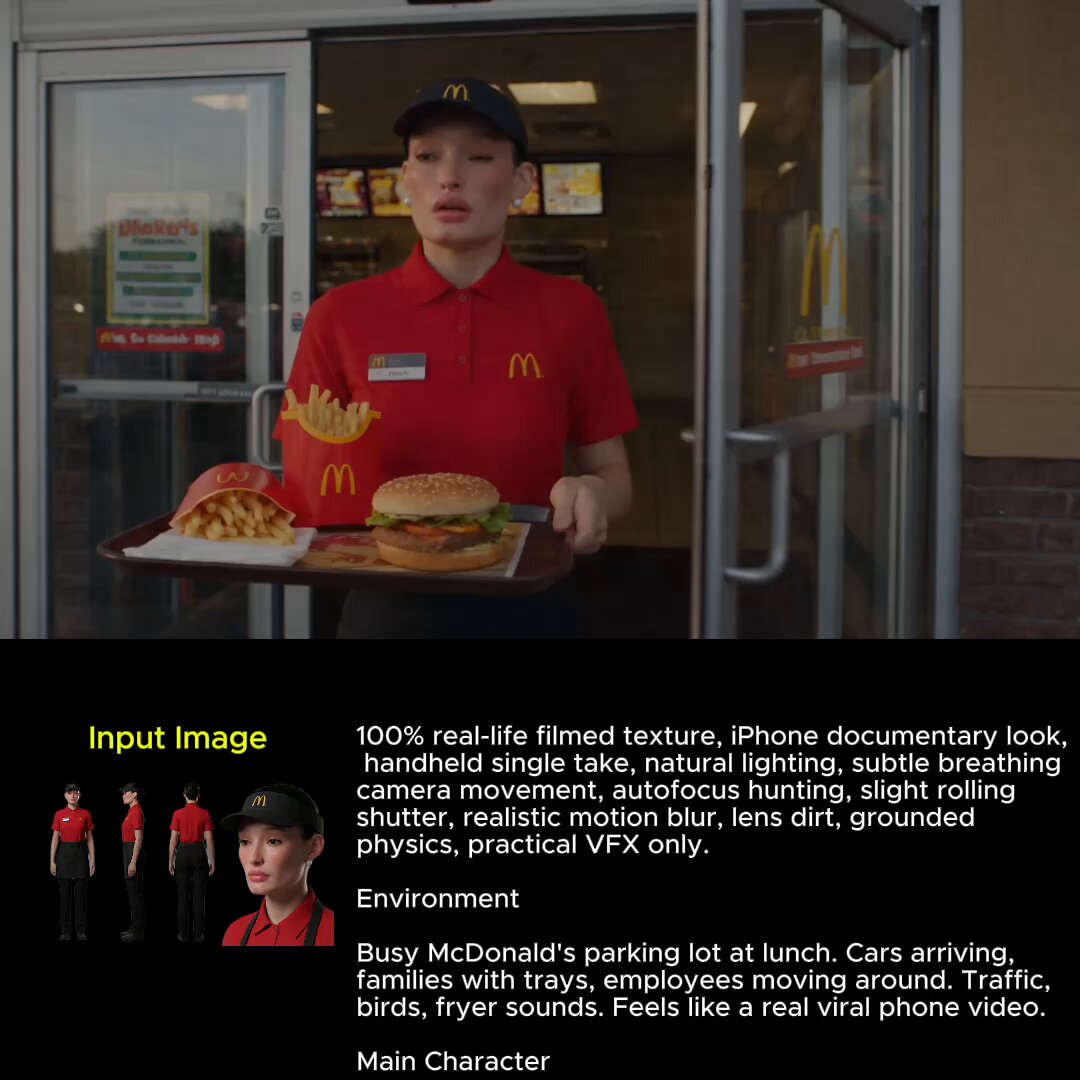
One recurring weakness in generated short video is visual drift: a character or setting looks different from one scene to the next. Multi-image fusion solves this by using reference images to anchor identity and style across shots.
For a series, maintain a reference sheet for every recurring element. Feed consistent identity into each shot and keep the descriptive core of your prompts steady. Review the motion as well as the still frames before accepting output, because a perfect frame can hide a stutter or an identity change in motion.
AI directorial support in your workflow
An AI assistant can act as a director-lite, helping you plan shot order, structure scenes, and maintain a coherent narrative across clips. It is most valuable when you produce frequently and need to move from idea to outline quickly.
Use it to generate options for hooks, scene breakdowns, and transitions, then apply your judgment on what feels right for your audience. The human call about tone and fit still leads; the tool accelerates the mechanical parts of planning.
Building an efficient production workflow
Efficiency is what makes consistent quality sustainable. A repeatable pipeline lets you produce more without sacrificing standards.
- Plan in batches. Decide several concepts at once and outline them together.
- Generate in passes. Build a draft pass for testing, then a polished pass for finals.
- Tighten in post. Trim to length, layer captions, fix pacing, and unify color.
- Keep a library. Store winning prompts, references, and style settings for reuse.
- Template the ending. A consistent outro or branding sequence speeds publication.
When the mechanics become routine, you spend your energy on the creative decisions that actually differentiate your content.
Storyboarding and scripting before you generate
The highest-effort creators do their best work before any render happens, because a short video is a disciplined edit, not a freeform burst.
Write a short script or outline for each clip, even if it is only three sentences. State the hook, the core beat, and the payoff. Translate that into a rough shot list: which shots you need, what happens in each, and how they connect. This list becomes your plan and your quality checklist.
Keep the script tight. Decide the single most important moment in the clip and design everything else to lead to it. If a scene does not serve that moment, cut it. Generators make it tempting to add more, but restraint is what separates professional short-form from a random sequence of pretty shots.
Sound and captions that carry the emotion
Two production elements often decide whether a short feels finished: audio and on-screen text.
Design the sound bar early. Pick music and effects that match the mood rather than adding them as an afterthought at the end. Even a small amount of audio design, such as a subtle riser before the payoff, makes a clip feel considered. Keep voice and effects clear on small phone speakers, because that is where most viewers watch.
Captions are essential on muted autoplay. Write them as a companion layer that reinforces, not merely duplicates, the spoken words. Use short, readable phrases, position them to avoid covering key parts of the frame, and time them to reinforce pacing. Strong captions often push viewers to turn on sound and rewatch.
Estimating effort and planning your time
Quality short-form is sustainable only when it fits your life and schedule. Learn to estimate how long each step takes so you can plan honestly.
For a typical clip, script and layout might take the least time, rendering and iteration the most, and editing, captions, and audio a meaningful chunk on top. Track your own times for a few clips, then use those averages to budget future work.
Batch similar steps together to reduce context switching. Write several scripts in one session, generate all the drafts you need in another, and edit in a single focused block. This grouping turns scattered work into predictable, efficient production, freeing the mental energy you need for the creative choices that differentiate your channel.
Improving motion and coherence
The fluidity of motion and the coherence of scenes separate amateur from professional work. Even strong stills can fail if the motion is erratic.
Pay attention to camera and subject motion in your prompts. Consistent speed and direction make clips feel considered. Where possible, use longer-form models or careful seeding to preserve the same character and environment across cuts, so an edited sequence reads as one intentional shot rather than a collage.
Monetization and sustainability in the creator economy
Quality short-form is also a business. Reliable production makes it possible to build a sustainable model: consistent engagement, audience growth, and ultimately revenue through sponsorships, subscriptions, or product promotion.
For sustainability, treat your content as a product with a repeatable format your audience recognizes. A distinctive, consistent style becomes your signature and makes your work easier to monetize, because brands and viewers know exactly what to expect.
Common mistakes to avoid
Watch for the traps that quietly hold back short-form creators.
- Weak hooks. Making the viewer wait too long for a reason to care.
- Broken continuity. Characters or places changing between shots.
- Ignoring pacing. Segments that linger past their purpose.
- Overcomplicating the idea. Trying to cram too much into ten seconds.
- Skipping polish. Missing captions or flat audio that cheapen the result.
- No repeatable system. Starting from scratch every time fuels burnout.
A simple checklist before publishing
Run a quick pass before you post to catch common issues:
- Does the first second promise a payoff?
- Does the middle hold attention?
- Is continuity consistent across every shot?
- Are captions clear and on time?
- Is the audio clean and appropriately mixed?
- Is the concept easily understood even on mute?
If the answer is no to any of these, spend a little more time before you hit upload. The extra minutes compound into a stronger channel identity.
Frequently asked questions
Do I need expensive equipment? No. The quality bar today is achievable with cloud tools and a solid workflow, not costly hardware.
What is the ideal length for a short? Match length to the content and hold retention until the end. A tight twenty seconds with full retention beats a slow minute that sheds viewers.
How do I keep a character identical across clips? Use reference images and the same descriptive core in your prompts, and review motion frames before acceptance.
Should I always use the newest model? Adopt new tools deliberately. Test with your audience in small experiments before betting your channel on them.
How do I stand out when everyone has the same tools? Through your point of view, narrative instinct, and consistency. Tools are available to everyone; your voice is the differentiator.
Final thoughts
Quality short-form is a combination of narrative craft, smart technical choices, and a repeatable workflow. Start with a strong hook and payoff, choose the right tools for the job, keep visuals consistent, and build an efficient process you can sustain.
Polish the fundamentals, measure what holds attention, and keep refining. As consistency compounds, the channel you build will stand apart in a field of average content, and the quality that once felt hard to reach will become your standard.
Testing hooks before you commit
Before investing in full production, test the concept cheaply. A hook only matters if it holds a viewer for three seconds, so validate that early.
Write three to five hook variants for the same idea and rate them against your audience. You can ask a small group, share a mock in a community, or simply watch your own retention data on a quick inexpensive clip. Choose the hook with the strongest response, then build the full version around it.
This habit prevents the most common waste in short-form production: spending hours rendering a beautiful video attached to a hook that never worked. Cheap testing before expensive rendering keeps the pipe full of ideas that actually stand a chance.
Building a reusable quality toolkit
Over time, assemble a small set of reusable assets that codify your standard of quality.
Create a template for opening sequences and outro cards, keep a curated set of reference images for your recurring characters and places, and store prompts that reliably produce your signature style. Keep a checklist you run on every upload so nothing slips.
A well-organized toolkit does the same thing for video that a good recipe book does for cooking: it lets you reproduce excellence without rediscovering it. It also makes collaboration easier, because a collaborator can open the shared elements and produce within your established look, keeping the channel recognizable even when the workload is shared.
Setting a quality floor you actually keep
The hardest part of consistency is not reaching quality occasionally, but keeping it steady when you are short on time or motivation. A clear, written quality floor helps you decide what ships and what needs another pass.
Write down the few essentials every clip must meet: a hook in the first second, clean audio, captions timed correctly, no broken continuity, and a payoff that matches the promise. When you are rushed, this floor is your safety net. When you have time, you can go beyond it, but you never ship below it.
A quality floor also gives you honest context when you look back at your catalog. You will be able to tell whether a video underperformed because of the idea or because it slipped below your standard, which makes your learning far more precise than a vague sense that something felt off.
