

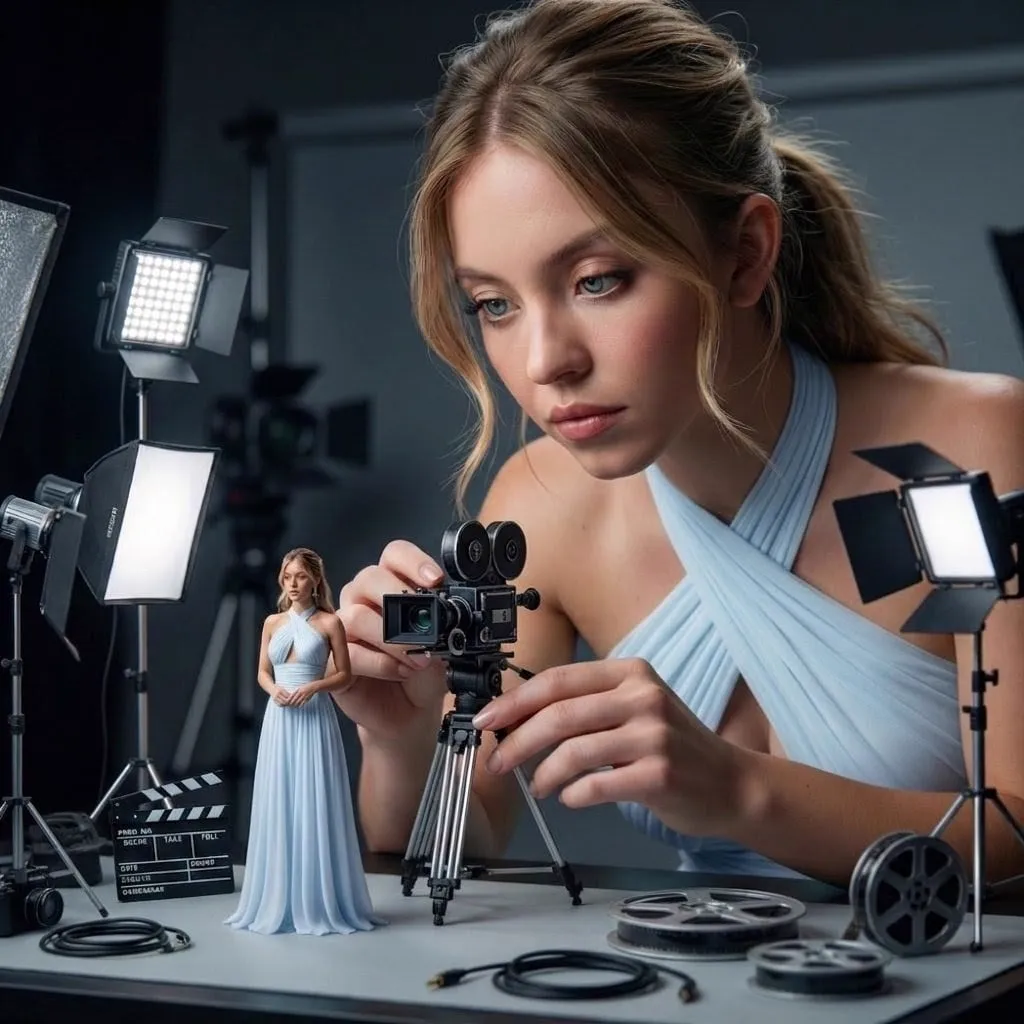

Character consistency is the quiet tax on every AI video project. You can have a beautiful model, a strong script, and a shot list that reads like a real film, and still lose the audience in ten seconds because the lead's face changes between the wide shot and the close-up. Image fusion exists to solve exactly that problem: instead of asking a model to remember a person it has never seen, you feed it a structured set of images and let a fusion layer combine them into a single, stable identity signal.
This guide is a practical workflow for filmmakers, motion designers, and solo creators who need the same character to survive a full sequence: different angles, different lighting, different wardrobe states, and different levels of motion. It covers what fusion actually does, how to build reference sets that hold up, how to orchestrate several models without visual drift, and how to test identity before you waste a weekend on renders.
Why character consistency still breaks AI video
Generative video models do not have memory in the human sense. Every shot is a fresh sample from a probability distribution, conditioned on text prompts, reference images, control signals, and sometimes a previous frame. A face is one of the most statistically dense objects a model can be asked to produce, which means small amounts of sampling noise accumulate into visible identity drift: the jawline softens, the eye spacing widens, the hairline recedes, the skin tone warms by two stops.
Several forces push in the same direction. Prompt phrasing changes between shots, so the model receives slightly different instructions for the same person. Aspect ratio and resolution shifts alter how much pixel budget the face gets. Motion intensity scrambles facial structure during fast camera moves. Aggressive compression in reference images strips the fine detail the model needs. And models carry their own bias toward average, symmetrical faces, which quietly pulls a distinctive character toward a generic one.
Multi-character scenes make it worse. When two faces share the same conditioning space, identity features bleed: one character inherits the other's brow, nose, or hair color. The result is what most creators describe as the cousin problem: everyone in the film looks related, nobody looks like the person you designed.
The practical consequence is that consistency is a pre-production problem, not an editing problem. Teams that try to fix identity in post spend most of their time on rotoscoping, face replacement, and regeneration loops. Teams that plan a fusion strategy up front spend that time on story.
What multi-image fusion actually does
Fusion is easiest to understand as three cooperating layers.
The first layer is identity encoding. One or more reference photos are converted into numerical representations that describe stable facial geometry: interocular distance, nose width, jaw angle, brow position, and so on. Face-recognition style embeddings are good at this because they were trained to treat the same person across lighting and angle as similar.
The second layer is appearance conditioning. Reference images are injected into the generation process so the model can copy texture, not just geometry: skin, freckles, stubble, makeup, hair strand behavior. This is where identity adapters, reference-only sampling, and lightweight fine-tuning live.
The third layer is temporal regularization, which keeps the signal stable across frames and shots. This includes anchor frames, latent blending between consecutive shots, and pose-guided warping that transfers identity information along motion paths so the face does not "re-roll" every time the camera cuts.
Multi-image fusion combines several references into a single steering signal rather than using one. That combination can happen by clustering references by angle and lighting and weighting them per shot, by averaging or interpolating embeddings, by blending attention signals inside the model, or by training a small adapter on a curated set. The important idea is not the specific mechanism; it is that several well-chosen references describe a person far better than one perfect portrait.
Fusion has a sweet spot, and it is worth naming. Push identity weight too high and faces go stiff and mask-like: expressions flatten, skin turns plastic, the character resists the performance you asked for. Push it too low and you get drift. That balance shifts from model to model, which is why testing beats guessing.
Reference variety beats reference quantity
Ten nearly identical frames teach a model almost nothing new. Five references that differ meaningfully do far more work: a clean frontal, a three-quarter turn, a profile, a low-angle shot, and an expressive frame. Coverage is the goal, not volume.
Where fusion sits in the pipeline
Fusion is not a single button. It touches three moments: before generation, when you build the reference set and any adapters; during generation, when each shot receives identity conditioning plus an anchor frame; and after generation, when a continuity pass catches drift and triggers targeted repairs instead of full re-renders.
Designing a character reference set that survives scene changes
Most identity failures trace back to a weak reference set. Build it like a casting package, not a photo dump.
Shot list first, references second
Write down every shot the character has to survive before you collect a single image. Classify those shots by angle, expression range, lighting condition, and wardrobe state. If the script calls for a rain-soaked night scene and you only supplied daylight studio references, the model has to invent the difference, and invention is where identity dies.
Lighting, crop, and labeling hygiene
Use neutral, evenly exposed images in a standard color space. Avoid heavy grading, strong stylized filters, motion blur, and depth-of-field so shallow that the ears are soft. Keep crop consistency: if one reference is a tight headshot and another is a full body in a wide frame, the model receives conflicting scale cues. Crop shoulders-up for most references and reserve one or two full-body images for silhouette.
Label everything. A simple manifest with columns for angle, expression, lighting, wardrobe, and file path saves hours later, because you will need to know which reference to weight for which shot.
How many references and which ones
A practical starting set for a lead character: eight to fifteen images. Three or four frontal variations with different expressions, two or three three-quarter angles, one or two profiles, one or two full-body frames, one or two extreme expressions, and at least one image in the actual costume the character wears on screen. Add a separate reference for any signature prop that defines the character's silhouette.
If two characters appear together often, keep their reference sets physically separate and never merge them into one conditioning batch. Treat the pairing as its own continuity problem with its own tests.
A practical production workflow
Stage one: build the identity bible
Create a single document per character containing the reference manifest, the prompt fragment you will reuse verbatim in every shot, seed values that worked, model choices, adapter or fine-tune identifiers, and known failure modes. This document is the difference between a repeatable process and a series of lucky accidents.
Stage two: generate anchor frames before motion
Generate stills first. Iterate until you have three or four anchor frames that genuinely look like the character, then lock them. Animate from those anchors rather than starting from text alone, because image-to-video conditioning preserves identity far better than prompt-only generation.
Stage three: shot-level generation with fusion conditioning
For each shot, combine an anchor frame as the visual start, the curated reference set as identity conditioning, and a pose or depth guide derived from previz. Keep the character's prompt fragment identical across shots; change only camera, action, and environment language. Small prompt variations for the same person are a hidden source of drift.
Stage four: continuity pass and repair
Review consecutive shots side by side, not one at a time. Compare hairline, eye line, skin tone histogram, wardrobe details, and accessory placement. When something breaks, regenerate that shot with a stronger anchor or a different reference weighting rather than re-rendering the whole scene. Typical productions regenerate a meaningful minority of shots this way and composite the rest.
Orchestrating multiple models without identity drift
No single model wins every shot. Some handle close-ups with excellent skin detail, others handle wide action or stylized inserts better. Routing shots across models is normal, but each switch is a risk: identity adapters do not transfer perfectly, and a character can shift subtly the moment the model changes.
Three habits reduce that risk. First, give every model the same reference set and the same prompt fragment, then add only model-specific technical notes. Second, always carry an anchor frame into a new model so the first frame is grounded in something real. Third, insert a short bridge shot or transition when switching, so the audience never compares two identity interpretations back to back without a cut that hides the seam.
Also standardize color grading after generation, not inside each model's output. Applying one grade downstream hides small tone differences that would otherwise read as identity changes. Store model-specific settings in the identity bible so the next sequence starts with routing decisions already made.
Testing and QA: catching identity failure early
Testing identity is a skill worth building, because the eye acclimates. After twenty renders, everything looks correct.
Start with a landmark checklist: face width, interocular distance, nose length, jaw angle, ear shape, hairline, brow shape, lip fullness, and skin tone variance. Then use a ten-shot test: generate ten short shots covering the character's range, sort them randomly, and inspect for drift. If you have access to face-embedding similarity tools, run them; consistent outliers below your normal similarity band tell you exactly which shot to re-anchor.
Add a human test too. Show five shots out of order to someone who has not seen the project and ask which frames show the same person. If they hesitate, the audience will too. A useful rule: identity should resolve in under a second of screen time.
Keep a log of every failure with the shot number, the suspected cause, and the fix. Patterns emerge quickly, and most of them point back to the reference set rather than the model.
Common mistakes that break character identity
- Using one reference image, or ten images from the same angle.
- Mixing color grades, exposure levels, or stylized filters inside a reference set.
- Over-weighting identity conditioning, producing stiff, mask-like faces.
- Rewriting the character's prompt fragment between shots with new adjectives.
- Changing aspect ratio, resolution, or lens simulation mid-sequence.
- Cropping the head differently from shot to shot.
- Adding a second character without separating conditioning.
- Reusing a seed across scenes with incompatible lighting.
- Regenerating endlessly instead of fixing the reference set.
- Ignoring wardrobe, hair state, and props, then blaming the face model.
Most of these are cheap to prevent and expensive to repair.
Continuity beyond faces: wardrobe, props, and place
A character is a bundle, not a face. Silhouette, wardrobe, hair length, and signature objects do as much identity work as facial features, especially in wide shots or in stylized projects where facial detail is minimal.
Build parallel reference sets for costumes, props, and key environments, and keep them in the same family as the character references: consistent lighting, consistent grading, consistent crop logic. If a jacket changes color between two shots, viewers read it as a continuity error even if the face is perfect.
For environments, fixed reference plates help the model place the character in a stable world. For props, a clean product-style reference prevents the model from reinventing an object every time it appears. Fusion techniques designed for faces generalize reasonably well to repeated objects, but they work best when the object is isolated on a clean background.
Finally, treat audio as continuity too. If you use generated voice, keep the same voice profile and pacing across shots, because tone shifts read as character shifts even when the image is stable.
When fusion is the wrong tool
Fusion is powerful, not universal. There are cases where it costs more than it returns.
Highly stylized characters, such as loose animation or abstract mascots, often benefit from latitude. Over-constraining them removes the expressive exaggeration that makes the style work. In those projects, define identity through shape language and color palette instead of facial embedding.
Documentary-style work involving real people is an ethics and consent question before it is a technical one. Likeness rights, disclosure, and permissions matter, and there are situations where using authentic footage is the only responsible choice.
Heavy visual effects work may be better served by a 3D pipeline: a rigged model, matchmove, and a rendered face give frame-perfect control that generative fusion cannot match. Similarly, extremely fast action shots often hide identity detail anyway, so spending effort on fusion there is wasted.
And in dialogue scenes with two characters, better blocking can solve what conditioning struggles with. Over-the-shoulder framing, single-close-ups, and cutaways reduce the number of frames where two faces compete for the same identity space.
FAQ
Do I need to train a model for every character?
No. Start with reference-based conditioning, which works well for most projects and requires no training time. Fine-tuning or a lightweight adapter makes sense when a character appears across many sequences, when the face is highly distinctive, or when you need consistent results across several models. Train only after you have a clean reference set, because a bad set produces a bad adapter.
How many reference images are enough?
Eight to fifteen well-chosen images usually outperform fifty random ones. Prioritize coverage: frontal, three-quarter, profile, full body, expression extremes, and the on-screen costume. If you notice the character drifting in a specific angle or lighting condition, add references that match that condition rather than adding more of what you already have.
Why do characters shift after a camera angle change?
Because the model has to synthesize geometry it has not seen. A profile requires information your frontal references do not contain, so the model guesses. Supplying profile and three-quarter references, plus an anchor frame from a similar angle, reduces the guesswork dramatically.
Can I fix identity in post instead of regenerating?
Sometimes. Small corrections such as tone matching, subtle warping, or compositing a stabilized face patch can work. But heavy post fixes are slow and often visible. If a shot fails badly, regenerating with a better anchor and different reference weighting is usually faster and cleaner.
How do I stop two characters from blending in a dialogue scene?
Separate their conditioning completely, generate each character's coverage independently where possible, and use blocking that limits frames containing both faces at high detail. Shot-reverse-shot construction is not just a film grammar tradition; it is also a practical defense against identity bleed.
Does fusion work for stylized or animated characters?
Yes, with adjustments. Geometric embedding helps less when proportions are intentionally exaggerated, so lean on color palette, silhouette, costume details, and line style as additional identity anchors. Expect to weight stylization and identity conditioning differently than you would for a photoreal character.
Consistency is not a feature you buy once; it is a discipline you maintain across the life of a project. Build the reference set carefully, anchor every shot in something real, test before you scale, and treat every identity failure as diagnostic information rather than bad luck. Do that, and your characters will hold together from the first frame to the last, in every angle and every scene.
