

Why a Single Still Frame Is the Best Starting Point for AI Video
Most people who try text-to-video first run into the same wall. The model invents the cast, the lighting, the costume, and the composition all at once, so a prompt becomes a lottery draw rather than a shot. Image-to-video reverses that relationship. The still frame carries the art direction, the casting, the framing, and the color palette. The model only has to add time.
That narrower job is exactly why image-to-video results are so much easier to steer. The system is not guessing what the world looks like — it is guessing how the world moves. And motion is a far smaller search space than appearance.
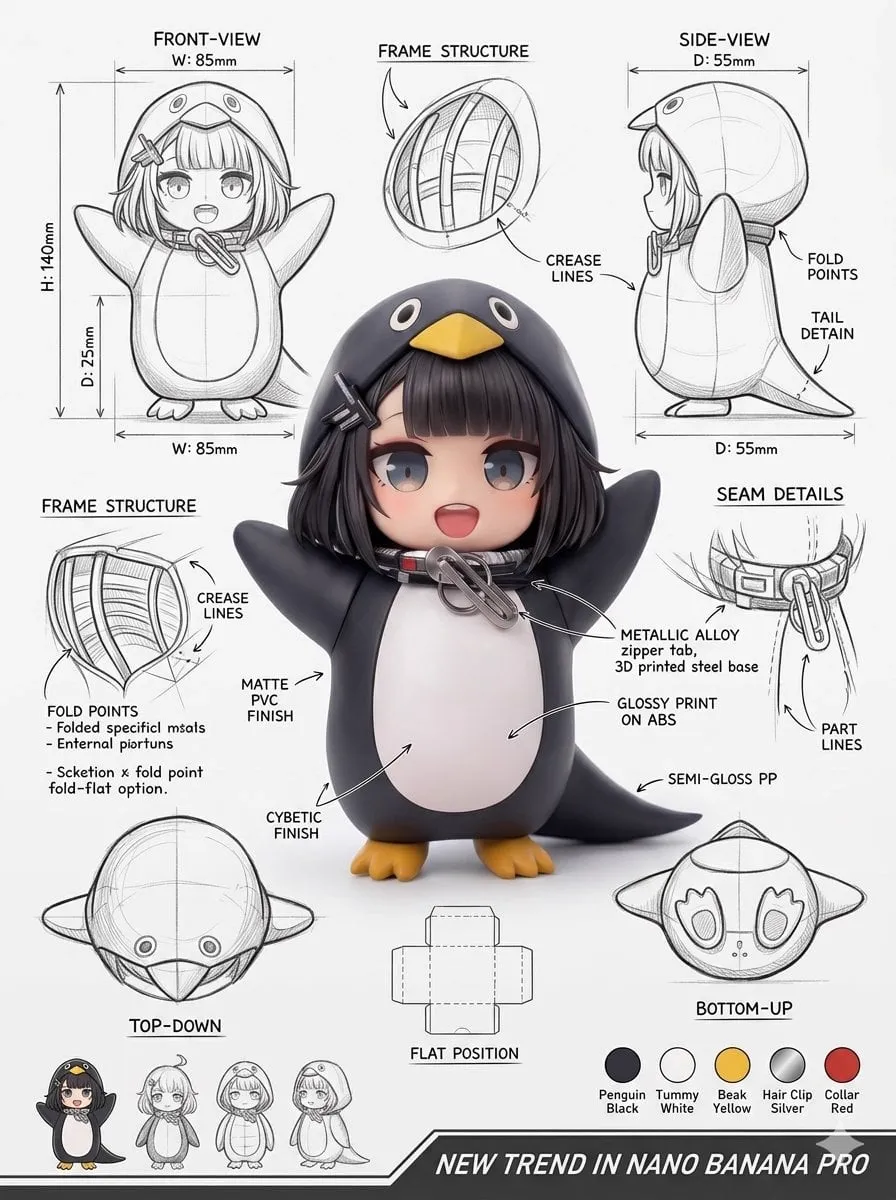
For working creatives, this changes the economics of production. Concept artists, illustrators, product photographers, and solo filmmakers already own large libraries of finished stills. Those assets used to be endpoints: a poster, a keyframe, a hero image. Now they are raw material. A single illustration can become a six-second atmospheric shot; a product photo can become a rotating hero loop; a character sheet can become a dozen short beats for a pitch animatic.
The workflow also suits how teams actually plan. Storyboards, mood boards, and style frames are all still images. Instead of describing a scene in prose and hoping, you animate the frame you already approved. Approvals happen once, in still form, where changes are cheap.
How Image-to-Video Generation Actually Works
Understanding the machinery at a high level helps you predict failures. You do not need to read papers, but you do need to know why a face melts or a hand multiplies.
Latent diffusion and temporal layers
Modern image-to-video systems generally start from a diffusion model that has learned to denoise images in a compressed latent space. That latent space is where the model thinks — a low-dimensional representation that keeps structure and discards redundant pixel detail.
To make video, a temporal component is added on top. It looks across neighboring frames and enforces that patches move coherently rather than flickering independently. Some architectures stack attention across time inside the same network; others use a separate motion module, or predict optical flow and warp frames before refining them. The practical consequence is the same: the model has a temporal budget, and every element it must track costs some of it.
What your input image is really telling the model
Your source image acts as a set of constraints:
- Composition — where the subject sits, and therefore where motion can safely go.
- Depth cues — overlapping shapes, perspective lines, focus falloff. These tell the model what is near and what is far, which determines parallax.
- Lighting direction — shadows imply a light source, and the model will usually keep that source fixed while the camera moves.
- Material hints — the way surface texture reads (fabric, glass, fur, brushed metal) informs how the model animates it.
If any of these are ambiguous, the model resolves the ambiguity arbitrarily, and that is where artifacts come from. A flat, evenly lit image with no overlapping shapes gives the model almost no depth information, so a "push in" becomes a zoom with no parallax.
Where the limits bite
Short clips are still the norm. Longer generations tend to drift: faces evolve, backgrounds recede, and colors shift. Consistency degrades gradually rather than breaking suddenly, which is why shot-length discipline matters more than raw resolution in most pipelines.
Preparing Source Images That Survive Motion
The single highest-leverage thing you can do is prepare the still correctly. Good inputs reduce artifacts more than any prompt trick.
Resolution, aspect ratio, and headroom
Generate or upscale the source to at least the target output resolution, ideally somewhat above it. Match the aspect ratio of your output exactly — internal cropping can cut a subject out of frame mid-shot. Leave negative space where motion is going to happen. If the camera pushes in, the composition should survive a tighter crop.
Lighting and depth separation
Images with a clear key light and readable shadow shapes animate better than flat, shadowless ones. If your still is flat, add a subtle gradient or a rim light before animating. Also check separation: a subject whose edges blend into the background is hard for the model to keep coherent.
Subject clarity and limb placement
Faces benefit from being fully visible and reasonably large. Hands that overlap other hands, or arms that merge into the torso, cause the temporal layer to guess — and it guesses badly. If a pose reads awkwardly as a still, it will read worse in motion.
Practical checklist
- Output-matching aspect ratio, with margin for camera movement
- One dominant light direction, with visible shadows
- Clean subject silhouette against a distinguishable background
- No severe motion blur baked into the source
- Text and fine repeating patterns minimized, because they shimmer
- Saved as a clean, lightly compressed file rather than a heavily compressed one
Controlling Motion With Language
Prompts for image-to-video are not scene descriptions. The image already described the scene. Your text should describe only what changes over time.
Describe motion, not content
Compare two prompts. "A warrior in a forest" adds nothing — the model can see the warrior. "The camera drifts slowly to the right as her cloak ripples in the wind and leaves fall past the lens" gives the temporal layer specific instructions.
Effective motion prompts tend to include:
- One primary movement — the camera, or a subject action, not both at full intensity
- Secondary ambient motion — dust, steam, fabric, rain, hair
- A pace word — slow, drifting, snapping, deliberate, gentle
- A stability cue when you need it — locked-off tripod shot, steady framing, minimal shake
Keep the instruction count low
More instructions do not compound. Past three or four simultaneous motions, the model starts trading them off against each other and you get mush. If a shot needs many things happening, split it into multiple generations and cut between them.
Negative and avoidance language
Describe what you do not want as specific artifacts rather than as "bad quality." Terms like morphing faces, warping edges, flickering highlights, and duplicated limbs give the model something concrete to avoid.
Camera Language and Shot Design
Camera control is the most cinematic lever available, and it is often the difference between a clip that looks like a slideshow and one that looks like a film.
The core moves
Push in and pull out. Use a slow push to build tension on a face, a pull out to reveal context. On a still with weak depth cues, expect this to behave like a digital zoom.
Pan and tilt. Horizontal and vertical rotations. Pans read well on landscapes and interiors where horizontal information continues past the frame edge.
Orbit and arc. A partial circle around the subject. This produces the strongest sense of dimensionality because it forces parallax, but it also demands the most from the model — backgrounds invented behind the subject can wobble.
Crane and boom. Vertical translation of the camera itself. Excellent for scale reveals.
Handheld and drift. Small, irregular motion that adds documentary energy. Keep the amplitude tiny; large handheld motion looks like a broken stabilizer.
Matching the move to the emotional beat
A useful rule: static or near-static frames read as observational, slow pushes read as intimate, and orbits read as revelatory. If you are building a sequence, alternate locked-off shots with moving ones. Constant motion is exhausting; stillness makes motion legible.
Duration and cutting
Think in beats rather than seconds. A four to six second clip is usually enough to register one idea. Cut on motion — let a pan reach its end, or a subject action complete — rather than holding until the model starts to drift.
Keeping Characters and Scenes Consistent
Consistency is where most multi-shot projects either succeed or collapse.
Character reference sets
Build a small reference sheet per character: a clean front view, a three-quarter view, and one expression. Feed the relevant reference alongside your scene frame when prompting. When a character appears in multiple shots, keep the same wording for their appearance every time — persistent, identical descriptions act as an anchor.
Scene extension and shot matching
To continue a scene, take the last usable frame of one clip and use it as the first frame of the next. This chains shots together without a visible jump. Generate a short overlap and cut inside it, so the transition is masked by matching frames.
Anchoring color and light
Global consistency is easier to maintain than local consistency. Fix a color temperature and a light direction for the whole sequence, and keep the same palette references in every prompt. Then vary framing rather than mood. If a shot needs a different mood, treat it as a different scene and earn the change with a transition.
A simple continuity checklist
- Same lens feel across the sequence — wide, standard, long
- Consistent palette and exposure
- Subject facing direction maintained between cuts
- Light source position unchanged within a scene
- Continuity of props, weather, and time of day
Style Control: Live Action, Animation, and Hybrid Looks
Image-to-video inherits style from the source image, so style work happens mostly in the still — or in a refinement pass.
Live-action realism
Photoreal inputs need restraint. Emphasize natural secondary motion — breath, cloth, hair, environmental particles — and avoid dramatic camera moves that expose invented detail. Shallow depth of field in the source helps, because it hides background invention behind blur.
Animation and illustrated styles
Illustrated and animated sources tolerate far more motion, because viewers accept elastic physics in drawn worlds. You can push camera moves harder and let secondary motion exaggerate. Stylized sources also hide temporal artifacts better: an imperfect transition reads as a stylistic flourish rather than a glitch.
Hybrid approaches
A common production pattern is to animate in a stylized pass, then finish with a grade and grain layer to unify everything into one look. Adding subtle film grain, a slight vignette, and a consistent color grade across all clips does more for perceived quality than another round of generation.
Stop-motion and specialty looks
For stop-motion, deliberately reduce the frame rate and add tiny positional jitter between frames. This is the one case where imperfection is the goal — the model's natural smoothness works against you, so you reintroduce it in post.
A Repeatable Production Pipeline
Ad hoc prompting produces demos; a pipeline produces deliverables.
Step 1 — Shot list and animatic
Write the sequence as a list of shots with a stated purpose each. Then build a rough animatic by holding your stills on a timeline with approximate durations. You will immediately see whether the pacing works. Changing timing here costs nothing.
Step 2 — Prepare and animate
Prepare each still to the checklist above. Generate each shot with one primary motion. Produce three to five variations per shot, then triage ruthlessly: if a take has a warped face in the first second, discard it rather than trying to fix it.
Step 3 — Select, cut, and cover
Sort takes into keep, maybe, and no. Cut the keeps into the animatic order. Where a shot fails, cover it: cut earlier, use a reaction insert, or replace it with a different angle. Coverage is the cheapest form of quality control.
Step 4 — Finishing
Add sound design before color. Footsteps, cloth rustle, room tone, and a music bed do disproportionately heavy lifting — viewers forgive visual imperfection far more readily when the audio is coherent. Then apply a global grade, unify grain, and check the whole sequence at small size to catch continuity breaks.
Common Failure Modes and How to Fix Them
Face morphing. Usually caused by a small or partially occluded face in the source. Crop closer, or slow the motion.
Background warping during camera moves. Often a depth-cue problem. Add stronger foreground and background separation, or reduce the move amplitude.
Flickering textures. Fine detail — text, stripes, foliage — is hard for temporal layers. Reduce it in the source or soften it slightly.
Rubber-limb motion. Ambiguous poses. Choose a source frame where limbs are clearly separated and readable.
Color drift as the clip progresses. Long generations drift. Shorten the clip or lock palette references in the prompt.
Everything feels like a slideshow. You are probably using moves that produce no parallax. Introduce overlapping elements and a slight orbit.
Everything looks like a floaty dream. You are using too much motion. Add a locked-off shot and let stillness define the rhythm.
Mushy multi-action shots. Split them. One idea per generation.
Choosing Tools and Setting Expectations
Tool choice should follow the shot, not the other way around.
- Motion fidelity — how well small, subtle movement survives generation
- Prompt responsiveness — whether camera terms actually do anything
- Max usable duration — the length before visible drift, not the spec-sheet number
- Reference support — the ability to condition on character or style images
- Resolution and aspect ratios — whether your delivery format is native
- Determinism — whether a seed lets you reproduce a take
- Iteration speed — how many takes you can afford per shot
- Output rights and licensing — what you may actually publish
The most underrated criterion is iteration speed. A model that is slightly less impressive but generates takes in a fraction of the time will usually produce a better final sequence, because selection is where the quality actually comes from.
Frequently Asked Questions
How long can an image-to-video clip be before quality drops?
It varies by model and scene, but drift typically becomes visible somewhere in the range of several seconds of continuous motion, and much sooner in shots with faces or complex backgrounds. Plan around short clips and cut.
Do I need a high-resolution source image?
Higher than your target output is ideal, but clarity matters more than raw size. A clean, well-lit, moderately sized image with strong depth cues outperforms a huge, soft one.
Can I animate a photo of a real person?
Technically yes, and the results can be impressive. Practically, get permission, be careful with likeness and publicity rules, and label synthetic media where required.
Why does my camera push look like a digital zoom?
Because the model has no depth information to work with. Add overlapping foreground elements, perspective lines, or depth-of-field falloff to the source image, then try again.
What is the fastest way to improve results?
Generate more takes and select harder. The largest single quality gain in most workflows comes from triage, not from tuning prompts.
Should I animate the still or generate variations first?
Generate three or four composition variations, choose the strongest as a still, then animate it. Approving frames is cheaper than approving motion.
How do I keep a character recognizable across shots?
Use a consistent reference set, repeat identical appearance descriptions, and keep the camera at similar distances. Wide shots hide detail differences; close-ups expose them.
Do I still need editing software?
Yes. Assembly, sound, pacing, and grading determine whether a sequence reads as a film or as a folder of clips.
