
Why Visual Consistency Is the Hardest Part of AI Video
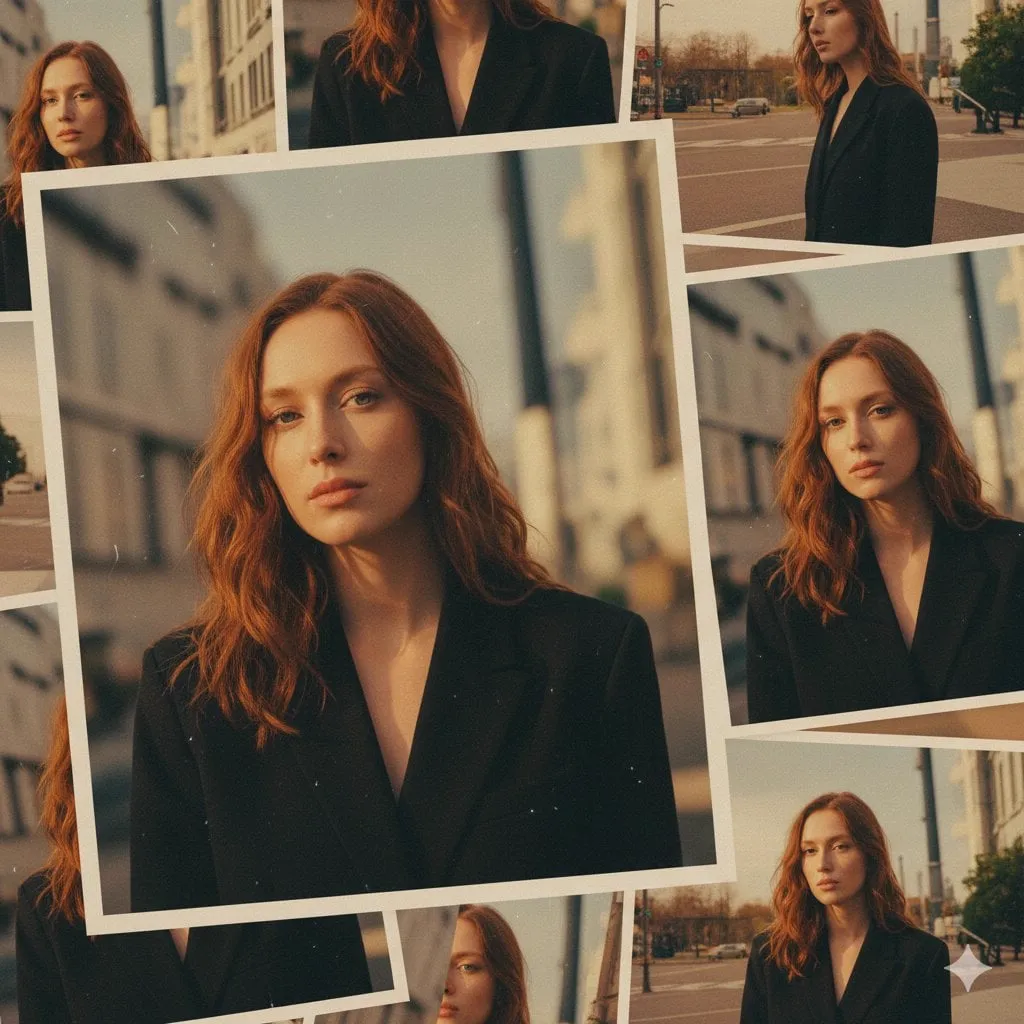
Modern text-to-video and image-to-video models can produce a single breathtaking shot in seconds. Ask them for the same character in the next shot, from a different angle, in different light, and the illusion collapses. Hair that was copper becomes strawberry blonde. A denim jacket turns into a leather one. The camera that sat at eye level suddenly tilts upward. The color grade drifts from warm tungsten to clinical daylight.
This is the continuity problem, and it is the single biggest reason AI-generated footage still struggles in narrative, advertising, and episodic formats. Audiences forgive a slightly odd hand. They do not forgive a main character whose face changes between cuts.
Lego pixel processing is a practical response to that problem. The idea is simple: instead of asking a model to invent an entire frame from scratch every time, you break the frame into modular, reusable, addressable pieces — like Lego bricks — and lock the ones that must never change. The model still generates, but it generates inside constraints you control.
This guide covers the concept, the workflow, the decision criteria, and the mistakes that cause most consistency failures.
What Lego Pixel Processing Actually Means
Lego pixel processing is not a specific algorithm. It is a mental model and a pipeline discipline. It treats a video frame as something assembled from a small set of named components rather than as a single unpredictable image.
In a conventional AI video workflow, one long prompt describes everything: the character, the outfit, the lighting, the lens, the mood, the background, the style. Every generation re-rolls all of those variables at once. Any small change in sampling noise can shift five attributes at the same time.
In a Lego approach, you separate the frame into bricks:
- Identity bricks — the face, body proportions, hair, and signature features of a character.
- Wardrobe bricks — clothing, accessories, and their exact colors.
- Palette bricks — the hex-level color scheme of the production.
- Texture bricks — grain, halftone, pixelation, film stock, or brush treatment.
- Lighting bricks — key direction, color temperature, contrast ratio.
- Camera bricks — focal length feel, height, angle, movement.
- Motion bricks — how the subject moves and how fast the camera moves.
- Negative bricks — the things that must never appear.
Each brick has a reference image, a written description, and a locked status. When you generate a shot, you assemble the bricks you need and leave the rest untouched. When something drifts, you know which brick failed and you fix only that brick.
Why this reduces drift
Diffusion and transformer-based video models are sensitive to reference dilution. If you give a model one strong face reference plus four competing style references, the face inherits traits from the styles. Lego thinking reduces dilution by keeping reference sets small, specific, and role-separated.
It also makes debugging possible. When a shot looks wrong, you are not guessing among forty prompt tokens. You are auditing six bricks.
Where drift actually comes from
Consistency failures are rarely random. They usually trace back to one of five causes:
- Sampling noise — the model re-invents low-frequency detail on every run.
- Reference dilution — too many references competing for the same conditioning space.
- Prompt entropy — vague words like "cinematic" or "beautiful" that the model interprets differently each time.
- Resolution mismatch — a reference at 512px conditioning a 1080p render loses detail influence.
- Post-process drift — upscalers, frame interpolators, and color grades applied inconsistently across shots.
The Four Layers of a Consistency Stack
A production-ready consistency system has four layers. Skipping any one of them produces footage that looks fine in isolation and broken in sequence.
Identity layer
This is the anchor. It defines who or what is on screen. For human characters, the identity layer needs at minimum a front, a three-quarter, and a profile reference, all shot with the same lighting so the model is not confusing lighting variation with facial variation. For stylized characters — pixel-art avatars, mascots, product mascots — the identity layer is often a single well-crafted sprite plus a turnaround sheet.
Keep the identity layer frozen. Every time you "improve" the reference mid-project, you invalidate every shot already generated.
Style layer
The style layer defines how the image is rendered: color palette, contrast, grain, edge treatment, and level of abstraction. In a pixel-processing pipeline, this often means defining a target block size, a palette of eight to sixteen colors, and a dithering rule. That sounds restrictive, but restriction is precisely what makes output repeatable.
A useful trick is to build a one-page style sheet with swatches, a reference frame, and a written rule such as "no gradients, no anti-aliasing, maximum four values per character." Written rules catch inconsistencies that image references alone miss.
Motion layer
The motion layer governs how things move. Two shots can match perfectly in a still frame and still feel disconnected because one has a slow dolly and the other a handheld sway. Define motion vocabulary up front: camera moves, subject speed, and how much secondary motion (hair, fabric, particles) is permitted.
Continuity layer
The continuity layer is the glue between shots: eyelines, screen direction, prop positions, time of day, and wardrobe state. This is where most AI video projects quietly fail. A character holds a cup in the left hand in shot one and the right hand in shot two, and no amount of face matching will save the sequence.
Build a continuity sheet — a simple table of shot number, location, wardrobe state, props, and time — before generating anything.
Building a Reference Library That Actually Works
Most creators under-invest here and pay for it later. A good reference library is small, boring, and heavily labeled.
Start with a canon folder. This folder contains only approved references. Nothing experimental lives here. If a reference is not approved, it goes to an alt folder.
Standardize resolution and aspect ratio. Mixing a 512x512 portrait with a 1920x1080 frame in the same conditioning set produces unpredictable influence weighting. Normalize to the aspect ratio you will render in.
Use neutral, repeatable lighting. Butterfly lighting on one reference and hard side light on another teaches the model that your character has two different face shapes.
Name files descriptively. presenter_front_neutral_v03.png tells you more in one glance than IMG_4421.png ever will. Version numbers matter because you will eventually need to know which reference produced which shot.
Store metadata next to the image. A simple text file with the prompt, seed, model, and settings that produced a reference turns a lucky accident into a reproducible asset.
Limit the canon. Five to eight references per character is usually enough. Beyond that, returns diminish and dilution increases.
A Step-by-Step Workflow: From Test Brick to Final Shot
Here is a workflow that scales from a single short to a full series.
Step 1: Lock the identity brick
Generate still images until you have a face or design you are genuinely happy with. Do not move to video. Do not move to a second shot. Approve and freeze.
Step 2: Define the palette and texture bricks
Write down hex codes. If you are producing retro pixel content, define block size and dithering rules. If you are producing realistic content, define a LUT or grade reference frame. Store both as files, not as memory.
Step 3: Generate a single isolated shot
Use image-to-video conditioning with your identity reference. Keep the prompt short and structural: subject action, camera behavior, lighting condition. Avoid adjectives that compete with the reference.
Step 4: Run a two-shot test
The two-shot test is the cheapest consistency check in existence. Generate the same character in two different shots — say, a medium front shot and a three-quarter shot — and cut them together. If the cut reads as the same person in the same world, your stack works. If not, fix bricks before scaling.
Step 5: Add motion last
Once stills match, add camera and subject motion. Motion amplifies existing inconsistencies, so solve identity first.
Step 6: Assemble and quality-check the sequence
Cut the shots together with no music, no titles, and no sound design. Watch it three times. The first pass catches face drift, the second catches palette drift, the third catches continuity errors. Bare cuts expose everything.
Step 7: Re-render surgically
When one shot fails, re-render only that shot with the same bricks. Never regenerate the whole sequence, or you will introduce new variation into shots that were already correct.
Choosing the Right Generation Approach per Shot
Different shot types need different techniques. Forcing one method across a whole project creates unnecessary inconsistency.
| Approach | Best for | Main weakness | Use when |
|---|---|---|---|
| Image-to-video conditioning | Character-driven dialogue and product shots | Motion can feel restrained | Identity must be exact |
| Keyframe interpolation | Precise camera moves and transitions | Needs strong start and end frames | Both ends of the shot are defined |
| Reference-conditioned generation | Stylized or animated looks | Style can overpower identity | Style consistency matters more than realism |
| Multi-reference fusion | Recurring characters across many shots | Dilution risk if references multiply | You need one identity across a whole series |
| Pure text-to-video | Establishing shots, abstract B-roll | Weak identity control | No recurring character is present |
A practical rule: the more a shot depends on a returning character, the more conditioning it needs. Establishing shots can be almost fully generative because nobody is comparing faces.
Common Mistakes and How to Fix Them
Chasing perfection in a single frame. A shot that looks perfect in isolation but breaks the sequence is worse than a slightly imperfect shot that cuts cleanly. Always evaluate in context.
Changing the reference mid-project. Every reference swap resets consistency for all future shots. Version your canon folder and only promote a new reference at a project boundary.
Overloading the prompt with style adjectives. Words like "hyper-realistic cinematic masterwork" pull the model away from your reference. Replace mood adjectives with concrete camera and lighting instructions.
Ignoring color management. If one shot is graded and another is not, the cut will feel wrong even if the faces match. Apply the same grade pipeline to every shot.
Letting the upscaler invent detail. Upscalers hallucinate texture and can subtly change facial features. Use one upscaler with one setting for the entire project, or upscale after final assembly.
Skipping the continuity sheet. Prop and wardrobe errors are the most common consistency complaint from viewers precisely because they are easy to prevent with a checklist.
Generating too many variations. Endless re-rolls produce a pile of near-matches that are individually appealing and collectively incoherent. Set a variation cap — say three — then commit.
Treating motion and identity as one problem. Fix them separately. Motion problems look like identity problems when the frame is blurred.
Quality Control: How to Review Frames for Drift
A short, repeatable QC pass catches most problems before an audience does.
Side-by-side comparison. Place the current frame next to the canon reference at identical scale. Your eye catches differences in proportion faster than any metric.
The flip test. Mirror the current frame horizontally and compare. Facial asymmetries that were invisible suddenly stand out.
The grayscale test. Desaturate both frames. If the cut still reads as consistent in grayscale, your palette is working.
The thumbnail strip. Export six consecutive frames as thumbnails in a single strip. Drift is far more visible across a strip than in a large single image.
Histogram check. Compare color histograms between shots in the same scene. A large shift in average luminance or saturation usually means a lighting brick was missed.
Sound-off, music-off viewing. Music hides cuts and masks discontinuity. Review bare.
Scaling Consistency Across a Series or Campaign
Once a project grows past ten or fifteen shots, consistency becomes an asset-management problem rather than a prompt problem.
Create a production bible. One document containing the identity references, palette, style rules, motion vocabulary, and continuity sheet. Anyone joining the project reads this before generating anything.
Build shot templates. Save prompt structures with brick slots. A template like [IDENTITY] + [ACTION] + [CAMERA] + [LIGHTING] + [NEGATIVE] is far more reliable than free-form writing, and it makes batch generation predictable.
Separate generation from assembly. Generate all shots for a scene, then assemble, then grade. Interleaving these steps causes you to re-render shots that were already fine.
Version everything. Shots, references, and grades. When a client asks for the earlier version, you want it back in seconds.
Document what you rejected. Rejected references and failed prompts prevent teammates from repeating your mistakes — and prevent you from repeating them six weeks later.
Budget for re-renders. Even with a tight stack, expect roughly one in five shots to need a second pass. Plan review time accordingly.
Frequently Asked Questions
Is Lego pixel processing only for pixel-art or retro styles?
No. The "pixel" in the name refers to treating image data as addressable modular units, not to a retro aesthetic. The same discipline applies to photorealistic footage, 3D animation, motion graphics, and stop-motion looks.
How many reference images does a character need?
Three to five well-matched references usually outperform ten inconsistent ones. Prioritize a neutral front view, a three-quarter view, and one full-body or wardrobe reference.
Why does the character change when I switch camera angles?
Your identity conditioning is too weak relative to the camera prompt. Strengthen the identity reference weighting, reduce competing style references, and describe the camera change in concrete spatial terms rather than emotional ones.
Should I fix problems in generation or in post?
Fix identity and style in generation, because post tools struggle to reconstruct faces. Fix small color and exposure mismatches in post, where they are cheap and reversible.
How do I keep consistency across multiple scenes over time?
Freeze the identity and palette bricks for the entire production. Allow lighting and camera bricks to change per scene. Consistency should be a constant, not a variable.
Does a longer prompt improve consistency?
Usually the opposite. Long prompts introduce more variables. Short, structured prompts built from locked bricks are more repeatable than verbose ones.
What if my model cannot take multiple references?
Chain the process: generate a strong still, then use image-to-video conditioning from that still. Generate a new still for each shot from the same reference, and treat the still as your consistency gate.
Putting It Into Practice
The core insight behind modular pixel workflows is that consistency is not a model feature you hope for. It is a pipeline property you build. Models will keep improving, but the discipline of separating identity, style, motion, and continuity into independently locked components will remain useful regardless of which generation tool you use next.
Start small. Build one character reference set, define one palette, and run the two-shot test before you generate anything else. If those two shots cut together believably, you have a system. If they do not, you have found the exact brick that needs fixing — which is a far better position than staring at forty inconsistent clips and wondering where it all went wrong.
Treat every frame as assembled rather than conjured. Lock what must not change, vary only what the story requires, and review in sequence rather than in isolation. That is how AI video stops looking like a collection of impressive accidents and starts looking like a production.
