
What the "Lego Pixel" Approach Actually Means
AI video has crossed a threshold that few people noticed. Generating one striking clip is no longer impressive — it is routine. The hard part starts with the second shot. The moment you need the same character to walk through a doorway, turn their head, and deliver a line without morphing into a stranger, most pipelines fall apart.
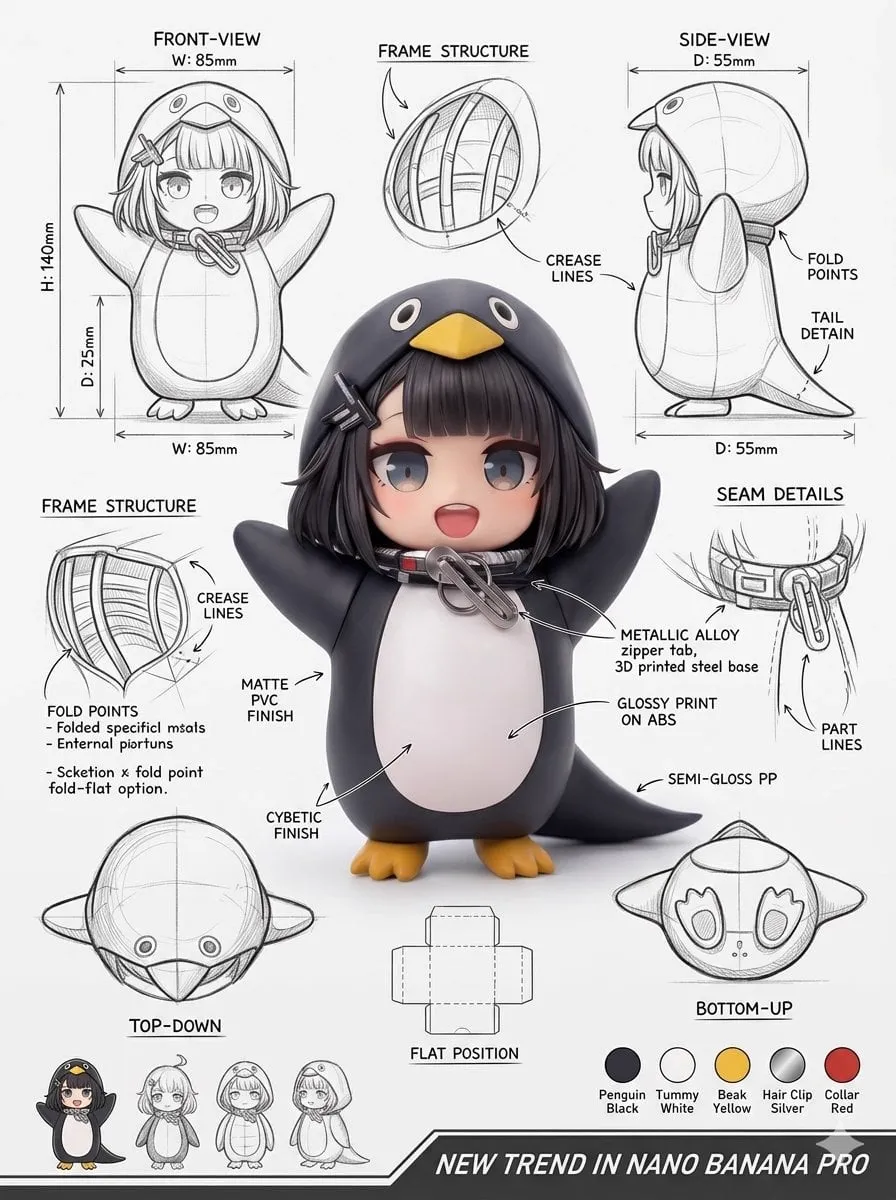
The "Lego Pixel" idea is a mental model for fixing that. Instead of treating a frame as a single indivisible artwork, you treat it as an assembly of modular parts: a silhouette, a palette, a facial structure, a lighting direction, a texture grain, a camera distance. Each part is a brick. Each brick can be described, referenced, swapped, and reused. When you rebuild a scene you are not asking the model to invent a person again — you are handing it the same bricks and asking for a new arrangement.
That reframing matters because it converts a fuzzy creative wish ("make it look the same") into a set of controllable parameters. Consistency stops being luck and becomes engineering.
This guide walks through the practical side: how modular composition works, how multi-image referencing locks a character in place, how to transform style without destroying story context, and how to build a reference pack that survives a full production. Everything here is deliberately tool-agnostic. Whether you work with a hosted generator, a local diffusion setup, or a hybrid pipeline, the underlying rules are the same.
Why Consistency Is Still the Hardest Problem in AI Video
Most tutorials spend their time on the first generation. That is the easy 10%. The remaining 90% is the discipline of making shot twelve look like it belongs to shot one.
The three drifts
Almost every consistency failure falls into one of three categories.
Identity drift is the most visible. The jaw narrows, the eye color shifts, the hairstyle changes length, the age moves by a decade. It happens because the model has no memory. Each generation is stateless: it reads your prompt and your references, samples from a distribution, and forgets. If your reference material is thin or contradictory, the sampler wanders.
Palette drift is subtler and often more damaging to perceived quality. Indoors the scene trends warm, outdoors it trends cold, and by the final act the whole film looks like it was graded by three different people. Palette drift usually comes from unmanaged lighting keywords and from letting the model choose colors freely.
Geometry drift covers everything spatial: the door is on the wrong wall, the character is suddenly left-handed, the car has four doors in one shot and two in the next. Video models compress the world into latents and reconstruct it imperfectly; without explicit spatial anchors, small errors compound across shots.
Why single-image prompting cannot fix it
A text prompt is a lossy channel. Words like "a determined young engineer" carry enormous ambiguity, and every re-encode of the same prompt produces a different sample. Text alone gives you a category, not an individual. To get an individual, you need pixels — many of them, from many angles, with consistent lighting.
That is the entire argument for reference-driven generation, and it is why the modular approach wins over clever prompt writing.
The Architecture of Visual Cohesion
Think of a coherent scene as four stacked layers. When something looks wrong, diagnose which layer failed before you touch the prompt.
Layer one: identity
Identity is the skeleton of your character: face geometry, body proportions, hair, distinguishing marks. Identity should be locked first and changed almost never. In practice this means you build a fixed reference set and reuse it verbatim across every shot in a sequence.
Layer two: style
Style is the rendering treatment: pixel-art quantization, cel shading, watercolor bleed, film grain, chromatic aberration, brush stroke size. Style is global and should be defined once as a style bible — a short written spec plus two or three visual examples that every generation inherits.
Layer three: staging
Staging is camera, lighting, and composition: lens length, height, direction of key light, background depth. Staging changes constantly, which is exactly why it must be described in a rigid, repeatable format rather than improvised prose.
Layer four: continuity props
Props and wardrobe are the connective tissue of a story. A red scarf, a cracked phone screen, a specific mug. Keep a prop sheet with reference images so props can be re-injected on demand instead of re-described from memory.
Separating these layers is the single biggest productivity gain in the whole workflow. When a shot fails, you know whether to fix the identity references, the style bible, or the staging line — usually in under a minute.
Multi-Image Fusion: Locking a Character Across Shots
Multi-image fusion means feeding the model several references of the same subject simultaneously and letting it reconcile them into one coherent subject. Done well, it is the closest thing to a character lock that current tools offer.
The five-view rule
For any character who appears in more than three shots, prepare at least five references:
- A neutral front view in flat light
- A three-quarter view
- A profile view
- A full-body shot showing proportions
- An expressive shot with a strong emotion
These five cover the geometry that text cannot express. If the character will be seen from behind or in motion, add a back view and a mid-action frame.
What makes a good reference image
Good references are boring. They are evenly lit, uncluttered, and shot against a simple background. Dramatic lighting in a reference is harmful, because the model cannot tell whether the shadow belongs to the character or the environment — and it will bake that shadow into every future scene. Save the drama for the shot, not the reference.
Also keep references at the same aspect ratio as your target output. Mixing a square portrait reference with a wide cinematic frame forces the model to invent the sides of the character's head, and invented anatomy is where drift begins.
Fusion strength and weighting
Most tools that accept multiple references let you weight them. A practical default: give the front view the highest weight, the three-quarter view slightly less, and the full-body shot enough weight to survive but not enough to fight the face. If your tool exposes an identity-strength slider, keep it high while staging is simple and reduce it slightly for very dynamic action, where over-constraining identity produces stiff, mannequin-like motion.
Style Transformation Without Losing Narrative Context
Style transformations go wrong in a very specific way: they work beautifully on a single still and destroy the story when applied across a sequence.
The cause is that style and content are entangled in the prompt. If you write "pixel-art style, 8-bit palette, blocky" and then ask for a tense dialogue scene, the model may quantize the facial expressions too, flattening the emotional read. The scene becomes a decorative poster instead of a beat in a narrative.
Separate the what from the how
Write two prompt components and keep them physically separate in your template:
Content line: who is in frame, what they are doing, where they are, what the camera sees.
Treatment line: rendering style, palette constraints, grain, edge treatment, resolution feel.
When you iterate, change only one line at a time. If you change the treatment and the scene breaks, you know the treatment is too aggressive rather than guessing.
Use a style ramp, not a style switch
Treat style strength as a dial with five positions rather than a binary. Generate the same frame at low, medium, and high treatment strength, then choose the highest setting that still preserves facial micro-expression and readable staging. For pixel-art treatments especially, the sweet spot is usually the middle of the range: enough quantization to read as deliberate, not so much that eyes become two dots.
Protect the emotional beats
Identify the three or four shots in your sequence where emotion carries the story, and dial the treatment down for those shots. Audiences forgive a stylistic wobble far more readily than they forgive a flat performance. If a tool supports per-shot treatment strength — or a mask that keeps faces at higher fidelity while the environment stays heavily stylized — use it.
Building a Reference Pack: A Step-by-Step Workflow
This is the routine that keeps long projects stable.
- Write the style bible first. One paragraph of treatment rules plus three visual examples. No generation begins before this exists.
- Design the character in a still image pipeline. Iterate on single images until the character is unmistakable. This is the cheapest place to explore.
- Generate the five views. Do not skip the profile or the full body. Those two references prevent most proportion drift.
- Normalize the references. Crop to identical framing, match exposure, and place them on a consistent neutral background. A few minutes in any image editor pays off across dozens of shots.
- Name and version everything. Use a scheme like
char_name_view_v03. When drift appears in week three, you need to know exactly which references were in play. - Lock a seed and a staging template. Reuse the same seed family and the same staging sentence structure for every shot in a scene.
- Generate establishing shots first. Environment shots are cheap to fix and they set the palette that character shots must match.
- Review in contact sheets. View ten frames side by side, not one at a time. Drift is invisible in isolation and obvious in a grid.
- Fix backward, not forward. When a shot drifts, correct the reference pack and regenerate the scene, rather than patching the single bad frame. Patching creates a new baseline that drifts again two shots later.
Matching the Engine to the Job
The tooling landscape splits into a few functional categories, and the practical skill is knowing which category a problem belongs to.
Image base models — Stable Diffusion-family checkpoints, Flux, Midjourney — are where identity and style are invented. They offer the most control over references, seeds, and fine-tuning, so they are the right place to build your character.
Video engines — Runway, Kling, Luma, Pika, Sora and similar systems — excel at motion and temporal coherence but offer less precise identity control. Feed them images rather than words whenever the tool allows image-to-video. Starting from a locked frame is dramatically more stable than starting from a prompt.
Upscaling and restoration tools matter more than people expect, because compression artifacts and softness are read by viewers as inconsistency. A consistent upscale pass across the whole sequence unifies texture.
Compositing and grading in DaVinci Resolve, After Effects, or Blender is where final cohesion is actually won. A single grade applied to the whole timeline hides small color differences between engines far better than any prompt tweak.
Asset management can be as simple as a strict folder convention plus a spreadsheet of prompts, seeds, and reference versions. Projects fail at scale from lost context, not from bad models.
Prompt Patterns That Hold Together
Reusable templates beat improvisation. Three patterns cover most needs.
The identity anchor block — a fixed chunk of text describing the character, identical in every prompt, placed at the start: age range, build, hair, wardrobe, distinguishing features. Never paraphrase it. Copy-paste it.
The staging line — a rigid format: [camera height] + [lens feel] + [subject action] + [environment] + [light direction]. Because the structure never changes, only the variables shift, and the model receives a consistent grammar.
The treatment suffix — the style bible compressed into one sentence, placed last so it applies globally: palette limits, edge treatment, grain, contrast behavior.
Two refinements make a measurable difference. First, use negative constraints sparingly but specifically — "no lens flare, no bloom" is useful; a laundry list of twenty negatives dilutes attention. Second, keep a running prompt log with a one-line note on why each version changed. Six weeks later, that log is the only reason you will be able to reproduce a look.
Common Mistakes and How to Fix Them
| Symptom | Likely cause | Fix |
|---|---|---|
| Face changes between shots | Too few reference angles | Add profile and three-quarter views, re-weight the front view highest |
| Colors shift scene to scene | No palette lock | Add a fixed palette clause to the treatment suffix and grade the sequence as a whole |
| Motion looks robotic | Identity constraint too strong | Lower identity strength slightly for action shots |
| Style overwhelms emotion | Treatment applied globally | Use a style ramp and reduce treatment on emotional beats |
| Backgrounds feel unrelated | No established environment references | Generate establishing shots first and reuse them as environment references |
| Props appear and disappear | No prop sheet | Build a prop reference folder and re-inject per shot |
| Output changes after upscaling | Different upscale settings per clip | Apply one consistent upscale and grade pass to the entire sequence |
FAQ
How many reference images do I really need?
For a character in one or two shots, two or three references are enough. For anything resembling a narrative, five is the practical minimum, and eight is comfortable if you can get clean angles.
Can I fix consistency in post instead of during generation?
Partly. Grading, upscaling, and light compositing can unify color and texture, but they cannot restore a face that has already drifted. Fix identity at the source.
Does a higher resolution always mean better consistency?
No. Very high resolution generation can introduce new micro-detail that varies between shots. Generate at a moderate resolution with strong references, then upscale the finalized sequence uniformly.
How do I stop style transformations from flattening performances?
Keep content and treatment in separate prompt lines, use a style ramp rather than a binary switch, and reduce treatment strength on shots that carry emotional weight.
Should I use one engine for everything?
Rarely optimal. Build identity in an image model with strong reference control, animate in a video engine with good temporal coherence, and unify the result in a single grade. The discipline is in the handoffs, not in the hero tool.
What is the fastest way to spot drift?
Contact sheets. Lay out ten frames from a scene side by side at thumbnail size. Discrepancies in face shape, palette, and proportions jump out immediately in a grid and hide completely in sequential playback.
Bringing It Together
The Lego Pixel mindset is not really about pixel art. It is about refusing to treat generation as a slot machine. Break the image into bricks — identity, style, staging, props — lock each brick with references and reusable text blocks, and rebuild scenes from the same parts every time. The output becomes predictable, which is exactly what makes ambitious work possible.
Start small. Take one character, build five clean references, write a one-paragraph style bible, and produce a six-shot sequence with a locked staging template. You will learn more from that single exercise than from a hundred one-off prompts, and you will have a pipeline you can scale to a full episode without rebuilding it from scratch.
