
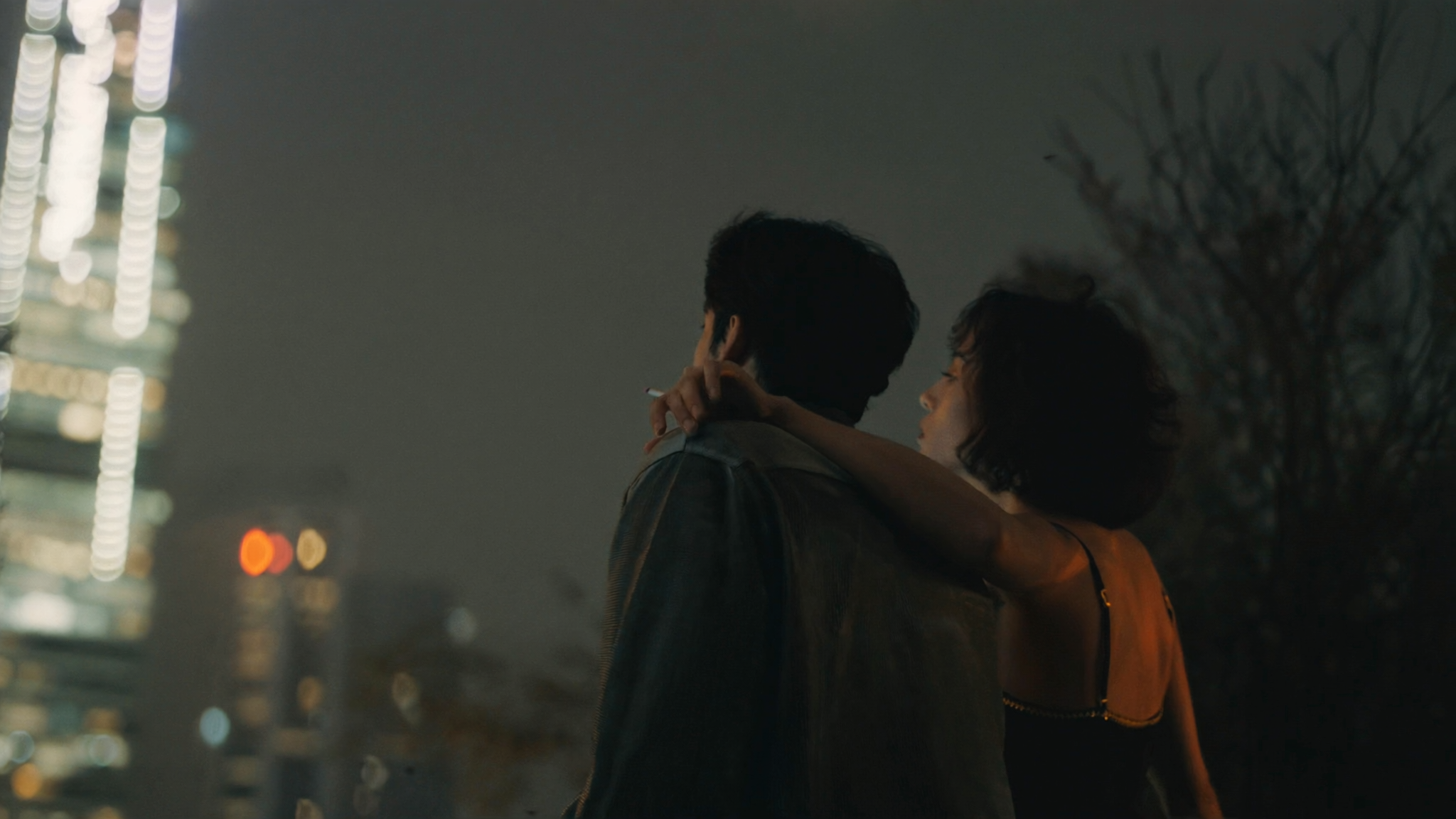
Style has always been the hardest thing to reproduce in generative video. A model can master believable motion and then completely miss the visual language that makes a sequence feel like it belongs to you: the lighting direction, the color palette, the grain, the mood. This is why style transfer has become one of the most exciting directions in generative video, and why approaches like Lego Pixel have drawn attention.
The core idea is to stop treating style as a vague vibe and start treating it as data that can be decomposed, stored, and reapplied. When a system can isolate the visual traits that define a look and transfer them cleanly across models, creators gain the kind of control that used to require a full art department. This article explains how pixel-level style transfer works, how it interacts with generative models, and how to use it to build genuinely consistent visual series.
Why Style Is the Missing Control
Generative models have become unreasonably good at producing individual frames. Motion, physics, even subtle cinematic gestures. What they have struggled with is holding one visual identity across an entire project. Ask a generic text-to-video model for a look once and it may deliver something close; ask it to keep that exact look across ten shots and the palette drifts, the lighting shifts, and the series starts to feel like unrelated clips.
Traditional studios solved this with art direction: a cinematographer sets the lighting, a colorist grades the footage, a designer locks the look. Generative creators lacked an equivalent control. Style transfer systems aim to hand that control back by encoding the look as reusable data.
What Lego Pixel Does Differently
Lego Pixel approaches style as a problem of decomposition. Instead of trying to describe a style with a paragraph, it breaks the visual language into discrete, predictable components, comparable to the idea of building a picture from many small, standardized blocks. Each component captures a specific visual attribute, and the system learns how to reassemble them.
This modular framing has a concrete payoff: because the style is stored as components rather than as an opaque blend, it can be analyzed, moved between models, and held consistent across many generations. The creator does not need to re-earn the look from scratch every time; the style exists as a reusable asset.
The Principle of Style Discretization
Discretization is the act of turning a continuous, hard-to-pin-down quality into a structured set of distinct pieces. Applied to style, it means the model learns a finite set of visual characteristics that, taken together, reproduce the intended look.
The win is reproducibility. A continuous style is fuzzy and drifts; a discretized style has defined parts that can be checked against one another and reapplied identically. When you change one component, lighting, for instance, the rest of the style can remain intact, giving you targeted control rather than a lottery.
How Pixel-Level Style Interacts with Generative Models
Style transfer does not replace a generative model; it steers it. The approach sits on top of whatever model you use for motion and content.
In practice, the workflow splits into two stages. First, the style representation is computed from reference material, breaking the target look into its pixel-level components. Second, that representation is fed to the generative model alongside the content prompt, so the model produces motion and framing in your chosen visual language rather than in its default style.
The benefit of keeping these separate is flexibility. You can pair one stylistic identity with different generative models, moving from a realism model to a stylized one while preserving the palette and lighting. When a new and better model appears, you keep the same look, which is how a series remains coherent as the underlying technology improves.
Building Visual Consistency with Style Components
The real promise of style transfer is consistency over time. Here is how to get it.
Define your style components deliberately. Decide which attributes matter to your brand or series: lighting direction, dominant colors, grain level, contrast, vignette, lens feel. Write them down as if you were writing an art direction brief, because that is effectively what you are doing.
Create a reference bank. Collect examples of the look you want, ideally across multiple scenes so the system can learn which attributes are stable. A single reference teaches it your intent once; several teach it your intent reliably.
Standardize the base camera language. Style and camera are cousins. If you want a consistent cinematographic feel, also standardize shot sizes and typical camera movement so the style does not fight the framing.
Apply the style early, not only at the end. Some creators generate first and grade in post. Better results come from injecting the style into generation itself so every frame is born in the right palette, with a light touch at the end for final unity.
Reaching Cinematographic Quality through Standardization
A big part of why independent shots feel inconsistent is that each is generated in isolation with slightly different defaults. Standardization is the cure. When lighting, color, and tonal values are treated as fixed specifications across the whole project, the set of outputs converges toward one look instead of fanning out across many.
This is where a style module shines. By locking lighting and color as shared components, you get the coherence a camera team would normally produce, but it arrives automatically in every frame. Combined with consistent composition and grading, it lets independent creators produce series with a genuinely cinematic, studio-like quality.
Designing a Workflow That Uses Style as an Asset
Treating style as an asset changes how you work day to day.
Build once, reuse everywhere. Spend the effort encoding your style once, then reference it for every scene and every project that shares the brand. Never rebuild the look from scratch on each video.
Evaluate style before content. When a new generation tool appears, test how your saved style transfers to it before you commit a project to it, not after.
Keep a live style library. Treat your style components like a git repository: version them, document changes, and let them evolve deliberately rather than by accident.
Separate style from subject. Keep the visual language independent from the characters and content so you can change subjects without losing the look, or change the look without redoing your characters.
Common Mistakes in Style Transfer Workflows
Over-relying on a single reference. One image teaches intent poorly. Build a multi-scene reference bank to learn the stable attributes.
Ignoring base model behavior. The same style lands differently on different models. Verify your saved style on each target model before betting a project on it.
Confusing style with filters. A heavy filter over inconsistent footage is a mask, not a style. Style should be baked into the generation, not pasted on after.
Neglecting target platform. A look that sings on a cinematic monitor may flatten on a small, sound-off social feed. Check your style in its real viewing context.
Style as an Asset Across an Entire Project
The payoff of treating style as data shows up across a full production, not just one scene. Consider a ten-scene episode. Without a style asset, each scene is a coin flip on whether it lands visually with the others. With a decomposed, reusable style, every scene is born inside the shared look, and the editor merely tightens the seams.
This is also the key to revisability. If a client or director decides scene four should feel warmer, you adjust the lighting component of the style for that scene without disturbing the palette or character design that the rest of the episode relies on. Targeted control of this kind is exactly what continuous, opaque styles cannot offer.
Choosing the Right Style Granularity
How finely you decompose a style is a practical decision. Both extremes have costs.
Too coarse and you are barely past a filter, inheriting all the drift problems of continuous approaches. Too fine and you have hundreds of components, which is slow to manage and compute.
A useful middle ground decomposes a style into a manageable set of named components such as lighting, palette, texture or grain, contrast and grade, and lens and framing. Five to ten well-named components are enough for most production work to give real, repeatable control without ballooning complexity. As your needs grow, you can add components deliberately rather than all at once.
Integrating Style Transfer with Character Consistency
Style and character are often handled separately, but they interact. A memorable project holds both: a recognizably styled world and recognizably consistent characters inside it.
Cultivate the two as independent layers. Lock the style as a visual world the character inhabits, and lock the character as a stable identity within that world. Because they are separable, you can change the world without breaking the character, or evolve the character without losing the world.
The seam between them matters. Lighting graded through the style layer must not flatten or distort the character reference. When you adjust a lighting component, verify the character still reads as themselves. The two disciplines support each other when kept aligned.
A Practical Checklist for a Styled Series
When you plan a series built on a style asset, run through a short checklist.
Is the style decomposed and named? Do you have discrete components you can adjust independently?
Is there a multi-scene reference bank? Are you learning stable attributes from several examples rather than one?
Does the style survive model changes? Have you verified your saved style against every model you plan to use?
Do characters and style stay separable? Can you change either without breaking the other?
Is the grade consistent at the end? Do independently generated shots share the same final white balance and tonal curve?
The Future Direction of Style as an Asset
Style transfer is early but moving fast, and the trajectory favors creators who treat style as a first-class asset rather than an afterthought measured by few trends.
One direction is finer control. As decomposition improves, creators will adjust ever smaller style components in real time and preview them instantly before committing, inching a workflow that currently requires iteration toward direct manipulation.
Another is cross-model portability. The ability to move one saved style seamlessly among many generators, current and future, makes style assets more valuable and more durable than any single tool's look.
The practical takeaway is to invest now in defining and versioning your style as structured data. Whatever specific tools come next, a well-organized style asset will remain useful, portable, and reinforcing of your brand long after any single model is superseded.
Frequently Asked Questions
Do I still need a separate colorist?
For most independent work, no. A style module plus a light final grade covers the need. Large productions with complex look development may still benefit from a colorist for the finishing touch.
Can style transfer work across different models?
Yes, and that is a primary advantage of component-based style. The same style representation can steer several models, keeping a series consistent as you swap generators.
How many references do I need to define a style?
More than one, fewer than hundreds. A focused set covering the lighting and palette across a few scenes works better than quantity.
Is style transfer slow?
Encoding the style adds one analysis step, but it saves far more time by eliminating per-shot drift correction and repeated matching.
Final Thoughts
Style is the most personal layer of visual work, and it is also the most fragile layer of generative output. Approaches like Lego Pixel change that by turning style from a vague feeling into a structured, reusable asset. When you can decompose a look into stable components, move it between models, and reapply it identically, you stop fighting the generator and start directing it.
The discipline is straightforward. Define the style as components, collect a reliable reference bank, standardize lighting and color, and inject the look into generation from the first frame. Do that, and a single ambitious idea can become a consistent, cinematic series rather than a string of one-off clips.
