

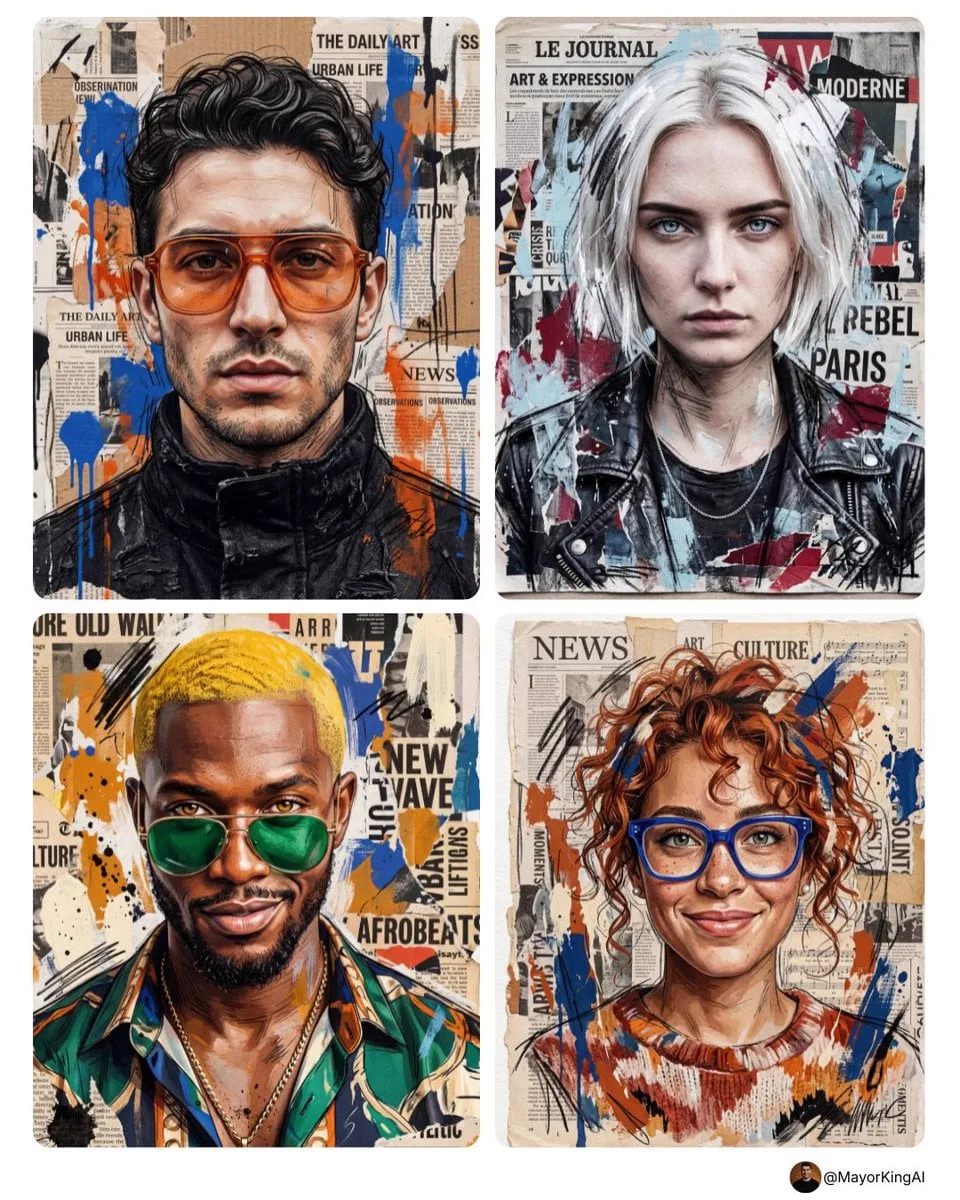
The "Lego Pixel" Mindset for Style Stability
There is a recurring moment in AI video production when the output feels almost right and then collapses: the main character changes clothes between cuts, the color grade drifts, or a hand turns into a smear. This is called style inconsistency, and it is the single most common reason creators abandon AI workflows for anything longer than a single clip. "Lego Pixel" processing is a way of thinking about this problem. The name comes from the idea that a visual should behave like a set of interlocking bricks: every frame snaps to the same structural grid, so the whole picture stays coherent even as individual pieces move.
Think of the method as enforcing a stable pixel-level identity across every frame of a sequence. Instead of treating each generated frame as an independent surprise, you train the pipeline to treat the frames as shared pieces of one construction. When the system understands that the character and background are the same "bricks" rearranged, not new content invented each time, the output stays recognizable from start to finish.
For anyone trying to upgrade the style of their videos, this is the core technical idea worth grasping. Style is not just a filter you apply at the end. It is an identity you establish at the foundation, so that every lighting change, camera move, and cut reinforces the same look rather than fighting it.
Why Style Consistency Went From Nice-to-Have to Must-Have
Attention is the scarcest resource in digital media, and consistent style is how you earn a second look. When an audience scrolls past a series of videos, what makes them stop is recognizing a signature. That recognition comes after several views, but only if the visual language stays stable across them.
In short-form video, the problem is acute. A cut that changes the protagonist's face or swaps the background's color scheme registers as an error even if the viewer cannot name what went wrong. They just feel that something is off, and they scroll. Style consistency is therefore not cosmetic. It is a retention mechanism.
There is also a pressure from volume. Brands and creators need to produce many videos on a schedule. If every video requires hand-correcting inconsistencies, the workflow stops scaling. A pipeline that holds a stable style lets you repurpose the same character and world across dozens of outputs with far less manual cleanup.
The Technical Foundation of the Method
To control style, you need to understand what the generative pipeline is actually balancing. Modern video models decide each frame by reconciling two pressures: the natural variability they learn from training and the explicit instructions in your prompt. "Lego Pixel" style control works by increasing the influence of the shared identity and reducing the model's freedom to reimagine it frame by frame.
Three levers matter most.
The first is reference anchoring. By feeding the model strong visual references for the character and environment, you give the model something to hold constant. The more authoritative the reference, the more the model treats it as the ground truth to reproduce rather than a suggestion to interpret.
The second is multi-input fusion. Instead of relying on a single prompt, the pipeline combines several inputs: a character reference, an environment reference, and a motion instruction. Working together, they constrain the output in multiple dimensions at once.
The third is temporal persistence. The model must remember what it drew in the previous frame and carry that forward. This is the "bricks" idea made literal: each frame is assembled from the pieces the previous frame established, so the identity does not restart from scratch.
Getting all three levers aligned is what separates stable output from lucky output.
Controlling Style Diversity Without Losing Your Identity
There is a tension here. Strong style control can make every output feel identical, which kills creative variety. Weak control produces inconsistency. The skill is managing the balance deliberately.
The practical move is to identify which aspects of your style are fixed and which are free. A fixed trait might be the character's face, the color palette, or the texture of the world. A free trait might be the camera angle, the lighting mood, or the specific action in the frame. You encode the fixed traits tightly and leave the free traits loose.
This is where the user experience of style upgrades gets interesting. You are not choosing between "completely identical" and "chaotically different." You are choosing a spectrum, and you tune how much the fixed identity constrains the loose variables. The result is the same character in a new situation, which is exactly what audiences expect from a real ongoing story.
Testing is essential here. Generate the same character across multiple settings and note where it holds and where it drifts. The patterns you observe tell you which trait got under-constrained and where to add a stronger reference.
Transparency and Shading Control
Part of what reads as "high quality" in video is controlled transparency and shading. Translucent materials, soft shadows, glows, and reflections all depend on the pipeline understanding how transparency interacts with light.
In a style-stable workflow, transparency becomes another identity trait you can constrain. If your character wears a translucent garment or exists in a scene with glass and fog, the model must apply the same transparency rules every frame. Otherwise the material will turn solid, then transparent, then solid again across cuts.
The practical tip is to include examples of the transparency behavior you want in your reference material. Show the model what the material looks like lit from different angles, what its shadow looks like, and how it interacts with the background. Reference variety teaches the model the behavior rather than a single still.
Shading works the same way. Consistent light position, shadow softness, and tone mapping anchor the scene in a believable world. When these remain stable, the viewer never questions the reality of the frame, and the style reads as intentional rather than accidental.
Building the Workflow Step by Step
A reliable style-upgrade workflow follows a repeatable sequence. Lock these steps into your routine and the whole process becomes faster and more predictable.
Step one, establish references. Gather or create strong images of the character and environment that capture the style you want. These become the fixed points the pipeline reproduces.
Step two, describe the motion separately. Keep the action in the prompt and the identity in the references. Mixing them tempts the model to sacrifice one for the other.
Step three, run a low-stakes test. Generate a short clip that exercises the character in motion, in a new setting, and in a close-up. Compare against your style checklist before committing to a full render.
Step four, adjust constraints. If the face drifted, strengthen the character reference. If the color shifted, anchor the palette. Change one variable at a time so you learn which lever does what.
Step five, batch test across scenarios before production. A style is validated when it survives variety, not when it shines in one hero shot.
Step six, assemble the final sequence and do a last pass for continuity. Check that the final shot of one clip flows into the first shot of the next without a jarring reset.
A Concrete Production Example
Imagine you are producing a recurring series with a fantasy protagonist in a medieval world. Your fixed identity includes the character's face, the muted earthy palette, and the stone texture of the environment. Your free variables include the time of day, the action, and the camera movement.
For scene one, you keep the character and environment references fixed and write a prompt about walking through a torch-lit courtyard at dusk. The output keeps the face and palette, introduces the warm lighting you asked for, and holds the stone texture.
For scene two, you reuse the same references, change the prompt to a fight near a castle wall in daylight. The same face and palette appear, the stone texture returns, and the scene reads as the same world, just at a different hour.
The reason this works is the shared reference layer. You upgraded the style of the entire series by establishing the bricks once and reusing them, rather than re-inventing the world for every scene.
Comparing and Selecting Approaches
Not all style-stability methods behave the same. You will encounter approaches that trade quality for speed, and others that trade speed for fidelity.
Reference-heavy approaches usually deliver the most consistent character identity, but they require you to have strong reference material ready and to tune how much authority those references hold. They reward preparation.
Frame-interpolation approaches reduce motion artifacts in fast footage but do little to stabilize a drifting character face. They are a fix for a different problem.
Post-production grading approaches help unify color across already-generated clips. They are a useful safety net, but they cannot repair a character whose face changed between cuts. Grading fixes tone, not identity.
The strongest results combine approaches: strong references during generation, then a light grading pass to unify whatever residual color drift remains.
Prompt Design for the Method
The prompt is where you express what should change. Keep the fixed identity out of the prompt entirely. It lives in the references. The prompt should describe the new situation: environment, action, lighting, camera, and mood.
A good template is: [environment] + [action/subject in motion] + [lighting] + [camera movement] + [mood]. This mirrors the idea that the model merges the fixed identity (references) with the variable situation (prompt). By keeping them separate, each can be tuned without disturbing the other.
Avoid contradictory instructions. If you say "bright, cheerful seaside" and "gloomy, desaturated mood" in one prompt, you force an impossible trade-off and invite instability. Decide the emotional direction before writing, and keep the prompt internally consistent.
Also be specific about motion. "Slow tracking shot" and "fast whip pan" produce very different coherence demands. Matching the motion instruction to the capability of the pipeline reduces smearing and unintended cuts.
Automating the Workflow
Once the sequence is reliable, you can begin to automate parts of it. The reference layer is the natural place to standardize because it is reusable across many outputs. Store your character and environment references in a structured library so they are easy to call on for any new scene.
Automation is most useful for the repetitive parts: applying the same references, formatting prompts to the same template, and running the same batch of evaluation scenarios. The creative judgment about which style traits to fix and which to free should stay with you. Automate the mechanics, not the decisions.
This division is why the method scales. The more of the repetitive pipeline you can delegate to configuration, the more of your attention goes to the choices that actually differentiate your work.
Troubleshooting Common Failures
If the character's face changes between shots, strengthen the character reference and reduce the variety of situations in your test while you isolate the cause.
If the palette shifts mid-scene, anchor the color more tightly or add consistent lighting references so the model has a stable target for how colors should render.
If motion produces smearing, reduce the speed of the described action or split the clip into smaller segments before combining them, letting each segment hold its own consistency.
If the output looks too rigid and identical, you have over-constrained the free variables. Loosen the environment or lighting references and allow more variation in the non-essential traits.
Keep the one-change-at-a-time rule in debugging. When you adjust multiple levers at once, you cannot tell which one fixed the issue, and you will be unable to reproduce the success methodically.
FAQ
What exactly does "Lego Pixel" mean in practice? It is a mental model for style stability. Think of every frame as assembled from shared pieces that snap to the same grid, so the identity of a character or world carries across frames instead of being reinvented.
Do I need expensive hardware or datasets? No. The method is more about using references, prompts, and constraints deliberately than about raw compute. Organizing good references and testing iteratively matter more than scale.
Can this work for characters I already generated, or only from scratch? It works best when you establish references up front, but you can often extract a strong reference from an existing well-liked frame and rebuild the identity around it.
How do I avoid every output looking the same? Deliberately free up the variables that do not define your identity, such as lighting mood, camera angle, and action. Keep the fixed traits tight and the situational traits loose.
Is a post-production grade still necessary? Often yes, as a lightweight final pass to unify residual tone. But it is a complement to strong references, not a replacement for establishing identity during generation.
Putting It All Together
The leap from fragile output to dependable style comes down to treating consistency as a foundation rather than an afterthought. Establish your references, separate the fixed identity from the variable situation, test across scenarios, and automate the repetitive parts. Treat each failure as a diagnosable signal that points to a specific lever.
Start with one character and one environment. Master the loop with a small, manageable scope, then expand to more variables. Consistency is a discipline you build, and every stable video you produce compounds into a signature that audiences learn to recognize.
