
Why Two Model Releases Changed Everyday Video Work
Text-to-video has stopped being a novelty demo and started behaving like a production tool. The shift is not about a single spectacular clip going viral; it is about the moment when a director, marketer, or solo creator can plan a shot, describe it, generate it, and know with reasonable confidence what they will get back. Luma 2.5 and Kling 2.5 both pushed the field closer to that point, but they pushed in different directions.
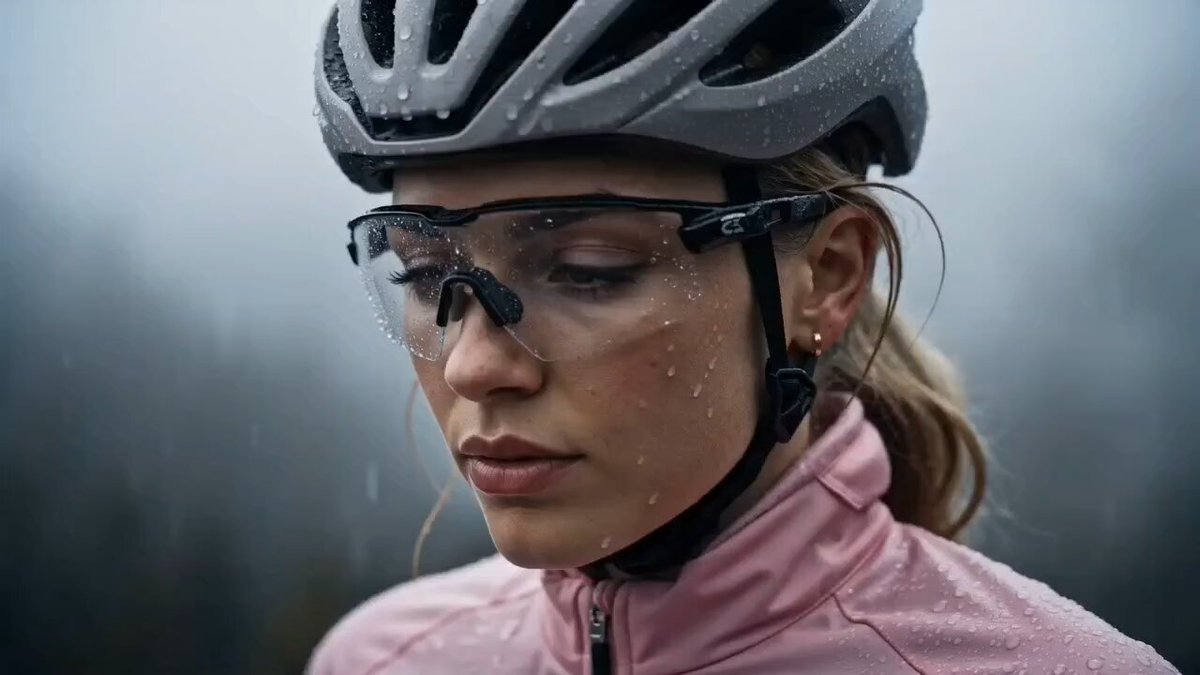
Luma 2.5 refined cinematic motion. It gives you a vocabulary for moving a virtual camera through a scene, and it renders light, glass, skin, and fabric with a restraint that reads as shot footage rather than generated footage. Kling 2.5 refined intent. It listens more carefully to layered descriptions, handles multiple subjects and physical action with fewer collapses, and gives you stronger control when you want the model to follow a specific sequence of events.
The practical consequence is that most working creators should not be asking which model is "better." They should be asking which shot in front of them needs cinematic motion and which needs narrative obedience. This guide breaks down what each model does well, how to route shots between them, how to build a repeatable workflow around both, and where people waste the most time and compute.
What Luma 2.5 Actually Does Well
Luma 2.5 belongs to the Ray line of models, and its personality is consistent: elegant motion, believable physics, and a strong bias toward realism. If your project is a product film, a fashion teaser, a title sequence, or an atmospheric brand spot, this is usually the faster path to a usable result.
Camera motion as a first-class input
The standout capability is camera language. Instead of hoping the model invents a nice move, you can describe one: a slow dolly in, a crane rise, a lateral truck, a handheld drift, an orbit around a stationary subject, a push through a doorway. Because the camera path is treated as an instruction rather than a suggestion, you can storyboard with intent and get something close to your plan on the first or second attempt.
This matters more than it sounds. In older workflows, the hardest part of generating video was not the subject — it was the accidental camera. You would write a beautiful scene description and get a random whip pan. When the camera is controllable, you can cut generated shots against real footage without the motion feeling foreign.
Loop-friendly clips and product spins
Luma 2.5 is unusually good at seamless loops. Turntable product rotations, ambient background plates, slow drifting textures, and abstract transitions can be generated so the first and last frames match closely enough to loop invisibly. For anyone building hero banners, social carousels, or kiosk displays, that single capability saves hours of manual crossfading.
Realistic light and material rendering
Glass, metal, wet pavement, linen, hair, and skin all hold up. Reflections behave plausibly, highlights roll off instead of clipping, and shadows stay attached to their objects. When a shot is mostly about mood and materials rather than plot, Luma 2.5 often produces something you would be comfortable putting in a client presentation without heavy post-processing.
Where Luma 2.5 struggles
Complex, dialogue-heavy scenes with several interacting characters are not its strength. Dense prompts with many simultaneous requirements tend to get partially satisfied, and fine text inside a scene — signage, labels, screens — still requires care. Very fast, chaotic action can also smear in ways that are hard to fix later.
What Kling 2.5 Actually Does Well
Kling 2.5 has a different center of gravity. It behaves less like a virtual cinematographer and more like a very literal scene interpreter, which is exactly what you want when the content of the shot matters more than the elegance of the camera.
Prompt adherence with layered scenes
Kling 2.5 handles multi-part instructions well. If you describe a woman in a yellow raincoat stepping off a bus while a dog shakes water on the pavement behind her, you have a reasonable chance of getting both subjects, both actions, and the spatial relationship between them. That kind of layered obedience is where earlier models fell apart.
Human motion and expression
Bodies move with believable weight. Running, climbing, dancing, handing an object to someone else, turning to look at something — these read correctly more often, and faces hold their identity through moderate motion. Emotions are also easier to steer through description alone, which is valuable when you need a performance rather than a tableau.
Start and end frame control
One of the most useful production features is the ability to supply a starting image and an ending image and have the model generate the motion between them. This turns the model into an interpolator for storyboards, animatics, and complex transitions. You can draw or generate two keyframes, then let the model invent the movement that connects them — and if the result is wrong, you only need to change one of the two anchors.
Where Kling 2.5 struggles
Camera moves are less programmable. You can ask for a specific movement, but strict paths and precise timing are harder to guarantee than with Luma 2.5. High-resolution output also takes noticeably longer, and some scenes drift toward a slightly stylized look unless you actively push the prompt toward documentary realism.
Head-to-Head: Choosing by Shot Type
| Shot type | Better fit | Why |
|---|---|---|
| Product turntable or loop | Luma 2.5 | Seamless looping and stable materials |
| Atmospheric brand film | Luma 2.5 | Controlled camera paths and realistic light |
| Two-character interaction | Kling 2.5 | Stronger prompt adherence and spatial awareness |
| Action or sports moment | Kling 2.5 | More believable body physics |
| Transition between two keyframes | Kling 2.5 | Start and end frame control |
| Architectural walkthrough | Luma 2.5 | Reliable camera trajectories |
| Emotional close-up performance | Kling 2.5 | Better facial continuity and expression |
| Social vertical teaser | Either | Depends on whether motion or narrative drives the hook |
The most productive mindset is hybrid routing: use Luma 2.5 for establishing shots, environments, product beauty shots, and loops; use Kling 2.5 for people, actions, and any shot where the story beat must land exactly. A single 30-second spot might use both models three or four times each.
Decision Criteria Before You Commit to One Model
Before locking a project to a single model, walk through these criteria in order.
Motion complexity. Is the camera doing the work, or are the subjects? Camera-driven shots favor Luma 2.5; subject-driven shots favor Kling 2.5.
Number of subjects. One subject is easy for both. Two or more interacting subjects tilt strongly toward Kling 2.5.
Continuity requirements. If a character must look identical across ten shots, you need a reference-driven pipeline rather than pure text prompting, and you should test both models with your specific reference images before committing.
Iteration speed. When you are exploring, fast drafts matter more than polish. Generate at a lower resolution, review quickly, and only upscale the winners.
Aspect ratio and duration. Vertical social output is now well supported, but check the native durations available and how the model behaves at the extremes. Very short clips hide motion problems; very long clips accumulate drift.
Audio needs. If you need synchronized sound, plan to generate or record audio separately and align it in your editor. Treating audio as a post-production step keeps model choice flexible.
Team skill. A model that rewards detailed prompt writing will underperform in the hands of someone who writes three-word prompts, and vice versa.
A Practical Workflow: From Script to Finished Cut
1. Lock the story beats and shot list
Write the piece as a list of shots, not as a paragraph. Each shot should have one job: establish place, introduce product, show reaction, demonstrate use, deliver the closing beat. If a shot has two jobs, split it. This single discipline prevents most wasted generations.
2. Build keyframes before motion
Generate or shoot still images for each shot first. Stills are cheap to iterate on and easy to approve with a client. Once the frames are right, animate them. Image-to-video almost always produces more controlled results than text-to-video, and it gives you a client-facing approval gate that does not depend on unpredictable motion.
3. Route each shot to the right model
Apply the criteria above and assign a model per shot. Mark your shot list with a simple tag so nobody regenerates a Luma shot on Kling or the other way around by accident.
4. Generate in controlled batches
Generate several variations of one shot at a time rather than one variation of several shots. Batching keeps your prompt context fresh, makes comparison easy, and reveals whether a problem is the prompt or the model. Save every attempt with a consistent filename that includes shot number, model, and version.
5. Assemble, sound design, grade
Cut the generated shots against your music or voiceover early. Generated clips often feel different once they sit in a timeline with sound. Add room tone, foley, and a light grade to unify shots from different models — a shared color treatment does more to hide model inconsistency than any prompt trick.
6. Review against a delivery checklist
Before exporting, check motion continuity across cuts, identity consistency, text legibility, safe areas for platform crops, and loudness. Regenerating a single problematic shot is normal; discovering a continuity break after delivery is not.
Prompt Patterns That Transfer Between Models
Both models respond well to a consistent prompt skeleton. Build prompts in this order: subject, action, environment, camera, lens and framing, lighting, mood, timing, and constraints.
A weak prompt reads like a summary: "A chef cooking in a kitchen, cinematic." A strong prompt describes a single moment: "A chef in a dark green apron lifts a copper pan from a blue flame, steam curling past her face, medium shot from a low angle, slow push in, shallow depth of field, warm tungsten light from the left, quiet focused mood, movement stays slow and controlled, no camera shake, no text overlays."
The differences that matter most are specificity of action, a single dominant camera instruction, and explicit negative constraints. Adding "slow and controlled" to a motion description is one of the highest-leverage phrases in either model.
Keep a personal prompt library organized by shot type: product rotation, hero close-up, walking shot, landscape establishing shot, transition. Reusing a proven skeleton and swapping the subject is far faster than writing from scratch, and it makes results comparable across a project.
Common Mistakes That Waste Renders
Prompting a plot instead of a moment. A model generates a few seconds, not a story arc. Describe one beat.
Ignoring motion magnitude. If you do not say how fast or slow something moves, you get a default that may not match the music or the edit.
Mixing lighting descriptions. "Golden hour" plus "neon night" plus "soft studio light" produces muddled color. Pick one lighting logic per shot.
No negative constraints. Naming what you do not want — no extra fingers, no text, no lens flare, no jump cuts — measurably improves output on both models.
Crowding the frame with faces. Small, distant faces are where identity breaks first. Move the camera closer if you need the audience to recognize someone.
Regenerating instead of editing. Sometimes a shot is 90% right and a five-second trim, speed change, or stabilization fixes it. Editing is almost always cheaper than another round of generation.
Judging from one sample. Every model produces outliers. Generate three variations before concluding that a model cannot do something.
Managing Compute and Time Without Guesswork
Efficiency comes from deciding how much polish each shot deserves. Not every clip in a project needs maximum resolution or the longest duration. A useful approach is a three-tier system: draft tier for exploration at the lowest acceptable quality, review tier for client-facing previews, and delivery tier for the handful of shots that end up in the final cut. Most projects only need delivery quality for a third of their shots.
Track your own hit rate. If it takes nine attempts to get an acceptable walking shot on one model and four on the other, that is a strong signal about where that shot type belongs in your personal routing table. After a few projects, you will have a routing table tailored to your own style rather than a generic recommendation.
Also protect your time budget, not just your compute budget. Long render queues encourage multitasking, and multitasking destroys prompt quality. It is better to run a smaller batch, review it properly, and write the next prompt with full attention than to queue twenty variations and skim the results.
Quality Control Checklist Before Publishing
Run every final clip through the same checks:
- Motion continuity: does the camera movement resolve, or stop abruptly mid-move?
- Identity: do faces, clothing, and hair stay consistent across shots?
- Hands and extremities: any warping, merging, or extra digits?
- Physics: do objects fall, pour, and collide with believable weight?
- Background stability: do windows, doors, and signage stay put?
- Text: is any on-screen text legible and correctly spelled?
- Crop safety: does the subject survive a vertical or square crop?
- Audio: are levels consistent, with room tone under every cut?
- Color: does a shared grade make shots from different models feel like one film?
The last item is the one people skip, and it is the one that has the largest effect on whether an audience notices that multiple models were used.
FAQ
Which model is better overall? Neither. Luma 2.5 is stronger for cinematic motion, environments, loops, and realistic lighting. Kling 2.5 is stronger for prompt adherence, human performance, multi-subject scenes, and keyframe interpolation.
Can I mix both models in one project? Yes, and most experienced creators do. Route shots by type, then unify the result with a consistent grade, sound design, and pacing.
Do I need a powerful machine to use them? Not necessarily. Cloud generation removes local hardware constraints, but a fast editing machine still helps because iteration speed is where projects are won or lost.
How long should each generated clip be? Short enough that motion does not drift, long enough to cut comfortably. Generate slightly longer than you need and trim in the edit.
What about audio? Plan for separate audio. Music, voiceover, and foley added in post will outperform generated ambience for most commercial work.
How do I keep a character consistent? Use reference images, keep the camera relatively close, avoid crowded frames, and generate the same character in the same lighting setup across shots.
Are these models good enough for client work? For many categories — product, fashion, travel, abstract branding, social — yes, provided you apply a real quality-control pass. For dialogue-driven narrative, expect to combine generation with conventional shooting.
The honest summary is that model choice is now a craft decision, not a loyalty decision. Build a shot list, route each shot to the model that fits it, keep your prompts specific, and treat post-production as the place where everything becomes one film. That workflow will outlast any single release.
