
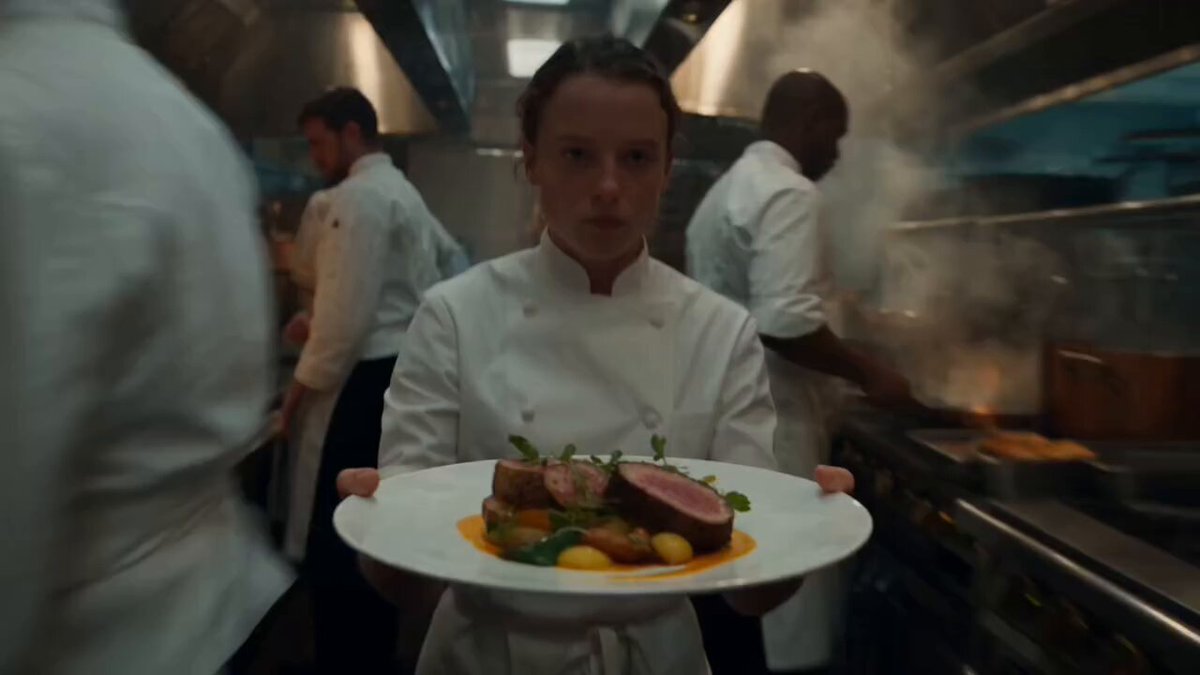

The fusion of AI video generation with serious narrative direction marks a paradigm shift in content creation. The market for AI-generated video is projected to keep climbing toward tens of billions of dollars, and the reason is not novelty: it is utility. Storytellers can now produce cinematic-quality footage without a studio, but only if they bring the one thing the tools cannot supply: a story worth telling. This guide shows how to combine narrative craft with AI video generation, from scene continuity and model selection to structure and emotional direction.
Why Storytelling Is the Missing Skill in AI Video
The digital media landscape is defined by an insatiable demand for high-quality short-form and long-form video. Traditional production pipelines are buckling under the pressure to maintain velocity and visual fidelity, and AI acceleration is the obvious answer. But there is a gap between generating impressive clips and telling a story. Most AI video fails not because the images are weak but because the narrative is absent: a sequence of beautiful shots with no reason to exist in that order.
Storytelling is the frame that gives generated footage meaning. It determines what the audience should feel, what information arrives when, and why one shot follows another. The tools produce the pixels; the storyteller produces the structure. In the competitive content arena, cinematic quality is the new baseline expectation for engagement, and cinematic quality is a narrative property, not just a visual one.
The Foundation: Directing Consistency
The first technical requirement of cinematic storytelling is consistency. An audience will forgive many imperfections, but a character whose face changes between scenes breaks the illusion and the story with it. Achieving scene continuity, ensuring that characters, lighting, and set design remain visually identical across disparate generations, has historically been the Achilles' heel of generative video.
The solution is reference-based generation. Build a reference sheet for every recurring element: the protagonist from multiple angles, the key locations from several vantage points, the costume and the props. Feed the model multiple images of the subject so it constructs a stable identity, and keep the lighting and style language identical across every prompt. When identity is locked, the director can generate a hundred shots and assemble them into one continuous world.
Consistency is not just technical hygiene; it is a storytelling tool. A consistent visual world lets the audience forget the technology and believe the fiction. That suspension of disbelief is the entire foundation of narrative.
The Director's Toolkit: Automated Cinematography Suggestions
Modern AI pipelines increasingly include an agent director: software that acts as an expert consultant embedded in the creation workflow. Instead of merely expanding a text prompt, it offers proactive cinematographic advice: it reads the script, identifies the emotional beats, and recommends shot types, camera moves, and transitions for each moment.
For a storyteller, this is a powerful second opinion. You still decide the story, but the agent helps you see the visual options. A dialogue scene might benefit from a slow push-in on the speaker; a revelation might deserve a whip pan into a flashback; a quiet ending might call for a long, still wide shot. The agent proposes the vocabulary; you make the editorial choice.
The pattern that works is collaborative: treat the agent as a first-pass director, generate its suggestions, review them against your intent, and override freely. The agent's value is speed and coverage, not authority. It will never know your story better than you do.
Model Selection Strategy for Optimal Output
The success of a cinematic piece hinges on selecting the right tool for the right job. With a large library of specialized models available, the decision is complex but tractable: analyze the visual characteristics each scene needs and match them to the model's strengths.
If the scene demands photorealism, reach for the models benchmarked on realistic detail. If the scene is stylized, a stylized model will outperform a photorealistic one. If the scene needs fast camera motion, choose a model known for motion quality. The agent director can act as a model curator, but you should keep your own map: note which models you trust for faces, for environments, for motion, for speed, and update it as you test.
The tiering principle applies here too. Spend the premium models on the scenes the audience remembers: the opening, the turning point, the emotional climax. Use lighter models for transitional scenes and coverage. The budget follows the story's emphasis, and the result is a film that looks expensive where it matters.
Achieving Cinematic Fidelity with Core Models
The current generation of core models delivers unprecedented realism. The Flux series is known for fine detail and strong prompt interpretation, useful for scenes where the audience will look closely: close-ups, product moments, emotional beats. The OpenAI Sora series brought a sophisticated understanding of cinematic language and physical motion, useful for complex camera moves and action. Advanced diffusion control, through depth maps, pose skeletons, and reference conditioning, lets you direct the structure of the scene rather than hoping the model guesses it.
The practical workflow for fidelity is layered. Start with a strong reference image. Add conditioning inputs where you need structural control: a depth map for the environment, a pose skeleton for the actor. Write the prompt with cinematic vocabulary: lens, angle, movement, lighting, mood. Generate, inspect at full resolution, refine. Fidelity is built through iteration, not through a single lucky prompt.
Character and Location Consistency with Runway and Kling
Beyond the leading tier, models like Runway and Kling have made character and location consistency a headline feature. Runway Gen-4 made significant strides in keeping characters and scenes stable across generations, which is the core requirement for narrative work. Kling AI has grown quickly with strong motion quality and regional strengths, useful when the story has a specific cultural setting.
The lesson is to test consistency explicitly. Generate the same character in five different scenes and check whether the identity holds. Generate the same location at different times of day and check whether the architecture stays stable. A model that fails the consistency test, no matter how beautiful its individual frames, is the wrong tool for narrative production.
Specialized Control: Referencing and Fine Direction
The newest models add specialized controls that act like a director's instruments. Reference features let you pin a face, an object, or a style to every generation. Camera controls let you define lens, depth of field, and motion. Some models offer dozens of cinematic parameters, from focal length to motion response, giving you the precision of a camera operator.
These controls change what is possible in storytelling. A flashback can be marked by a consistent warm grade and a shallow depth of field, applied through controls rather than hoped for through prompts. A dream sequence can be signaled by a specific distortion and a slow, drifting camera. The controls turn visual motifs into repeatable instructions, which is exactly what a director needs to build a coherent film language.
Narrative Structure: The AI as Story Architect
The deeper contribution of AI to storytelling is structural. An agent director can deconstruct a screenplay: identify the inciting incident, the rising action, the midpoint turn, the climax, and the resolution. It can map each structural beat to a visual treatment: the inciting incident deserves a disruption in the visual rhythm; the midpoint turn deserves a change in location or scale; the climax deserves the most intense camera language.
Automated scene direction goes further: shot sequencing and transition planning. Given the script, the agent proposes a shot list with camera moves, shot sizes, and transitions, and maintains continuity across the sequence. The storyteller reviews the plan, adjusts the beats that feel wrong, and approves the rest. The result is a production plan in minutes instead of days.
This is the real democratization: the structural knowledge that used to live in film schools is now available as a working tool. The director's job becomes curation and judgment, which are exactly the skills that cannot be automated.
Character Performance Directives and Emotional Rendering
The final layer of storytelling is performance. An actor conveys emotion through expression, gesture, and timing; a generated character conveys it through the prompt's directives and the model's interpretation. The skill is writing performance instructions that survive generation: specific actions, micro-movements, and emotional states expressed in visual terms.
Instead of "the character is sad," write "the character looks down, blinks slowly, and turns away from the camera." Instead of "she is surprised," write "she freezes, eyes widen, then she takes a step back." Concrete physical language produces recognizable emotion; abstract emotional language produces vague imagery. Build a vocabulary of performance directives for each character and reuse it across scenes for consistency.
Emotional rendering also depends on the environment: lighting, color, and camera distance carry feeling. A low, warm light reads intimate; a high, cold light reads alienating; a distant wide shot reads lonely. Combine performance directives with environmental language, and the generated scene carries the emotion the story needs.
The Production Workflow: From Logline to Final Cut
A cinematic AI production follows a clear path. First, the logline: one sentence that states the story. Second, the script and structural breakdown, assisted by an AI story architect. Third, the reference kit: character sheets, location frames, style guides, locked before generation. Fourth, the shot list: every scene mapped to a model, a camera move, and a transition. Fifth, generation: premium models for key scenes, lighter models for coverage, controls applied consistently. Sixth, assembly: edit to the structure, add transitions and sound design. Seventh, review: watch with fresh eyes, regenerate the weakest scenes, refine the cut.
The workflow protects the story at every stage. References lock the world, the shot list encodes the structure, and the review pass keeps the emotion on target. Storytellers who run the full path produce work that reads as intentional, and intentionality is the definition of cinematic quality.
Building a Film Language Across Projects
The deepest advantage of a disciplined workflow is a repeatable film language. Save your style blocks, your reference kits, and your performance vocabulary. Over time you build a personal grammar: the way your close-ups behave, the palette of your emotional beats, the transitions that mark your time jumps. This grammar is what makes your work recognizable, and recognition is the beginning of an audience.
The tools will keep changing, but the language compounds. Every project adds vocabulary, and the next project starts from a richer base. That is the real return on mastering storytelling with AI video: not a single impressive clip, but a growing capacity to tell stories at cinematic quality, on demand.
FAQ
Can AI video really deliver cinematic quality?
Yes, when the craft is present: consistent references, deliberate shot planning, and narrative structure. The technology supplies the pixels; the storyteller supplies the design. Cinematic quality is a property of the combination.
What is the most common mistake in AI storytelling?
Generating scenes without a plan. Beautiful clips in random order do not make a story. Lock the structure and the references before generation, and the footage will have somewhere to go.
How do I keep a character emotionally consistent across scenes?
Use a performance vocabulary: concrete physical directives for each emotional state, reused across scenes. Pair it with consistent references and consistent lighting language. Emotion comes from specific action, not abstract adjectives.
Do I need a screenplay before using an AI director?
A full screenplay helps, but a structured outline works for shorter content. The agent needs the beats: what happens, who is involved, and what should change emotionally. Feed it structure and it returns a plan.
Which models should I use for narrative work?
Test consistency first: generate the same character and location across scenes and check stability. Start with the models known for consistency and photorealism, and tier the rest of your usage by scene importance.
Final Thoughts
Mastering storytelling with AI video is not about chasing the newest model. It is about bringing a complete craft to a new tool: consistent worlds, deliberate structure, concrete performance direction, and a film language that compounds across projects. The technology removes the barriers of budget and equipment; the storyteller provides the reason any of it exists. Bring both, and the footage you generate will do what footage is supposed to do: make an audience feel something and remember it.
