


Why Restraint Wins in a Saturated Feed
Short-form video has trained audiences to make snap judgments, and those judgments happen fast. Within the first three to five seconds, a viewer decides whether a clip deserves attention. The loudest possible opening, built from rapid cuts, stacked text, and exploding sound design, is now so common that it reads as noise rather than excitement. Minimalist storytelling takes the opposite bet: fewer elements, each one doing more work. A single held shot, one recurring sound, one line of dialogue can carry more emotional weight than a dozen effects layered on top of each other.
This is not about making cheap content. It is about making deliberate content. When you strip decorative layers away, every remaining choice becomes visible: framing, color, silence, the precise frame where a cut lands. That visibility is what makes minimalist work feel confident, and confidence is what holds attention.
The rest of this guide breaks the approach into practical decisions: what to keep, what to cut, how to build a sound bed before rendering a single frame, how to work with generative video tools without losing coherence, and how to tell whether restraint actually improved the result.
The Three Pillars of Minimalist Storytelling
Minimalist storytelling rests on three mutually reinforcing disciplines. Drop one and the others collapse, either into emptiness or back into clutter.
Visual economy
Visual economy means using the smallest number of images that still produce the intended emotional meaning. Instead of elaborate set dressing or machine-gun editing, you choose shots that carry weight. Practical rules that work well:
- One subject per frame. If two things compete for attention, the frame is doing two jobs and neither lands.
- One dominant color temperature per scene. Warm versus cool becomes your emotional shorthand instead of dialogue explaining how someone feels.
- Static frames over drifting ones when the content is heavy. Movement signals energy; stillness signals importance.
- Negative space as a character. Empty rooms, wide skies, and long hallways create pressure that a close-up cannot.
- A visual motif that returns. A glass of water, a doorway, a specific pair of shoes appears three times and becomes a story without a single word of explanation.
The test is simple. If you can remove a shot and the story still works, the shot was decoration.
Sonic minimalism
Sound is where most minimalist videos fail, because creators treat audio as a finishing layer rather than a structural one. Purposeful sound design means every audible element is either carrying information or carrying emotion, and ideally both.
- Build a bed, not a wall. One low drone or room tone holds the piece together so silence elsewhere feels intentional rather than broken.
- Use three to five signature sounds total. A door latch, footsteps on gravel, a phone vibrating, a breath. Reuse them and let them mean different things through context.
- Let silence be an event. Cutting all audio for half a second before a key moment is one of the most reliable attention spikes available, and it costs nothing.
- Keep music mono-emotional. One track, one feeling, one dynamic shape. Layering three tracks to convey complexity usually conveys confusion.
- Record real room tone. Synthetic silence sounds sterile; captured silence sounds like a place.
Pacing and tight structure
Pacing in minimalist work is about the length of holds, not the speed of cuts. A video that cuts every half second exhausts the viewer. A video that holds one shot for eight seconds demands something from them. Both are valid, but they produce very different relationships with the audience.
A dependable structure for a 60-second minimalist piece:
- Establishing hold (0-5s): one clear image, one ambient sound, no music yet.
- Disruption (5-15s): a small change inside the same frame, or the first cut to a related image.
- Development (15-40s): two or three shots that repeat the motif with variation. Music enters here.
- Turn (40-50s): the emotional pivot. Audio drops out entirely or a single new sound appears.
- Resolution (50-60s): return to the opening frame or its visual echo.
Notice that nothing in this structure requires explanation. The viewer assembles meaning from repetition and contrast, which is exactly why the memory sticks.
Writing a Minimalist Script: The One-Idea Rule
A minimalist script is not a short script. It is a script with a single idea that everything else serves. Write the idea as one sentence and keep it visible while you work:
A woman realizes her father kept every letter she never read.
Once that sentence exists, every proposed shot must answer yes to one question: does this advance or deepen that idea? If the answer is maybe, cut it. This is harder than it sounds, because good ideas arrive constantly. Write them in a separate list for a future project and keep the current piece clean.
Practical constraints that help:
- Limit dialogue to two lines maximum. If a third line is essential, you have two ideas, not one.
- Give yourself a shot budget. Six to ten shots for a minute of finished video forces prioritization.
- Write the ending first. Minimalist endings work best when they echo the opening, and that echo is easier to engineer from the back.
- Describe sound in the script itself. Mark where music enters and where all audio vanishes, before any footage exists.
- Include one deliberate absence. Something the audience expects to see or hear that never arrives keeps them leaning in.
Building the Sound Bed Before You Render a Frame
Most creators storyboard visuals and improvise audio at the end. Reverse the order. Audio decisions determine how long a shot should hold and where a cut feels satisfying, so an early sound pass gives you a skeleton to build against.
A workable sequence:
- Record or generate a two-minute ambient bed: room tone, wind, traffic, a quiet hum. This becomes your baseline sitting under everything.
- Place a temporary music idea. It does not need to be final, but it does need the correct emotional arc and a clear entry and exit point.
- Mark your silence moments. Delete the bed entirely at those timestamps so you can hear the absence.
- Add signature sounds and check that each one lands on a meaningful visual event rather than randomly.
- Balance to a conservative loudness target and verify on phone speakers, which is how the majority of your audience will hear it.
Tools that fit this workflow well include ElevenLabs and similar voice models for narration, Descript for fast audio editing and text-based cutting, DaVinci Resolve Fairlight for precise mixing, and generative music tools when licensing is a constraint. The tool matters less than the order of operations: bed, then music, then silence, then punctuation.
Working With Generative Video Tools Without Losing Coherence
The difficulty with AI video generation is not producing an image. It is producing the same world repeatedly without the model drifting in lighting, wardrobe, or lens character between shots. Coherence is the whole game in minimalist work, because restraint leaves nowhere to hide inconsistency.
Lock a reference pack first
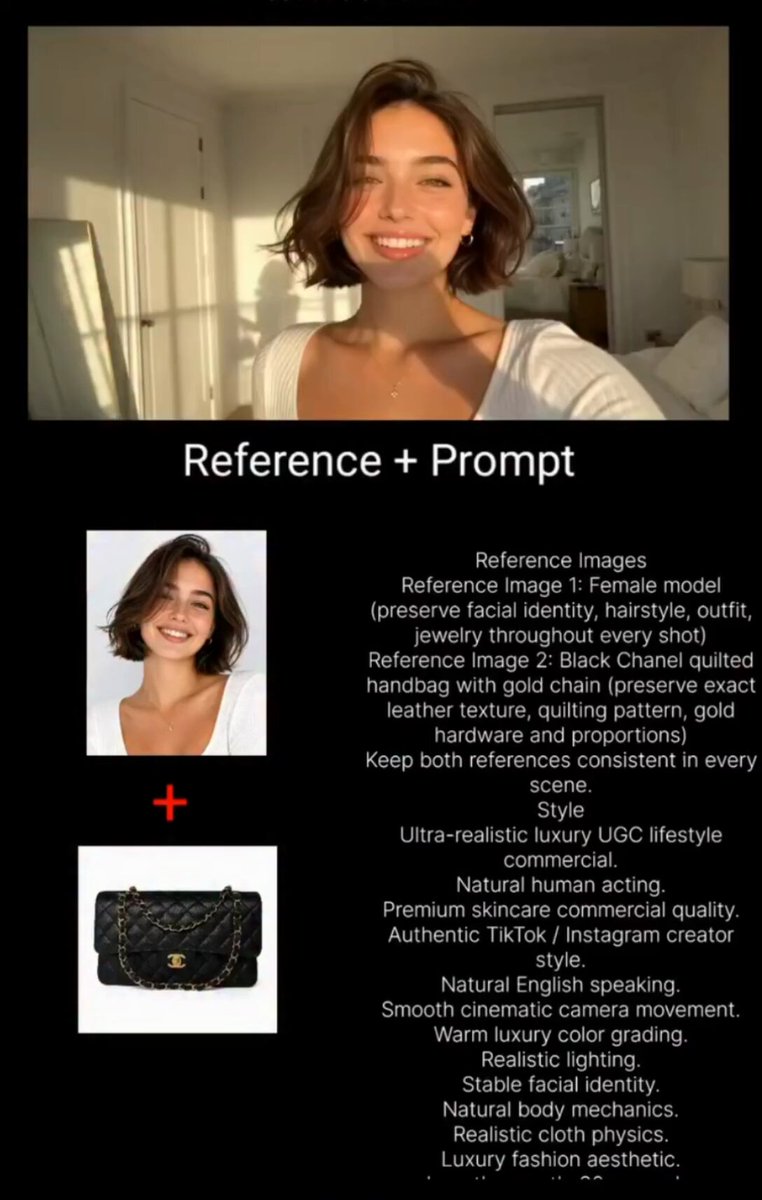
Before generating anything, assemble a small reference set: two or three stills that define the palette, one that defines the lens and depth of field, and one that defines the subject. Feed these references into every generation request so the model has an anchor beyond text. When a model offers a reference or style conditioning option, use it even when the prompt alone seems sufficient.
Write prompts as camera notes, not descriptions
Weak prompts describe a scene. Strong prompts describe a shot: subject, action, framing, lens, light direction, and mood. Compare:
- Weak: a sad woman in a kitchen.
- Strong: medium shot, woman at a kitchen table, static camera, 50mm equivalent, single window light from the left, muted blue tones, still expression, no camera movement.
The second version gives the model fewer chances to invent something that breaks continuity.
Build shots in consistent batches
Generate variations of the same shot together in one session rather than jumping between scenes. Models tend to drift over time within a session, so grouping keeps each scene internally consistent. Save the seed or settings behind your best result and reuse them for related shots.
Expect to fix, not to finish
Treat every generation as a plate. Clean up small artifacts in a compositor, stabilize with a tracking pass, and grade everything through one shared look-up table at the end. That final unified grade is what makes footage from different generations feel like one film.
Choose the right model for the job
Different engines have different strengths. Sora-style models handle longer coherent motion and complex physics. Runway, Kling, Luma, and Pika each excel in particular areas such as stylized motion, camera control, or image-to-video fidelity. The professional move is to pick per shot rather than committing to one engine for the entire project, then unify in post.
Editing Rhythm: Cuts, Holds, and Negative Space
Editing is where minimalist storytelling is won or lost, and the deciding factor is almost never the cut itself. It is the hold before the cut.
A few patterns worth testing:
- Cut on stillness, not motion. Ending a shot while the frame is static feels considered; cutting mid-movement feels abrupt unless you intend it.
- Hold 20 percent longer than feels comfortable. Draft edits are usually too fast by roughly a fifth. Trim after watching the slower version, not before.
- Pair a hard cut with a soft sound, or a soft cut with a hard sound. Contrast between picture and audio keeps minimalist work from becoming monotone.
- Use the J-cut deliberately. Bringing the next scene's audio in early creates anticipation without adding a single visual.
- Reserve one jump cut. A single deliberate jump in a restrained piece reads as an emotional break. Five of them read as sloppiness.
Negative space applies to time as well as framing. Leave a beat of nothing after an important line, an important action, or an important image. That beat is where the audience does the interpretive work, and that work is what makes the story theirs.
Emotional Subtraction: Designing Feeling Through Absence
The counterintuitive core of minimalist storytelling is that removing an element often increases its emotional charge. If a character's grief is explained by three lines of dialogue, the audience observes it. If the same grief is shown through an empty chair and a plate set for two, the audience participates in it.
Ways to subtract on purpose:
- Remove the reaction shot. Cutting from the event to an unrelated object forces the viewer to supply the face they never see.
- Remove the score at the climax. The most emotionally intense moment in a restrained piece often has no music at all, just a breath or a room.
- Remove the resolution. Minimalist work frequently ends one beat before the answer, which is why it lingers in memory longer than a fully closed story.
- Remove explanation of time. If the story works without specifying how long has passed, let the audience decide.
- Remove one character's dialogue entirely. A silent presence in a talkative scene shifts the whole dynamic.
Restraint only reads as intentional when it is consistent. If a piece uses slow holds and then suddenly introduces a frantic montage without narrative justification, the audience reads it as a mistake rather than a choice.
A Step-by-Step Minimalist Production Workflow
- Define the one idea in a sentence and write it at the top of your document.
- Draft six to ten shots, each with a stated purpose and a stated sound.
- Assemble references for palette, lens, and subject.
- Build the ambient bed and the silence map before generating visuals.
- Generate shots in scene-grouped batches with detailed camera-note prompts.
- Select the best plate per shot and log its settings for continuity.
- Assemble a rough cut at roughly 120 percent of your target length.
- Watch it once without pausing, then cut the weakest shots rather than the weakest frames.
- Clean artifacts, stabilize, and apply one unifying grade across all shots.
- Mix audio last, checking on phone speakers and headphones.
This order matters. Visual decisions made after the sound bed exists tend to be sharper, because you already know where the silence is.
Common Mistakes That Break Minimalist Videos
- Confusing minimal with unfinished. Sparse lighting still needs intention; flat lighting reads as an accident.
- Overusing silence. Constant absence becomes its own kind of monotony. Alternate emptiness with texture.
- Ignoring continuity. In a busy video nobody notices a shifting jacket color. In a quiet one everybody does.
- Adding a voiceover to fix confusion. If the visuals are unclear, the fix is a better shot order, not narration.
- Keeping a shot because it was expensive. Sunk effort is the most common reason minimalist edits fail.
- Applying a heavy stylistic filter at the end. LUTs and grain help unify footage, but pushing them too far reintroduces the noise you removed.
- Forgetting the first frame. In minimalist work the opening image is the hook, so give it the same care as the ending.
How to Measure Whether Restraint Worked
Minimalist work often underperforms on one metric and overperforms on another, so measure in pairs:
- Average view duration against total length. Restrained pieces should hold a higher percentage than your usual content, even with a slower start.
- Rewatch rate or loop count. Repetition value is the strongest signal that a piece was memorable rather than merely watched.
- Comment specificity. Comments that describe a moment or a feeling indicate emotional engagement; generic praise does not.
- Save and share ratio relative to views. Restrained storytelling travels well when it is genuinely resonant.
- Completion rate at the 75 percent mark. If viewers drop right before the turn, your pacing is off, not your concept.
If a minimalist piece shows weak duration and weak shares, the problem is usually clarity rather than restraint. Test a version with one additional establishing shot and one earlier music entry before abandoning the approach.
Frequently Asked Questions
Is minimalist storytelling only suitable for short films?
No. The same principles scale to brand films, product launches, documentaries, and social series. Longer pieces simply need more motifs and a stronger structural spine so repetition reads as development rather than stalling.
Can AI-generated video really look minimal rather than synthetic?
Yes, if you constrain it. The synthetic look usually comes from uncontrolled motion, inconsistent lighting, and heavy post-processing. Static framing, one light source, matched references, and a single shared grade solve most of it.
How many shots does a one-minute minimalist video need?
Six to ten is a reliable range. Fewer than six risks feeling like a slideshow unless the holds are very long; more than ten usually means you are explaining instead of implying.
Do I need professional audio equipment?
Not really. A decent lavalier, a phone with a clean recording app, and thirty seconds of captured room tone will outperform an elaborate setup that is poorly placed. What matters is the sound plan, not the gear list.
How do I keep a recurring motif from feeling repetitive?
Change one variable each time it appears. Keep the object, change the light. Keep the framing, change the sound. Repetition with variation is how motifs build meaning instead of numbing the audience.
What if the client wants more energy and more detail?
Offer two cuts. Deliver the restrained version with a clear rationale and a second version with faster pacing and additional coverage. Presenting a considered recommendation alongside the safer option usually converts the client, and it protects the relationship when it does not.
How do I learn to judge holds accurately?
Export the edit and watch it on a phone while standing, with no ability to scrub. Discomfort at a specific moment is data. Write down the timestamps where your attention drifted, then shorten only those holds rather than the whole piece.
Minimalist storytelling is not a style you apply at the end. It is a series of decisions made early and defended consistently: one idea, a small shot budget, sound designed before visuals, holds longer than instinct suggests, and one deliberate absence the audience has to fill. Get those right and the video becomes memorable for the same reason a good photograph is: it gives the viewer room to feel something rather than telling them what to feel.
