
Why single-shot AI video breaks at the sequence level
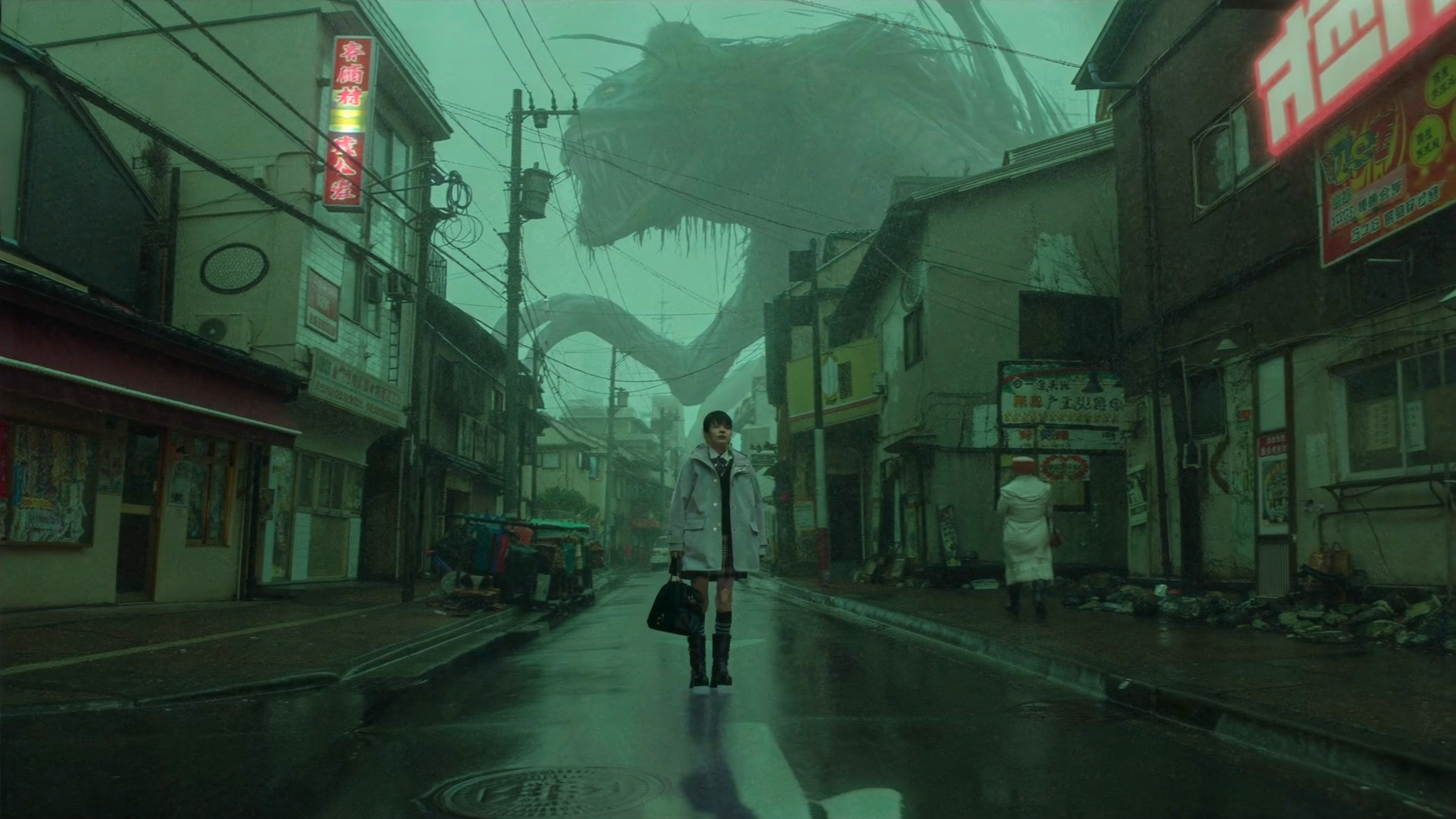
A single five-second clip can look genuinely cinematic. The camera drifts, the light rakes across a face, the model renders fabric and skin with surprising fidelity. Then you generate shot two, and the illusion collapses. The jawline shifts a few millimeters, the jacket goes from charcoal to navy, the window that was behind the actor's left shoulder is suddenly behind the right. Nothing is catastrophically wrong, yet the two shots no longer belong to the same film.
This is the central problem of AI filmmaking, and it is not a rendering problem. It is a continuity problem. Each generation is typically sampled independently, which means every clip starts from a fresh pocket of latent noise. The model has no memory of the previous shot unless you explicitly give it one. Prompts help, but prompts are lossy: a sentence like "a woman in a grey coat in a rain-soaked alley" leaves hundreds of visual decisions unspecified, and the model fills those gaps differently every time.
The cost of that drift is what experienced creators call the consistency tax. You spend an hour masking a face, another hour color-matching two shots that should have matched automatically, and a third trying to persuade a model to reproduce a room it invented five minutes ago. Multi-frame fusion is the structural answer to that tax: instead of treating each clip as an island, you build a spine of shared visual references and generate every shot against it.
What multi-frame fusion actually means in practice
Fusion is not one feature. It is a family of techniques that all serve the same goal: carry information from one frame, shot, or scene into the next. In practice, three mechanisms do most of the work.
Anchor frames as the spine
An anchor frame is a still image you are happy with, produced either by a text-to-image model, by a video model's first frame, or by a photograph. Once you have it, you stop prompting from scratch. You condition every subsequent generation on that anchor, so the model inherits the composition, palette, and identity rather than reinventing them. A ten-shot sequence might use four or five anchors: a wide establishing frame, a medium character frame, a close-up, and a reverse angle. Every generated shot attaches to one of them.
Reference plates for identity
Character consistency is the hardest sub-problem, because faces are where viewers notice drift instantly. A reference plate is a small set of neutral images of the same character — front, three-quarter, profile — ideally generated in consistent light. Feeding those plates alongside your prompt locks facial structure far more reliably than adjectives. The rule of thumb: describe wardrobe, mood, and action in words; describe identity with images.
Fusion versus hard cuts
Fusion is not always the right choice. Blending two frames into a continuous camera move is powerful, but a deliberate cut is often the more cinematic option, and it resets the model's frame budget. A practical heuristic: fuse when the story wants continuity of space and time within a beat, and cut when the beat changes. Sequences that attempt to fuse everything end up with a dreamlike, slightly soupy texture that reads as uncanny rather than polished.
Pre-production: planning shots before you generate
AI video rewards planning more than any traditional production format, because generation is cheap relative to the cost of fixing drift. Ten minutes of structure saves hours of repair.
Start from a beat sheet, not a prompt
Write the sequence as five to nine beats in plain language: what changes emotionally, and what the audience learns. Then assign shots. A beat usually needs one to three shots, not eight. If a beat has no informational or emotional change, it is probably a candidate for deletion rather than another generation.
Build a look bible
A look bible is a one-page document containing: palette swatches, aspect ratio, lens character (wide, normal, long), film grain preference, time of day, and acceptable motion blur. Crucially, it also contains fixed descriptive strings for recurring elements — the character's coat, the specific alley, the specific car. Copying and pasting identical phrasing across prompts does more for continuity than any artistic rewording.
Camera language you can actually prompt
Vague cinematography words produce vague results. Translate intent into physical terms instead:
- "Slow dolly in, waist-height, 35mm-equivalent" beats "dramatic push-in."
- "Handheld, subtle sway, locked horizon" beats "documentary feel."
- "Static wide, subject enters frame left, exits center" beats "tense composition."
Write the camera move as an instruction with a start state and an end state. Models respond far better to trajectories than to adjectives.
A step-by-step multi-frame consistency workflow
This is a workflow you can run end to end on a short sequence. It assumes access to at least one image generator, one image-to-video model, and a basic editor.
Step 1 — Lock the look
Generate ten to twenty stills of your key locations and your main character before touching video. Reject anything that does not match the look bible. This stage is fast and cheap, and it determines the ceiling of everything that follows. Do not move on with a character design you only partly like; you will be looking at it in every shot.
Step 2 — Assemble the anchor set
Promote the best stills to anchors. Aim for coverage: one wide, one medium, one close-up per location, plus two to three reference plates per recurring character. Name them consistently in your project folder — alley_wide_a, mara_plate_front, office_medium_b. Naming discipline is not busywork; it prevents you from accidentally conditioning shot nine on the wrong alley.
Step 3 — Generate hero frames first
For each shot in your list, generate a still first — the hero frame — and approve it before animating anything. Animated shots built on a bad still are unrecoverable. Hero frames cost you seconds and save you full regeneration cycles. Approve them in a single review pass so you catch continuity errors across the whole sequence at once rather than one shot at a time.
Step 4 — Animate with fusion conditioning
Now turn each approved hero frame into motion. Condition on the hero frame plus, where relevant, the neighboring anchor. Keep the prompt focused on motion and camera: what moves, how fast, in which direction. Repeating identity details here is usually counterproductive, because it competes with the image conditioning. Trim the prompt to motion language and short environmental notes.
Step 5 — Fuse adjacent shots where continuity matters
For pairs of shots inside the same beat, fuse them: take the final frame of shot A and the hero frame of shot B and generate the bridging interval. This produces transitions that feel like a single continuous take. Where the beat changes, keep the cut. A sequence that alternates fused moves and clean cuts reads as intentional editing rather than as a technical limitation.
Step 6 — Assemble, cut, and grade
Drop everything into an editor. Cut to rhythm before you fix detail — pacing hides small inconsistencies and reveals large ones. Then apply a single grade across the whole sequence. A unified color treatment is the cheapest continuity fix available: it pulls slightly mismatched shots into the same world.
Choosing your tool stack: categories and decision criteria
Tools change quickly, but the categories are stable, and knowing what you need from each category matters more than chasing the newest release.
The four layers you actually need
- Still generation for anchors, plates, and hero frames. Prioritize identity control and reference-image support over raw fidelity.
- Image-to-video for animation. Prioritize start-frame adherence and motion realism.
- Fusion and interpolation, either built into the video model or handled by a separate pass. Prioritize blend quality on faces and fabric.
- Post-production: editor, upscaler, and a grain or texture pass to unify outputs.
Decision criteria that hold up
| Criterion | Why it matters |
|---|---|
| Reference-image support | Determines whether identity can be locked at all |
| Start-frame adherence | Whether your approved hero frame survives animation |
| Maximum clip length | Fewer generations means fewer seams |
| Deterministic controls | Seeds and fixed prompts make iteration predictable |
| Latency | A fast, mediocre model often beats a slow, excellent one |
| Export flexibility | Resolution and codec options shape your finishing pipeline |
Model-hopping discipline
It is tempting to switch engines mid-sequence when a new model produces a beautiful sample. Resist it unless you are prepared to regenerate the whole sequence. Different models have different implicit color science, motion cadence, and facial priors; a single shot from another engine will read as a different film. If you must switch, switch at a scene boundary and re-anchor everything downstream.
Prompt patterns that survive a cut
Prompts are not scripts. They are parameter settings expressed in language, and the most reusable ones are boring and repetitive.
The anchor description block
Write one fixed block of text describing your character and location, and paste it verbatim into every relevant prompt. Example structure: subject, wardrobe, hair, location, time of day, lens character, and palette note — in that order, same words every time. Variation lives in a separate motion sentence appended afterwards.
Continuity tokens
Short, concrete nouns and numbers travel well between generations. "Charcoal wool coat" is more stable than "dark, moody coat." "35mm, f/2 look" is more stable than "shallow and cinematic." Numbers and physical materials give the model less room to improvise.
What to leave out
Remove emotion adjectives, vague atmosphere words, and any instruction you would not be able to verify by looking at the output. If a phrase cannot be checked, it is decoration, and decoration costs you consistency without buying anything in return.
Common failure modes and how to fix them
| Symptom | Likely cause | Fix |
|---|---|---|
| Face changes between shots | Weak or inconsistent reference plates | Build a neutral plate set, condition every shot on it |
| Lighting flips direction | Lighting described only in adjectives | Specify key direction relative to camera in words |
| Set geometry drifts | No wide anchor for the location | Add one wide establishing anchor and reuse it |
| Motion feels rubbery | Prompt too dense with identity detail | Strip prompt to motion and camera only |
| Fused transition looks soupy | Fusing across a beat change | Cut instead, or shorten the fused interval |
| Whole sequence feels flat | No grade, no grain, no sound design | Apply one unified grade, add texture and audio |
A useful diagnostic habit: when something looks wrong, freeze-frame the problem and compare it side by side with the anchor. Nine times out of ten the drift is measurable — a color shift, a lens change, a composition change — and measurable problems have specific fixes.
Budgeting time, iterations, and review
Plan your effort in ratios rather than absolutes. A healthy split for a one-minute sequence is roughly: 30 percent pre-production and anchors, 40 percent shot generation and fusion, 20 percent assembly and grading, and 10 percent rework. If rework exceeds a quarter of your time, the problem is upstream in your anchors, not in your prompting.
Batch your review. Approving shots one at a time hides inter-shot drift; approving them in a contact-sheet grid exposes it instantly. Generate more candidate stills than you need and fewer candidate videos. Stills are cheap; video is expensive.
Building a repeatable short-film pipeline
Once a sequence works, formalize it. Keep a project template with your look bible, anchor folder, plate folder, and a prompt file containing your fixed anchor block. Version your anchors rather than overwriting them, so you can roll back when a new direction fails. Log which model produced which shot — when you return in a month, that log is the difference between a maintainable project and a mystery.
Then narrow your ambition deliberately. A two-minute piece with eight shots, three characters, and two locations will teach you more than a ten-minute piece that never ships. Consistency is a skill you build by finishing sequences, not by starting them.
FAQ
Can a single model handle fusion without extra tooling?
Sometimes. Several image-to-video engines accept multiple reference images natively, which covers most identity needs. When you need true continuity across a camera move, an explicit interpolation pass still gives you more control.
How many anchor frames does a sequence need?
Usually one wide, one medium, and one close-up per location, plus two to three plates per recurring character. More than that becomes hard to manage; fewer leaves gaps where drift creeps in.
Is it better to fuse or to cut?
Cut when the beat changes or the location changes. Fuse when the story needs an unbroken sense of space and time. Alternating both makes a sequence feel edited rather than generated.
Why does my character look right in stills but wrong in motion?
Motion models add priors about how faces move, and those priors can override your reference. Shorter clips, motion-focused prompts, and a strong front-facing plate usually resolve it.
Do I need a color grade if every shot came from the same model?
Yes. Even consistent models drift across generations. One unified grade, applied to the whole timeline, is the highest-return five minutes you can spend.
How do I keep a long project from falling apart?
Lock your anchors early, resist mid-sequence model switches, and review shots in batches rather than individually. Continuity is a planning habit long before it is a rendering setting.
