
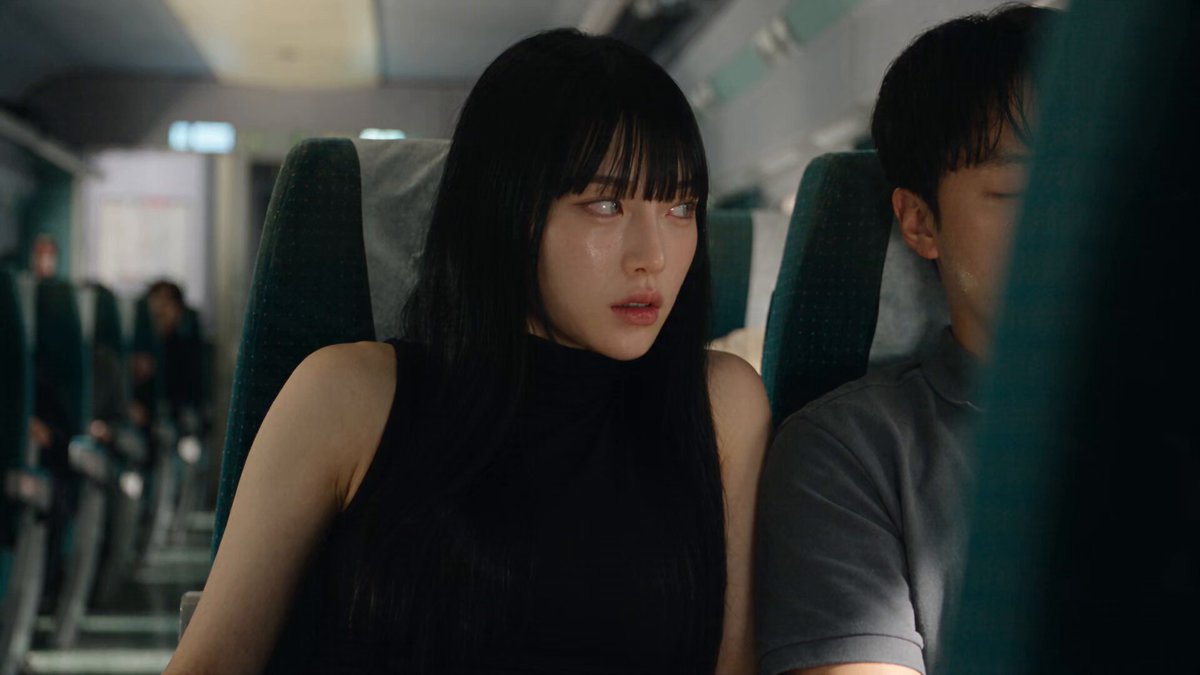
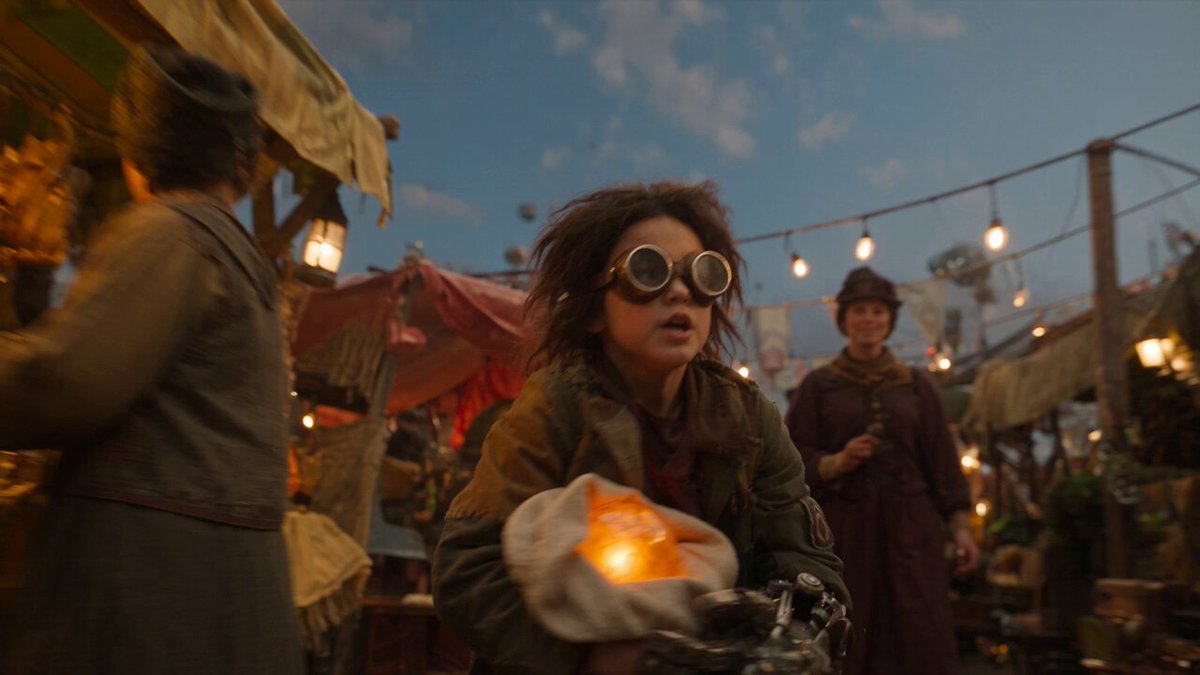

Consistency is the quiet constraint in AI video. Audiences forgive an odd frame, a soft edge, or an aggressively stylized color grade, but they almost never forgive a character whose face changes between shots. That single failure breaks the illusion faster than any artifact, which is why multi-image fusion has moved from a research curiosity into a core part of serious production pipelines.
This guide explains what multi-image fusion is, how it works under the hood, how to build reference packs that models can actually use, and how to run a repeatable workflow that holds identity and style steady across a full sequence.
Why consistency is the real bottleneck in AI video generation
Generation quality has improved dramatically. Motion is smoother, lighting is more believable, and short clips routinely look like they came from a camera rather than a model. What has not improved at the same pace is continuity across shots. A model that produces a gorgeous five-second clip can still produce a completely different person in the next five seconds.
What actually breaks when a sequence grows
In a single shot, a model only has to satisfy one coherent visual moment. The moment the sequence grows, three new demands appear at once. The subject must survive a camera move. The subject must survive a cut. The subject must survive time, meaning wardrobe, hair, and lighting states that change gradually rather than reset.
Text prompts handle the first demand reasonably well. They handle the second and third poorly, because language is a lossy channel for visual identity. Saying "a woman in her thirties with dark wavy hair" describes millions of people. The model is free to pick any of them, and it will pick differently when the seed, resolution, or framing changes.
Three kinds of drift: identity, style, and physics
It helps to name the failure modes because each one has a different fix.
Identity drift is the changing face, body proportions, hairstyle, or signature accessory. It is the most visible and the most damaging.
Style drift is a shift in rendering language: film grain appears and disappears, the palette warms and cools, the lens character changes, line weight in animation wobbles.
Physics drift is subtler but equally disruptive. Fabric behaves like liquid in one shot and canvas in the next. Shadows point in inconsistent directions. A character's weight does not match the motion of their body.
Identity is usually fixed with reference conditioning. Style is fixed with style references plus a color script. Physics is fixed with consistent prompt vocabulary and, when available, motion or depth guidance.
Why one reference image runs out of information
A single reference tells the model what the subject looks like from exactly one angle under exactly one lighting setup. Ask for a profile shot, a back shot, or a scene at night, and the model must extrapolate. Extrapolation is where drift begins. Multi-image fusion exists precisely to widen the evidence the model has before it starts guessing.
What multi-image fusion actually means in practice
Multi-image fusion is the practice of conditioning a generation on several reference images at once, each carrying a different kind of information, and blending their influence so that one coherent subject and one coherent look emerge.
Conditioning on references instead of describing them
The conceptual shift is simple but important. Instead of describing identity in words and hoping the model agrees, you supply identity as pixels and let the model align its output to those pixels. Language still controls the scene, the action, and the mood. Images control who and what.
Giving every reference a job
Fusion works far better when references are not redundant. A practical division of labor looks like this:
- Subject references: three to six images of the same person or character from different angles and expressions.
- Style reference: one image that defines rendering language, film stock, line quality, or painterly treatment.
- Lighting reference: one image that establishes the key light direction and contrast ratio for the scene.
- Layout reference: a rough sketch, blocking diagram, or previz frame for camera and composition.
- Prop or environment reference: anything that must remain recognizable across shots.
Five references with distinct jobs beat twenty near-duplicates every time.
Where the line between single and multi-reference sits
For a one-off still or a short loop, single-reference conditioning is often enough. Multi-image fusion starts to pay off when three conditions are true: the sequence has more than about four shots, the subject returns in different framings, and the deliverable has to be reviewed by someone other than the person who made it. Those three conditions describe almost every commercial project.
How multi-image fusion works under the hood
You do not need to implement these systems to use them well, but knowing the mechanics makes tool selection and troubleshooting much easier.
Feature extraction and latent space alignment
Each reference image is passed through an encoder that converts it into feature vectors rather than pixels. The critical step is alignment: the model must map features from a frontal portrait and a three-quarter portrait into positions in the same latent space so they can be treated as views of one entity rather than two different entities. Alignment quality is the single biggest differentiator between tools that hold identity well and tools that merely blend references into an average face.
Attention injection and control weights
Most modern systems inject reference features through cross-attention layers during the diffusion process. Each reference can carry a weight, and that weight determines how strongly it influences the output. High weight on a face reference locks identity but can flatten expression. Moderate weight preserves likeness while allowing the scene to breathe. Weighting is the primary dial you control, and it is worth testing systematically rather than guessing.
Temporal smoothing across shots
Even with strong conditioning, noise differs from shot to shot. Temporal smoothing techniques reduce flicker and micro-drift by propagating latent state between adjacent frames or by constraining the first frame of a new shot to match the last frame of the previous one. Overlapping shots — rendering a short tail and a short head that share frames — is the manual version of the same idea and remains one of the most reliable continuity tricks available.
Grading output: the metrics that matter
Quantitative evaluation is useful for iterating quickly. The metrics most teams track are identity similarity (embedding distance between generated faces and reference faces), prompt adherence (how well the scene matches the description), temporal flicker (frame-to-frame variance in static regions), and motion plausibility judged by humans. No single number decides whether a sequence works. The practical rule is to use metrics to catch regressions and human review to decide whether something ships.
Building a reference pack the model can actually use
Garbage references produce garbage continuity. Most drift complaints trace back to weak inputs, not weak models.
The character sheet: angles, expressions, lighting
Aim for coverage rather than volume. A strong six-image set includes a frontal neutral, a three-quarter left, a three-quarter right, a profile, a mild expression variation, and one wider shot showing full body proportions. Keep lighting consistent across the set. If half the references are lit from the left and half from the right, the model receives contradictory information about the shape of the face.
Style plates and color scripts
Style references should be chosen for rendering language, not subject matter. A landscape photograph that happens to have the exact grain and contrast you want is a better style reference than a portrait that merely looks cool. Pair it with a short color script — three to five named colors with approximate values — so the palette can be reasserted in prompts when the model starts drifting warm.
Props, wardrobe, and environment continuity
Anything a viewer might track deserves a reference: a jacket, a phone, a car, a room. Wardrobe continuity is especially easy to lose because fabric read changes with lighting. If a garment matters, supply at least two references showing it under different light.
Naming, versioning, and reuse
Name references by role and version: hero_face_front_v03.png, style_plate_noir_v02.png. This sounds bureaucratic until the first time you need to reproduce a shot from three weeks earlier. Version references alongside prompts so a change in either can be isolated.
A practical multi-image fusion workflow, step by step
This sequence is the one most teams converge on after a few painful projects.
Map the shot list before writing any prompt
List every shot with framing, action, lighting state, and which references it needs. Continuity problems are often script problems: if a character's appearance changes purposefully mid-story, that must be planned, not discovered during generation.
Lock the look with one anchor frame
Generate a single still that nails identity, wardrobe, style, and lighting. Iterate on this anchor until it is genuinely right. Everything downstream inherits from it, and fixing it here costs minutes instead of hours.
Fuse references per shot with weighted control
For each shot, load the anchor frame plus the references that matter for that framing. A profile shot does not need the frontal reference at high weight; it needs the profile reference. Adjust weights per shot rather than using one global setting.
Extend, overlap, and stitch
Render shots with an overlap of roughly ten to twenty frames where continuity risk is high. Use the final frame of shot A as the opening conditioning frame for shot B, or blend in an editor. Overlap is the cheapest insurance against visible seams.
Repair and finish
After assembly, fix what remains: replace a flickering hand, stabilize a background element, correct a color shift at a cut. Targeted repair on a handful of frames is faster and cleaner than regenerating an entire shot and hoping the identity holds.
Prompt patterns that survive shot changes
Prompts should describe the variable parts of a scene and let references handle the constant parts.
Separate invariants from variables
Write two prompt layers. The invariant layer describes permanent traits and style: same character as reference, consistent facial structure, consistent wardrobe, 35mm film look, warm-cool contrast. The variable layer describes this specific shot: medium close-up, walking through a rain-soaked alley, key light from a neon sign on the right. Reusing the invariant layer across every shot is what keeps vocabulary consistent, and consistent vocabulary produces consistent output.
Negative constraints that reduce drift
Negative prompts are blunt instruments but useful ones. Common entries include changing face, different person, inconsistent hairstyle, warped hands, style shift, color grading change. Keep the list short. Long negative lists fight the positive prompt and can suppress desired detail.
Weighting language that actually changes output
Syntax varies by tool, but the principle is stable: raise weight on identity anchors and lower it on stylistic adjectives when the face starts drifting. If a shot feels stiff, reduce identity weight slightly and let expression references carry more influence.
Tool choices and how they differ
Reference-aware video generators
Some video platforms accept multiple reference images directly and handle alignment internally. They are the fastest path to results and the easiest to hand to a small team. Trade-off: less control over weighting and less visibility into what the model did with each reference.
Image-first pipelines with adapters
A pipeline built around a strong image model, identity adapters, and structural controls offers the most control. You can tune per-reference influence, use depth or pose guidance for motion, and repair individual frames. The cost is complexity and a steeper learning curve.
Hybrid and finishing stacks
Many professional workflows blend both: generate keyframes in an image-first pipeline, animate with a video model, then finish with upscaling, grain matching, and compositing. This is usually the highest-quality route and the one that scales best to longer runtimes.
Common mistakes and their fixes
Reference overload
More references are not better. Ten similar faces dilute the signal and produce an averaged, slightly generic identity. Fix: cut to the smallest set that covers angles and lighting states.
Conflicting lighting between references
If lighting direction differs across the pack, the model cannot infer facial geometry. Fix: reshoot or relight references, or convert them to a neutral lighting state before use.
Over-locking the face and losing performance
Cranking identity weight to maximum produces a rigid, mask-like face. Fix: reduce weight on dialogue and emotional beats, keep it high on wide and profile shots.
Skipping continuity review
Reviewing shots individually hides drift. Fix: watch the assembled sequence at full speed, then at half speed. Problems invisible in stills jump out in motion.
Quality control: a checklist that scales
Pre-flight
Reference pack complete, lighting consistent, style plate approved, shot list locked, color script written.
Per-shot
Identity matches anchor, wardrobe matches previous shot, light direction matches scene, palette within tolerance, no flicker in static regions.
Sequence-level
No visible jolt at cuts, emotional arc intact, motion plausibility holds across transitions, runtime matches the brief.
Governance
Prompts, references, and seeds stored together. Every approved shot tagged with the reference versions used. This turns luck into a repeatable process and makes revisions cheap.
FAQ
How many reference images does multi-image fusion need?
Usually three to six subject references plus one style and one lighting reference. Coverage across angles matters more than raw count.
Can multi-image fusion fix an inconsistent sequence after the fact?
Partly. You can repair individual frames and re-render problem shots with tighter conditioning, but rebuilding from a locked anchor frame is usually faster than patching drift.
Does higher reference weight always improve likeness?
No. Very high weights lock identity but reduce natural expression and motion. Tune per shot type.
Is multi-image fusion only for human characters?
No. It works equally well for products, vehicles, environments, and animation styles, wherever a specific look must persist.
What causes a sudden style jump at a cut?
Usually a different style reference, a changed prompt vocabulary, or a different model version between shots. Version everything.
Do I need a technical background to use these workflows?
Not for reference-aware generators. Image-first pipelines reward some familiarity with adapters, latent structure, and compositing, but the core skill is disciplined reference management.
How long should a shot be to keep continuity manageable?
Shorter shots with overlaps are easier to keep consistent than long takes. If a scene feels unstable, break it into more shots and stitch.
