
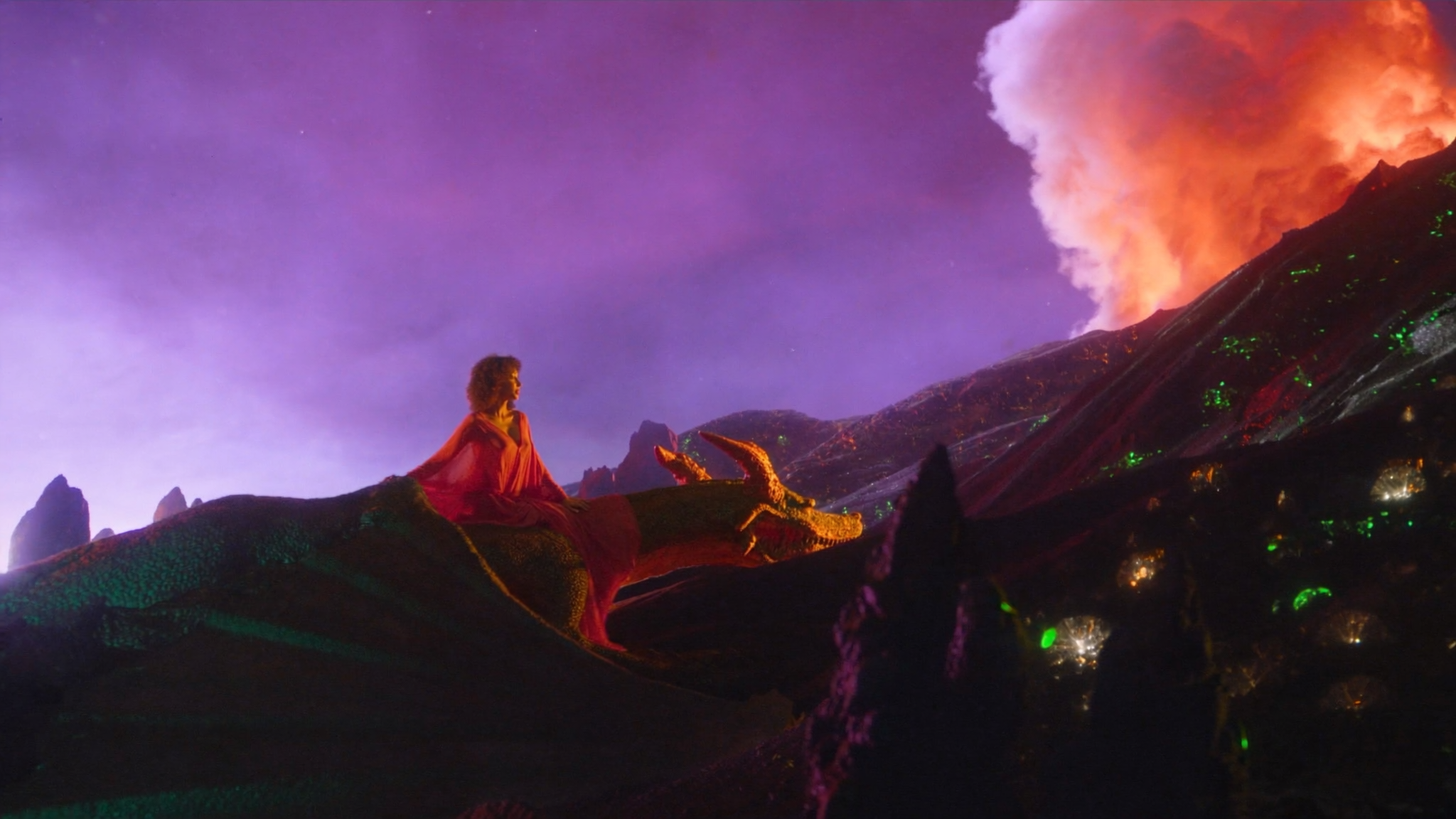

Here is a scene every AI animator knows. You generate a beautiful first shot of your character. The face is right, the outfit is right, the mood is perfect. Then you generate the second shot. The character is wearing a different jacket. The third shot brings a new face. Before long, your hero has become a different person in every scene, and your animation has turned into a casting disaster.
This problem, character consistency, is the reason multi-image fusion has become one of the most important techniques in AI-driven animation. This guide explains how it works, why it beats text-only prompting, and how to build a workflow that keeps your characters recognizable across scenes, styles, and even different models.
Why Consistency Is the Hardest Problem in AI Animation
When you turn still images into animation, the model's job is to invent motion. But motion is not the only thing it invents. Every generation starts from a noisy state and reconstructs the image frame by frame, which means it also redecides what your character looks like. Unless something anchors the identity, each shot is a fresh interpretation.
The result is the industry's most common complaint: inconsistent characters. Text prompts can describe a character, but words are lossy. Describe a scar on the left cheek and the model will place it on the right, or omit it, or add a second scar on the nose. The more scenes you generate, the more the identity drifts.
High-quality models actually make the problem worse, because their output is so detailed that even small inconsistencies become obvious. A blurred background hides nothing when every pore is rendered.
How Multi-Image Fusion Works
Multi-image fusion is a technique for building a stable identity from multiple reference images. Instead of telling the model who the character is with words, you show it. The technique extracts the salient features of the character, the face, the hair, the costume, the proportions, from several source images and merges them into a compact representation that can be used as conditioning input for video generation.
The key insight is that one reference image is not enough. A single photo captures one angle, one expression, one lighting setup. When the model tries to animate that character in a new pose, it has to guess the parts it never saw. Multiple references, ideally from different angles and expressions, fill in the gaps and produce a representation that survives transformation.
Think of it as building a 3D model of the character's identity in a latent space. The fused representation becomes a stable anchor, and every generated scene inherits that anchor instead of inventing a new identity from scratch.
Keyframes: The Second Half of the Formula
Multi-image fusion locks who the character is. Keyframes lock what the character does.
A keyframe is a frame that defines a critical pose, expression, or position. In animation, keyframes are the bones of a sequence; the software or model fills in the motion between them. When you are turning still images into animation, reliable keyframes are what keep the action readable.
In practice, you can use keyframes in two ways. The first is endpoint control: specify the starting frame and the ending frame of a shot, and the model generates the transition between them. This is excellent for character entrances, exits, and dramatic pose changes. The second is beat control: place keyframes at important moments in the middle of a shot, such as the moment the character turns to face the camera, to keep the action on the beats you designed.
Combine fusion for identity with keyframes for action, and you have a complete control system for animated characters.
Building Your Character Reference Kit
The quality of your fusion depends entirely on the quality of your references. A sloppy reference kit produces a sloppy identity, no matter how good the fusion algorithm is.
Start with angles. Collect at least three views: front, side, and three-quarter. If the character has a distinctive feature, hairline, scars, jewelry, collect a close-up of it. More angles mean the fused identity is robust to the new poses you will ask for.
Then match lighting. References shot in wildly different lighting confuse the fusion, because the model cannot tell whether a shadow is part of the face or part of the lighting. Aim for consistent, soft, neutral lighting across all references.
Then keep the costume consistent. The character's outfit is part of their identity. If one reference shows a jacket and another shows a t-shirt, the fused identity will blend them into something that looks like neither. Shoot the full costume in every reference.
Finally, clean the images. Remove background clutter, crop to the subject, and keep the resolution high. Garbage in, garbage out is the law here.
Applying Consistency Across Scenes and Styles
Once your reference kit is fused, every scene in your animation should be conditioned on the same identity. This is the discipline that separates productions from experiments.
The workflow looks like this. Lock the identity first, before you generate anything. Then plan the scene list and decide which keyframes each scene needs. Generate each scene with the fused identity as the conditioning input. Review every render against the reference kit before moving on. If a render drifts, retake it immediately; do not accumulate broken shots and hope to fix them in post.
Consistency also applies to style. If your animation mixes models, a character can look different because the rendering engine interprets skin and fabric differently. The fix is a style reference: feed the same style frame into every model you use, so the whole sequence shares a visual language. The identity stays fused; the style stays anchored.
Multi-Scenario Character Portrayal
A consistent character is not a boring character. The whole point of fusion is that your hero can appear in many scenarios while still being the same person.
Plan the character's range deliberately: the same face in a cozy interior, a rainy street, a fantasy landscape, a formal event. Because the identity is anchored, the audience will accept the character in any world. This is the same logic as casting: the actor stays the same, the setting changes.
For series creators, this is a superpower. You can build one character kit and use it across an entire season of content, in different styles, seasons, and moods. Your library becomes your franchise asset.
Object and Costume Consistency
Characters are not the only things that drift. Props, costumes, and products suffer the same identity problem, and they matter just as much in branded animation.
Apply the same fusion logic to objects. If a character always carries a distinctive sword, or wears a branded jacket, or interacts with a specific product, build reference kits for those objects too. Fuse them, and condition the scenes on the combined set of references.
For product animation, this is the difference between a commercial that looks polished and one that looks surreal. When the product's logo, shape, and color stay exact from shot to shot, the audience reads the video as professional production. When they drift, the video reads as cheap AI novelty.
Saving Resources with Fusion
There is an economic argument for fusion, not just a creative one. A consistent pipeline costs less to run because you stop burning renders on retakes.
Think about the math. Without a stable identity, you might generate five versions of every scene before one matches the character. With fusion, the first or second render usually passes, because the identity was never in question. Across a ten-scene animation, that is the difference between ten renders and fifty.
The savings multiply when you reuse assets. The same character kit can power a dozen videos, so the setup cost amortizes quickly. Treat your reference library as infrastructure, not as a one-off asset.
Combining Fusion with an Agent Director
The newest AI-assisted workflows add an agent layer on top of the generation pipeline: a director-style assistant that helps you plan shots, choose models, and apply consistency rules automatically.
The practical value is standardization. The agent can enforce your reference kit on every scene, remind you when a shot violates the style anchor, and suggest keyframe placements based on the action you described. It behaves like a consistent first assistant who never forgets the production bible.
Use the agent for the mechanical parts of direction, and keep the creative decisions for yourself. The agent will not replace your taste, but it will remove a large share of the repetitive work.
Troubleshooting Common Consistency Failures
The character still drifts. Go back to the references. Inconsistent lighting or an inconsistent costume is almost always the cause. Rebuild the kit with stricter discipline.
The character looks wrong in motion, even though the stills are fine. Add keyframes at the critical poses. The model needs explicit anchors for extreme expressions and actions.
Different models produce different versions of the character. Add a style reference and pass the same reference set to every model in the pipeline.
The fused identity works for close-ups but fails on wide shots. Add full-body references to the kit so the model knows the proportions, not just the face.
A Practical Template for Your Character Sheet
A character sheet sounds like concept art for a game studio, but for AI animation it is a working document you can build in an afternoon. Here is a template that works.
First, the identity block: name or label for the character, plus three to five reference images from front, side, three-quarter, and one close-up of any distinctive feature. Keep the lighting neutral and the costume identical in every image.
Second, the variation block: one image showing the character in a different expression, one in a different pose, and one in a different environment. These give the fused identity enough material to survive transformation without drifting.
Third, the rules block: a short list of visual rules for anyone generating with this kit. Hair color, costume details, proportions, and one or two features that must never change. Write them as prompts, not as descriptions, so they can be dropped directly into the generation.
Fourth, the style anchor: one image that represents the intended look of the whole sequence. This is the frame you pass to every model so the rendering style stays consistent.
Keep the sheet in a folder with the fused identity and the prompts used. Every project that reuses the character starts from this folder, which is why the second video is always faster than the first.
A Three-Scene Case Study
To see the system in action, walk through a simple three-scene animation: a character waking up, walking through a market, and arriving at a destination.
Scene one needs a close shot of the character opening their eyes. The fused identity handles the face; a keyframe defines the moment the eyes open. One quick render, one review, done.
Scene two is a wide tracking shot through the market. The identity keeps the face consistent, the keyframes mark the character passing two landmarks, and the style anchor keeps the crowd and the buildings in the same visual language. The risk here is background clutter, so the review checks the character first and the environment second.
Scene three is the arrival, a medium shot with a slow push-in. The keyframe locks the character stopping at the door, and the push-in adds emotional weight. Because the identity never changed, the audience reads all three scenes as one continuous story.
The case study has a point: consistency is not a quality boost for one shot; it is what makes a sequence feel like a film instead of a collection of clips. Every scene inherits the same face, the same world, and the same rules, and that is exactly what viewers experience as production value.
Frequently Asked Questions
How many reference images do I need? Three to five well-made references, front, side, three-quarter, plus any distinctive features, are usually enough. More images only help if they are consistent.
Does fusion work with any video model? Most modern models support some form of reference conditioning. If yours does not, use a consistent style reference and strict prompts as a fallback.
Can I use fusion for photorealistic characters? Yes. Photorealistic characters benefit most, because the audience notices small inconsistencies more in realism.
How long does it take to set up a character kit? With clean source images, the setup is fast. The discipline of shooting consistent references takes longer than the fusion itself.
Is this technique only for professionals? No. The tools are accessible to independent creators, and the technique removes one of the biggest barriers to professional-looking output.
What if I cannot generate a character sheet from scratch? Start from a single strong image and build variations with an image model, keeping the identity fixed. The sheet does not need to be hand-drawn; it needs to be consistent.
The Workflow in One Paragraph
Build a character reference kit with consistent angles, lighting, and costume. Fuse it into a stable identity. Plan your keyframes so the action follows your beats. Condition every scene on the fused identity and the style anchor. Review each render against the kit and retake immediately. Reuse the kit across every scene, every style, and every video. That is the entire system, and it turns character consistency from a gamble into a production standard.
