
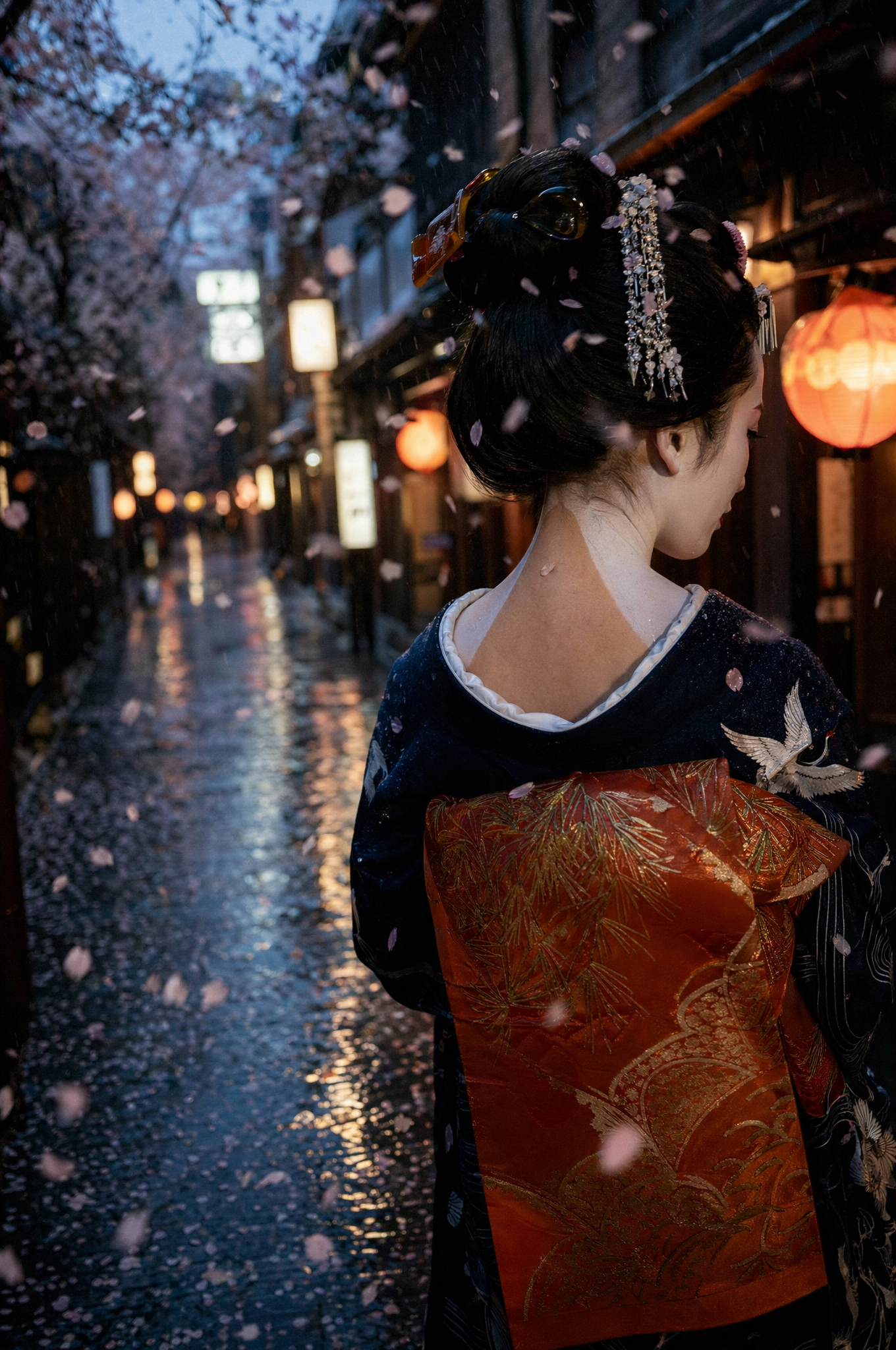
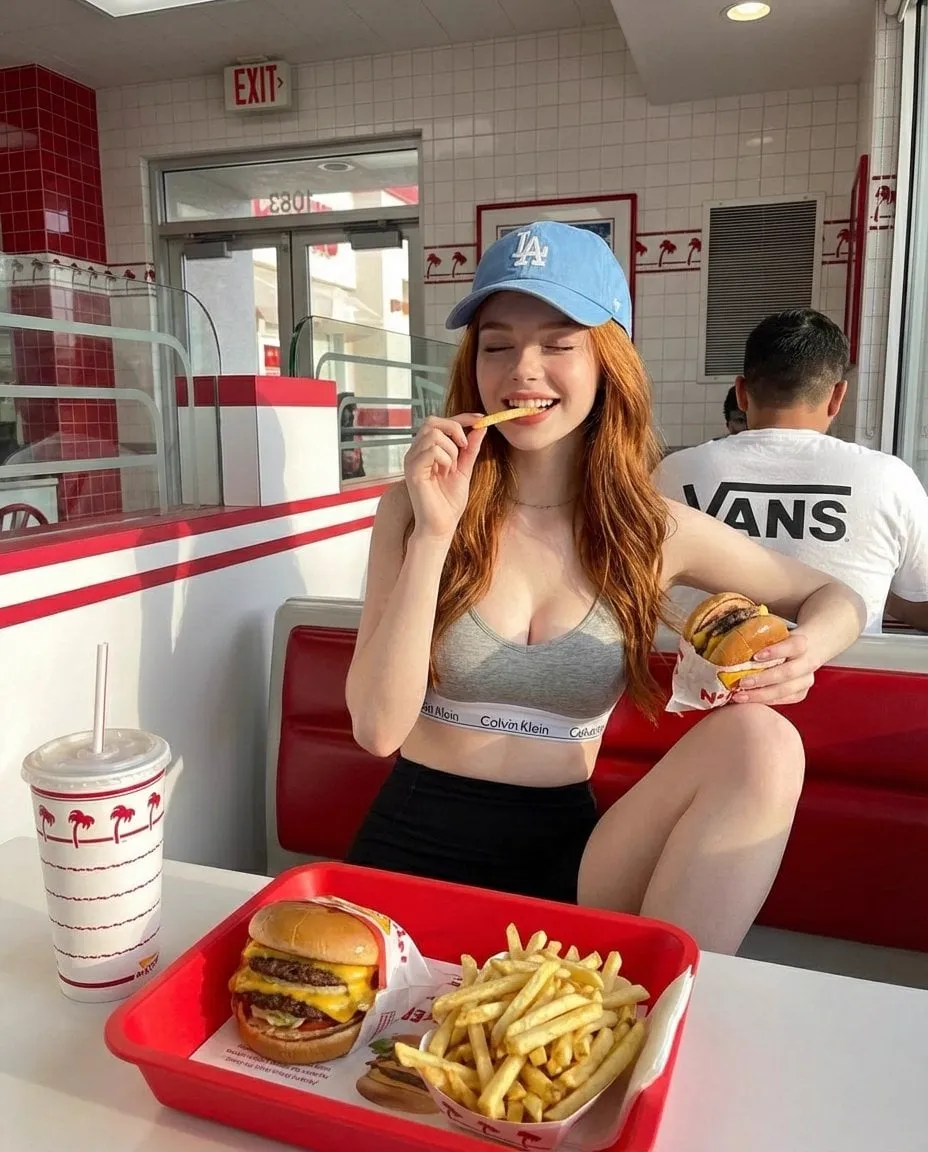
Generative video has reached the point where a single text prompt can produce a beautiful shot. What it still struggles with is the second shot. The moment you cut away from a character and return to them, the jawline shifts, the hair colour drifts two shades warmer, the jacket changes cut, and the audience quietly stops believing the scene. Character consistency is the hardest unsolved problem in AI video production, and multi-image fusion is currently the most practical answer to it.
This guide explains how multi-image fusion works, how to build reference sets that a model can actually use, and how to run a repeatable production workflow that keeps a cast recognisable across dozens of shots. It is written for creators, small studios, and marketing teams who need episodic output rather than one-off clips.
Why AI characters drift between shots
Every generative video run starts from a compressed representation of your intent. When that intent is text alone, the model samples from a broad distribution of plausible faces, wardrobes, and lighting conditions. Nothing in a text prompt pins the result to a specific individual, so each generation is a fresh lottery draw that happens to match your adjectives.
The drift gets worse as production scales. A five-shot test often looks acceptable because you can cherry-pick the best takes. A thirty-shot narrative exposes every inconsistency: the character ages in and out of focus, their hairstyle resets after every cut, and clothing details that were consistent in shot four vanish in shot nine.
Three forces cause most of the problem:
- Sampling variance. Prompt-only generation has no memory, so identity is re-invented from scratch at every call.
- Motion pressure. The more the character moves, turns, or gestures, the more the model has to improvise on parts of the face and body it never saw clearly.
- Style bleed. Global style words such as "cinematic," "moody," or "neon-lit" can override identity cues, repainting the character to match the aesthetic.
The usual workaround, feeding one reference image into an image-to-video model, helps but does not solve it. A single reference captures one angle under one lighting setup. The moment the character turns their head, the model is guessing again, and the guess is informed by whatever generic face patterns dominate its training data.
What multi-image fusion actually does
Multi-image fusion is the practice of conditioning a generative model on several reference images of the same subject at once, then compressing those references into a shared identity representation that persists across generations. Instead of "here is what the character looks like from this angle," you say "here is what the character looks like, full stop."
From a single reference to an identity vector
The core idea is abstraction. Rather than treating each reference image as a pixel patch to copy, fusion encodes the invariant features: bone structure, interpupillary distance, nose shape, hairline, skin tone range, and signature accessories. Those encoded features become a reusable identity signal that the generation step consults alongside your prompt.
This is why fusion handles angles the references never covered. A well-built identity signal generalises from a three-quarter view to a profile, because it learned what makes the face that face rather than what the pixels looked like.
How fusion differs from a simple image prompt
A single-image prompt is a strong constraint on a narrow slice of the subject. Fusion is a broad constraint across many slices. Practically, this means:
- Better performance on head turns, profiles, and extreme close-ups.
- More stable wardrobe and hairstyle details across shot changes.
- A measurable reduction in regeneration attempts, which matters when you are paying per second of generated video.
- More tolerance for stylised outputs, since the identity signal survives a stylistic pass better than raw pixels do.
Where fusion sits in a production pipeline
In a typical workflow, fusion happens before animation and after casting. You generate candidate stills, select and fuse the references into a locked identity, then use that identity as the anchor for every subsequent video shot, storyboard frame, or thumbnail. The identity is a production asset, not a prompt detail, and it should be versioned and reused like any other asset.
Building a reference set that fusion can use
The quality of the reference set caps the quality of the result. A sloppy set of ten images performs worse than a disciplined set of five. Treat the reference set as a casting package.
Coverage checklist
Aim for these views before you consider the set complete:
- One neutral, straight-on portrait with even lighting.
- Two three-quarter views at different angles, left and right.
- One profile view, ideally not extreme.
- One full body or three-quarter body shot to capture proportion and posture.
- One expression variant: smiling, serious, or mid-speech.
- One shot in the primary costume or wardrobe for the project.
Quality rules that matter more than quantity
- Consistent identity, varied framing. Every reference should show the same person with the same hair length and hair colour.
- Neutral or consistent lighting. Mixed colour temperature makes the model average across lighting instead of isolating identity.
- Clean separation from the background. Busy backgrounds confuse the encoding step and leak into identity features.
- No heavy filters or beautification. Smoothing removes the micro-detail that makes a face recognisable.
- Decent resolution. References below roughly 720 pixels on the short edge lose detail that fusion needs.
What to leave out
Avoid screenshots with timestamps and overlays, heavy motion blur frames, images where the face is partly occluded by hands or hair, and dramatic side-lighting that turns half the face into shadow. Also avoid mixing art styles in one set. If your project is animated, keep every reference in the same visual language.
A repeatable multi-image fusion workflow
This is the loop that holds up under deadline pressure.
Step 1: Write a character sheet before generating anything
Write down the invariants: apparent age range, build, hair colour and length, eye colour, distinguishing features, wardrobe palette, and any signature accessory. Keep it to eight to twelve bullet points. This document becomes your prompt skeleton and your QA checklist later.
The value here is discipline. When someone on the team says "the hair looks different," you have a written standard to compare against instead of an argument about vibes.
Step 2: Generate candidate stills in batches
Generate thirty to sixty stills using the character sheet as a prompt base, varying only camera angle, expression, and framing. Hold the style words constant. Do not vary the wardrobe, the age descriptors, or the art direction between batches, because that reintroduces exactly the variance you are trying to eliminate.
If you are working with a photo of a real, consenting person as your source, use that photo set as your starting references and keep the same coverage rules.
Step 3: Curate hard, then fuse
Select five to eight of the best candidates. Selection criteria, in order of importance:
- Same-looking person across every image.
- Clean facial detail with no smearing or artefacts.
- Angle coverage that matches the checklist above.
- Wardrobe consistency with the project's costume plan.
Discard anything that requires a mental apology. One weak reference drags the whole identity signal toward a generic face, and you will spend the rest of the project fighting the resulting drift.
Step 4: Lock the identity before animating
Create the fused identity and test it immediately with three cheap checks: a profile view, a close-up, and a full-body shot. If any of the three looks like a cousin rather than the same person, go back to curation. Fixing this at the still stage costs minutes. Fixing it after animating twenty shots costs days.
When the identity passes, freeze it. Save the reference set, the fused identity, and the prompt skeleton together as a named asset.
Step 5: Animate shot by shot with a QA loop
Generate each shot with the locked identity and a prompt that describes action, camera, and environment rather than appearance. Review every shot against the character sheet before accepting it. Build a simple reject-and-regenerate loop with a maximum of two retries per shot; if a shot fails twice, the problem is usually the prompt or the reference set, not luck.
Prompt patterns that protect identity
Fusion carries the identity, but prompts still influence how faithfully it survives. A few habits make a large difference.
Describe action, not appearance. Once identity is locked, appearance words in the prompt compete with the identity signal. Say "she turns toward the window, slow dolly in," not "a woman with dark curly hair and green eyes turns toward the window."
Anchor wardrobe explicitly. Identity fusion protects the face more reliably than the clothing. Naming the garment in every shot prompt, with the same words each time, stops jacket drift.
Keep style words identical across the sequence. Changing "soft natural light" to "golden hour glow" mid-sequence repaints the character's skin tone. Change the environment, keep the treatment.
Avoid contradictory descriptors. Adding an age word that conflicts with the reference set, or an ethnicity word that does not match, forces the model to compromise and produces a face that resembles nobody.
Use motion prompts that respect geometry. Fast whips, full spins, and heavy occlusion are where identity fidelity drops fastest. If a shot needs one, generate at a slightly wider framing and crop in post.
Keep negative prompts stable. If you suppress artefacts such as warped hands or duplicated facial features, use the same negative prompt throughout so the model's baseline does not shift between shots.
Choosing the right layers in your tool stack
Consistency is a pipeline property, not a single-feature property. Build for the layers you actually need.
| Layer | What it must do | Selection criteria |
|---|---|---|
| Image generation | Produce clean reference stills and storyboards | Fine control over pose, lighting, and aspect ratio |
| Fusion / identity tooling | Encode multiple references into one reusable identity | Handles 4–10 references, survives style passes |
| Video generation | Animate shots from the locked identity | Supports image or identity conditioning, good motion coherence |
| Editing and finishing | Cut, stabilise, colour match, upscale | Frame interpolation and face-aware upscaling |
| Asset management | Store identities, prompts, and versions | Searchable naming, versioned identity files |
A practical rule: pick one image model, one video model, and one fusion method, and learn them deeply rather than switching constantly. Every tool change resets your intuition about how identity behaves under motion and style pressure.
Troubleshooting the six most common failures
Identity morphs mid-shot. Usually caused by an under-specified reference set or a prompt that introduces a strong conflicting face description. Remove appearance adjectives and add a profile reference.
Wardrobe drifts between shots. Lock garment wording verbatim in every prompt and add one reference where the full costume is visible.
Expressions all look identical. Your reference set is too uniform. Add one expressive reference, then vary expression in the prompt while holding everything else constant.
Style bleeds into the character's face. Style words are outweighing identity cues. Reduce stylistic intensity in the prompt and re-test with a close-up.
Background swallows the subject. Complicated environments pull the model's attention. Simplify the environment description, then add detail back gradually.
Identity collapses during fast motion. Regenerate with a wider shot, slower camera movement, or split the action into two shorter shots.
Scaling from one clip to a series
Once a single character holds together, the real leverage comes from systemising. Three practices pay off quickly.
Maintain a shot bible. A document listing each shot, its prompt, its identity version, and its status. It turns a creative process into something a team can hand off.
Version your identities. When you update a reference set, publish it as a new version rather than overwriting. Old shots stay reproducible, and you can compare quality across versions when a character starts drifting again.
Build a reusable asset library. Environment plates, lighting presets, and wardrobe reference sets should be as reusable as the identity itself. A series that shares assets looks more coherent and takes less time per episode.
For multi-character scenes, fuse each character separately and generate shots individually, then composite. Fusion handles one identity well; asking it to resolve two at once usually produces two people who resemble neither original.
Ethics, consent, and rights in character work
Consistency technology makes it easier to reproduce a face at scale, which raises the stakes on how you use it. A few non-negotiables:
- Get written consent before building an identity from a real person's photographs.
- Keep the consent record with the identity asset, including any limits on usage.
- Do not build identities from public figures for commercial or political content.
- Label synthetic characters where your audience, platform, or client requires it.
- Store identity assets securely; a fused identity is a biometric-adjacent artefact.
Being explicit about this up front also makes client conversations easier. Studios that can hand over a consent trail win work that less organised competitors lose.
Frequently asked questions
How many reference images does fusion need?
Four to eight well-chosen references cover most cases. Beyond ten, returns flatten unless each image adds a genuinely new angle or expression.
Can I use multi-image fusion with animated or stylised characters?
Yes. Keep every reference in the same visual style, and expect to spend more time on curation, because stylised faces have fewer distinctive micro-features for the encoder to latch onto.
Does a locked identity work across different video models?
Often partially. Identity signals are not perfectly portable between tools, so plan one or two test shots after any model switch before committing to a full sequence.
Why does my character look fine in stills but wrong in video?
Motion is the stress test. Add references from the angles your shot requires, slow down camera movement, and avoid frames where the face is heavily occluded.
How do I stop a character ageing across a long sequence?
Keep age descriptors out of individual shot prompts entirely. Age belongs in the character sheet and the reference set, not in per-shot text.
Is fusion worth it for a single short clip?
Usually not. For one or two shots, careful reference selection and iteration are enough. Fusion pays for itself when you need a character to survive ten or more shots, or to return in future episodes.
What is the fastest way to fix drift mid-project?
Rebuild the reference set from your best accepted frames, re-fuse, and regenerate only the shots where the character is most visible. Do not try to patch a broken identity with prompt tweaks alone.
Putting it into practice
The difference between an amateur AI video and a professional one is rarely the model. It is whether the audience believes the same person walked through every frame. Multi-image fusion gives you a mechanism for that belief, but the mechanism only works when it is fed a disciplined reference set and protected by stable prompts.
Start small: pick one character, build a clean reference package, lock the identity, and produce five connected shots. Review them side by side at full size, not on a phone. If the character holds, you have a workflow you can repeat for an entire series. If the character drifts, the failure will tell you exactly which layer to fix — references, prompts, or motion choices. Either way, you will have moved from hoping for consistency to engineering it.
