


Why Character Identity Is the Hardest Problem in AI Video
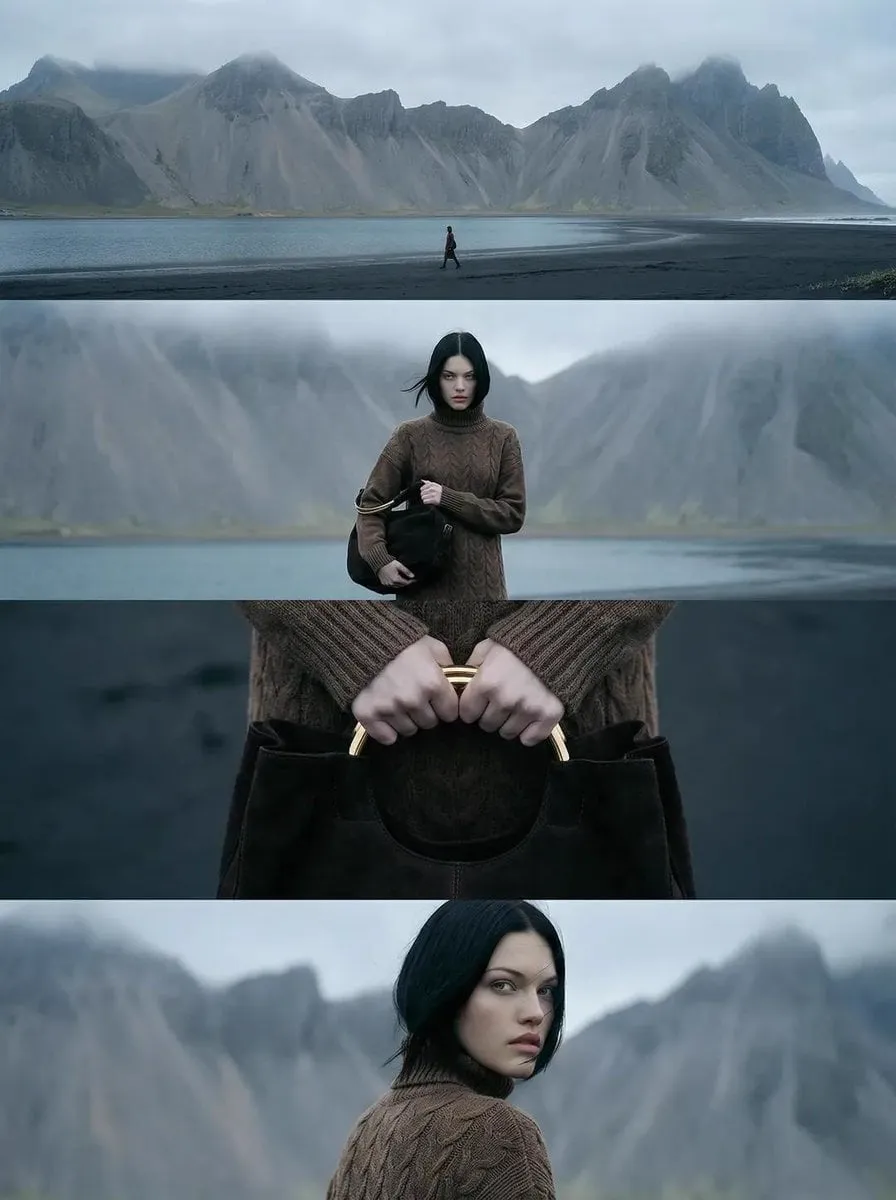
Generative video models have become remarkably good at producing a plausible person in plausible motion. They remain surprisingly bad at producing the same person twice. Ask for a shot of a woman in a red coat walking through a station and the model delivers something convincing. Ask for the same woman two minutes later in a different location and the jawline softens, the hair shortens, the eye color drifts half a shade, and the coat quietly acquires a different collar.
That is identity drift, and it is the most common reason AI-assisted narrative work looks amateur in the final cut. Audiences forgive imperfect physics, stylized lighting, and slightly uncanny hands. They do not forgive a lead character whose face changes between cuts. The brain is aggressively tuned to facial recognition, and a recast mid-scene reads as an error even when the viewer cannot articulate what changed.
There are two ways to fail here, and they sit at opposite ends of the same dial. Under-constrain the model and every shot invents a new face. Over-constrain it and you get a stiff, copy-pasted mannequin that repeats the same head angle in every scene regardless of the story beat.
Multi-image fusion exists to occupy the useful middle of that dial. Instead of handing the model one photograph and hoping it generalizes, you hand it a curated set of views and let the system average them into a stable identity representation. The result is not a single frozen face but a character that survives changes in pose, lighting, wardrobe, and camera angle.
What Multi-Image Fusion Actually Does
A single reference image is a weak instruction. It contains identity, but it also contains a background, a lens, a lighting setup, a pose, and a hairstyle that may never appear again in your story. When a model conditions on one image, it tends to latch onto all of it, not just the useful part. That is why single-reference characters often reproduce incidental details faithfully while drifting on the things you actually care about.
Multi-image fusion changes the input from a single sample to a distribution. You supply several views of the same person, the system encodes each into a feature representation, and those representations are combined into one identity signal that downstream generation conditions on. Because no single photo dominates, incidental features get diluted while stable features get reinforced.
Three places fusion can happen
In the conditioning encoder. Some video and image models accept multiple reference images directly and merge them before generation. This is the easiest route: you upload, you set an influence strength, you generate.
In an adapter layer. Cross-attention adapters are trained to inject identity from reference features into a base model. They are lightweight, swap in and out easily, and are the most common approach for keeping a consistent cast across a project.
In a small fine-tune. With fifteen to thirty well-chosen images you can train a compact personalization layer that encodes the character permanently. This is heavier to set up but gives the strongest identity lock and the most consistent behavior across very different prompts.
A fourth option, replacing the face in post, is really a patch rather than a solution. It works for locked-off shots and falls apart the moment the head turns or the lighting changes direction.
Identity is not style
Keep these separate. Identity is who the character is: bone structure, eye spacing, hairline, skin tone, signature features. Style is how the shot looks: film grain, color grade, lens character, era. Fusion should carry identity. Style belongs in your prompt and your reference look, not in the character set. Mixing the two is why so many attempts produce a character who only looks correct in exactly the lighting of the reference photos.
Building a Reference Set That Actually Works
The quality of your fusion is capped by the quality of your references. Ten mediocre images will always lose to six excellent ones.
The eight-image starter kit
A dependable baseline set looks like this:
- Three head-and-shoulders shots at roughly -40°, 0°, and +40° of head rotation, neutral expression.
- One profile or near-profile view so the model learns the nose bridge and jaw silhouette.
- One three-quarter body shot that establishes proportion and posture.
- One full-body shot in the character's default wardrobe.
- One expressive shot: a smile, a scowl, a laugh. This teaches the model how the face deforms.
- One shot under different lighting, ideally warmer or dimmer than the rest.
That is eight images, and it covers the axes that matter: yaw, framing, expression, and light.
What to leave out
Exclude anything you would not want reproduced. Heavy beauty filters, sunglasses, hats that hide the hairline, exaggerated makeup, motion blur, watermarks, and low-resolution crops all teach the wrong lesson. Also exclude duplicate angles. Six near-identical frontal portraits do not add information; they simply weight the frontal view six times and bias every generated shot back toward that exact head position.
If your character set is itself AI-generated, regenerate it until the references are internally consistent before fusing. Fusing a set where two images are subtly different people produces a blurred average that resembles neither.
A Step-by-Step Multi-Image Fusion Workflow
Step 1: Collect at the highest resolution available
Downscale rather than upscale. Fusion benefits from clean detail in the eyes, hairline, and skin texture, because those are the regions where drift becomes visible first.
Step 2: Normalize framing and color
Crop all references to comparable framing, correct obvious white-balance mismatches, and neutralize background clutter where you can. Normalization is not cosmetic; it reduces the amount of irrelevant variation the fusion step has to average out.
Step 3: Choose a fusion mode and set the influence weight
Start moderate. If the character is over-faithful, replicating the reference pose in every shot, lower the influence. If the face keeps morphing, raise it or add more varied references rather than simply pushing the slider up.
Step 4: Validate with a fixed test prompt
Build a short test ritual. Write one prompt block describing the character, then generate five variations with different seeds: a close-up, a medium shot, a profile, a low-light scene, and a backlit scene. Compare them side by side. If the profile and the backlit shot hold up, the profile is ready for production.
Step 5: Lock, name, and version the profile
Give the character a stable identifier, save the exact reference set, the influence settings, and the prompt block together. Version it whenever you change anything. The most frustrating failure in this workflow is a character that looked perfect three weeks ago and cannot be reproduced because nobody recorded which images were in the set.
Prompting for Consistency Across Shots
The identity block
Write one short paragraph describing the character and reuse it verbatim in every prompt for that project. Keep it to four or five invariant traits: apparent age range, hair color and texture, build, skin tone, and one distinctive feature. Long character descriptions create internal contradictions and the model resolves them differently each time.
Shot-specific language
Everything outside the identity block is free to change: camera height, lens, movement, action, environment, time of day. Structure prompts so the character block stays frozen and the shot language rotates around it. This separation is what allows a fused character to walk through twenty different scenes without mutating.
Negative prompts and forbidden drift
Maintain a short negative list for the traits that keep creeping in: different hairstyle, different eye color, facial hair, glasses, age shift. The list should be specific to your character's failure modes, not a generic dump.
Choosing the Right Technique for the Job
| Approach | Identity strength | Setup effort | Best for | Watch out for |
|---|---|---|---|---|
| Single reference image | Low to moderate | Minutes | Quick concept shots | Pose and angle lock-in |
| Multi-image fusion adapter | High | An hour or two | Series with a recurring cast | Adapter conflicts between characters |
| Compact fine-tune | Very high | Several hours | Long-form projects, brand characters | Rigidity, longer iteration |
| Post-process face replacement | Moderate | Minutes per shot | Locked-off inserts, fixes | Breaks on turns and profile |
Decision criteria
Pick the lightest tool that meets your continuity requirement. A five-shot social piece does not need a trained personalization layer. A twenty-minute narrative with a recurring lead almost certainly does, or at minimum a carefully tuned multi-reference adapter. Consider how many scenes the character appears in, how often they are seen in profile or motion, and whether the project will be extended later. Reuse potential is the strongest argument for investing in a proper fused profile.
Continuity Across Scenes in Long Narratives
Build a continuity sheet
Before generating anything, list every scene with the character's wardrobe, hair state, emotional register, and lighting condition. Fusion holds the face; it does not hold the story. Wardrobe and grooming changes are your responsibility.
Batch by scene, not by character
Generate all shots for one scene in one session with the same profile settings. Model versions and settings shift over time, and batching limits how much drift accumulates between distant shots.
Handle multi-character scenes deliberately
When two fused characters share a frame, the model has to resolve two identity signals at once. Keep them in separate depth planes, avoid heavy occlusion of faces, and generate extra takes. If identities start swapping, reduce influence on both and let pose and wardrobe carry more of the differentiation.
Common Mistakes and How to Fix Them
Too many similar references. Six frontal portraits bias everything frontal. Fix by adding yaw variety.
Mixing styles in the reference set. A cinematic portrait plus a phone snapshot with harsh flash produces an identity that only looks right in one of those conditions. Fix by grading references toward a common look.
Ignoring seed discipline. Random seeds are useful during validation and destructive during production. Lock seeds once a look is approved.
Over-weighting the reference. If every generated shot mirrors the reference pose, you have traded drift for stiffness. Lower influence and describe the action more explicitly.
Fixing continuity in post. Retouching faces across dozens of shots is slower and worse than rebuilding the reference set once.
Quality Control: Review Passes and Metrics
Run three passes. First, a technical pass: resolution, artifacts, limb integrity. Second, an identity pass: put five frames from different scenes side by side and check whether they read as one person at a glance. Third, a continuity pass: wardrobe, props, injuries, time of day.
The identity pass is the one people skip, and it is the one that matters. A useful trick is the thumbnail test: shrink the frames to the size of a phone thumbnail. If the differences disappear at thumbnail scale, the drift is minor. If they become more obvious, you have a real problem. Another is a blind reviewer who has not seen the production; ask them to sort the frames by scene and note any that look like a different actor.
FAQ
How many images do I actually need? Six to ten well-chosen images cover most cases. Beyond twelve, the marginal benefit drops sharply unless the character has dramatically different looks within the story.
Can I fuse a character from AI-generated images? Yes, but verify internal consistency first. Generate a wide set, discard anything inconsistent, and fuse only the reliable subset.
Why does my character look right in close-ups but wrong in wide shots? Wide shots give the model more freedom over proportion and posture. Add a full-body reference and specify build in the identity block.
Do I need to retrain if I change the wardrobe? No. Wardrobe belongs in the prompt and reference look, not in the identity set. Only retrain or re-fuse if the face itself changes.
What if two characters keep swapping faces? Reduce identity influence on both, separate them spatially, and lean on distinct silhouettes and color palettes. Two similar-looking characters are a casting problem before they are a technical one.
How do I keep consistency across a months-long project? Save the reference set, settings, prompt block, and seeds in a project document, and version it like code. Reproducibility is the whole game.
Is fusion worth it for a single short clip? Usually not. For anything with a recurring character across two or more scenes, it pays for itself almost immediately in avoided rework.
