
Why character consistency breaks most AI video projects
Ask anyone who has tried to build a narrative video with a generative model and they will describe the same experience. The first shot looks fantastic. The second shot features a stranger who vaguely resembles the first character. The face drifts, the jacket changes color, the hairstyle lengthens, and by the fifth shot the story has quietly lost its lead actor.
This is not a prompting failure in the usual sense. It is a structural limitation. A text-to-video model reconstructs a scene from scratch each time it runs. It has no memory of the character it drew a minute ago, only whatever guidance exists inside the current prompt and the current seed. Language is a lossy channel for describing a face: as soon as you compress a person into words, the model fills the gaps with its own priors, and those priors shift between shots.
The problem compounds for series work. A short film, an explainer series, a social channel, a training module, anything with recurring talent needs the same identity across dozens or hundreds of generations. Editors then spend hours in post trying to salvage continuity that should have been locked before the first render.
Multi-image fusion exists to solve exactly that problem. Instead of describing a character, you show the model what the character looks like from several angles, and the model treats those images as a stable identity anchor rather than loose inspiration. Everything else in this guide is about how to build that anchor properly and keep it intact as the story moves.
What multi-image fusion changes in practice
Multi-image fusion is a conditioning strategy. A generation model receives several reference images of the same subject alongside the prompt and the motion instructions, then blends the identity information from those images into the output. The relevant word is identity, not pixels.
A well-built fusion pipeline separates what the character is from what the character is doing:
- Identity: bone structure, facial proportions, skin tone, hairline, eye shape, body type.
- Presentation: wardrobe, accessories, hairstyle state, makeup, recurring props.
- Performance: pose, expression, gesture, gaze direction, breathing rhythm.
- Environment: lighting, camera angle, lens character, color grade, set design.
Single-image references tend to lock identity and presentation together too tightly. Change the lighting and the face changes with it, because the model treats the reference as one indivisible package. Multi-image fusion, when it works well, gives the model enough samples to separate those layers. You can move a character from a daylight street into a neon-lit interior without rebuilding the face from scratch.
Compare that to classic text-to-video, where the prompt is the only anchor and every word carries too much weight. Add the phrase about a red jacket and the model may also shift the jawline, because it treats the whole prompt as one entangled description. With fusion, the jacket can be changed in text while the identity stays anchored by images.
The practical payoff is fewer retakes. In a sequence where references are used properly, most generations become usable, and the remaining retakes usually concern motion or composition rather than identity. That shift matters more than any single quality improvement, because it changes how you plan a production day.
Building a reference set that a model can actually use
The quality of your references sets the ceiling for everything downstream. A messy reference set produces a character who looks like the average of several different people, which is exactly the uncanny result nobody wants.
Start with a deliberate set of four to eight images. More is not automatically better. Divergent references pull the identity in competing directions, and the model has no way of knowing which one you consider canonical.
What belongs in a character reference sheet
Aim for coverage rather than volume:
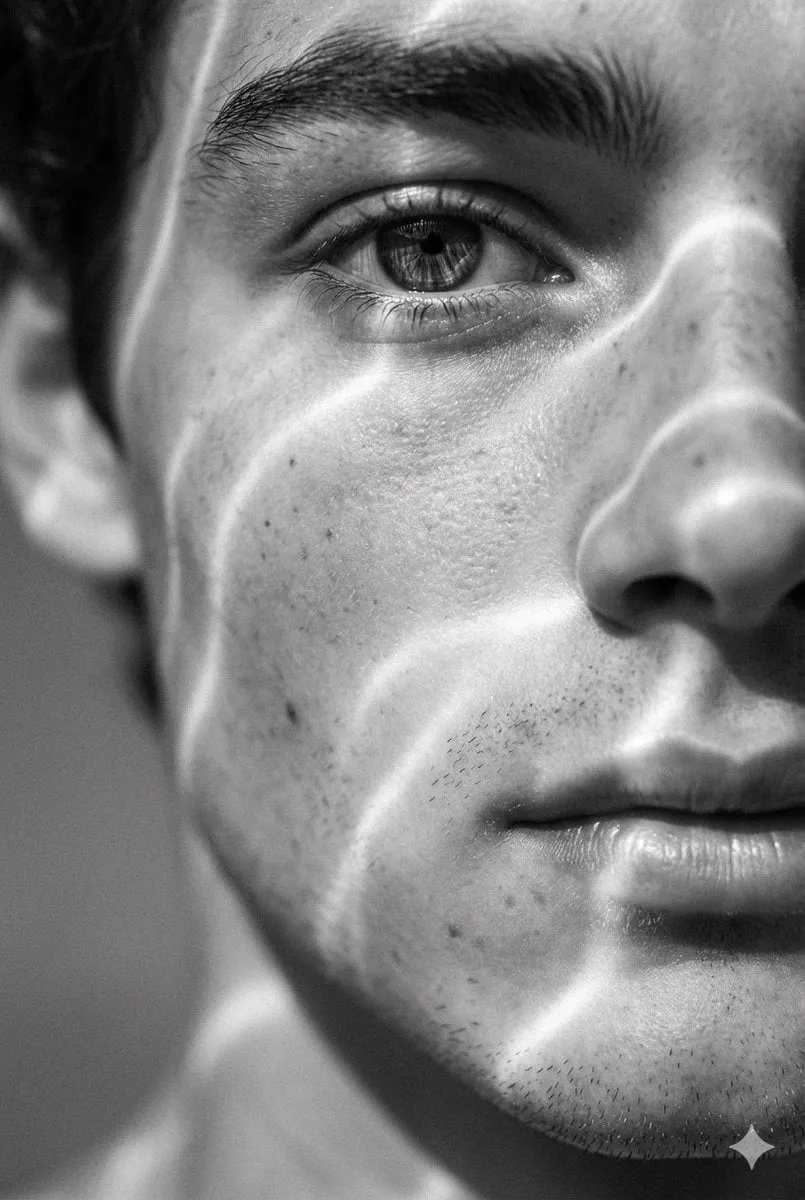
- A neutral front-facing portrait with even, shadowless lighting.
- A three-quarter view that reveals the cheekbone and nose profile.
- A true profile view, useful for dialogue shots and turns.
- A full-body frame that establishes proportions, height, and silhouette.
- One or two expression variations (relaxed, engaged) that keep the same face.
- A wardrobe reference showing the outfit worn flat or on the body.
- Optional: a detail crop of hair texture, tattoos, scars, or signature accessories.
The neutral portrait is the most important frame. If only one image survives review, keep that one.
Reference mistakes that quietly ruin consistency
- Mixed lighting temperatures. Half the sheet in warm tungsten, half in cold daylight, teaches the model that skin tone is unstable.
- Heavy stylization in the source. Airbrushed or heavily filtered references push the output toward plastic skin.
- Phone selfies with wide-angle distortion. A stretched nose in the reference becomes a stretched nose in every shot.
- Inconsistent hair state. Long in one frame, short in another, tied back in a third. The model will interpolate, and the result is a stranger.
- Watermarks, logos, and text. These leak into generations surprisingly often.
- Different people in the same set. Obvious when stated, common in practice when a mood board is assembled from multiple sources.
Normalize your references before you upload them: same aspect ratio, same crop logic, similar exposure, no filters. Ten minutes of preparation saves entire afternoons.
Keyframe control, style locking, and motion planning
References stabilize who the character is. Keyframes stabilize where the character goes. The two techniques complement each other, and each covers the other's weakness.
Start frames, end frames, and bridging
A first-frame reference tells the model the exact starting composition. An end-frame reference tells it where the shot must land. When both are supplied, the model interpolates the movement between them, which is far more controllable than describing a camera move in text and hoping for the best.
Practical pattern for a dialogue scene: generate or select a clean hero frame of the character, use it as the start frame, then supply a second frame with a slightly shifted head angle. The interpolation produces a subtle, believable head turn instead of a rubbery morph.
Style locking
Style drift is consistency's quieter cousin. The face holds, but the color grade, contrast, and grain change between shots. Lock the look with a fixed set of descriptors and a fixed reference frame for grading: focal length language, lighting direction, contrast level, film stock or render style. Then treat those descriptors as untouchable. If a shot needs a different mood, change the light in the scene, not the words that describe the look.
Motion planning before generation
Write the camera move and the character action as separate lines. The camera does one thing per shot. The character does one thing per shot. Two simultaneous camera moves produce mush.
Choosing a model for each shot type
Different model families behave differently, and the right choice depends on the shot, not on a leaderboard. Treat these as behavioral categories rather than brands.
| Shot type | What matters most | Model behavior to look for |
|---|---|---|
| Talking head, close-up | Facial fidelity, micro-expression | Strong identity retention, low face warping |
| Full-body action | Limb integrity, motion physics | Reliable anatomy, stable silhouette |
| Stylized or painterly | Aesthetic coherence | Consistent style transfer across frames |
| Product or prop hero | Fine detail, texture | Sharp micro-detail, stable highlights |
| Long continuous take | Temporal stability | Low flicker, gradual motion |
| Quick social cutdown | Speed and iteration | Fast drafts at lower resolution |
When you evaluate a model for a recurring character, run the same three-shot test: neutral close-up, walking medium shot, and interior scene with different lighting. If identity survives all three without retouching, the model suits your pipeline. If it survives the close-up but fails the walk, use it for portraits and hand action shots to a motion specialist.
Also consider duration limits and resolution ceilings, since they determine whether you can finish a shot in one generation or must stitch. A model that produces an excellent eight-second clip is more useful to a series than one that produces a spectacular but unpredictable twenty-second take.
A repeatable workflow from script to locked character
The following sequence is designed for a series, where the same character returns across many episodes.
- Write the character bible. One page: silhouette, age range, build, hair, distinguishing marks, wardrobe rules, three adjectives that describe how they move. This document governs every creative decision later.
- Generate or source the reference sheet. Produce the six to eight frames described earlier. Approve them as a set, not individually.
- Clean and normalize. Crop consistently, match exposure, remove text and logos, export at a uniform size.
- Lock a look document. Fix focal length language, lighting direction, contrast, and color treatment. Freeze it.
- Storyboard with the character in mind. Note shots where the face is small, because identity pressure is lowest there and you can spend more creative risk on composition.
- Generate hero frames first. Before animating anything, produce still frames for each shot. Review and approve them as a contact sheet. Rejecting a still costs seconds; rejecting a video costs minutes.
- Animate approved frames. Use start frames, end frames, and a single camera instruction per shot.
- Assemble and review in sequence. Identity problems that are invisible in isolation become obvious in a cut. Watch the whole scene at normal speed, then at half speed.
- Log every prompt and setting. The goal is reproducibility: when shot fourteen works perfectly, you need to know exactly why.
Steps six and nine are the ones teams skip, and they are the ones that make a series sustainable.
Prompt patterns for identity-safe shots
Once references are carrying the identity load, prompts should describe action and environment only. Every unnecessary physical descriptor is a chance for the model to reinterpret the face.
A reliable structure:
- Subject action: what the character is doing, one clear verb phrase.
- Camera: shot size, angle, movement, one instruction only.
- Environment: location, time of day, weather, background activity.
- Lighting: direction and quality, consistent with your look document.
- Mood: one or two emotional adjectives, no physical description.
Avoid restating hair color, eye color, or clothing in every prompt once a reference set exists. If wardrobe must change, state it explicitly as a change and keep everything else identical, so you can isolate whether the modification caused drift.
Describing wardrobe, age, and emotion changes
A character arc often requires a costume change, a time jump, or a shift in physical condition. Handle each with a dedicated reference image rather than text alone. Create a second sheet for the older version or the injured version of the character. Text alone is a weak signal for structural change, and the model will interpret an age jump inconsistently across shots.
Emotion is different. Expressions are performance, so they can be directed in text: tense jaw, relaxed shoulders, slight smile, eyes narrowing. Keep the face vocabulary to muscle behavior rather than shape, because shape descriptors tempt the model to restructure the features.
Negative prompts worth keeping
Maintain a short reusable list: extra fingers, warped hands, blurry face, changing eye color, face morphing, flickering, watermark, text overlay, duplicate limbs. Keep the list stable across a project. A negative prompt that changes shot to shot introduces a variable you cannot diagnose.
Failure modes, diagnostics, and fixes
Most consistency problems fall into a handful of patterns. Match the symptom, apply the fix, and change one variable at a time.
| Symptom | Likely cause | Fix |
|---|---|---|
| Face changes between shots | Divergent references or prompt restating features | Trim the reference set, remove feature descriptors from prompts |
| Character looks younger or older | Inconsistent lighting or stylized references | Normalize exposure, add an age-specific expression reference |
| Skin looks plastic | Over-filtered references | Replace with unretouched natural-light frames |
| Wardrobe flickers | Clothing described in text only | Add a wardrobe reference image |
| Subtle blur on the face | Model prioritizing motion over detail | Shorten the shot, add a close-up, or slow the camera |
| Color grade shifts | Unlocked look descriptors | Freeze style language, add a grading reference frame |
| Hands degrade in gesture shots | Pose complexity | Simplify the gesture, frame hands out or use an insert shot |
| Identity holds but proportions change | Full-body reference missing | Add a standing full-body frame |
Diagnostic discipline matters more than any single trick. Change one thing, regenerate the same shot, compare. If you change the reference set and the prompt at the same time, you learn nothing.
Quality control, versioning, and scaling to a series
When a project grows past a handful of shots, process replaces intuition. Two practices carry most of the weight.
Contact-sheet review. Generate still frames for every shot in a scene and lay them out in a grid. Scan the grid at thumbnail size. Identity drift is easier to spot when faces are small and adjacent than when you view them one at a time on a large monitor.
Naming and versioning. Use a convention that encodes character, scene, shot, and iteration, for example char-name_s03_sh07_v04. Keep the approved reference set in a folder that nobody edits casually. When a downstream shot misbehaves, you can confirm within seconds that the references are unchanged.
For long-running series, maintain three living documents: the character bible, the look document, and the prompt library. Treat them as production assets with owners. The prompt library in particular becomes the most valuable file in the project, because it captures the exact phrasing that worked for each recurring situation: walking, sitting, turning, entering a room, speaking to camera.
Finally, budget iteration rather than hoping to avoid it. A realistic planning assumption is two to four generations per shot for motion and composition, with identity handled on the first pass once references are solid. If a shot needs more than five attempts, the problem is usually in the brief, not in the model.
FAQ
How many reference images are actually needed?
Four to six well-matched frames usually outperform twelve inconsistent ones. Start with a neutral portrait, a three-quarter view, a profile, and a full-body frame, then add expression or wardrobe references only when a specific shot demands them.
Does multi-image fusion work for non-human characters?
Yes, and it often works better. Creatures, robots, stylized mascots, and product characters have fewer competing real-world priors, so a clean reference set locks a design quickly. The main risk is style drift rather than identity drift.
Can I fix a character mid-project if the design changes?
You can, but expect to regenerate everything downstream. Changing the reference set changes the anchor, so previously approved shots will no longer match. The cheaper path is to finish the current sequence with the existing design and introduce the revision after a natural story break such as a time jump or costume change.
Why does the character look fine in stills but wrong in motion?
Motion adds temporal noise. The model distributes attention across frames, so fine facial detail competes with movement. Shorten the shot, tighten the framing, or reduce camera ambition. A slow push-in with a steady subject holds identity far better than a fast orbit.
Do I still need a seed if I am using references?
References do most of the heavy lifting, but seeds still help you reproduce a specific result. Fix the seed when you are iterating on a single shot and release it when you want variation. Log which one you used either way.
What is the fastest way to test whether a model suits my character?
Generate three shots: a neutral close-up, a walking medium shot, and an interior scene with different lighting. Keep the prompt minimal and the references identical. If identity survives all three, the model is viable for series work.
