
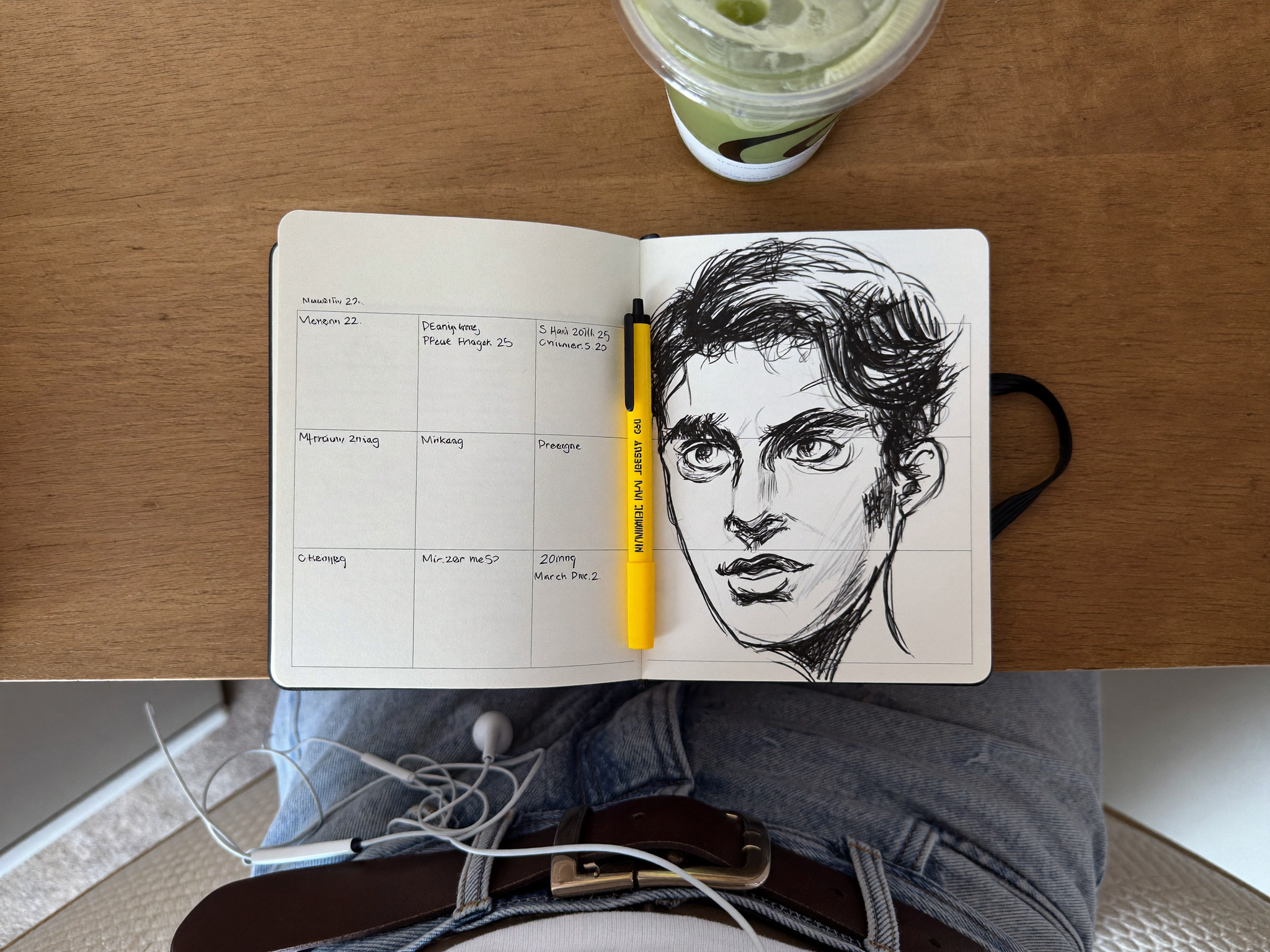
The single most frustrating moment in generative video work is watching a character you love quietly turn into someone else between two cuts. You spend hours getting a hero figure right in one scene, holding onto a perfect facial expression, outfit, and body language — and then the next shot hands you a stranger wearing vaguely similar clothes. For anyone building story-driven short films, this inconsistency has been the wall that separates "a collage of nice clips" from "a film." Multi-image fusion exists to break through that wall.
In plain terms, multi-image fusion is a technique that fuses information from multiple reference images so a generation system holds onto a single identity across different scenes, poses, and even entirely different models. Instead of hoping a single prompt remembers a character, you give the system several locked references and ask it to keep them stable. This guide explains how it works, how to use it in a professional short-film workflow, and why it matters for anyone serious about consistent characters.
The core problem: identity has to survive the model
Most text-to-video systems are built around a prompt. You write a sentence, you get a clip, and the character in that clip is whatever the model decided. That works fine for a single throwaway clip and almost never works across a sequence, because nothing pins down "who this person is" from shot to shot.
Identity in this context means a set of stable attributes: the face, the haircut, the clothing, the proportions, the color palette — everything a viewer uses to recognize a character as the same person. For that recognition to survive between scenes, the identity has to be represented in a way the generation system can repeatedly apply, not just described once.
This is where multi-image fusion changes things. The idea is to feed several images that all show the same character from slightly different angles, in slightly different situations, so the system can extract a robust internal representation of the identity — a kind of "identity signature" — and hold it steady while other elements of the scene change. The character stays constant; everything around them is free to move.
How the technique actually works
It helps to think of multi-image fusion as an embedding problem before it is a rendering problem. When you give the system multiple images of the same character, it compares them, finds the features that stay stable across all of them — the face, the silhouette, the wardrobe — and treats those stable features as the identity to preserve. The variable features, the angles and backgrounds and lighting, are understood as context you are allowed to change.
The more your reference set genuinely varies — different poses, different angles, different expressions, ideally different settings — the better the system can tell the difference between "what defines this person" and "what is just the scene around them." A single reference image can only teach one lock, and it can be thrown off by lighting or angle. Several good references triangulate the identity.
That identity signature then does double duty. It guides the current scene's generation, and it travels forward to the next scene when you reuse the same references. This is what lets you place the same character in a city street, then a room, then a forest, and have the audience believe it is the same person the whole time.
Setting up references that actually hold
Not all images are equally useful as references. Prepare yours with intent, and your consistency improves dramatically.
Build a varied but narrow set. Aim for three to six images of the same character. Vary the angle (front, three-quarter, profile), the pose, and the expression — but keep the identity-defining attributes identical: the same face, the same style of clothing, the same palette. Variation in context is good; variation in identity is poison.
Keep lighting honest to the goal. If a scene is meant to be lit warm and soft, include at least one indoor reference in similar lighting, so the model does not only know the character in harsh daylight. But do not force inconsistency — the priority is a clear, coherent identity.
Be careful with partial frames. A reference where the face is tiny or heavily obscured teaches the system very little about identity, no matter how beautiful the shot is. Faces and key distinguishing features should be clearly visible in most references.
Fusing across different generation models
A less obvious but extremely valuable capability is that a well-built identity signature can often be carried across different generation models — you can lock a character in one model for a cinematic establishing shot, then move the same identity to another model better suited for a fast action sequence. This keeps a project flexible without sacrificing continuity.
To make that work, keep a single canonical set of reference images that you reuse everywhere. Treat your reference pack as the project's source of truth, and pass the same pack to whichever model you use for a given shot. Stay consistent in how you caption the character across sessions, because the describing words also help align the identity.
Test the handoff early. Before committing to a long pipeline mixing models, generate the same scene with your references in each model and compare. If one model mangles the identity, either adjust the captioning or resize the reference set before you build the whole sequence around it.
Fusing audio and visuals into a complete story
Consistency is not only a visual problem. A character that looks identical but sounds wrong or is paced inconsistently still breaks the illusion. Treat the whole scene as one production unit.
Pair your visual references with consistent characterization in the written brief — the same name, the same personality notes, the same vocal tone described every time. If your workflow includes voice or music, establish one audio identity for the character (a voice profile, a recurring motif) and reuse it. The audience builds recognition from every sense at once, so keep all of them aligned.
This is also where short-film editing shines: consistent identity is what lets you cut between a wide establishing shot, a close reaction shot, and a detail shot and have it all read as one continuous moment. The technique does not remove the need for tasteful pacing; it removes the jarring discontinuity that used to make every cut a gamble.
Why consistency is a business advantage
If you are making content for clients or an audience, visual consistency is not a technical nicety — it is the difference between looking professional and looking generated.
Brands run on recognition. A client who opens your series and has to re-learn who the main character is in every scene will not return. A consistent protagonist reads as craft, and craft is what justifies premium rates. The same applies to branded characters, mascots, and recurring product personas used across campaigns.
Consistency also translates directly into cost savings. When identity holds on the first or second try, you stop burning generations on fix-it passes. Production time drops, and your per-scene cost falls — on a multi-scene film, those savings compound quickly. Reliable tools mean you estimate timelines honestly and ship on promise.
A workflow for short films with fused characters
Here is a practical order of operations you can adapt to your own project.
Build and lock the character pack
Create the reference set first, review it against your story bible, and freeze it as the canonical identity. Do not keep swapping references mid-project; that is how identity drifts.
Write a scene-by-scene brief
For each scene, note the setting, the mood, the character's expression and action, and the desired camera move. Reuse the same character descriptors in every brief so captioning stays uniform.
Generate with the pack everywhere
Pass the same reference pack and the same identity descriptors to whichever model each scene requires. Verify identity on each scene before moving on.
Review continuity across the whole film
Once all scenes exist, watch them as a sequence, not as isolated clips. Fix any scene where the identity falters before final assembly. Then edit for rhythm, pair visuals with music and sound, and release.
Common pitfalls and how to avoid them
A nearly-identical face that keeps changing hairstyle is sometimes worse than a clearly different face, and here is why: the audience registers the small, wrong change as an error, while a deliberate redesign reads as intentional. Minor drift in details is often the real breaker. Guard the details — hair, outfit details, palette — as carefully as the face.
Another common mistake is using too few varied references, so the model misreads a specific angle as the identity itself. Fix by expanding the reference variety while holding identity constant.
People also overfit to one model and then are surprised when switching loses the look. Use the canonical pack everywhere, as described above.
Finally, do not evaluate consistency on beauty alone. A gorgeous clip that does not match the character from the rest of the film is a failed shot. Number check: is it good, and is it them?
Planning a scene-by-scene consistency map
Before you generate a single frame, plan what consistency needs to hold across the whole film, because fix-it passes are far more expensive than a pre-empted plan. Make a simple per-scene table with four columns: the setting, the character states, the identity locks, and the tools you intend to use.
In the setting column, note the location, time of day, and lighting style so you keep the environmental mood coherent across sequences. In the character states column, record how the character looks and feels in each beat — which outfit they are wearing, their emotional register — so you can anticipate changes that must be intentional, not accidental. In the identity locks column, list the references and descriptors that must stay constant everywhere: the canonical image set, the caption naming the character, any fixed palette. The final column holds which model or approach you plan for each shot, which forces you to flag model changes before they silently break identity.
Reviewing this map before production prevents most of the drift that beginners discover only after assembling the rough cut. It also gives you a concrete artifact to revisit whenever you consider "just tweaking" the character partway through. The map is the single most time-saving step most filmmakers skip, and skipping it is why so many projects end up with a character that slowly changes appearance for no reason.
Using style continuity beyond a single character
Multi-image fusion is usually discussed for protagonists, but its real power scales when you apply the same logic to a whole project's look: the world, the palette, and the recurring iconography must also hold.
Define a style identity for the film — a color grade, a lighting language, a texture sense, and maybe a signature prop — and lock it with reference images just as you lock the hero. When the world itself is consistent, the characters feel planted rather than pasted. This is the difference between "a series of AI clips with the same person" and "a film set in a believable world."
You can also reuse the technique for recurring assets: a brand's product, a canal city's street, a costume item that appears in several episodes. Anything that should be recognizable every time it recurs deserves its own small reference pack. Over a multi-episode project, these packs accumulate into a reusable style library that makes later seasons dramatically cheaper and more consistent to produce. What begins as a fix for character drift becomes the backbone of a scalable series.
Deciding when consistency matters and when it does not
Not every project needs heavy consistency infrastructure. Some are better served by a lighter hand, and spending too much time locking identity in the wrong place wastes effort.
High-stakes, serial, or brand-driven work — anything where the same character or asset reappears and must be recognized — justifies the full reference and fusion workflow. This includes advertising campaigns, series, mascot-led content, and client deliverables where continuity is part of the professional promise.
By contrast, abstract or ambient pieces where no recurring identity exists may not need references at all; forcing them would add complexity without visible payoff. The discipline is to know which regime you are in before engineering the pipeline, so you invest your effort where the audience will actually feel it. The craft is not to use every tool always; it is to apply exactly as much consistency infrastructure as the project needs, and no more.
Frequently asked questions
How many reference images do I need?
Typically three to six, varied in angle and pose while constant in identity. Better a tight, varied set than a large pile of near-duplicates.
Can I use different base models for different scenes?
Yes, if you reuse the same canonical reference pack and consistent captioning, and test the handoff first.
What if my character's outfit changes each scene by design?
Then the "identity" is the face and body plus the costume set; provide references accordingly and describe costume changes explicitly per scene.
Is multi-image fusion only for cinematic films?
No. It helps branded content, series, long-form narrative video, mascot-driven marketing, and anything where a recurring character must stay recognizable.
Final words
Generative video has crossed a threshold where individual clips can look breathtaking. The remaining craft is assembly — making many good moments read as one story. Multi-image fusion is the tool that turns that craft into a repeatable, learnable skill. Build a disciplined reference pack, reuse it religiously, test your handoffs, and guard the details. The characters you keep consistent are the ones your audience will actually bond with, and that bond is what makes a short film feel finished rather than thrown together.
