
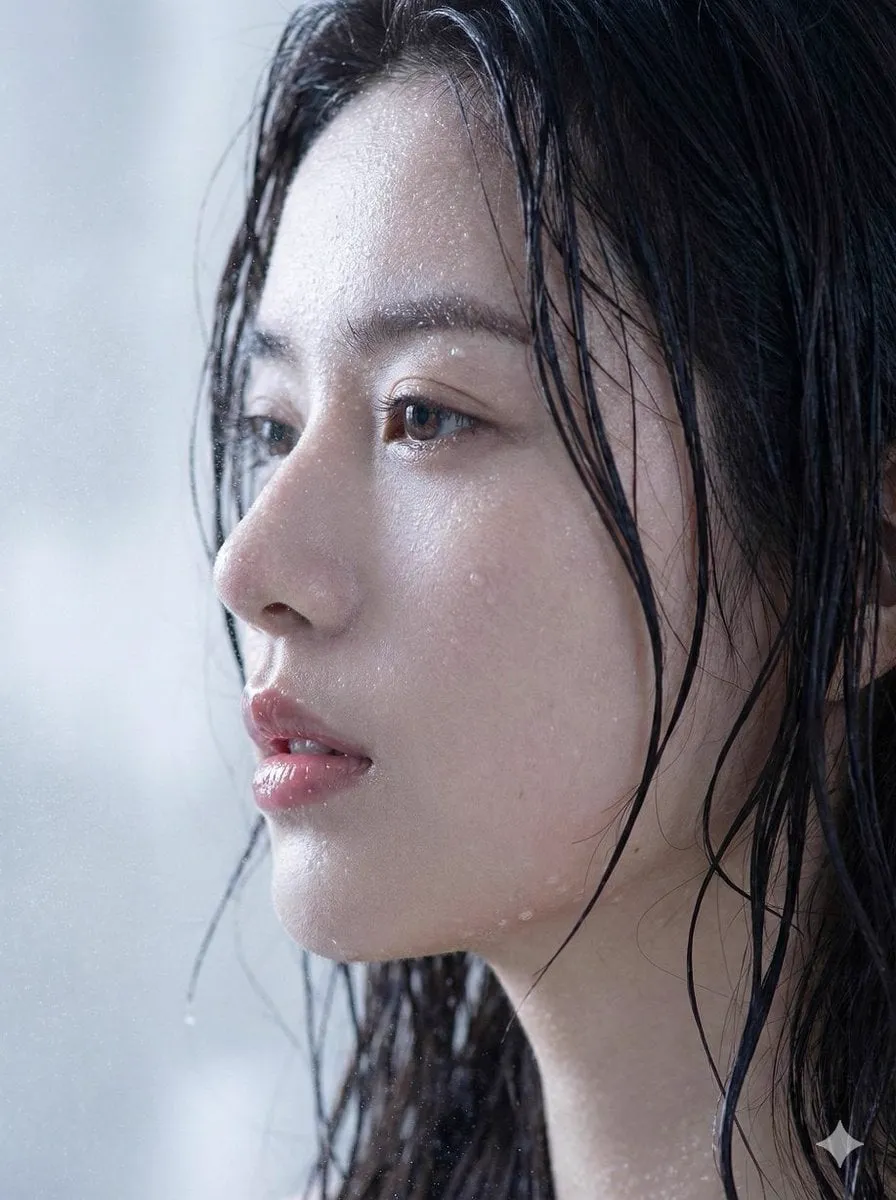

Most generative video projects fail for a boring reason: the instructions were too vague to be obeyed. A sentence prompt can describe weather, mood, and camera attitude, but it cannot describe this particular face, this jacket, this kitchen. Photographs can. Multi-image fusion — supplying several related stills so that a model treats them as a single visual identity — converts vague wishes into hard constraints. What follows is a production-oriented walkthrough: how to assemble a reference set, what happens inside the model when you do, how to write prompts once identity is carried by images, and how to repair the failures that appear in nearly every first attempt.
Why Photographs Outperform Sentences as Directives
A photograph carries structured information that language rarely captures: the distance between the eyes, the way a collar sits against a neck, the falloff of window light across a cheek, the compression of a long lens. Write "a woman in a red coat" and you have specified a category. The model may choose any face, any coat, any red. Upload five photographs of the same woman in the same coat and you have specified an instance. The model's remaining freedom narrows to motion, framing, and light — which is precisely the territory you want it to explore.
That distinction explains the most common frustration in AI video generation. A lone prompt often produces a striking first second followed by a quiet betrayal: the jaw widens, the hairline retreats, the coat turns maroon, the room quietly rearranges its furniture. Nothing is catastrophically wrong, which is exactly why the problem goes unnoticed until the clips are cut together and the audience realizes the protagonist has become three different people.
Prompts also scale badly across a sequence. Each new shot is an independent roll of the dice against the same vague description, so error accumulates shot by shot. References behave differently. The same five images applied across twenty generations create a gravitational center that every shot is pulled toward. You stop describing consistency and start enforcing it.
There is an economic argument too. A failed eight-second generation costs minutes of waiting plus the attention required to evaluate and retry it. A tidy reference set costs roughly twenty minutes once and then pays out across the entire project. When a client asks for a second round of variations, a project built on references can absorb the request; a project built on improvisation usually has to start over.
What Multi-Image Fusion Actually Does
Embeddings and the overlap region
Every input image is converted into an embedding — a long numeric fingerprint describing its visual features. Similar images cluster closely in that numeric space. When several references are supplied, the model searches for the region where they overlap and treats that intersection as an anchor for identity, palette, and texture.
The practical consequence is counterintuitive: a mismatched reference does not merely add noise, it drags the anchor. Four portraits in soft daylight plus one harsh flash selfie will not average into a balanced face; they will produce someone who resembles nobody in the set. One bad reference is often worse than three missing ones. Curate ruthlessly.
Three layers of fusion
Fusion happens on three layers at once, whether or not the interface names them:
- Identity — bone structure, hair, wardrobe, accessories, body proportions.
- Style — color grade, contrast, grain, lens compression, lighting quality.
- Motion — implied physics: how fabric folds, how weight shifts, how shadows travel as the camera moves.
Conflict at the identity layer causes drift. Conflict at the style layer causes blandness, because the model splits the difference between two visual languages instead of committing to one. The cleanest solution is to nominate a single style authority and let the remaining images contribute identity only. In practice this means choosing references that already share a look, or reducing style-transfer strength rather than adding more images.
Ordering, weighting, and seeds
Many interfaces treat the first uploaded image as dominant, sometimes without saying so. Lead with your sharpest, most representative frame: a clean, evenly lit, front-facing image. Where weighting controls exist, a workable starting split is roughly 60 percent on the primary reference, 25 percent on a second angle, and 15 percent spread across the rest. Fix the seed when you are chasing continuity across shots, and change it only when you deliberately want variation.
Building a Reference Set That Survives Animation
The five-frame core
For a person, five images carry most projects:
- A neutral, front-facing portrait in even light.
- A three-quarter view that reveals jaw and cheekbone structure.
- A profile or back view that defines hair and silhouette.
- A full-body frame that establishes proportions and wardrobe.
- One action or expression frame that shows how the subject behaves.
Products follow the same logic with different content: hero shot on white, angled view, macro detail, in-context shot, and a scale reference. Locations need a wide establishing frame, a reverse angle, doorway or window details, a texture close-up, and one frame with a person in it for scale.
Angle and lighting discipline
Aim for roughly 1200 to 2000 pixels on the long edge. Beyond that you gain little and risk teaching the model an artificial texture, especially with over-sharpened files that carry visible halos. More important than resolution is agreement. If your references were shot in wildly different light — hard noon sun, tungsten interior, blue-hour exterior — the model will spend its capacity reconciling them instead of animating your subject.
Backgrounds deserve the same discipline. Either keep them clean and neutral, or keep them deliberately consistent across the whole set. A subject photographed against five unrelated backgrounds is harder to fuse reliably than the same subject photographed against one, because the model cannot tell which background features belong to the subject's world and which are incidental.
What to delete before you upload
Blur, motion smear, group photos where the subject occupies a small fraction of the frame, heavy beauty filtering, watermarks, screenshots of screenshots, and images with clashing white balance. Also remove anything you do not have clear rights to use — a subject you have not asked, a stock image whose license forbids derivative work, a frame grabbed from someone else's film.
A Repeatable Six-Stage Workflow
Stage one: write the shot plan before opening any tool
List every shot in plain language: subject, action, framing, camera movement, duration, and the emotional beat. Twelve to twenty shots is a comfortable short-form sequence. Writing this first prevents the classic trap of generating gorgeous clips that cannot be edited into a coherent scene.
Stage two: run an identity lock test
Generate one short, low-motion clip using your reference set. Compare the face in the first frame and the last frame. If identity holds, your references are working and you can proceed. If it drifts, fix the reference set before touching anything else — prompts cannot repair bad references, but good references can survive mediocre prompts.
Stage three: generate shot by shot under fixed conditions
Keep the reference set, the seed, and the prompt structure identical between shots. Vary only the action and the camera language. Resist switching tools mid-project: different models interpret the same references differently, and mixed pipelines advertise themselves in the final cut through small inconsistencies in skin rendering and motion quality.
Stage four: the continuity pass
Bring clips into the editor, order them, and watch the sequence once at normal speed without stopping. Do not take notes during the first viewing; let your eye catch what it catches. Then rewatch and mark every moment where you noticed something — a cheekbone, a collar, a shadow direction, a shift in grain. Those marks are your repair list.
Stage five: repair instead of regenerate
Regenerating everything to fix three shots wastes the continuity you already achieved. Fix the specific shot: adjust its motion intensity, shorten it, or nudge the reference weighting. When a shot refuses to cooperate after three attempts, change the shot rather than fighting the model — swap a wide for a medium, or a turn for a walk.
Stage six: sound, grade, and delivery
Add music and room tone before you judge pacing; silence makes even good sequences feel wrong. Apply a single grade across all clips to unify any residual color differences. Export at the highest resolution your delivery platform accepts, and keep a version without burned-in text so the material can be reused.
Prompt Patterns for Fused References
Once references carry identity, prompts should carry action, camera, and continuity. Keep them short and structural.
Weak: a woman in a red coat walks through a market, cinematic, beautiful, 8k, masterpiece
Better: medium tracking shot, subject walks left to right through a covered market, camera dollies at walking pace, overcast daylight, shallow depth of field
The second version never describes the woman, because the references already did that work. It spends its words on the things references cannot express: movement, framing, pace, and quality of light.
Patterns that hold up well in practice:
- Name the camera move explicitly: slow push in, handheld follow, static wide, slow orbit.
- State the beat you want inside the take, such as "she pauses, then continues."
- Describe the light source rather than the mood: "north-facing window, soft fill from the left."
- Change exactly one variable per generation so you know what caused the difference.
- Keep a written prompt skeleton and swap only the bracketed parts.
Also avoid stacking contradictory instructions. "Static wide shot, dynamic handheld energy" gives the model two incompatible goals and it will satisfy neither cleanly. If you want both, generate two shots.
Consistency Playbook for Characters, Products, and Locations
Characters
Reuse an anchor frame whenever the tool allows: end a shot on a frame and start the next shot from it. Continuity by construction beats continuity by luck. Keep the aspect ratio constant, because cropping changes how much of the face the model analyzes and identity drifts with the crop. Introduce new angles gradually — if the reference set is entirely eye level, a dramatic low angle is essentially an invention request.
Products
Products forgive identity drift less than faces do, because logos, seams, and label typography are unforgiving. Use a tighter reference set with a dedicated detail frame for any branding. Generate product shots at slower motion intensities; fast spins and tumbles destroy fine text. Where the label matters, plan a separate close-up shot rather than hoping a wide shot will hold it.
Locations and wardrobe
Treat a location as a character with its own reference set: same room, multiple angles, consistent light. Wardrobe changes are safe as long as each outfit appears in at least one reference; unseen outfits get invented, and invented outfits rarely match the rest of the film. Keep a simple continuity sheet listing, per shot, which references were used, and check it when something looks off.
Troubleshooting the Failures You Will Actually See
Flicker on skin and fabric. Usually a symptom of demanding too much movement in too few frames. Lower motion intensity, shorten the take, and raise the effective frame rate if the tool allows it.
Identity drift mid-shot. The reference set is under-covering an angle. Add a profile or back view rather than adding more front-facing images.
Melting hands and fingers. Keep hands out of frame or at rest. Complex manipulation is still a weak point in most models, and no prompt reliably fixes it.
Rubbery fabric. Reduce motion, add a reference that shows the garment at rest, and avoid describing impossible wind.
Background jitter. Lock the camera in the prompt and reduce ambient motion. If the shot needs a moving camera, accept a shorter take.
Style bleed across shots. One reference is carrying an unwanted look. Remove it or reduce its weight, and nominate a single style authority.
Color cast mismatch at the cut. Grade rather than regenerate. Small global corrections are faster and more reliable than another generation round.
The uncanny pause. If a character holds still for several seconds, artifacting accumulates. Give subjects small continuous business: breathing, a slight head turn, a hand adjusting a sleeve.
Choosing a Tool Without Being Fooled by Feature Lists
How many references does it genuinely use? Many tools accept several images and effectively use one. Test with two clearly different faces and see which survives, or whether the result is a blend of both.
How long can one shot be? This decides whether you are designing three-second beats or ten-second takes, which changes your entire shot plan.
How granular is camera control? Explicit dolly, pan, push, and orbit controls make continuity planning possible. A single vague motion-strength slider does not.
Cloud or local? Cloud tools start faster, collaborate more easily, and require less upfront investment. Local pipelines offer reproducibility, privacy, and freedom from queue times, at the price of hardware and setup time. Many teams use both: local for iteration, cloud for the final highest-quality renders.
What are the export and licensing terms? Resolution, watermark policy, and commercial usage rights should be verified before you build client work on a tool, not after.
How does it handle your subject matter? The same model that excels at cinematic landscapes may struggle with product labels or stylized illustration. Test with your actual content, not a demo prompt.
Rights, Consent, and Disclosure
Fusion makes it easy to build a convincing likeness from a handful of photographs, which is exactly why the rules around it matter.
Only use images of real people with clear permission, and be especially cautious with public figures and minors. Disclose synthetic media where your audience or platform expects it; an unlabeled fabricated clip of a real person is a reputational and legal hazard, not a clever trick. Never use a fused identity to imply that someone said or did something they did not.
For client work, get the reference images, the usage scope, and the distribution territory in writing before generation begins. Store references securely, delete them when the project ends if the agreement requires it, and keep a record of which model version produced which deliverable so revisions remain possible months later.
Finally, calibrate expectations honestly. Fusion produces striking, consistent, stylized motion. It is not a substitute for principal photography on a feature, and it will not reproduce a specific performance beat for beat. Its sweet spot is short-form narrative, product storytelling, explainers, and social series where a consistent visual identity is the entire point.
FAQ
How many photos do I actually need? Five is the working number for most subjects: front, three-quarter, profile, full body, and one action frame. Add references only when a specific shot demands detail your set cannot supply.
Why does my character look right in stills but wrong in motion? The set usually skews toward a single angle, so the model invents structure the moment the head turns. Add a profile or back view.
Do I need the same prompt for every shot? Keep the structure identical but change action, framing, and light. Consistency comes from references and structure, not from repeating identical wording.
How do I fix flicker? Reduce motion intensity, shorten the beat, and generate at a higher effective frame rate if possible.
Should I upscale before or after editing? After. Upscale only the shots that survive your continuity pass so you are not spending time on clips you will cut.
Can I mix photographic and illustrated references? Generally no. Choose one visual lane; mixing photoreal and stylized sources produces a compromise that satisfies neither.
What about animating a single photo? Possible, but expect identity to hold only for short, low-motion takes. Add a second and third reference as soon as you need the subject to turn or move through space.
How long should each shot be? Three to five seconds per beat is a reliable rhythm for short-form. Longer takes are only worth attempting when the subject barely moves.
A Starting Sequence for This Week
Pick one subject you already have good photographs of — a person, a product, a room. Assemble five references using the angle checklist. Generate a single three-second shot and inspect the first and last frames for drift. Then generate a second shot from the same set with the same seed. If those two clips feel like they belong to the same world, you have a workflow. Scale it to twelve shots, add music and room tone, apply one grade, and you have a short film built from images that were already sitting on your drive.
From there, the improvements compound: better references produce better first attempts, and better first attempts free up time for the parts of the process that still need a human — pacing, story, sound, and the decisions only an editor can make.
