
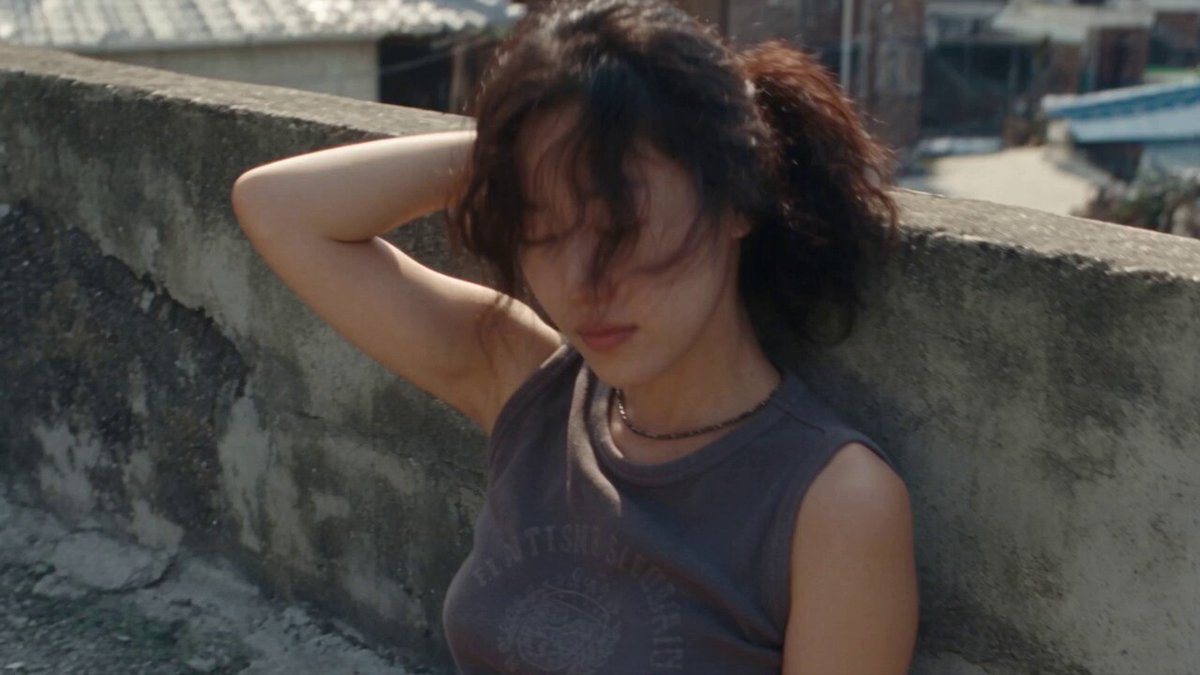
Every few months a new generation of text-to-video models arrives and quietly invalidates half of your saved prompts. The latest PixVerse and Hailuo iterations are a good example: camera control, physical realism, and temporal consistency have moved beyond what the previous generation could hold together for more than a few seconds. But a release announcement is not a workflow. The real question is narrower and more useful — what does this generation actually change in the way you plan, generate, review, and finish a video?
This guide is a working playbook. It walks through how to evaluate a new video model, where PixVerse and Hailuo tend to outperform, how to build prompts that survive a model swap, and which mistakes quietly eat a week of production time every time something new ships.
Start With the Pipeline, Not the Model
Most creators evaluate a new model by typing a few sentences into a blank box and judging the output. That tells you almost nothing, because a raw clip is not a video. A finished two-minute piece is a stack of decisions: shot list, framing, continuity, sound design, pacing, color, and the edit that ties generated fragments into a coherent whole.
What a video model actually owns
A generative model owns exactly three things: the frame quality, the motion inside a single shot, and the consistency across a short span of time. Everything else — narrative logic, emotional rhythm, pacing, sound, and the meaning of a cut — belongs to you. When a new release claims to improve "realism" or "control," translate that claim into one of those three buckets before you get excited.
The three layers of an AI video pipeline
Think of your pipeline as three layers, and evaluate every new model against each one separately:
- Layer 1 — Shot generation. Text-to-video, image-to-video, and reference-driven generation. This is where model releases compete hardest.
- Layer 2 — Consistency and continuity. Keeping a character's face, wardrobe, and lighting stable across multiple shots, and keeping backgrounds believable when the camera moves.
- Layer 3 — Post and assembly. Editing, upscaling, frame interpolation, lip sync, sound, and color. New models rarely change this layer, but they change the footage you feed into it.
A model that dramatically improves Layer 1 while destabilizing Layer 2 is not automatically an upgrade. In practice, that is the most common trap when a hyped release lands.
What Genuinely Improved in This Generation
Strip away the marketing language and three technical shifts stand out across the current wave of releases, including the newest PixVerse and Hailuo versions.
Temporal control and shot continuity
Earlier models were strong on single frames and weak on sequences. You would get a beautiful first second, then drifting faces, melting hands, or a background that reorganized itself mid-shot. The current generation holds identity and lighting much longer, and — more importantly — respects explicit motion instructions such as "slow dolly in, stop at the midpoint, hold." That means you can now write camera direction as instructions rather than as wishes.
Prompt understanding for multi-clause instructions
Older models degraded quickly when a prompt contained more than one idea. "A woman walks through a wet market, glances left, then turns toward the camera while rain hits her umbrella" would produce a woman, rain, and a market, in roughly random order. Newer models parse clause order, so the sequence of events in your sentence starts to map onto the sequence of events in the clip. This is the single biggest practical change for anyone writing shot-by-shot prompts.
Physical realism and material behavior
Water, cloth, smoke, hair, and rigid objects now behave closer to how they behave in the physical world. This matters more than it sounds. Bad physics is the fastest way to break an audience's suspension of disbelief, and it was historically the hardest thing to prompt around. When material behavior improves, you can stop burning generations on tricks to hide melting cloth.
PixVerse in Practice: Cinematic Movement and Staging
PixVerse has built its reputation around movement. In the current generation it is strongest when the shot itself is the subject — a camera move, a stunt, a transformation, an energetic action beat.
Where it shines
- Directed camera motion. Dolly, crane, orbit, and push-in instructions land with reasonable accuracy, which makes it a good fit for establishing shots and transitions.
- High-energy movement. Running, dancing, falling, vehicles, and combat beats hold together better than in most competing tools.
- Vertical-first content. Short-form social formats, where motion and an early hook matter more than subtle performance, are its natural home.
Where it still struggles
Fine facial performance, long dialogue exchanges, and subtle emotional beats remain weaker than the movement work. If your scene depends on a two-second eye flicker carrying the meaning, generate coverage and choose the take carefully rather than expecting the first output to be the one.
A prompt pattern that works
Structure prompts as a stack: subject, action, environment, camera, light, duration. For example: A courier in a rain-soaked neon alley shakes water off a sealed package, then sprints toward the camera; handheld follow shot, slight lens flare, cool blue key light with warm shopfront accents, three seconds. Every element has a job, and the camera instruction sits where the model expects it.
Hailuo in Practice: Physical Plausibility and Fast Iteration
Where PixVerse leans into spectacle, Hailuo leans into believability. It tends to handle weight, contact, and material interaction more convincingly, which changes how you plan certain shots.
Strengths worth building around
- Physical interactions. Objects have mass. Hands grip, doors resist, cloth folds, and liquids pour in a way that reads as real.
- Everyday realism. Interiors, natural light, and ordinary human motion look grounded rather than stylized, which suits documentary, brand, and narrative work.
- Iteration speed. Fast turnaround on a shot makes it practical for exploring variations before committing to a look.
Where to be careful
Extremely stylized aesthetics and aggressive camera acrobatics are less of a strength here. If your concept depends on a surreal, hyper-designed look, test before you commit, and be ready to pair it with a tool that specializes in stylization.
A prompt pattern that works
For realism-focused models, describe physics explicitly: A ceramic cup tips off a wooden table, spills dark coffee across a paper notebook, and comes to rest on the floorboards; static medium shot, soft window light from the left, four seconds. Naming the material and the contact point gives the model something concrete to simulate.
A Seven-Step Adoption Workflow for a New Release
The mistake most teams make is switching wholesale the day a model ships. A staged adoption protects your schedule.
Step 1 — Freeze a reference scene
Pick one scene you have already produced that represents your typical work: two or three shots, one character, one location, some movement. It becomes your benchmark and stays fixed for future comparisons.
Step 2 — Re-generate the benchmark
Run the same prompts, same reference images, same seeds if the tool supports them, on the new model. Do not improve the prompts. You are measuring the model, not your own growth.
Step 3 — Score five dimensions
Score each output from 1 to 5 on: motion accuracy, identity stability, material realism, prompt adherence, and usable-frame ratio. That last one is the most honest metric — how many seconds out of ten you would actually keep in an edit.
Step 4 — Test the failure modes deliberately
Push the model to its weak spots: fast motion, hands, crowds, text, reflections, and long dialogue. You want to discover the boundaries during testing, not in the middle of a client delivery.
Step 5 — Run a small live project
Choose one real piece of work with a tolerant deadline. Use the new model for a portion of it, keeping the old one as a fallback for shots that fail twice.
Step 6 — Update documentation, not just habits
Write down what changed: which prompt patterns stopped working, which shot types now succeed, what the new failure signatures look like. A shared one-page note saves hours of duplicated discovery.
Step 7 — Retire the old model slowly
Keep the previous generation available for at least one more cycle. There is almost always a shot type it handled better, and knowing which one is a real advantage.
Prompt Patterns That Survive a Model Swap
Model-specific tricks decay fast. Structural prompt habits do not.
Separate the sentence layers
Write subject and action in the first clause, setting in the second, camera and light in the third. Models that understand multi-clause prompts will use the order; models that do not will still capture the nouns. Either way you get something usable.
Prefer physical verbs to emotional adjectives
"She grips the railing until her knuckles pale" outperforms "she looks anxious" across nearly every model. Physical descriptions are observable and therefore generatable.
Constrain one variable per iteration
If you change the camera angle and the lighting and the wardrobe at once, you learn nothing when the output improves. Change one thing, evaluate, then change the next.
Keep a negative list
Most tools accept exclusions. Maintain a personal list — warped faces, extra fingers, floating objects, subtitles — and apply it consistently. It is the cheapest quality improvement available.
Write for duration
A four-second prompt and a ten-second prompt are different prompts. Specify the length and give the model enough events to fill it; otherwise it will invent filler motion that you will have to cut.
Choosing Per Shot: A Decision Framework
Do not choose a model for a whole project. Choose per shot. Build a simple table and update it as you test.
| Shot type | Preferred strength | What to check first |
|---|---|---|
| Establishing / landscape | Camera movement accuracy | Horizon stability, parallax |
| Action beat | Motion coherence | Limb integrity at peak speed |
| Dialogue close-up | Facial stability | Eye line, mouth shape, micro-expression |
| Product or object | Material realism | Edges, reflections, texture |
| Transformation | Continuity | Object identity across the change |
| Crowd or background | Density handling | Face smearing, repetition patterns |
The reusable scorecard
Keep a single sheet with columns for model, shot type, date tested, scores on the five dimensions above, and a short note on the primary failure. After three or four releases you will have a genuinely useful internal map — one that reflects your projects rather than someone else's demo reel.
When to route a shot to a different tool
Route it out when a shot fails twice for the same reason. Two identical failures mean the problem is structural, not prompt-related. Switching tools costs a few minutes; fighting a model that cannot do the shot costs an afternoon.
Common Mistakes When a New Release Drops
These repeat in almost every team, including experienced ones.
- Rebuilding everything at once. New model, new prompts, new folder structure, new presets. If the output gets worse, you cannot tell why.
- Judging from demo clips. Demos are selected, retouched, and often generated from ideal inputs. Reproduce the conditions yourself before forming an opinion.
- Ignoring the usable-frame ratio. A model that produces spectacular three-second fragments but rarely gives you a full usable shot is slower to work with than a plain, reliable one.
- Forgetting the audio and edit chain. Footage that looks better but edits worse — inconsistent grain, unstable exposure, mismatched motion blur — costs you time in post.
- Abandoning your reference library. Strong reference images and character sheets transfer between models and are usually more valuable than any prompt trick.
- Skipping the licensing and usage review. Before commercial delivery, confirm what the tool permits for your use case. This is a five-minute check that prevents a very expensive conversation later.
- Chasing novelty over repeatability. The best model is the one that produces predictable results under your deadline, not the one that wins a weekend comparison.
FAQ
Should I switch to the newest model immediately?
No. Run your frozen benchmark scene first, then use it on one low-risk live project. Immediate wholesale switching is how teams lose a week of schedule to a change nobody evaluated.
How long should a test clip be?
Three to five seconds per shot, eight to twelve shots total. That is enough to reveal drift, physics failures, and prompt-adherence problems without consuming an entire day.
What if two models are equally good?
Choose based on iteration speed and consistency, not peak quality. A slightly less impressive model that gives you a usable take on the second attempt will outproduce a brilliant one that needs eight.
Do prompt patterns transfer between PixVerse and Hailuo?
Structural patterns do — subject, action, setting, camera, light, duration. Specific keyword magic does not. Keep the structure, retest the vocabulary.
How do I keep characters consistent across shots?
Lock a character reference image, describe wardrobe and features in the same words every time, and generate a short character sheet before any scene work. Consistency is a documentation problem as much as a model problem.
Is it worth keeping older models around?
Yes, for at least one more production cycle. Older versions often handle a specific shot type better, and having a fallback removes the pressure that causes rushed decisions.
Final Checklist Before You Commit to a New Model
Run this list before you change your default tool:
- Benchmark scene regenerated with identical prompts.
- Five-dimension scores recorded, including usable-frame ratio.
- Failure modes tested deliberately on hands, crowds, text, and fast motion.
- One live project completed with the old model available as fallback.
- Prompt patterns updated and documented in a shared note.
- Per-shot routing table revised with the new strengths.
- Usage terms reviewed for your specific commercial context.
New model releases are genuinely exciting, and the current generation of tools has raised the floor for everyone. But the creators who benefit most are rarely the ones who adopt fastest. They are the ones who test deliberately, keep their pipeline stable, and treat each release as an additional instrument in the kit rather than a replacement for all of them. Adopt the shot types where the new model wins, keep the ones where it does not, and let the tool list grow quietly in the background while your output keeps improving.
