

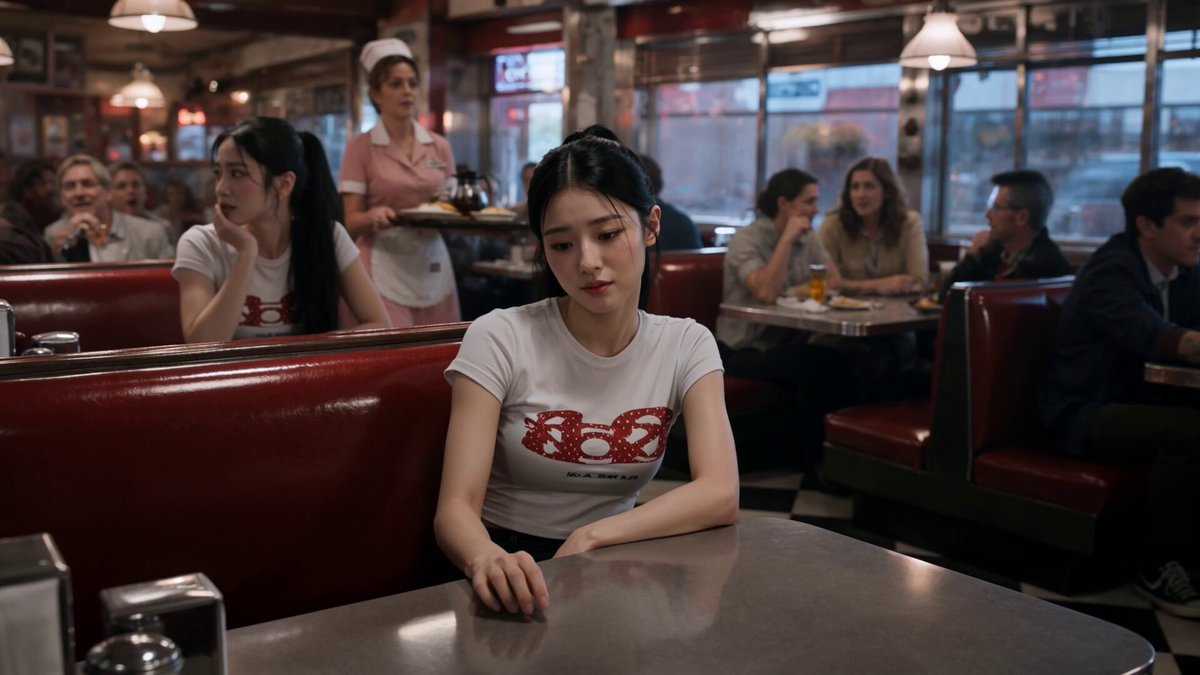
Short-form video rewards a very specific kind of craft. A viewer decides in roughly two seconds whether your clip deserves the next thirty, and that decision is made before they consciously read a caption or judge your production budget. The clips that travel are not always the most expensive ones. They are the ones where the first frame earns attention, the second beat rewards it, and every cut after that keeps a small promise alive.
This guide treats visibility as a production problem rather than a mystery of the algorithm. It covers how to plan a vertical clip, which AI tools fit each stage of the pipeline, how to keep a character or product looking consistent across a dozen shots, and how to edit for retention instead of for beauty. Everything here applies whether you generate footage with AI, shoot it on a phone, or blend both in the same timeline.
Why visibility is a production decision, not a lottery ticket
Most creators blame distribution when a clip underperforms. In practice, distribution systems mostly amplify what already works: strong early retention, repeat views, saves, shares, and completion. Those metrics are downstream of editing decisions you fully control.
The useful mental shift is to stop thinking about publishing and start thinking about manufacturing attention. A short-form video is a chain of small commitments:
- Frame one must communicate a subject, a mood, or a tension instantly.
- Second three to five must promise something specific will be resolved.
- The middle must deliver new information or a new image at a steady rhythm.
- The end must feel finished, or deliberately unfinished in a way that invites a rewatch.
When a clip fails, one of those links is usually weak. A beautiful opening shot with no tension produces a scroll. A funny middle attached to a slow opening never gets watched. Diagnosing by link, rather than by gut feeling, turns editing into something you can iterate on instead of something you hope for.
There is also a volume reality. You cannot optimize a handful of clips meaningfully, because the variance is too high. You can optimize twenty to forty short clips in a month, because patterns emerge: which hooks get past the first second, which cut rhythm keeps people to the midpoint, which topics get saved rather than liked.
The four levers that actually control reach
Almost every variable you can tweak collapses into four levers. Optimize them in order, because a later lever cannot rescue an earlier one.
Lever one: the opening second
The opening second is not an introduction. It is a thumbnail in motion. Show a face mid-expression, a finished result, a strange object, a before/after pair, or text that poses a question. Avoid logos, title cards, slow camera moves, and any sentence that starts with context the viewer does not yet care about.
A practical test: pause your clip at 0.5 seconds and ask what a stranger would expect to happen next. If the answer is nothing, rebuild the open.
Lever two: visual consistency
Character drift and scene drift are the fastest route to disengagement, because the brain registers them as unreliability. If your protagonist's jacket changes color between cuts, or a room's lighting flips from warm to clinical, viewers may not articulate the problem, but they feel it. Consistency lets the viewer relax enough to follow the story instead of monitoring the image.
Lever three: cut rhythm and information density
Vertical video compresses everything. Cuts arrive faster, sentences are shorter, and every second should introduce either a new visual, a new claim, or a new emotion. Dead air is not just silence; it is any span of time where the viewer already knows what is happening and has nothing to look at.
A useful editing habit is to cut the clip to its final length before you refine anything. If your 30-second script needs 42 seconds to breathe, the script is the problem, not the edit.
Lever four: packaging and metadata fit
Titles, captions, cover frames, and the first line of on-screen text determine whether the right viewer ever sees the clip. Packaging is not decoration; it is targeting. A great clip with vague packaging reaches a random audience and dies with a mediocre retention curve.
Plan the clip before you generate a single frame
Generation is the cheapest part of the modern pipeline, which makes planning more valuable, not less. A generation-first mindset produces beautiful fragments with no spine.
Write the one-sentence promise
Before anything else, write one sentence: This clip shows ______ so the viewer can ______. If you cannot finish it in one line, the clip is two clips.
Build a beat sheet at the exact target length
For a 15-second clip, three beats is usually right: hook, development, punchline. For 30 seconds, five beats: hook, setup, first turn, second turn, resolution. For 60 seconds, seven or eight, with a deliberate re-hook around the halfway mark to catch viewers who are about to leave.
Write each beat as one line of action plus one line of dialogue or caption. That is your shot list, and it should fit on a single screen.
Design shots that are easy to assemble
Aim for variety in scale and angle rather than exotic camera moves. Wide establishing shot, medium two-shot, tight insert, reaction close-up. This edit-friendly pattern gives you coverage to trim against, and it plays better on a small screen than continuous motion. It also conveniently matches how AI generation works best: short clips of four to eight seconds, each with a single clear action.
Choosing AI tools for each job in the pipeline
Different tools solve different problems. Match the tool to the job rather than looking for one system that does everything.
Text-to-video for establishing shots and abstract imagery
Text-to-video is strongest when the shot needs atmosphere rather than precision: skylines, weather, textures, food, product hero shots with no dialogue. Keep prompts concrete. Specify subject, action, environment, lighting, lens feel, and camera movement in that order, and keep one action per clip.
Image-to-video for characters, products, and continuity
When the same person or object must appear in multiple shots, generate a reference image first, then animate from it. This single habit eliminates most continuity problems. Lock the reference image as a project asset and reuse it, rather than regenerating a new look for every shot.
Keyframing and multi-reference techniques
Keyframing lets you define a start state and an end state, which gives you control over motion instead of accepting whatever the model invents. Multi-reference or image-fusion approaches let you combine a character reference, a wardrobe reference, and a background reference into one coherent frame. Both are worth the extra setup time on any clip where continuity matters more than novelty.
Voice, music, and captions
Synthetic voice works well for narration, listicle formats, and explainers where the voice is a delivery mechanism rather than a personality. For anything built on trust or humor, a real voice usually wins. Captions are non-negotiable: most vertical viewing happens muted, so burn in readable text with high contrast and no more than six to eight words per line. Music should sit under the voice, not compete with it; a short fade at the end prevents an abrupt stop.
A repeatable workflow from brief to export
Here is the sequence that keeps quality high and rework low.
Step 1: lock the script and the beat sheet
Do not generate anything until the words are final. Every script change after generation invalidates footage. Read the script aloud at performance pace and time it. If it runs long, cut words, not pauses.
Step 2: generate in small batches, with a naming convention
Generate four to six variations per shot, not twenty. Name files by scene and shot number so your editor imports in order. Review at thumbnail size; if a shot does not read at thumbnail size, it will not read on a phone.
Step 3: assemble a rough cut at final length, immediately
Drop the selects on the timeline and cut to the target duration before you color, mix, or polish anything. This forces structural honesty. A rough cut that is already at 28 seconds when the target is 30 needs trimming, not expanding.
Step 4: pass one, the retention edit
Watch the rough cut with a stopwatch and note the exact seconds where your attention dips. Then fix those seconds specifically: cut the shot earlier, replace the visual, add a caption, or move a stronger beat forward. Do not wander through the whole timeline.
Step 5: pass two, the legibility edit
Now address clarity. Check caption timing against speech, check that on-screen text is not covered by platform interface elements at the bottom and right edges, and check that any product or face is large enough to read. Keep a safe margin of roughly ten percent on each side.
Step 6: export and package
Export at 1080x1920, 30 or 60 frames per second, and a comfortable bitrate for platform re-encoding. Then write the title and caption. The first line of the caption should extend the hook, not repeat it. Choose a cover frame that contains a face or a strong graphic and no small text.
Consistency techniques that stop viewers from scrolling
Consistency is where AI-assisted production most often breaks down, and where a few habits pay off immediately.
- Build a look bible. Three to five reference images that define palette, lighting direction, lens character, and wardrobe. Keep it open while you generate.
- Reuse references instead of re-prompting from scratch. Rewriting a prompt usually produces a slightly different face. Reusing the image produces the same one.
- Keep motion modest. Large camera moves and full-body movement are where models drift most. Favor locked-off shots, subtle pushes, and dialogue-driven framing.
- Check color continuity in a filmstrip view. Squint at your timeline. If one shot jumps out as brighter or cooler than its neighbors, fix it before you worry about anything else.
- Standardize audio levels. Sudden loudness changes feel like errors even when visuals are flawless. Normalize voice tracks to a consistent perceived loudness across the whole clip.
If a shot cannot be made consistent after two attempts, replace it with a different shot rather than fighting it. In a 30-second clip, nobody misses the shot you never used.
Packaging: titles, captions, and cover frames
Packaging determines who gets a chance to watch. Treat it as a separate creative task, done after the edit is locked.
Titles work best as a specific promise or an unresolved question, kept short enough to read at a glance. Avoid generic labels that describe the format instead of the payoff.
Captions should open with a line that adds information the title did not contain. Use line breaks generously, keep hashtags minimal and topical, and place the most shareable line early, since captions often get truncated.
Cover frames are chosen, not accepted. Scroll through the finished timeline and pick a frame with a clear subject at large scale, ideally with an expressive face. If your platform lets you add cover text, keep it to three or four words in a heavy weight.
A useful rule: the cover frame, the title, and the first line of the caption should each say something slightly different but point at the same promise. Repetition wastes three opportunities to convince a viewer.
Measure the right things, then change one variable at a time
Analytics are most useful when they point to a specific edit decision. Track a small set of signals:
- One-second and three-second retention. This tells you about the opening frame, not the content.
- Midpoint retention. This tells you about pacing and whether your middle beats deliver.
- Completion rate by clip length. Short clips should complete at high rates; if they do not, your ending is weak.
- Saves and shares relative to views. These signal practical or emotional value, which is usually a topic decision rather than an editing one.
- Rewatches. These indicate density, mystery, or an unexplained detail worth a second look.
Change one variable between batches. If you test new hooks and new caption styles in the same week, you will not know which one moved retention. Two weeks of hook testing, then two weeks of pacing tests, produces usable knowledge.
Common mistakes that quietly suppress reach
Most underperforming clips fail for unglamorous reasons. Watch for these:
- A slow open. Two seconds of logo or ambient footage is enough to lose most of an audience.
- Aimless length. Clips are long because the creator could not decide what to cut. Cut the least informative beat first.
- Illegible captions. Low contrast, small type, or text hidden behind interface chrome.
- Inconsistent characters. A different face in every shot reads as an AI artifact rather than a story.
- Overcomplicated prompts. Cramming five actions into one clip produces mush. One action per generation.
- Music louder than speech. Viewers will leave rather than strain to hear.
- Packaging that describes instead of promises. "New video about coffee" does less work than "The three-minute pour that tastes like a cafe."
- No ending. A clip that stops mid-thought gets scrolled at the final second, which hurts completion.
- Publishing without a hook test. Show the first two seconds to someone who has no context and ask what they expect next.
FAQ
How long should a short-form video be?
As short as the idea requires and no longer. Most formats land at 15 to 40 seconds. Length is a consequence of the beat sheet, not a target you pick first.
Does AI-generated footage hurt performance?
Not inherently. Viewers respond to clarity and momentum. AI footage hurts when it introduces inconsistency, uncanny motion, or audio that does not match the visuals.
What is the fastest fix for a clip that is not getting views?
Usually the opening second. Rebuild the first two seconds with a stronger image or a sharper claim, keep the rest of the edit, and republish as a new clip rather than editing the original in place.
How many variations should I generate per shot?
Four to six is a good working range. More variations mostly create decision fatigue, and the difference between variation fourteen and fifteen is rarely the difference between a scroll and a share.
Do I need a different workflow for each platform?
Shoot and edit one master, then adapt the packaging. Aspect ratio, safe margins, and caption placement are worth adjusting; rebuilding the edit per platform is not.
How do I keep a character consistent across a series?
Keep a locked reference image, a short written description of wardrobe and lighting, and a small set of approved shots you can reuse as establishing material. Consistency across a series matters as much as within a single clip.
Putting it together
Visibility is not a feature you switch on. It is the accumulated result of a clear opening second, a consistent visual world, a rhythm that keeps introducing something new, and packaging that promises a payoff the viewer actually wants. Each of those is a decision you can make deliberately, measure, and improve.
The workflow that holds up over time is boring on purpose: write the beat sheet, generate a few options per shot, cut to final length before polishing, fix the specific seconds where attention drops, then package the clip with a title, caption, and cover frame that each add something new. Do that forty times and you will know more about your audience than any trend report could tell you.
