
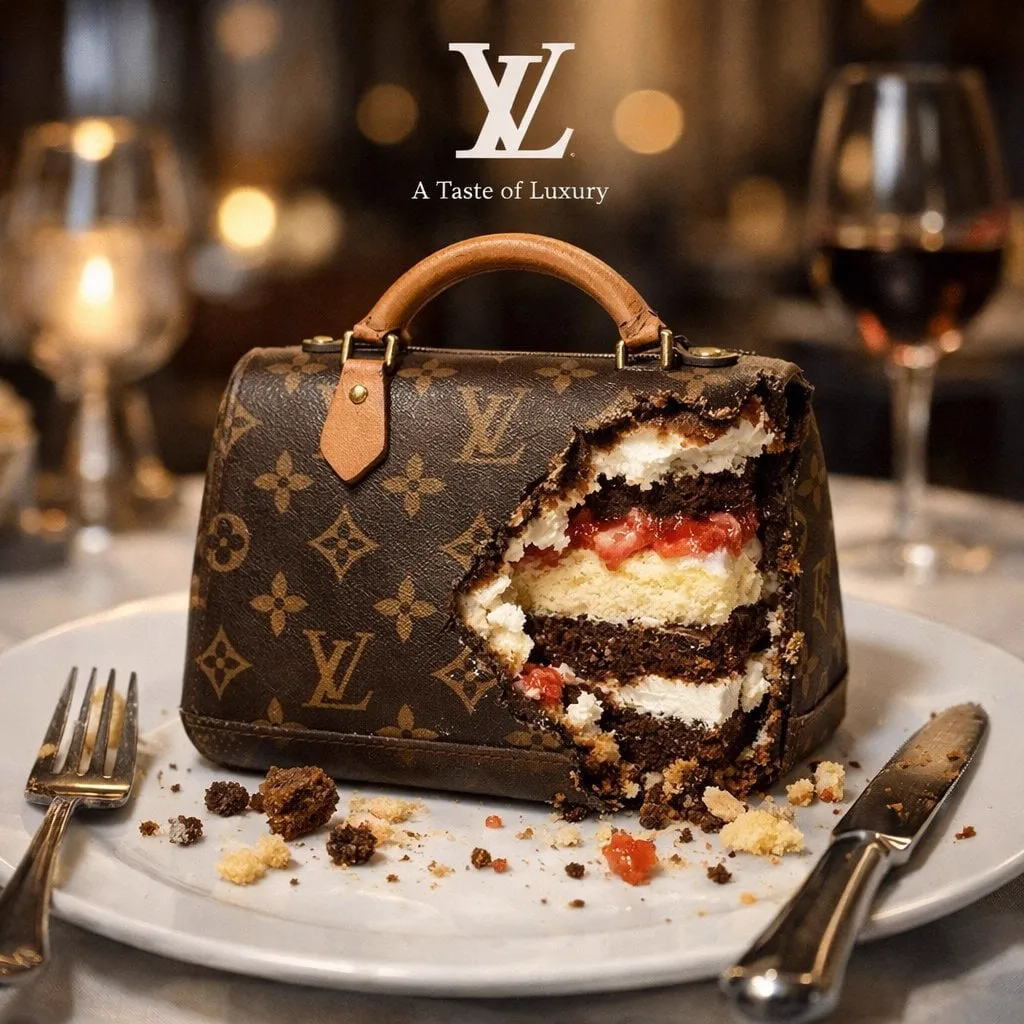
Why AI-Assisted Ad Video Changed the Production Math
Ad video used to be gated by three expensive things: a crew, a location, and time. A single 30-second spot could take six weeks from brief to final cut, and any change after the shoot meant paying for another shoot. That math pushed most brands toward a small number of high-stakes assets per year, which meant every ad had to carry an unreasonable amount of weight.
Generation tools broke that constraint. A marketing team can now go from a written concept to a storyboarded, voiced, subtitled, and versioned ad in a few days, then iterate on the parts that are not working. The important change is not that video got cheaper. It is that video became editable at the concept level. You can re-decide who the ad is for, reshoot the opening, and re-voice the whole thing without booking anything.
That shift moves the bottleneck. Production is no longer the scarce resource; judgment is. Teams that struggle with generated video usually do not have a tooling problem. They have a brief problem, an edit problem, or a testing problem.
There is also a sameness risk worth naming early. When thousands of advertisers generate from similar prompts, the output starts to converge: the same slow push-in on a person looking at a screen, the same warm color grade, the same anonymous office. Differentiation in an AI-heavy feed comes from the parts that are still human decisions, meaning the specific insight, the casting direction, the edit rhythm, the sound design, the joke that only your audience gets.
Finally, format reality. Most paid social video is consumed vertically, sound-off, and evaluated in under two seconds. Every decision later in this workflow exists to survive that environment.
Start With a Persuasion Brief, Not a Prompt
A prompt is an instruction to a model. A brief is an instruction to a team, including the version of you that will be staring at eight mediocre generations late at night. Write the brief first, and the prompt becomes a translation of it rather than a substitute for thinking.
A usable one-page brief answers seven questions:
- Who is this for? Not a demographic bracket, but a situation. "People who just moved into a flat with no dishwasher and cook every night" beats "women 25-45."
- What single thing should they believe after watching? One sentence, no conjunctions, no hedging.
- What evidence supports it? A demo, a number, a before-and-after, a review quote, a physical detail nobody else mentions.
- What is the emotional register? Relief, pride, curiosity, quiet competence, mild humor.
- What must appear? Logo treatment, legal line, packaging, talent direction, forbidden claims.
- What format? Length, aspect ratios, caption style, safe zones for platform interface overlays.
- What is the call to action? One verb, stated once in voice and once on screen.
Once the brief is locked, map it to your prompt fields deliberately: subject, action, environment, camera behavior, lighting, lens, color grade, duration, and motion intensity. Then create a style block, six descriptive lines that you paste into every prompt in the campaign. If your style block says "documentary realism, overcast daylight, 35mm, subtle handheld drift, desaturated greens and cool greys, no on-screen text," two shots from completely different scenes will still feel like one ad.
Equally important, write down what you refuse. Negative constraints save more time than positive ones. No visible text, no crowd scenes, no water, no reflective surfaces, no hand-to-object interaction. Each refusal removes a category of retry you will otherwise pay for twice.
Script Structure: Hook, Proof, Payoff
Persuasive ad scripts are not three-act narratives. They are a hook, a proof, and a payoff, and each element maps to a different production method.
The hook (0-2 seconds) decides whether anything else matters. Strong hooks include a cold-open problem, a visual contradiction (a clean shirt in a muddy field), direct address with a specific claim, or unexpected scale. Weak hooks include logo-first openings, slow fades, and establishing shots that explain nothing. In a feed, your first frame is also your thumbnail, so choose it as an image before you choose it as a moving shot.
The proof (roughly 60 percent of runtime) is where claims become visible. A demo, a side-by-side before and after, a real user reacting, a number on screen, a physical result. Show the mechanism, not just the outcome. If the ad says the product is fast, show the timer. If it says the fabric breathes, show sweat evaporating or a person who looks comfortable after a run.
The payoff (last 3-5 seconds) is a single action. Show a hand tapping a button while the voice says the same verb and the on-screen text repeats it. Triple reinforcement is not redundant; it is how sound-off viewers still get the instruction.
Here is a 30-second skeleton for a fictional hydration drink:
- Hook (0-2s): Close-up of chalk dust on a hand gripping a water bottle, ambient sound of a gym, no music yet.
- Setup (2-6s): Medium shot of the same athlete walking out of a session, voice: "Everything they told you about hydration was written for someone else."
- Proof part one (6-14s): Time-lapse of two bottles, one empty and one being finished, with a lightweight on-screen comparison.
- Proof part two (14-24s): Real-feeling close-up of the product label, then a reaction shot with genuine tired satisfaction.
- Payoff (24-30s): Product hero shot with a slow push-in, voice and text deliver one verb, end card with logo.
Now compress. A 15-second cut keeps the hook and one proof beat. A 6-second cut is hook plus payoff, often with the CTA in on-screen text only. Cutting down is always easier than writing short, so script the 30 first, then decide which 15 and which 6 you need.
Storyboarding and Shot Planning for AI Generation
A script describes feeling. A shot list describes work. Convert one into the other before you open a generator, because the shot list is where AI constraints become design decisions instead of disappointments.
Writing a shot list that survives generation
For a 30-second spot, plan five to eight shots of two to five seconds each. Note for each shot: the shot number, duration, description, generation method, and audio intent. Two planning rules matter more than the rest. First, prefer shots that a camera can plausibly hold: environments, product hero shots, motion within a frame, medium-distance people, interiors, weather, textures. Second, avoid shots that require precise physical interaction, because fingers closing around a small object, liquid pouring exactly into a glass, and hands writing legibly remain the most common failure points.
Design transitions in pairs. If shot four ends on a slow leftward camera drift, shot five should start in a compatible direction or cut on a hard beat. Generated footage rarely matches a director's intuition about eyeline and screen direction, so you build continuity into the plan rather than hoping for it.
Reference plates and style frames
Generate still frames before you generate video. Approval on a still image takes ten seconds and costs very little; approval on a four-second clip that will be discarded takes much longer. Produce three to five style frames covering your key environments, lock them, and then animate from them. Those frames double as a look-board for color grading later, so your editor is not inventing a grade from scratch.
Choosing the Right Generation Approach for Each Shot
Not every shot should be produced the same way. Assigning a method per shot is the single biggest efficiency gain in an AI-assisted ad workflow.
Text-to-video
Best for establishing shots, landscapes, abstract and texture-based b-roll, weather, and mood. Weakest for characters who must stay recognizable and for product packaging that must be accurate. Use it to build the world of the ad, then cut it to a beat.
Image-to-video and reference-driven generation
Best for product hero shots, recurring characters, and any environment that appears more than once. Start from an approved still, then control motion intensity conservatively: a slow push, a gentle orbit, a slight parallax. Heavy motion from a single reference tends to warp geometry, especially straight architectural lines and packaging edges.
Hybrid and live-action passthrough
This is the option most teams underuse. Shoot the hero product on a phone against a neutral background, or film the presenter delivering the CTA, then generate everything around those plates. You keep brand-accurate labels and a real human face exactly where trust matters most, while still avoiding a full crew day. Talking-head generation keeps improving, but lip sync at close range still carries risk, and a voiceover over generated b-roll usually reads as more professional than a generated mouth forming words.
Speed, resolution, and retry budget
Generate at lower resolution to make selects, then re-render only the winners at final resolution. Budget for retries honestly: a five-to-one ratio is normal for character shots, two-to-one for environment shots. Generate in batches by scene so you compare like with like, and keep a discard folder. Reviewing your failures is how you learn which phrasing, camera direction, and motion settings this particular model handles well.
Keeping Characters and Products Consistent
Consistency is the difference between an ad and a montage. Two mechanisms do most of the work: reference imagery and a written continuity document.
Reference imagery. Build a small pack for each recurring character: front, three-quarter, and profile views, plus one full-body frame and one frame showing wardrobe detail. Lock hair, facial hair, jacket color, and accessories in writing. For products, use a vector or photographed render of the actual label and composite it in the edit instead of trusting a generator to reproduce typography, which it will not do reliably.
A continuity document. One page listing every locked variable: outfit, hair, lighting direction, time of day, color temperature, lens character, and the exact style block text. When a shot comes back wrong, you compare it against this page rather than against memory.
Three practical habits reduce the pain. Keep lighting direction identical across shots featuring the same character, because mismatched light is the most visible giveaway. Avoid letting generated footage include on-screen text at all, and add all typography in the edit. And when a character appears in several shots, choose a distinctive but simple silhouette or accessory so viewers recognize them instantly even if small details drift.
Sound, Voice, and Edit: Where AI Ads Usually Fall Apart
A visually impressive generated ad with lazy sound reads as a demo, not a commercial. Sound is where the ad stops feeling synthetic.
Voiceover. Write for the ear, not the page: short sentences, one idea each, no nested clauses. Read your script aloud before you record or generate anything. Generated voices work well for explanatory and mid-tempo reads; for hero campaigns, a human voice actor paired with generated visuals is often the strongest combination, and it costs a fraction of a shoot day.
Music. Choose a bed that leaves a hole for the CTA. If the track is at full energy for thirty seconds, nothing lands at the end. Most editors cut at half tempo to leave room for the voice.
Sound design. This is the cheapest credibility you can buy. Add a subtle whoosh or impact at hard cuts, an ambient room layer under dialogue, and foley for the product: a lid clicking, fabric shifting, liquid pouring. Generated footage is often visually clean and sonically empty, and filling that emptiness is what makes it read as real.
Captions and safe zones. Decide early whether captions are burned in or platform-native, then keep text out of the top and bottom interface zones. Verify legibility on a phone at arm's length, not on a desktop monitor.
The mix. Dialogue first, music second, effects third. Keep dialogue prominent, avoid clipping, and target a loudness level appropriate to social platforms rather than broadcast. Check the mix in mono once; many viewers hear ads through a single phone speaker, and stereo effects can vanish entirely.
Producing Test Variants Without Rebuilding Everything
You will never get the winning version on the first try, so design the ad to be modular from the start. Build three hook modules, two or three proof modules, and two CTA modules inside a single master timeline. That gives you between twelve and eighteen combinations from one production effort.
Test one variable at a time. If you change the hook, the proof, and the music simultaneously, you learn nothing except that the results differ. Start with hooks, because hook rate moves the most, then test proof beats, then CTA phrasing.
Use a naming convention that survives a shared drive. Something like brand_concept_hookA_proofC_cta2_vertical_v3 tells everyone what changed without opening the file. Also produce aspect-ratio variants by re-rendering wide shots or reframing with intentional composition, never by stretching. Silently viewing viewers make up a large share of the audience, so export a captioned, no-voiceover variant of your best cut as well.
Quality Control, Common Mistakes, and Fixes
Watch every exported file end to end at full size before it goes live, twice. Run this checklist:
- Flicker, strobing, or frame-level brightness jumps between shots.
- Warped hands, extra fingers, or objects that merge into surfaces.
- Backgrounds that morph, especially doors, windows, and text on walls.
- Color drift between shots using the same location.
- Reflections and shadows that contradict the lighting direction.
- Garbled generated typography, which must always be replaced in the edit.
- Audio sync drift, uneven music levels, and abrupt cut-offs.
- Black frames, missing end cards, and wrong logo proportions.
The most common strategic mistakes are just as predictable. Cramming two ideas into one ad. Running a hook that explains nothing because the team already knew the context. Over-polishing until the ad looks like every other generated ad. Forgetting that the first frame is also the thumbnail. Generating far more footage than the edit needs and then feeling obligated to use it. And skipping a human edit pass, which is the step that turns a pile of clips into a piece of communication.
Measurement, Iteration, and Practical FAQ
Publish, then read the data instead of guessing. The metrics that matter at each stage are the three-second view rate (does the hook work?), the hold rate at the midpoint (does the proof work?), completion rate, click-through rate, and cost per acquisition or per qualified lead. Compare variants against each other before comparing against benchmarks, since a small test with consistent creative tells you more than a large test with mixed variables.
Review weekly. Kill losers quickly, promote winners into more formats and placements, and keep a library of your best-performing modules so the next campaign starts from an advantage rather than a blank page.
How long does an AI-assisted ad take?
A focused team can go from brief to a testable first cut in two to four working days, with another two days for variants and revisions. The variable is not generation; it is approvals and select time.
Do I need video production experience?
Not for the tools, but yes for the judgment. Understanding pacing, screen direction, and sound design matters far more than knowing any specific interface, and those skills transfer from editing, motion design, or even writing.
How do I make an AI ad that does not look AI-generated?
Four things: a human voice, real sound design, motivated camera movement instead of constant drift, and a specific insight that only your audience would recognize. Generic subject matter is what reads as generated.
Can I use AI video for regulated industries?
You can produce it, but every claim still needs the same legal review as a filmed ad, and platform disclosure rules for synthetic media apply. Budget review time into the schedule rather than after the edit.
Which aspect ratios should I export?
Start with vertical, then produce square and widescreen versions by reframing intentionally. Keep text inside safe zones for each format separately rather than reusing one layout across all three.
