
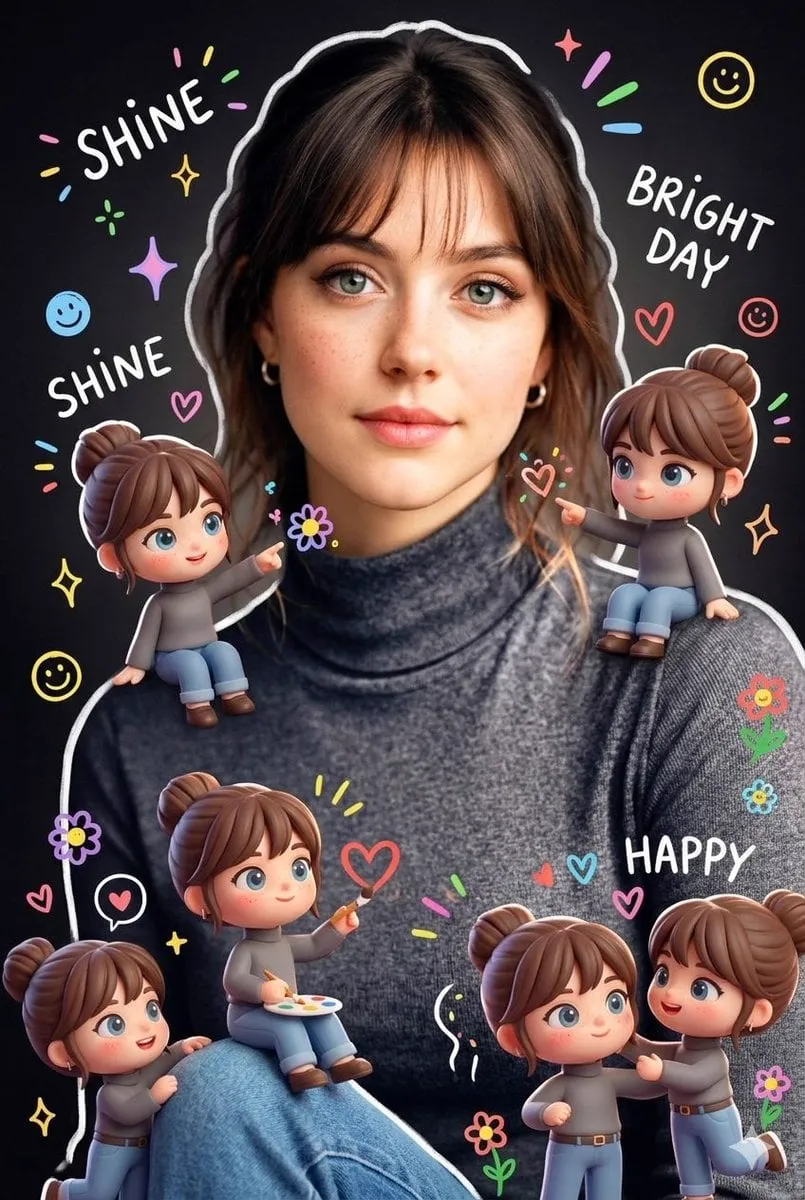
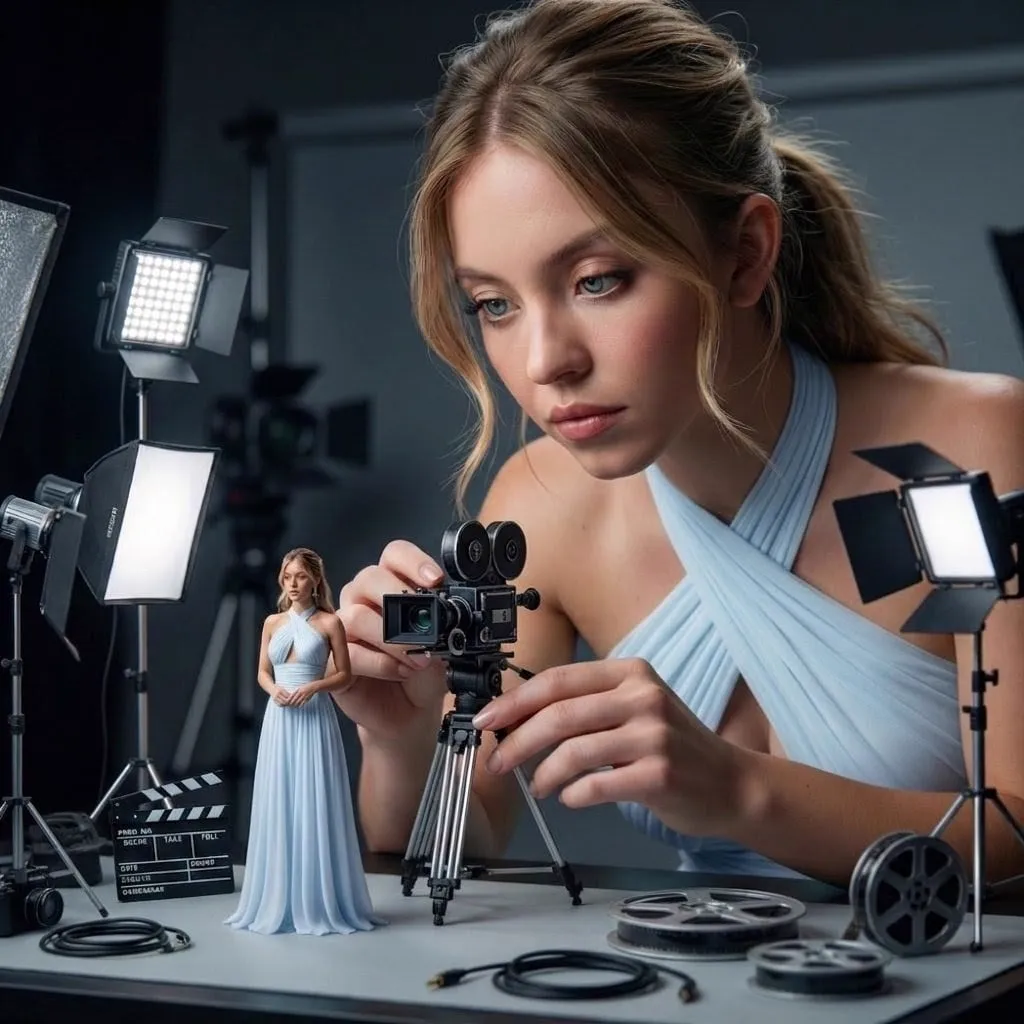
Turning still photos into moving video is one of the most requested AI capabilities, yet most creators quickly run into the same wall: characters drift between shots. The same face suddenly looks different, the outfit changes color, the background mutates. Multi-image fusion solves this by letting the model lock onto several reference images at once, so your character stays recognizable scene after scene. This guide explains how the technique works and how to use it in your own projects.
Why character consistency is the real bottleneck in AI video
The AI video generation market has grown at an extraordinary pace, and text-to-video models now produce footage that is genuinely hard to distinguish from real recordings. But the industry's dirty secret is consistency. Generate a single clip and you may be thrilled. Generate five clips featuring the same character and you will almost certainly notice that the face, wardrobe, and even body proportions change between them.
This problem has a name: generation drift. It happens because most models are stateless. Each prompt is processed independently, and the model reconstructs the character from your description every time. When the description is vague, the model fills the gaps with whatever it likes, and the result is a new interpretation in every shot.
For storytelling, marketing, and branded content, drift is fatal. Viewers notice instantly when a character's face changes mid-story. Trust breaks, and the video looks amateur no matter how impressive each individual frame is.
What multi-image fusion actually does
Multi-image fusion changes the input from a single reference to a set of references. Instead of saying "a woman in a red jacket," you provide three or four photos of the same woman from different angles, in different lighting, wearing the same jacket. The system analyzes all of them, extracts the stable traits, and builds a unified representation of the character.
That representation is then used as a constraint for generation. Every subsequent shot is created with the same visual identity locked in. The face shape, skin tone, hair, clothing details, and distinctive accessories stay consistent across scenes.
The key insight is that this is not the same as simple image-to-video. Image-to-video animates one picture. Multi-image fusion builds a character model from several pictures and applies it anywhere. One reference image tells the model what the scene looks like. Several reference images tell the model who the character is.
How to prepare reference images for best results
The quality of your output depends heavily on the input you provide. Here is a practical checklist.
First, use multiple angles. A front-facing photo plus a profile shot gives the model enough information about facial structure. One straight-on selfie is not enough.
Second, keep the character's appearance consistent across the reference images. If one photo shows the character with a beard and another without, the model will be confused. The same rule applies to clothing: if you need the character in a specific outfit, make sure every reference shows that outfit or at least the same silhouette and colors.
Third, use good lighting. Photos with strong shadows or extreme filters make it harder for the model to separate identity from lighting. Natural, evenly lit photos work best.
Fourth, crop consistently. If one reference is a close-up and another is a full-body shot, the model has less to anchor on. A mix of head-and-shoulders and full-body shots is fine, but avoid extreme variations in framing.
Fifth, limit the number of references to what is necessary. Five well-chosen images beat twenty random ones. Too many conflicting references dilute the signal.
Choosing the right model for photo-to-video work
Not all models handle multi-image input equally well. Some are optimized for photorealistic output, which is ideal for commercial work, product visualization, and character-driven narratives. Others excel at stylized looks such as anime, illustration, or clay renders.
For realistic characters, look for models with strong prompt adherence and good temporal consistency. Test the same reference set on two or three different models and compare the results side by side. You will often find that one model keeps the face stable while another drifts, even when both produce beautiful individual frames.
For stylized projects, such as animated shorts or brand mascots, models trained on illustrative data are often more forgiving and more controllable. The trade-off is usually between photorealism and stylistic coherence, so match the model to the final look you need.
A useful workflow is to generate a quick test clip with a cheap model first, validate the concept, and then switch to a higher-fidelity model for the final render. This saves both time and budget.
Building a repeatable workflow: from photos to finished scene
The most reliable approach is to treat character setup as a separate step from scene generation. Do not try to describe your character in every prompt. Build the visual identity once, then reuse it.
Start by creating a character sheet. Gather the reference images, name the character, and note the key visual traits. Keep this sheet in a project folder alongside your scripts and storyboards.
Next, generate a continuity test. Use the references to create two or three shots of the character in different poses and settings. Review the results for drift. If the face changes between shots, adjust the references before you invest time in a full sequence.
Once the continuity test passes, move to production. Generate each shot using the same character identity and the scene description. Keep a log of which settings worked, which model was used, and what the output looked like. Over time, this log becomes your personal playbook.
Finally, edit and color grade as usual. The generated footage should slot into your existing pipeline without special treatment, as long as the visual identity is stable.
Real-world applications: where consistency pays off
Digital marketing is the most obvious beneficiary. A brand character that appears in a product demo, a social media teaser, and a testimonial video should look like the same person in all three. Multi-image fusion makes this practical without hiring actors or arranging shoots.
Film production is another area, especially for short films and web series. Independent filmmakers can now create consistent characters for narrative work on modest budgets. A five-episode series with a recurring protagonist is feasible when the character model stays stable.
Education and training content also benefit. An instructor avatar that appears across a course library creates a sense of continuity that improves learner trust. The same holds for explainer videos that reuse a recurring presenter.
Even gaming and fan content creators use the technique to bring characters from concept art into animated scenes, preserving the original design across multiple clips.
Common mistakes and how to avoid them
The most common mistake is relying on a single reference image. One photo simply does not carry enough information about the character's identity across different poses and lighting conditions.
The second mistake is inconsistent references. If you change the hairstyle, clothing, or background between reference photos, the model has to guess which version is canonical. Keep the references aligned.
The third mistake is skipping the continuity test. Jumping straight into a full production run means discovering drift after you have already generated dozens of clips. A five-minute test saves hours of rework.
The fourth mistake is using reference images with watermarks, text overlays, or heavy compression artifacts. These introduce noise that the model may reproduce in every output.
The fifth mistake is expecting perfection from a single generation. Even with good references, you will need several takes. Plan for iteration instead of hoping for a one-shot result.
Tools and platforms that support multi-image workflows
A growing number of platforms now support multi-image fusion as a first-class feature. When evaluating tools, look for three things: support for multiple reference images in a single project, a way to reuse the character identity across separate generations, and documentation or examples that show the technique in action.
Some platforms offer dedicated character modes where you upload references once and then generate unlimited scenes with that identity. Others require you to attach the references to every prompt. The former is more convenient for long projects.
Model libraries matter too. A platform that lets you switch between photorealistic, cinematic, and stylized models while keeping the same character identity gives you creative flexibility that single-model tools cannot match.
How to evaluate a multi-image fusion tool
Create a standard test set before you commit to any platform. Use the same character references and a fixed set of scene prompts. Generate the same shots on each candidate tool and compare on three criteria: face consistency, clothing consistency, and background coherence.
Face consistency is the most important. Zoom into the eyes, nose, and jawline across shots. Small changes that are invisible in a single clip become obvious in a sequence.
Clothing consistency matters for branded content. Check that logos, colors, and patterns remain stable.
Background coherence is about the world around the character. Walls, furniture, and props should not warp or change color between shots.
Run the test with the exact type of content you plan to produce, not with generic demo prompts. The tool that wins on a scenic landscape demo may lose on a close-up character scene.
Budgeting for photo-to-video projects
Multi-image workflows can be more expensive than simple text-to-video because each generation uses more context. Plan for extra iterations during the setup phase.
A sensible budget looks like this: one hour of preparation for the reference set, one test sequence to validate consistency, and then roughly two to three generations per final shot to account for retakes. This is still dramatically cheaper than a live shoot with actors, locations, and crew.
If you are producing content regularly, invest in a workflow that reuses the character setup. The marginal cost of each additional video drops quickly once the identity is established.
The future of consistent AI characters
Multi-image fusion is not the end of the road. The next wave of models is incorporating longer context windows and memory, which will make consistency even easier to maintain across entire films rather than individual scenes.
For now, though, the technique is the most practical way to achieve professional-level consistency with today's tools. The fundamentals will not change: better references produce better characters, and testing before production saves time.
A worked example: building a series protagonist
Let us walk through a realistic project so the workflow is concrete. Imagine you are producing a four-episode web series about a detective, and the protagonist must appear in every episode without changing appearance.
Start with the character sheet. You gather five photos: a front-facing headshot, a profile shot, a three-quarter angle, a full-body shot in the character's trademark coat, and a detail shot of a distinctive accessory such as a watch. All photos use natural light and a neutral background. You note the key traits: short dark hair, a scar above the left eyebrow, a charcoal coat, brown boots.
Next, run the continuity test. You generate three test shots: the character standing at a rainy window, walking down a corridor, and sitting at a desk. Review them side by side. The scar is present in all three. The coat color matches. The face reads as the same person. The test passes, so you proceed to production.
During production, you generate each scene with the same character template and a fresh scene prompt. Episode one's final scene takes place at dusk; episode two moves to a bright office. The environment changes, but the character stays stable because the template carries the identity across all generations.
One episode later, you decide the character should remove the coat in episode three. Instead of regenerating everything, you update the reference set with a version of the character without the coat and create a new template variant. The rest of the identity stays locked.
This example is typical of what the technique enables: long, multi-scene projects where the character is a fixed asset rather than a gamble on every prompt.
Troubleshooting drift when it still happens
Even with a solid setup, you may occasionally see drift. Work through these checks in order.
First, verify the references. Open your character sheet and confirm every image agrees on the key traits. A single conflicting photo, such as one where the hairstyle differs, can poison the template. Replace the outlier and rerun the continuity test.
Second, check the model. Some models handle multi-image input better than others. If one engine consistently drifts with your references while another does not, switch engines for the character work and reserve the weaker model for scenes without characters.
Third, review your scene prompts. Descriptive prompts that mention physical details in a way that contradicts the template can confuse the generator. Keep scene prompts focused on action, setting, and mood, and let the template own the appearance.
Fourth, test at the final resolution. Some platforms render previews at low resolution, where small inconsistencies are invisible. A problem that appears only in the final render is still a problem, so validate at production settings.
Fifth, consider regeneration limits. If a model has a cap on how many times it can reuse the same template in one session, drift can creep in late in a batch. Split long projects into smaller batches and refresh the template between them.
Measuring consistency objectively
Subjective judgment is useful, but objective checks catch what the eye misses. A simple method is to generate a still frame from each scene at the same moment in the character's movement, then compare crops of the face, the torso, and the hands.
Look for three signals. Color consistency: skin tone, hair color, and clothing colors should match within a small tolerance. Geometric consistency: the shape of the jaw, the position of features, and body proportions should be stable. Detail consistency: scars, tattoos, logos, and accessories should be present in every frame that should show them.
If you want to be rigorous, export the frames and overlay them at low opacity in an image editor. The stable traits align almost perfectly, while drift appears as ghosting or double outlines. This technique turns a vague feeling that "something changed" into a measurable verdict.
Keep a record of which references, models, and settings produced the most stable results. Over a few projects, this record becomes a reference library of its own, letting you start every new project from a proven configuration instead of from scratch.
FAQ
How many reference images do I need for a consistent character? Three to five well-chosen images is a good starting point. Use different angles, consistent appearance, and even lighting. More images help only if they are consistent with each other.
Can multi-image fusion work with AI-generated character art? Yes. Concept art, digital paintings, and 3D renders work as references, as long as the character's design is consistent across the images.
Why does my character still drift sometimes? Drift usually comes from weak references, inconsistent prompts, or a model that is not optimized for multi-image input. Improve the reference set and test a different model.
Is multi-image fusion useful for product videos? Absolutely. Use photos of a product from different angles as references, then generate videos of the product in various settings while keeping the design stable.
Do I need a powerful computer to use multi-image fusion? No. The processing happens on the platform's servers. Your hardware matters only for editing the final footage.
