
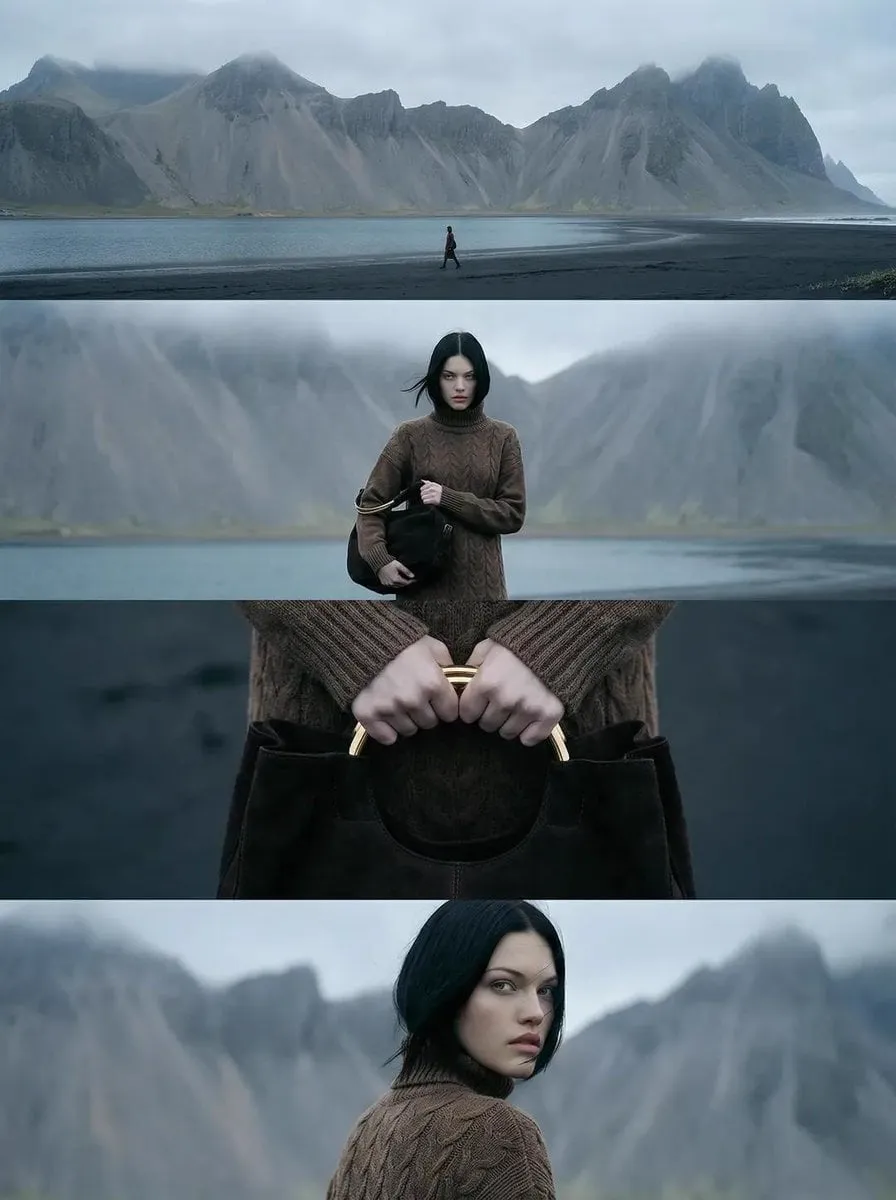
When synthetic footage stops looking synthetic
For most of the short history of generative AI, the biggest compliment a generated image could receive was "it almost looks real." The uncanny valley was the default: skin that was a little too smooth, eyes that did not quite focus, motion that carried a subtle wrongness. In the last couple of years, that has changed. The frontier of AI video has crossed into genuine photorealism, and at the high end, 4K resolution has become the marker of the new standard.
This is not just a visual upgrade. Photorealism at high resolution changes what AI-generated content can be used for. When an image or clip is indistinguishable from captured footage, it stops being a novelty and becomes production material: advertising, product imagery, virtual production, even cinematic narrative. The stakes of that shift are enormous for anyone creating visual content.
This article breaks down what makes modern photorealistic AI work, how 4K quality is actually achieved, where the technology stands in real applications, and what it means for creators, brands and filmmakers.
What changed: from artifacts to believability
The leap to photorealism was not one breakthrough but the convergence of several: better model architectures, larger and cleaner training data, and smarter generation strategies that respect the physics of light and lens.
Diffusion models reached maturity
Modern photorealistic generation is built on diffusion architectures that have been refined over many iterations. The improvements show up in the details that used to give AI away: skin texture with pores and sub-surface scattering, hair that falls in strands rather than clumps, fabric with real weave and wrinkle behavior, and reflections that obey the environment. These are the micro-details that the human eye uses, usually unconsciously, to judge whether an image is real.
Temporal consistency solved the motion problem
Still images reached photorealism earlier than video because a single frame can be polished. Video demands more: the same object must look the same across consecutive frames, lighting must stay stable, and motion must follow physical plausibility. Advances in temporal consistency, the techniques that bind frames into a coherent sequence, are what finally made photorealistic video viable. When a coat moves naturally and the face stays the same person from frame to frame, the brain stops looking for artifacts.
Rendering quality became a model capability
High resolution used to be a post-processing concern. Now it is a generation capability: models can be trained and configured to output at 4K with detail that survives scrutiny. This matters because upscaling a low-resolution generation to 4K rarely produces true detail; it produces sharpened blur. Native 4K generation, where the model reasons at high resolution, is what creates texture you can zoom into.
The architecture behind 4K photorealism
Scale and parameter efficiency
There is a real correlation between model scale and the fineness of detail a model can produce. Larger models trained on massive datasets learn more of the statistical structure of real images, including the details that make surfaces believable. But scale alone is not the story; the same generation quality can be achieved more cheaply with well-designed architectures and training strategies. The practical takeaway is to evaluate models by output, not by parameter count.
Specialized training for realism
Some of the most impressive photorealistic results come from models fine-tuned specifically for realism. These models are trained with a bias toward photographic truth: correct anatomy, realistic materials, plausible lighting. That specialization is why the same prompt produces dramatically different results in a general-purpose model versus a realism-focused one.
Fusion and reference techniques
A second path to photorealism is reference-driven: feeding the model real images or previously generated high-quality frames and asking it to build from them. Reference fusion keeps details locked across scenes and lets creators achieve a consistent photorealistic look without re-describing every visual property in text. For commercial work, where brand consistency matters as much as raw realism, these techniques are indispensable.
Output standards and pipelines
Photorealism is not finished at generation time. The output must survive encoding, color management and platform transcoding. Teams that ship photorealistic AI content professionally run it through the same finishing pipeline as captured footage: color grading, grain, noise treatment, and delivery in standards that preserve the look. Generation quality and finishing discipline go together.
Cinematic intelligence: directing the generated shot
Photorealism answers "does this look real?" The harder question is "does this look intentional?" A realistic image of a boring scene is still boring. The new generation of tools addresses this by building direction into the generation process: automated cinematography that chooses composition, camera movement and pacing the way a director would.
From narrative to actionable direction
The most useful systems translate a story into shot-level instructions: what the camera does, where the subject is in the frame, what the light is doing, how the scene evolves over time. This layer of cinematic intelligence is what turns a photorealistic generator into a production tool rather than a toy.
Collaboration between automated and custom direction
The strongest workflows combine automated direction with human or custom model control. The system handles the mechanical decisions, while the creator keeps the final say on framing, emotion and intent. This division of labor is the practical path to consistent, high-volume, high-quality output.
What the benchmarks actually measure
When a tool claims 4K photorealism, the claim should be tested against what matters in real production.
- Temporal coherence: does the subject stay consistent across frames and across cuts? This is the difference between a clip and a usable shot.
- Artifact suppression: how often do hands, faces, text or physics break? Artifact frequency determines whether output can be used directly or needs retakes.
- Detail retention at 4K: does the detail survive zooming in, or is it upscaled softness? Inspect skin, fabric and edges at full resolution.
- Prompt adherence: does the output match the brief, or does it drift toward generic? For commercial work, adherence is often more valuable than raw realism.
Benchmarks that only show beautiful stills are marketing. Benchmarks that show consistent multi-scene output with stable characters and clean physics are evidence.
Real-world impact: where photorealistic AI is already working
Advertising and product content
Brands now generate product visuals that would previously have required studio shoots: packaging on different backgrounds, products in lifestyle contexts, hero shots in multiple lighting setups. The cost and speed advantages are enormous, and when the output is photorealistic, the audience cannot tell the difference. The commercial constraint is accuracy, the product must look exactly like the product, which is why reference-driven techniques are central here.
Indie filmmaking and virtual production
Independent filmmakers are using photorealistic AI for shots that are expensive or impossible to capture: establishing shots, period settings, dangerous stunts, environments that do not exist. Virtual production pipelines blend AI-generated plates with live-action footage, and the seamlessness of that blend depends entirely on photorealism. When the AI element looks like it was shot on the same camera as the live action, the technique disappears into the story.
Social and creator content
For creators, photorealistic AI is a volume multiplier: high-quality backgrounds, realistic props, cinematic b-roll produced on demand. The bar for "good enough" has risen, and audiences increasingly expect a certain production polish even in casual content. Photorealistic generation provides that polish without a production budget.
Practical guidance for adopting photorealistic 4K workflows
Match the model to the task
Not every project needs 4K photorealism. Social content and early concepts can run on faster, cheaper models; hero shots and client deliverables deserve the highest quality. Build a tiered workflow instead of using one model for everything.
Invest in reference discipline
Photorealism projects fail on consistency more often than on beauty. Build reference sets for characters, products and brand styles. Lock them early. Use them consistently across every generation in the project.
Never skip the finishing pass
Generated footage still needs grading, sound and editorial polish. The teams that ship the best results treat AI output as raw material, not as the finished product. Color grading in particular is where generated footage is brought into line with captured footage.
Test on the delivery medium
A 4K render looks different on a phone screen, a TV and a cinema projection. Check your output in the actual delivery context before approving it, because compression and screen size change how detail and artifacts are perceived.
Building an evaluation kit for your own projects
Every production team should build its own evaluation kit: a fixed set of test prompts and reference materials used to judge any model or tool before it enters the pipeline. The kit removes hype from purchasing decisions and gives you a consistent yardstick over time.
Start with three categories of tests. First, identity: use a fixed character reference and a fixed scene prompt, and check how consistently the model reproduces the character across several generations. Second, realism: generate a subject with challenging details, skin, hands, fabric, reflections, and inspect at full resolution. Third, motion: generate a sequence with defined camera movement and check whether the physics hold and the subject stays coherent across frames.
Score each test on the same rubric every time: identity retention, artifact frequency, detail at 4K and prompt adherence. Keep the results in a simple table with the model version and settings. After a few evaluations, you will have a reliable picture of which models earn their cost for your specific content, rather than relying on marketing demos that always show the best possible output.
This discipline matters because the model landscape moves fast. A tool that leads the market this quarter may be overtaken the next, and a team with an evaluation kit can switch without drama, while a team that relies on reputation will keep paying for performance it no longer needs.
Common mistakes teams make when adopting AI photorealism
Even with capable tools, teams repeat the same avoidable errors. Recognizing them saves real money.
- Judging models on stills: A beautiful still proves nothing about video quality. Evaluate with motion, because temporal coherence is where models actually differ.
- Skipping references: Teams expect text prompts to carry brand and character identity. They do not. Without reference systems, every generation drifts slightly and consistency collapses across a project.
- Upscaling instead of generating: Sharpening a low-res generation to 4K does not add detail; it amplifies artifacts. For hero content, generate at native 4K or accept that the detail ceiling is baked in.
- Testing on the wrong screen: Approving output on a high-end monitor, then delivering to mobile, leads to surprises. Compression hides and creates different artifacts at different sizes.
- Treating AI output as final: Generated footage without grading, sound and editorial pass looks technically real but aesthetically unfinished. The finishing pipeline is part of the photorealism.
Frequently asked questions
Can AI video really pass as real footage?
For many subjects, yes, especially in short clips and static or slowly moving scenes. Complex physics, crowds and long interactions remain the weak spots. The honest answer is context-dependent.
Do I need a high-end GPU to generate 4K photorealistic video?
For local generation, yes, serious 4K work is compute-hungry. Cloud-based services remove the hardware barrier by handling generation server-side, which is why most production work happens through APIs and platforms.
Is photorealistic AI content legally safe to use?
The legal landscape is still settling. You must have rights to any training-data outputs you rely on, respect likeness rights for real people, and check platform and advertising rules for AI-generated content. Treat provenance as a professional requirement, not an afterthought.
Will photorealistic AI replace traditional video production?
It replaces specific expensive tasks: locations, sets, props and certain shots. It does not replace the editorial, directorial and strategic work that gives footage meaning. Production teams that adopt it will do more, faster; teams that ignore it will struggle with cost and speed.
How do I make sure my brand looks consistent across AI-generated assets?
Use the same reference system, the same models and the same finishing pipeline for every asset. Consistency is a workflow property, not a model property. Document your settings and reuse them.
Conclusion
Photorealistic AI at 4K is the point where synthetic content stops being a category and becomes indistinguishable from the real thing. The technology has moved from artifacts to believability, and it is already reshaping advertising, filmmaking and creator content. The winners in this shift are not the people who own the most impressive models; they are the teams that build disciplined workflows around them: the right model for the task, locked reference systems, rigorous finishing, and honest testing on the real delivery medium. That combination is what turns an impressive technical capability into content that audiences simply accept as real.
