


Why Photorealism Is a Language Problem First
When an AI-generated image looks wrong, the model usually takes the blame. In practice, most failures come from a prompt that describes a subject and says nothing about the physics of the scene. A generator has no abstract understanding of what "realistic photo" means. It responds to the vocabulary that real photography leaves behind: focal length, light direction, surface behavior, sensor artifacts. Those words cluster together in training data, and using them pulls the output toward the look of an actual capture.
Three levers control photorealism: the model you choose, the vocabulary you write, and what you do after generation. Model choice is limited by access and speed, post-processing is the last mile, and prompt vocabulary sits in the middle as the cheapest, most reusable lever you own. A phrase like "shallow depth of field with a soft falloff on the background" costs nothing and improves every tool you feed it into.
Think of keywords less as magic words and more as constraints. Every term you add removes a degree of freedom the model would otherwise fill with its statistical average. That average happens to be plasticky skin, even studio light, spotless surfaces, and endless mid-range sharpness. That is why a bare prompt of "a woman in a cafe, photorealistic" produces something that feels like a stock photo from a world where nothing has ever been dusty.
The Four Keyword Families That Control Realism
Photorealistic vocabulary divides into four families, and each one repairs a different failure mode. When an image looks artificial, identify which family is missing before rewriting everything.
- Camera and lens terms control optics: how depth falls off, how highlights bloom, how much the frame bends or distorts. Missing them makes images feel flat and uniformly sharp.
- Lighting and atmosphere terms control illumination: direction, softness, color, haze, bounce. Missing them produces the flat frontal light that instantly reads as generated.
- Material and texture terms control surfaces: skin, fabric, metal, water, grit, wear. Missing them produces plastic objects in a vacuum-sealed room.
- Composition and environment terms control the physical plausibility of the scene: camera height, framing, scale cues, foreground clutter, atmospheric depth.
A useful habit is to audit your last ten weak generations against these four families. In most cases two families are doing all the work and the other two are absent entirely. Adding two or three terms to the weakest family almost always beats adding ten terms to the strongest one.
The families also interact. A 24mm wide lens amplifies the importance of environment terms because more of the world is visible. A macro lens amplifies texture terms. A night scene amplifies lighting terms. Match your keyword effort to the shot type instead of using one universal formula.
Camera and Lens Keywords: Building the Virtual Optics
Focal Length, Aperture, and Depth of Field
These three settings do more for realism than any style adjective. Focal length changes spatial relationships: an 85mm portrait compresses the face and softens the background, while a 24mm street shot stretches the foreground and exaggerates perspective. Aperture controls how quickly focus falls away. Together they create the depth signature that viewers associate with real cameras.
Useful phrasing: 85mm portrait lens at f/1.8, shallow depth of field, background bokeh with subtle cat-eye shaping. For a wider environmental shot: 24mm at f/4, deep focus, mild corner softness, visible perspective distortion. Avoid stacking contradictory optics such as macro detail with an ultra-wide lens unless the shot genuinely calls for it.
Shutter Behavior, Motion, and Grain
Still images still carry temporal information. A slow shutter leaves a streak; a fast shutter freezes a droplet. Mention it when movement exists in the frame: 1/60s shutter, slight motion blur on the passing cyclist, sharp subject. Sensor behavior matters just as much. ISO 1600, fine luminance grain, mild highlight roll-off produces the slightly imperfect texture of a real capture, while a perfectly clean render often looks synthetic.
Optical Flaws and Camera Character
Real lenses are imperfect, and imperfection is persuasive. Small amounts of chromatic aberration on high-contrast edges, halation around bright sources, vignetting in the corners, and a faint dust spot or two all add credibility. Phrase them gently: subtle chromatic aberration, gentle vignette, slight halation around the window. Overdo it and the image looks like a filter instead of a photograph.
Body names can help, but treat them as flavor rather than guarantees. A phrase like shot on a full-frame mirrorless camera signals a format, while a specific model name may pull a look you did not intend. If you use a camera reference, pair it with the optics and light that made that reference iconic, otherwise you get the badge without the behavior.
Lighting and Atmosphere Keywords: Where Fake Images Fail
Direction and Quality of the Key Light
Light is the single largest realism multiplier. Without instructions, generators default to an even, front-facing wash with no clear source. Real photographs almost always have one dominant source with a direction and a falloff. Describe it explicitly.
Example: single soft key at 45 degrees from camera left, large diffuser, fill bounced from a white wall on the right, negative fill on the shadow side for contrast. That sentence does more for believability than a paragraph of style words, because it tells the model where shadows belong and how soft their edges should be.
Hard light and soft light produce different stories. Hard midday sun, crisp shadow edges, strong contrast suits documentary and street work. Overcast diffusion, nearly shadowless, gentle tonal gradients suits portraits and product shots. Pick one and commit rather than blending both.
Time of Day, Weather, and Haze
Atmospheric terms add depth that geometry alone cannot. Golden hour backlight, sun flare across the lens, warm rim light on hair creates separation. Blue hour, mixed ambient and window light, soft mist in the distance creates mood without heavy grading. Post-rain street, wet asphalt reflections, condensation on glass instantly justifies surface behavior you would otherwise have to invent.
Haze, dust, and humidity are especially valuable for landscapes because they create aerial perspective: distant objects lose contrast and shift toward the light color. That single cue is one of the strongest subconscious signals of a real photograph, and it is almost always absent from untouched AI output.
Color Temperature and Practical Sources
Mixing color temperatures is a photographer's habit that AI models rarely apply on their own. Warm tungsten lamps inside, cool daylight through the window, mixed color temperature on the subject's face produces the believable complexity of an actual interior. Name the practical sources in the scene: lamps, screens, candles, neon signs, car headlights. Each named source tells the model where to place highlights and where the shadows should fall away.
Material and Texture Keywords: Skin, Fabric, Metal, Water
Skin, Hair, and Eyes
Skin is the fastest place to spot a generated image. Models drift toward smoothing unless told otherwise. Add: visible pores, fine vellus hair, subtle skin texture, slightly uneven tone, faint redness on the nose and ears, subsurface scattering in the ears and fingertips. For eyes, request catchlight in both eyes, natural wetness along the lower lid, individual lashes. These phrases rarely change composition, but they change how the viewer reads the whole frame.
Fabric, Metal, Glass, and Water
Materials behave according to their microsurface. Brushed aluminum with fine directional scratches, dull highlights, faint fingerprints near the edge reads as metal. Wool coat with loose fibers, pilling along the cuff, slightly wrinkled at the elbow reads as textile. Glass with visible reflections, dust and smudges, slight refraction distortion at the edges reads as glass rather than a rendered surface.
Water deserves its own vocabulary because it appears in so many scenes: droplets beading on a surface, ripples with broken reflections, wet sheen on stone, mist on a window with hand marks. Naming the state of the water prevents the model from rendering a generic mirror-smooth puddle.
Imperfections and Environmental Residue
Real places are used. Adding wear and residue increases perceived realism more than adding detail, because wear implies history. Scuffed floorboards, coffee ring on the table, chipped paint on the doorframe, dust in the corner, worn leather on the armrest. Keep imperfections small and distributed. One dramatically broken object reads as a story beat; twenty small signs of use read as reality.
Prompt Ordering: From Macro to Micro
Ordering matters because most models weight earlier tokens more heavily. A reliable sequence is: subject and action, setting, light, optics and camera, materials and texture, mood and grade, then technical constraints. This moves from what the image is about to how it is captured, which mirrors how a photographer thinks.
Portrait example: Environmental portrait of a ceramicist in her studio, sitting at the wheel with clay on her hands, medium shot at eye level, single north-facing window as key light, soft falloff, 85mm at f/2.0, shallow depth of field, visible skin texture and flecks of dry clay, dusty air, muted earth tones, film-like highlight roll-off.
Exterior example: Street corner after rain at dusk, delivery rider waiting at the light, 35mm at f/2.8, low camera height, shop neon as the key source, warm and cool mixed lighting, wet asphalt with broken reflections, steam from a vent behind, slight motion blur on passing cars, gentle grain.
Notice that neither example uses empty hype words. Phrases like ultra detailed, 8K, masterpiece consume prompt space without supplying physical information, and they often push the render toward a hyper-clean, over-sharpened look that reads as digital rather than photographic.
One more caution: negative phrasing is unreliable. No blur, no noise, no distortion frequently summons the exact thing you are trying to remove, because tokens are activated whether or not you negate them. State what you want instead: crisp focus on the eyes, clean midtones, straight architectural lines.
A Repeatable Rendering Workflow
Step 1: Collect Real References
Before writing, gather six to ten real photographs that share the target look. Do not copy compositions; extract rules. Note the light direction, the contrast, the lens compression, the amount of visible detail in shadows, the color of the highlights. Converting those observations into keywords is the entire skill.
Step 2: Write the Scene Sentence
Start with one sentence of plain description: who or what, doing what, where, when. This anchors the render and prevents keyword soup from producing an incoherent image. Then add families in the order described above.
Step 3: Generate Small, Compare, Diagnose
Produce several variations at reduced resolution with a fixed seed where the tool allows it. Keep everything constant except one family. If the light is wrong, rewrite lighting terms only. If the surfaces are wrong, rewrite material terms only. Changing five things at once means you learn nothing from the result.
Step 4: Diagnose With a Short Checklist
- Too flat? Add light direction, falloff, and shadow description.
- Too clean? Add grain, wear, dust, and micro-texture terms.
- Too sharp everywhere? Add aperture, depth of field, and lens softness.
- Too weightless? Add scale cues, foreground objects, and atmospheric depth.
- Wrong color feel? Add color temperature and name the practical sources.
Step 5: Refine, Then Finish
Once composition and lighting are locked, move to higher resolution or refinement passes. Add detail through the model only where it helps; for the rest, use standard finishing: careful contrast, restrained sharpening, and a gentle grade. Aggressive sharpening at the end undoes the subtlety you spent the prompt building.
Stills vs Video: Adjusting Keywords for Motion
Video raises the cost of every keyword because continuity must survive across frames. Three adjustments matter most.
First, describe camera motion in plain cinematic language: slow dolly in, handheld tracking walk, gentle gimbal orbit, static locked-off shot. These terms tell the model how the frame should evolve, and they prevent the drifting, uncertain movement that makes generated video feel synthetic.
Second, keep the look bible consistent across shots. Write one paragraph of shared terms—lens, light source, palette, grain, time of day—and reuse it in every shot of the sequence. Scene consistency comes from repeated constraints far more than from a single perfect prompt.
Third, reduce texture keyword density. Highly specific micro-texture instructions can cause each frame to resolve differently, producing shimmer on skin, fabric, and foliage. Prefer stable, broader material descriptions and add fine detail in post if needed. Focus behavior is also worth naming: focus pull from the foreground cup to the subject's face gives motion purpose rather than leaving it to chance.
Common Mistakes and How to Fix Them
Keyword soup. Twenty unrelated style words produce mush. Fix: keep two to three terms per family and delete anything that does not describe a physical property.
Contradictory optics. Macro detail plus extreme wide angle plus telephoto compression cannot coexist. Fix: choose one lens story per shot.
Ignoring light. The most common cause of an AI look. Fix: always name the source, its direction, and its softness.
Style-name dependence. Naming a director or a film stock is a shortcut, not a system, and results vary wildly between tools. Fix: translate the reference into light, lens, and palette terms you can control.
Negation. Fix: describe the desired state instead of banning the unwanted one.
Changing too many variables. Fix: iterate one family per round with a locked seed.
Confusing detail with realism. More detail is not more believable. Physical behavior—light falloff, material response, perspective—is what convinces.
Upscaling too early. Fix: settle composition and lighting at low resolution first, then scale up.
FAQ
Do I need a specific model to get photorealistic results?
No single model owns photorealism. Modern image and video generators all respond to physical vocabulary, though they differ in how strongly they follow it. Test the same prompt across two or three tools and keep the vocabulary that survives translation, since that is the part that belongs to you rather than to the model.
How many keywords is too many?
When adding terms stops changing the image, you have crossed the line. A practical ceiling for most shots is four topic areas with two to four terms each. If a term is not describing light, optics, material, or physical scale, it is probably decorative filler.
Why does adding "no blur, no noise" make things worse?
Because tokens activate regardless of negation. The model sees blur and noise and applies them. Rewrite as positive constraints: crisp eye focus, clean midtones, smooth tonal transitions.
Should I include camera brand names?
Usefully, no more than one, and only when it implies a format or a rendering character you actually want. Camera names are weak signals compared with focal length, aperture, and light direction, which do the real work.
How do I keep a character consistent across multiple shots?
Write a reusable character block: age range, face structure, hair, wardrobe, and skin texture terms. Reuse it verbatim in every prompt, and pair it with a fixed lens and light setup for the sequence. Consistency comes from repetition, not from a single lucky render.
What is the difference between photorealistic and hyperrealistic?
Photorealistic aims at plausibility: the image could have been captured by a camera. Hyperrealistic exaggerates detail and contrast until it looks more vivid than life. Most commercial work wants the first and accidentally produces the second by over-sharpening and stacking hype keywords.
Can I get photorealism with a casual phone-photo look?
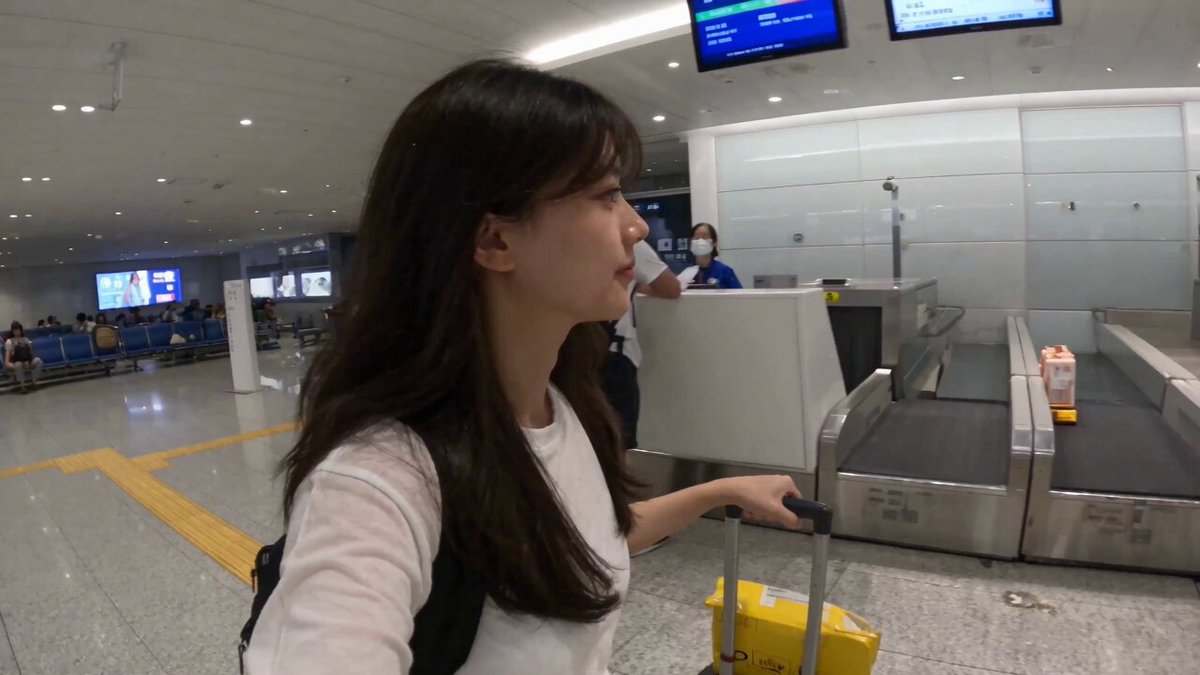
Yes, and it is a strong style choice. Use wider focal lengths, deeper focus, mixed available light, mild noise, and slight handheld framing. The vocabulary changes from cinema terms to documentary terms, but the underlying principle stays the same: describe the conditions of a real capture.
How do I fix hands, eyes, and other structural errors?
Prompting helps only marginally once the render is done. Reduce prompt overload, simplify the pose description, generate more variations, and use an infill or refinement pass on the affected region. Complex hand interactions are usually easier to avoid than to repair.
Does prompt vocabulary matter as much for video as for stills?
It matters more, because errors compound across frames. Light and lens terms keep the sequence coherent, material terms keep surfaces stable, and motion terms give the camera a reason to move. A still can survive a loose prompt; a sequence rarely does.
