
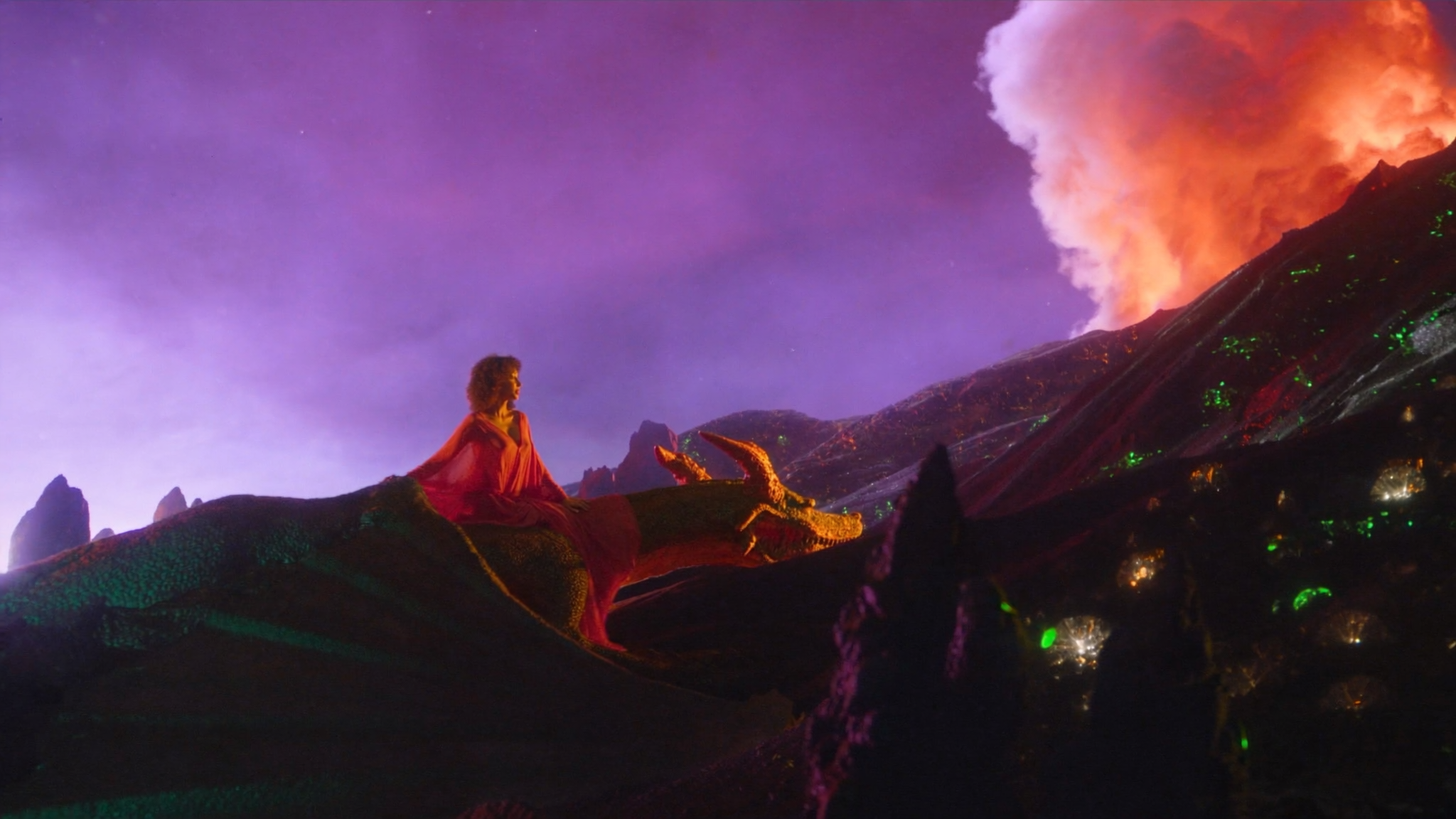
Why PixVerse V3.5 and Sora Deserve a Head-to-Head Look
AI video generation stopped being a novelty demo a while ago. Teams now use it for ad variations, storyboards, social cutdowns, music video inserts, and full short films. Once that happens, the interesting question stops being "can AI make a video?" and becomes "which model belongs in front of this specific shot?"
PixVerse V3.5 and OpenAI's Sora are two of the most discussed answers to that question, and they approach the problem from opposite directions. PixVerse leans into directable, lightweight, style-driven generation with an emphasis on motion responsiveness and camera control. Sora leans into long-take coherence, physical plausibility, and cinematic texture. Neither wins outright. They win on different shots.
This guide is a working comparison rather than a spec sheet. It covers how each model reads prompts, where each one breaks down, how to plan iteration loops, and how to combine them in one pipeline. If you want the short version: use PixVerse V3.5 for control-heavy, stylized, fast-turnaround shots, and use Sora for sustained realism and multi-shot narrative continuity.
How Each Model Reads a Prompt
Text-only prompting
Both models reward specificity, but they reward different kinds of specificity. PixVerse V3.5 responds well to compact, directive prompts: subject, action, camera, lens, lighting, pace. A prompt like "low-angle tracking shot following a skateboarder through a neon underpass, 24fps, shallow depth of field, rain on lens" gives it a clear job to do, and it usually delivers a usable take within a few attempts.
Sora responds better to descriptive, almost literary prompts. It tends to fill in environmental logic on its own, so a paragraph describing mood, setting, and continuity across a few seconds often produces a more coherent result than a keyword stack. The tradeoff is looseness. You get beautiful footage, but the exact camera move you imagined may not be the one you receive.
Image and reference conditioning
Here PixVerse V3.5 has an edge in everyday production. Multi-image reference support lets you lock a character's face, wardrobe, or a product silhouette and then animate it. That matters when a client says the bottle must look identical in every cut. Image-to-video is the backbone of repeatable commercial work.
Sora is strong at image-to-video too, especially when you want the still to breathe rather than move dramatically. It excels at subtle ambient motion: hair shifting, steam rising, light changing. If your shot needs a slow reveal with believable physics, Sora's interpretation is often more restrained and more convincing.
Multi-beat scenes
Sora handles multi-beat sequences better. If a prompt contains a turn, a reaction, and a small change of position, it tends to keep them all in order instead of compressing them into one continuous gesture. PixVerse V3.5 is happier with a single strong beat per generation, and you stitch beats together in the edit. That is not a weakness; it is a workflow choice. Short beats are easier to regenerate when one frame misbehaves.
Output Quality: Realism, Motion, and Style
Photoreal texture and lighting
Sora still holds the lead on photoreal texture. Skin, fabric, water, and reflective surfaces hold together under motion, and its lighting behaves like a real set with a real key light. For dialogue-free cinematic scenes, nature footage, or anything that needs to pass as camera-captured, Sora is usually the safer first attempt.
PixVerse V3.5 is no slouch, but its realism leans slightly cleaner and more graphic. Highlights are punchier, colors are more saturated, and the overall look reads as "premium social" rather than "documentary." For brands that want energy rather than naturalism, that is a feature.
Stylized and animated looks
This is where PixVerse V3.5 pulls ahead. Anime, painterly, comic, retro VHS, claymation, and 3D cartoon aesthetics all land quickly and consistently. Its motion responsiveness keeps fast stylized action readable, which is exactly what you want for energetic cuts, dance sequences, or abrupt comedic timing. Sora can produce stylized work, but it tends to smooth everything toward a cinematic middle.
Camera language and lens control
PixVerse V3.5 gives you more explicit direction: dolly, crane, orbit, snap zoom, whip pan, drone push, and lens choices that read as intentional. If your shot list is built around camera moves, this model respects your notes more often. Sora's camera work is elegant but more interpretive, and asking for a very specific move may require multiple attempts or external footage for reference.
Iteration Speed, Cost Planning, and Feedback Loops
Speed shapes creative decisions more than most people admit. When a generation takes seconds, you experiment. When it takes minutes, you plan. PixVerse V3.5 sits on the fast side, which makes it ideal for the messy middle of a project: testing a look, trying three wardrobe options, checking whether a camera move reads at all.
Sora's strength is fidelity per attempt, not volume of attempts. Budget your time around fewer, better-considered generations and treat each one as a real take. Practical planning advice that works regardless of which model you use:
- Decide your definition of "good enough" before you start, so you stop generating when a shot is usable.
- Keep a shot log with the exact prompt, seed behavior, and what you changed between attempts.
- Never iterate on two variables at once. Change the camera move or the lighting, not both.
- Generate your hardest shot first. If it fails, you still have time to redesign the sequence.
- Save every near-miss. A rejected take for one scene is often the perfect insert for another.
Where PixVerse V3.5 Wins in Practice
PixVerse V3.5 is the better default for:
- High-volume social content where you need ten variants by tomorrow.
- Stylized action with fast cuts, where readability beats realism.
- Character consistency across multiple clips using image references.
- Camera-move-driven storytelling, such as a single continuous push through a space.
- Client work with tight revision cycles, because each new attempt is cheap in time.
- Experimental mood pieces where the goal is energy, color, and rhythm.
Its weakness is long-form coherence. Ask it for an eight-second scene with three emotional beats and a costume change, and it will likely lose something. Break that scene into three generations and cut them together.
Where Sora Wins in Practice
Sora is the better default for:
- Photoreal establishing shots that need to feel captured rather than generated.
- Long, unbroken takes where continuity of space and light matters.
- Physical interactions: objects being lifted, water splashing, cloth folding.
- Slow, atmospheric moments where subtle motion carries the emotion.
- Narrative sequences that need to cut together with consistent world logic.
- Prestige-style brand films where texture and restraint are the point.
Its practical weakness is control granularity. When you need a precise product angle by a precise frame, you may burn more attempts than expected. Pair it with a strict edit plan and shoot extra coverage.
Choosing by Use Case
Short-form social clips
PixVerse V3.5. Vertical formats, quick hooks, bold color, and punchy motion fit its strengths. Generate six variations of the hook, pick two, and generate three endings for each. The math works in your favor because each clip is short.
Advertising and product work
Mix them. Use Sora for hero textures, lifestyle realism, and hero close-ups. Use PixVerse V3.5 for style frames, motion graphics transitions, and the fast alternate cuts the media plan needs. Keep the product geometry locked with image references in both cases.
Previsualization and storyboards
PixVerse V3.5 for volume. You can rough out an entire sequence in an afternoon, screen it, and fix the pacing before anyone books a stage. Bring Sora in only for the two or three shots that must sell the concept to stakeholders.
Music videos and experimental film
Both, deliberately. Sora gives you the slow, haunting passages. PixVerse V3.5 gives you the sudden energy spikes and stylistic collisions. The contrast becomes an editorial device rather than a technical compromise.
Training and explainer content
PixVerse V3.5, usually, because the visual language is clearer and the iterations are faster when you need to correct a confusing gesture. Reserve Sora for any segment that must look like real footage.
A Combined Workflow That Actually Ships
Step 1: Write the shot list before touching either model
List every shot with duration, purpose, and the single most important visual idea. This is the step people skip, and it is the reason their generations feel random.
Step 2: Route each shot
Mark each shot "control," "texture," or "continuity." Control shots go to PixVerse V3.5. Texture shots go to Sora. Continuity shots go to whichever model produced the surrounding footage, then get stabilized in post.
Step 3: Lock recurring elements
Create a reference folder with your character images, product stills, and palette guides. Feed the same references into every relevant generation so the edit does not feel like a clip show.
Step 4: Generate in batches, not one by one
Run all your PixVerse V3.5 control shots in one session while your prompt instincts are fresh. Then switch modes and run the Sora texture shots. Context switching is what kills momentum.
Step 5: Select with the edit in mind
Do not judge clips in isolation. Drop candidates straight onto a timeline, mute the audio, and watch them in sequence. A shot that looks mediocre alone often works perfectly as a two-second transition.
Step 6: Repair, do not restart
Most AI footage failures are framing failures, not content failures. Crop, reframe, speed-ramp, or overlay a graphic before you regenerate from scratch. A short stabilization pass and a color match can rescue more shots than you expect.
Step 7: Keep a prompt library
Every prompt that worked is an asset. Store it with a thumbnail, the model used, and one line about why it worked. Six months later that library is worth more than any single generation.
Common Mistakes That Wreck AI Video Output
Overloading a single prompt. Cramming five actions into one generation guarantees a mush of motion. One clear beat per clip, then edit.
Ignoring physical continuity. If a character holds a cup in shot one and the cup vanishes in shot two, no amount of color grading hides it. Track props across your shot list.
Chasing realism when style would serve better. A stylized, confident clip outperforms a photoreal clip with broken hands every time. Match the ambition to the shot length.
Generating without a delivery format in mind. If the final crop is vertical, generate vertical. Reframing wide footage into vertical destroys composition more often than it saves.
Treating the first good take as finished. Check the last frame. AI footage frequently degrades in the final half-second, which is exactly where your cut lands.
Skipping audio planning. Sound design is what makes AI footage feel real. Plan whooshes, room tone, and music hits before you lock picture.
Forgetting licensing and model release hygiene. If real people or branded products appear, document your sources and permissions. This is boring and it prevents expensive conversations.
Prompt Patterns Worth Reusing
A few structures consistently produce better results across both models:
- Subject + action + camera + lens + light + pace. The reliable workhorse formula.
- Constraint stacking. "No text, no logos, single subject, continuous motion" keeps generations clean.
- Negative framing. Describe what should stay still, not only what should move.
- Time markers. "At the two-second mark the camera settles" gives the model a beat to aim for.
- Texture words. Dust, condensation, film grain, brushed metal, and woven fabric all push output toward believable detail.
- Style anchors. Name a genre or era rather than an artist, and keep it consistent across a sequence.
Frequently Asked Questions
Which model is better for beginners?
PixVerse V3.5, generally. Shorter prompts produce usable results, camera direction is more literal, and faster iteration means you learn what works in an afternoon rather than a week.
Can I use both models in one project without it looking inconsistent?
Yes, if you unify color, grain, and motion blur in post, and if you keep the shot lengths short. The eye forgives style shifts more easily than physics shifts.
Do I need to write prompts differently for vertical video?
Yes. Vertical framing loses background context, so bring the subject closer and simplify the environment. Mention the orientation explicitly.
How many attempts should a single shot take?
Plan for three to six. If a shot needs more than ten, the prompt is usually asking for too much.
What is the biggest quality differentiator?
Shot length. Short clips almost always look better than long ones. If a scene needs eight seconds, consider building it from three clips.
Is one model enough for a full production?
For short social work, yes. For anything with a shot list longer than ten beats, two models will save you time and give the edit more variety.
How do I keep a character consistent across clips?
Use image references, keep wardrobe and lighting descriptions identical, and avoid dramatic camera angle changes between consecutive shots.
A Decision Checklist You Can Keep
Ask these questions before you generate anything:
- Does this shot need precise camera control? If yes, reach for PixVerse V3.5.
- Does it need to look like real captured footage? If yes, reach for Sora.
- How long is the shot, really? Under four seconds opens up both options.
- How many variants does the deliverable require? More variants favors the faster model.
- Does anything need to remain visually identical across clips? Lock references first.
- What is my repair plan if the take fails? If the answer is "start over," narrow the shot.
Treat both tools as cameras with different personalities rather than competitors to rank. One is a flexible handheld that goes anywhere fast; the other is a careful cinema rig that rewards patience. Good editors keep both in the bag, route each shot to the right one, and let the timeline do the arguing.
