
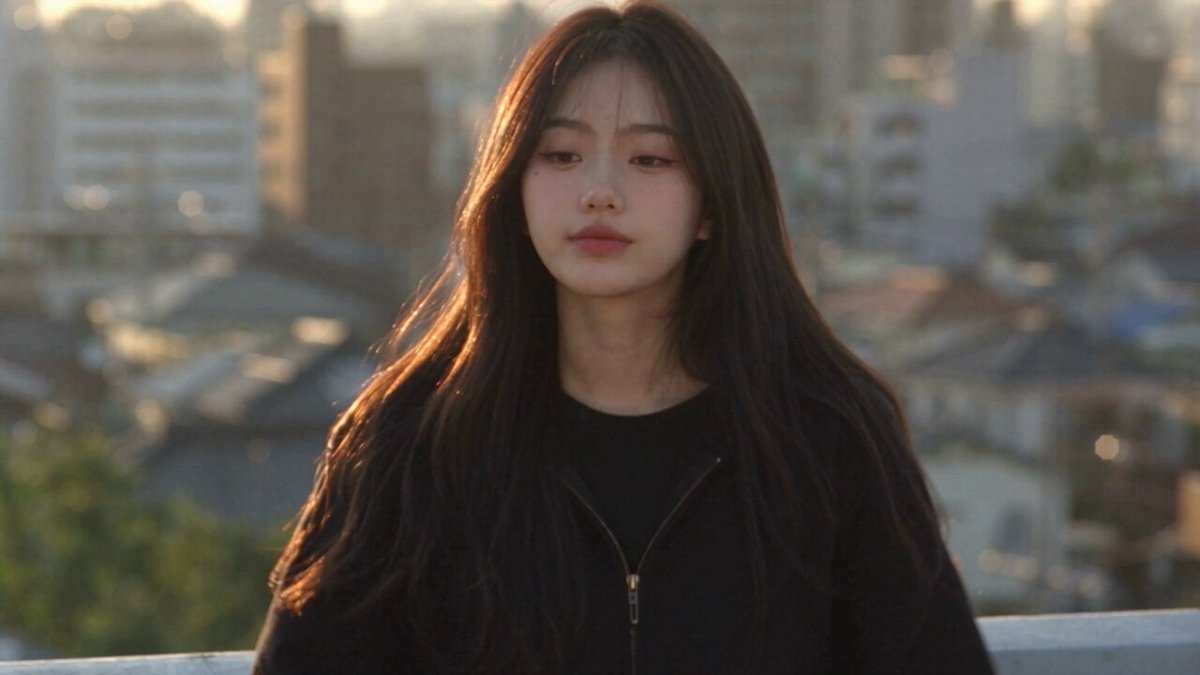
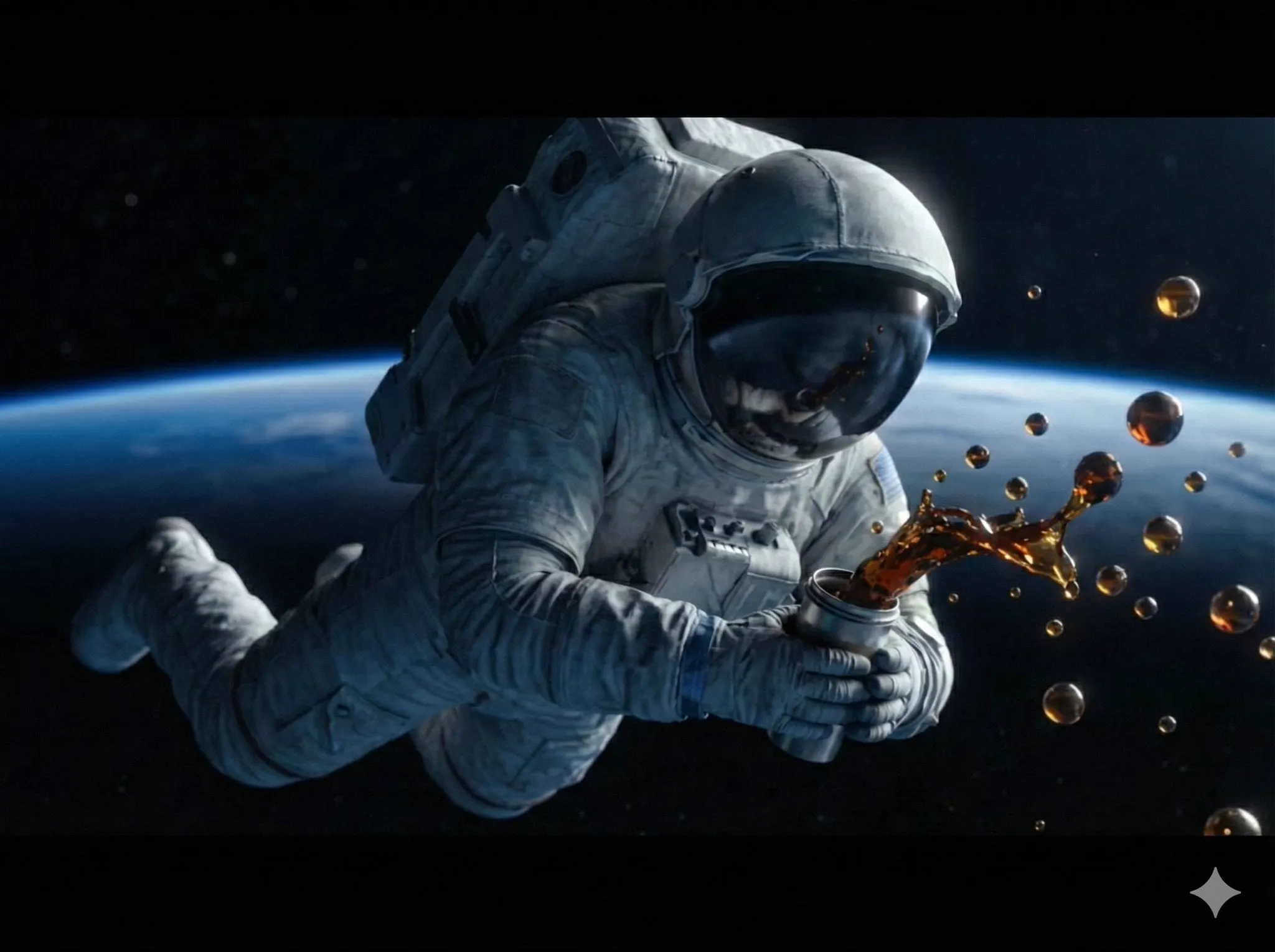
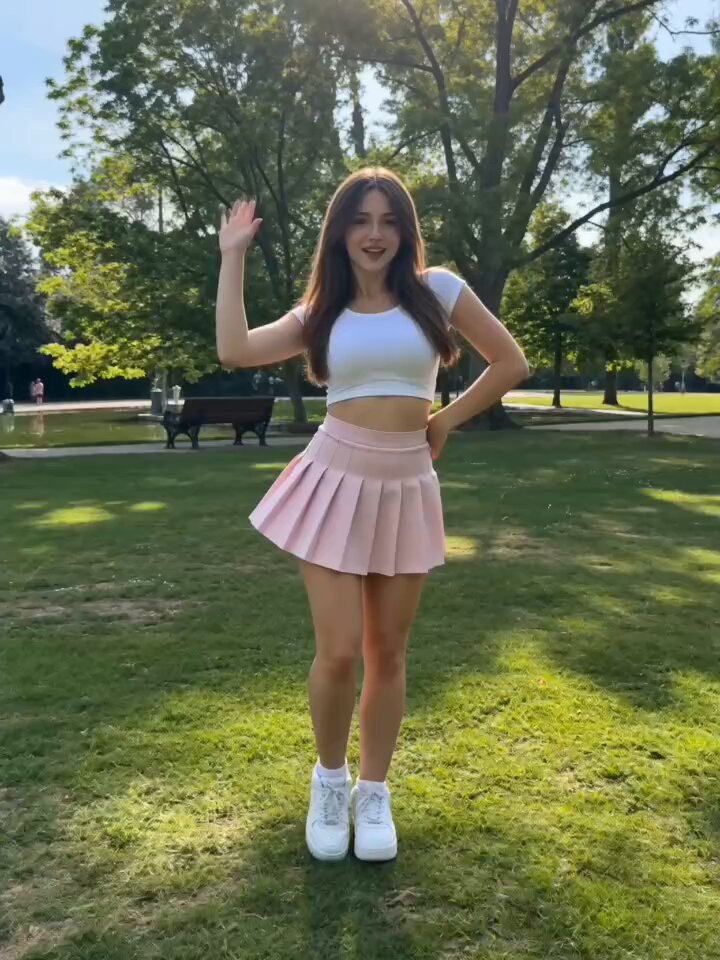
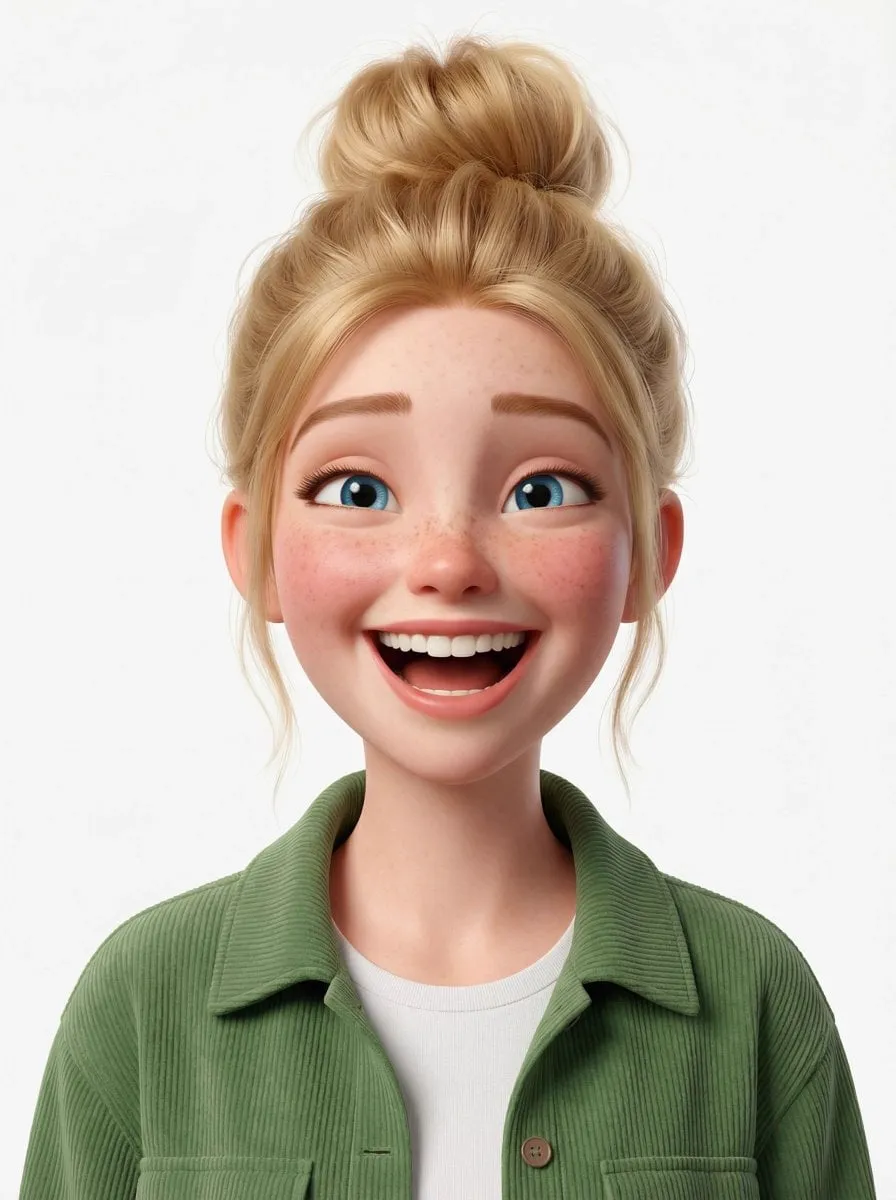
Prompting is not typing a wish into a text box and hoping a model guesses correctly. It is directing: you are describing a frame precisely enough that a machine can rebuild it, then describing a sequence precisely enough that several generated frames feel like one continuous world. Studios that produce consistently strong AI imagery treat prompts as production documents, not as throwaway phrases. They version them, reuse them, and refine them the way an editor refines a cut.
This guide walks through the whole discipline. You will learn how to structure a prompt that survives repeated generations, how to keep a character's face and wardrobe stable across a dozen shots, how to direct motion and emotion in video models, and how to diagnose the specific problems that make output look artificial. Everything here is tool-agnostic: the same principles apply whether you are generating stills, animating them, or building a full narrative sequence.
Why prompt quality is the real bottleneck
Most people assume the model limits their results. In practice, the limit is almost always the prompt. Two creators using the same model on the same day can produce wildly different output, and the difference comes down to specificity, structure, and iteration discipline.
A weak prompt leaves too many decisions to the model. When you write something like "a warrior in a desert, cinematic," the model fills in dozens of unstated variables: time of day, camera height, lens compression, skin texture, costume era, color grade, and horizon placement. Each unstated variable is a coin flip, and a sequence of coin flips produces images that look like they belong to different projects.
A strong prompt resolves those variables deliberately. It names the subject, the action, the environment, the camera, the light, and the finish. It also states what to exclude. The result is not just a better single frame; it is a repeatable frame. And repeatability is what turns generation from a novelty into a production method.
There is a second reason prompt quality matters: cost of iteration. Every generation takes time, and time is the scarcest resource in a content pipeline. A prompt that gets you to an acceptable shot in three attempts is dramatically more valuable than one that takes twenty. Good prompting is fundamentally an efficiency practice.
The anatomy of a production-ready prompt
A reliable prompt is built from layers. The order is less important than the completeness, but a consistent order helps you debug when something goes wrong, because you always know which part of the sentence controls which part of the image.
Subject and identity
Start with who or what is on screen. Be concrete about age range, build, hair, wardrobe, and any signature detail you want preserved. "A woman in her thirties" is vague. "A woman in her late thirties with shoulder-length dark hair, a faded olive field jacket, and a small scar above her left eyebrow" gives the model something to anchor to. That scar is not decoration; it is a continuity handle you can reuse in every subsequent shot to help the model reproduce the same person.
If you are working with a recurring character, write a reusable identity block and paste it into every prompt unchanged. Changing the wording changes the face. This is one of the most common causes of character drift, and it is entirely preventable.
Action and intent
The action describes what is happening at the exact moment of the frame. Use active, physical verbs: reaches, turns, lifts, braces, exhales. Vague verbs like "is standing" give the model almost nothing. Strong verbs imply posture, weight distribution, and the direction of motion, all of which the model can render.
Intent matters as much as action. "She reaches for the door handle, hesitant" produces a different body language than "She reaches for the door handle, decisive." Emotional adverbs are cheap to add and disproportionately powerful.
Environment and atmosphere
Describe the place, its scale, and its texture. "A desert" is a location; "a cracked salt flat stretching to a low ridge, heat shimmer distorting the horizon, dust drifting across the foreground" is a shot. Mention two or three environmental details rather than ten. Overloaded environments make the model distribute attention randomly, which shows up as mushy backgrounds and inconsistent props.
Camera, lens, and framing
This is the layer most beginners skip, and it is the layer that most reliably separates amateur output from professional output. Specify shot size (extreme close-up, medium, wide), camera height (low angle, eye level, overhead), and lens character (wide 24mm distortion, 85mm portrait compression, long telephoto flattening).
Movement belongs here for video: slow dolly in, handheld follow, locked-off tripod, crane rise. If you want the visual grammar of a specific genre, describe the camera behavior that genre uses. Thrillers favor slow push-ins and static frames. Action favors handheld tracking. Documentary favors naturalistic wide shots with slight drift.
Light, color, and grade
Lighting is the fastest way to change the emotional register of a frame. Name the source and the quality: hard afternoon sun with deep shadows, soft overcast diffusion, warm tungsten practicals, cold blue moonlight with a single warm rim. Then name the grade: desaturated teal shadows, warm highlights, high-contrast noir, pastel low-contrast.
If you are building a sequence, treat the grade as a locked asset. Write it once, reuse it verbatim in every prompt, and your shots will feel like they came from the same camera and the same colorist.
Format and technical constraints
Finally, state the output parameters that matter to you: aspect ratio, depth of field, motion blur, film grain, resolution intent. These are the finishing details, and they are the easiest place to be concise. A short technical tail is usually enough.
A complete prompt therefore reads something like a single dense paragraph of six layers. It is not poetry. It is a specification.
Adapting the same idea to different generation models
Different models respond to different prompt dialects. The underlying concept transfers perfectly; the phrasing does not.
Some models are trained heavily on natural-language description and reward full sentences with rich connective detail. Others respond better to comma-separated keyword stacks where each fragment is a discrete concept. Some interpret camera language literally and will actually simulate lens compression; others treat it as a stylistic hint and produce something looser.
A practical adaptation process looks like this:
- Write your prompt in full natural language first. This forces you to think through every layer.
- Generate three test images with that version.
- Compress the same prompt into a keyword stack and generate three more.
- Compare which version held the identity, the framing, and the grade better.
- Keep the winner as your template for that model.
Also learn each model's weaknesses. Some struggle with hands and text. Some over-saturate. Some drift toward a characteristic "AI look" with unnaturally smooth skin and symmetrical composition. Once you know a model's default bias, you can counteract it explicitly in the prompt with negative instructions or corrective descriptors like "visible skin texture," "asymmetric composition," or "documentary realism, uneven lighting."
Locking visual continuity across a sequence
Continuity is where AI production gets genuinely hard. A single beautiful frame is easy. Twenty frames that read as one film is a craft problem.
Reference images and character sheets
Use image references wherever the model supports them. A character sheet with three angles of the same face, identical wardrobe, and neutral lighting is worth more than any amount of descriptive text. Reference-driven generation locks identity far more reliably than adjectives do.
When you do rely on text, reuse the identity block verbatim. Do not paraphrase it, do not reorder it, and do not "improve" the wording between shots. Consistency beats elegance.
Style tokens and grade anchors
Define a small set of style tokens that appear in every prompt for a project: the grade, the lens family, the grain treatment, the lighting philosophy. Treat them as a house style. If your project is "muted earth tones, soft north light, fine 35mm grain," those seven words should appear in every single prompt without exception.
Shot-to-shot handoff notes
Keep a simple continuity sheet outside the prompts. For each shot, note the subject's wardrobe state, the props in frame, the time of day, and the direction of the light. Continuity errors in AI sequences are usually not model failures; they are planning failures. The model has no memory, so your document becomes the memory.
Directing motion, emotion, and pacing
Video prompts need everything an image prompt needs, plus a description of how the frame changes over time.
Motion verbs and speed
State what moves and how fast. "She slowly turns her head toward the window while dust drifts through the light" is a shot. "A woman in a room" is not. Include camera motion separately from subject motion so the model does not blend them into a single confusing instruction.
Speed modifiers matter: gradual, abrupt, accelerating, drifting, snapping. Use them deliberately. A slow drift reads as contemplative; a snap zoom reads as comic or aggressive.
Emotional tone
Emotion in video comes from three places: facial micro-expression, body language, and pacing. Describe all three. "Her jaw tightens, she holds still for a beat, then exhales" gives the model timing information that a simple "she looks sad" never will.
Scene transitions
If you are stitching clips, decide the transition type and generate to it. Hard cuts need matched framing and matched grade. Match cuts need a visual rhyme between shots. Dissolves need compatible movement direction. Deciding this after generation is much harder than deciding it before.
A repeatable workflow from brief to final cut
Here is a workflow that scales from a single social clip to a longer narrative piece.
- Write the brief in plain language. One paragraph describing the story, the tone, and the intended platform. Do not mention models yet.
- Break the brief into shots. A shot list with one line per shot: what we see, how the camera behaves, how long it lasts.
- Define the locked assets. Identity block, style tokens, grade, aspect ratio, lens family. These are the constants.
- Write full prompts for the two hardest shots first. Solve the difficult problems before you invest in the easy ones.
- Generate, evaluate, and log. For each attempt, note what changed and what improved. Keep the winning prompt.
- Freeze the template once it works. Port it to the remaining shots by swapping only the shot-specific layer.
- Assemble and review as a sequence, not as individual clips. Continuity problems only become visible in motion.
- Fix in post where cheaper. Slight color mismatch or a tiny framing difference is often easier to correct in an editor than to regenerate.
Step four is the one people skip. Generating twenty easy shots before testing the hard one wastes the most time in the entire pipeline.
Common prompt failures and their fixes
Character drift. The face changes between shots. Fix: freeze the identity block word-for-word and add image references.
Mushy backgrounds. The environment is vague and objects dissolve. Fix: name two or three concrete environmental details and specify depth of field explicitly.
Plastic skin and over-smoothing. The output looks synthetic. Fix: request visible skin texture, pores, uneven lighting, and documentary realism. Add grain.
Inconsistent grade. Shots do not match. Fix: lock the grade as a reusable token and never rephrase it.
Uncontrolled camera. The model invents movement. Fix: state camera behavior explicitly, including the word "locked-off" or "static frame" when you want no movement at all.
Cluttered composition. Too many elements compete. Fix: reduce the prompt to one subject, one action, one environment, and delete adjectives that do not change the image.
Wrong era or genre. Costumes and props feel anachronistic. Fix: specify decade-agnostic style markers instead of relying on the model's genre defaults — materials, silhouettes, and technology level rather than names.
Testing and versioning your prompt library
Treat prompts as assets. A simple structure works well: a project folder containing a locked-assets file, a shot list, and a prompt log where each row holds the prompt version, the output reference, and a short note on what changed.
Run controlled tests. Change one layer at a time. If you change the lens and the lighting simultaneously and the result improves, you have learned nothing reusable. Controlled iteration feels slower for the first hour and much faster for the next twenty.
Keep a personal library of patterns that reliably work: a lighting phrase that never fails, a motion phrase that produces clean movement, a negative list that kills the artifacts you hate most. Over time, this library becomes the most valuable thing you own, because it is the part of your workflow that no model update can take away.
Ready-to-adapt prompt patterns
Character portrait, controlled light. "Medium close-up of [identity block], seated, turning slightly toward camera, dark interior lit by a single warm practical lamp from the left, deep falloff into shadow, 85mm portrait compression, shallow depth of field, fine grain, muted warm grade."
Wide establishing shot. "Extreme wide shot of a lone figure crossing a wind-scoured salt flat at dusk, low camera angle near ground level, long telephoto flattening the distant ridge, cold blue ambient light with a thin warm band on the horizon, desaturated grade, subtle atmospheric haze, 35mm grain."
Motion shot with emotional beat. "Slow dolly in on [identity block], she reads a letter, her expression tightens, she holds still for a beat, then exhales and looks away, handheld micro-drift, soft window light from camera right, shallow focus, muted teal shadows, warm highlights."
Product hero shot. "Locked-off macro shot of a matte black device on a brushed concrete surface, hard raking light from the right creating a long shadow, cool neutral grade, deep blacks, visible surface texture, no reflections, clean negative space on the left for text."
Each pattern is a skeleton. Swap the identity block and the environment, keep the camera, light, and grade language intact, and you get a coherent sequence with minimal rewriting.
FAQ
How long should a prompt be? Long enough to resolve every variable that matters and no longer. Most production prompts land between forty and ninety words. Beyond that, you are usually adding adjectives that compete for attention rather than adding information.
Should I use negative prompts? Yes, when the model supports them. Keep a short, stable negative list for your project and reuse it. Do not build an enormous list; it dilutes the effect.
Why do my images look the same as everyone else's? Because you are using the same phrasing everyone else uses. Distinctive output comes from specific camera choices, unusual lighting, and locked grade language, not from more adjectives.
Can I fix a bad prompt with post-processing? Sometimes. Color, contrast, and grain are easy to correct. Composition, identity, and motion are not. Fix those at the prompt level.
How many iterations should a shot take? Three to five controlled attempts is a healthy target. If you are past ten, the prompt has a structural problem, not a detail problem. Rewrite it from the shot list.
Do I need to learn cinematography to prompt well? You need the vocabulary, not the résumé. Learning shot sizes, camera heights, lens behavior, and three-point lighting concepts will improve your output more than any model upgrade.
The pattern across every section here is the same: decide more, guess less, and lock what works. Prompting for AI images and video is a craft with rules, and the people who treat it that way are the ones whose sequences hold together.
