
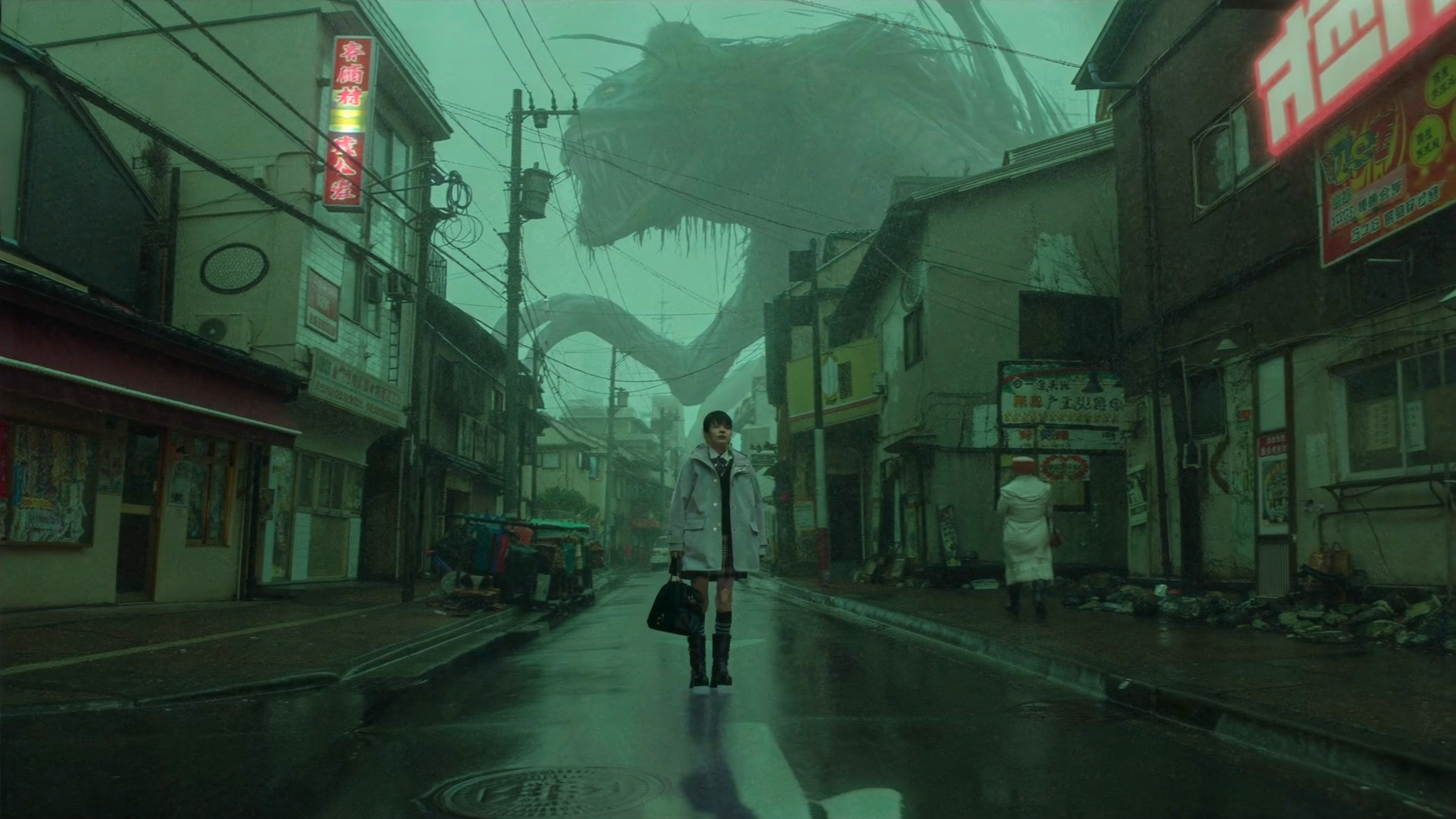

Why AI Video Now Rewards Directorial Thinking
Clip generators keep improving, but better fidelity has not removed the hardest part of the job: deciding what the camera should see, when, and why. A model can render a convincing street at dusk. It cannot decide that the street should be empty because the character feels abandoned. That decision is direction, and direction is what separates a sequence that holds attention from a pile of attractive shots.
Three shifts make this practical for solo creators and small teams:
- Model plurality. Different generators excel at different things. One handles photoreal human faces, another handles stylized motion, another handles long continuous takes. A director's job is now partly casting: matching each shot to the right engine.
- Image-to-video as an anchor. Starting from a still you control, such as a keyframe, a character sheet, or a matte painting, gives far more continuity than describing everything in words and hoping.
- Assistive agents. Several tools will now take a scene description, expand it into shots, suggest camera moves, and produce variations. These helpers are genuinely useful, but they amplify whatever clarity you bring. Vague input produces vague output, only faster.
The practical takeaway: write prompts the way a first assistant director writes a shot list. Every generation request should answer five questions - who, what, where, how it looks, and how it moves. Everything below builds on that foundation.
The Anatomy of a Director-Grade Prompt
Most weak prompts are not badly written. They are under-specified in a predictable way: they describe a subject and an action, then stop. A director-grade prompt carries five slots plus a short constraint block.
The five-slot skeleton
- Subject and action. Who is in frame, what they are doing, and in what state. Not a woman walking, but a woman in her fifties walking with a slight limp, jaw set, carrying a paper bag.
- Framing and camera. Shot size, angle, lens feel, and position relative to the subject. Medium close-up, slightly below eye level, compressed 85mm look.
- Light and color. Source, direction, quality, and palette. Single hard practical from screen-right, cool cyan spill, warm skin tones preserved.
- Motion and timing. How the camera moves, how fast, and what the movement reveals. Slow dolly in over four seconds, stopping as her hand reaches the door.
- Continuity anchor. The detail that must survive into the next shot. Same grey wool coat, same paper bag, same rain-slick street.
Then add negative constraints, but keep them narrow: the two or three things you truly never want, not a list of everything you mildly dislike. Long negative lists tend to flatten a shot because they remove texture along with the problem.
Specificity without overload
The opposite failure is the everything prompt: six characters, three camera moves, a wardrobe change, and two lighting setups in a five-second clip. Models resolve this by ignoring roughly half of what you wrote, and you cannot predict which half.
A useful rule: one primary camera behavior and one secondary detail per shot. If you need three camera moves, that is three shots, and the sequence will be stronger for it.
A worked example
Weak prompt: A detective enters a room, dramatic lighting, cinematic.
Directed prompt: Interior, narrow hotel room at night. A detective in a wrinkled tan overcoat steps through the door and pauses just past the threshold, shoulders squared, eyes scanning left to right. Medium wide shot from the far corner, camera static, 35mm look with mild barrel distortion. A single warm lamp behind him rims his shoulder while the rest of the room falls into cool shadow. He exhales once and his posture drops by a degree.
The second version costs ten extra seconds to write and typically saves two or three regeneration attempts. It also gives you a shot you can describe to a collaborator, which matters more than most people admit.
From Script Beat to Shot List
Prompting is the last mile. The work that decides whether your sequence works happens before you open a generator.
Break the scene into beats, not paragraphs
Read your scene and mark every moment where something changes: a decision, a reversal, a new piece of information, a shift in who holds power. Each change is a beat. Each beat needs at least one shot, and beats that carry the most weight deserve more coverage than beats that only move geography.
A thirty-second scene usually contains four to seven beats. If you count twelve, you are probably describing business rather than change, and the sequence will feel busy without feeling dramatic.
Assign coverage deliberately
For each beat, decide what the audience needs to see: a face, a room, a hand, a distance between two people. Then assign a shot size. A straightforward default pattern that reads well on almost any screen:
- Establish the space once, wide, early.
- Move to medium shots for dialogue and interaction.
- Use close-ups for the beat where the real decision happens.
- Return to a wider shot at the end to show the new normal.
Generate in continuity order
Generate your hero shot first: the one image that defines wardrobe, lighting, and location. Then use it as a reference for every other shot in the scene. Building forward from a fixed anchor is far cheaper than generating six shots independently and trying to reconcile them later.
Directing the Camera Without a Crew
Camera language is the part of prompting most creators underuse, and it is the fastest route to a professional feel. Two shots of the same action with different framing read as completely different storytelling choices.
Shot size and angle
Name the size explicitly, because generators interpret close-up and medium shot differently from one another and from your mental image. Useful vocabulary: extreme wide, wide, full, medium full, medium, medium close, close, extreme close. For angle, specify eye level, low, high, over-the-shoulder, or top-down. A low angle on a character entering a room implies threat or power; a high angle implies vulnerability or judgment. Say which you want rather than letting the model guess.
Movement vocabulary
Keep a short rotation of moves and use them with intent:
- Static. Underrated. Holds attention when the performance carries the shot.
- Dolly in or out. Changes intimacy or isolation without cutting.
- Tracking. Follows the subject and attaches the audience to them.
- Crane or tilt up. Reveals scale, often as a closing beat.
- Handheld drift. Adds unease or documentary immediacy.
State the duration of the move too. Slow push in over three seconds behaves very differently from push in, which the model may complete in half a second.
Lens, depth, and distortion
Describing a lens does more work than most prompt writers expect. A wide lens near the face exaggerates features and creates unease. A long lens compresses space and makes backgrounds feel intimate or claustrophobic. Shallow depth separates a subject from chaos; deep focus keeps the whole room readable. If your scene is about isolation in a crowd, a long lens with shallow depth is a faster route than writing three sentences about loneliness.
Lighting as argument
Light direction and quality carry emotional information. A single hard source creates contrast and moral clarity. Soft wraparound light creates comfort or blandness, depending on context. Practical sources inside the frame - lamps, screens, headlights - make a scene feel grounded and give you motivated color. Specify source, direction, and quality, then name one palette anchor: warm amber interior, sodium orange street, cold blue moonlight.
Holding Continuity Across Shots
Continuity is where AI sequences most often fall apart. The fix is procedural rather than clever.
Build character sheets
Create one strong reference image per character: neutral pose, even light, full wardrobe visible, face large enough to read. Reuse it as an image reference for every shot in which the character appears. Add a short written identity string to each prompt - hair, age range, distinguishing feature, clothing - and keep the wording identical across shots. Paraphrasing the same character in five different ways is a common cause of a character who looks like five different people.
Lock wardrobe, props, and set dressing
Pick two or three signature details and repeat them verbatim: a red scarf, a chipped mug, a specific wall color. These small anchors do more for perceived continuity than perfect facial matching, because audiences track objects and color more reliably than they track features.
Choose the right generation mode per shot
Use image-to-video when continuity matters and you already have a frame you like. Use text-to-video when you need to explore an idea quickly or the shot is a one-off insert. Mixing modes within one sequence is fine as long as the anchor frames come from the same visual family.
Pacing and Emotional Rhythm
A sequence is not a collection of shots. It is a rhythm, and rhythm is editable.
Shot length as punctuation
Short shots accelerate. Long shots create weight and let performance breathe. A reliable structure: establish with a longer shot, tighten through the middle as tension builds, then hold one long shot at the emotional peak so the audience cannot look away. If your edit feels flat, the problem is often uniform shot length rather than weak material.
Cut on motion and matching action
When a shot ends, look for a moment of movement - a head turn, a hand raising, a step - and place the cut there. Generators rarely produce perfect continuity, and motion hides the seam better than a static frame does. Match the direction of movement across the cut too: if a character exits frame left, the next shot should feel like it continues in that direction.
Give yourself a sound pass
AI video has no performance audio, and cuts that feel abrupt in silence often feel natural once ambience and a music bed are in place. Cut with a temporary sound design pass in mind, then refine. Do not over-trim a shot that only feels slow because it is silent.
Performance, Blocking, and Subtext
The most common note on AI-generated sequences is that the characters feel empty. The cause is almost always that the prompt described emotion as a label rather than as behavior.
Describe behavior, not feelings
She is sad gives the model nothing to animate. She looks at the empty chair, blinks once, and turns away before finishing her sentence gives it timing, eye path, and a physical action that reads as sadness without announcing it. Subtext lives in what a character does while saying something else.
Use micro-timing cues
Words that control timing are surprisingly powerful: pauses, half a beat, starts to speak and stops, glances away then back. These cues create the small irregularities that make a performance feel human rather than looped.
Block the space
Say where people are relative to each other and to the camera: standing two steps apart, neither closing the distance. Blocking communicates relationship status before anyone speaks, and it gives the model a stable spatial problem to solve, which improves output reliability.
Common Mistakes That Break AI Video Sequences
- One prompt per scene. A single generation cannot carry multiple beats. Break it up.
- Changing the character description between shots. Keep an identity string and paste it, do not retype it.
- No anchor frame. Generating blind across a sequence guarantees mismatch.
- Overloading camera moves. One primary move per shot.
- Ignoring negative space. If the frame should be empty, say so, or the model will fill it with extras.
- Fixing everything in post. Upscaling and color work can rescue a shot, not a performance or a broken cut.
- Chasing the perfect single take. Five acceptable shots edit better than one beautiful shot with nothing to cut against.
- Skipping the shot list. Improvisation works for a single clip, not for a story.
Quality Control: Keeping or Regenerating a Shot
Judging your own output is a skill, and it helps to have explicit criteria rather than a gut feeling. Score each take on four axes before deciding.
- Story function. Does the shot deliver the beat it was designed for? If not, no amount of polish saves it.
- Continuity. Do wardrobe, light, and location match the anchor frame? Small mismatches compound across a scene.
- Motion integrity. Are hands, faces, and geometry stable? Artifacts that are invisible in a still frame become obvious in motion.
- Edit compatibility. Does the shot begin and end at useful places for cutting?
Keep a shot if it passes story function and continuity, even when the image is not flawless. Regenerate when the failure is structural - wrong framing, broken motion, wrong character - and avoid regenerating only for aesthetic nitpicks, which can consume an entire session. A practical habit is to generate three variations per shot, choose one, and move on. Momentum finishes projects; perfectionism does not.
A Practical End-to-End Walkthrough
Here is how the pieces fit for a thirty-second scene:
- Write the scene in beats. Four to seven beats.
- Assign one or two shots per beat and note shot size, camera behavior, and purpose.
- Generate or source the anchor frame: the image that defines wardrobe, light, and location.
- Build a character identity string and reuse it word for word.
- Generate the hero shot first, review it, then generate outward from it.
- Produce variations for each shot, keep one, and log the prompt that worked.
- Assemble in the edit, cutting on motion, and test pacing before adding polish.
- Add ambience, music, and a light color pass so all shots sit in the same world.
Most of the quality in an AI video sequence comes from steps five through seven, not from the prompt itself. Prompting is how you execute a decision you already made.
Frequently Asked Questions
How detailed should an AI video prompt be?
Detailed enough to remove ambiguity about subject, framing, light, motion, and continuity, and no more. If two people reading your prompt would picture different shots, it is still too vague.
Should I use image-to-video or text-to-video?
Use image-to-video whenever continuity matters and you have a frame you trust. Use text-to-video for exploration, inserts, and moments where you want the model to surprise you. Most finished sequences end up mostly image-to-video with a few text-to-video inserts.
How do I stop characters from changing between shots?
Lock a reference image, write a fixed identity string, and repeat it verbatim in every prompt for that character. Also anchor two or three wardrobe details that appear in every shot, so continuity is readable even when faces drift slightly.
Why do my camera moves look chaotic?
You are probably asking for more than one move per shot, or leaving duration unspecified. Choose one primary behavior, state a rough duration, and describe what the move reveals.
Do I need a shot list for a short clip?
No. For anything with more than two shots, yes. A five-line shot list prevents the most expensive mistakes, which are continuity errors discovered during the edit.
How many variations should I generate per shot?
Three is a good default. Enough to give you a real choice, few enough to keep momentum. If all three fail the same way, the prompt is broken rather than unlucky, so rewrite it instead of generating more.
How important is editing compared to prompting?
They are roughly equal. Strong prompts give you usable material; strong editing gives that material rhythm and meaning. Many sequences that feel weak in the generator feel finished after a good cut and a sound pass.
Can I mix outputs from different tools in one project?
Yes, and it often helps, since different engines handle different shot types better. Just standardize resolution, frame rate, and color treatment early so the final edit does not feel like a patchwork.
