
Why Prompt Quality Decides the Output Quality
Generative video models do not search for footage; they interpret language and synthesize pixels from it. That single fact explains why two people using the same tool can get wildly different results. One writes "a woman walking in a city at night" and receives a mushy, generic clip with drifting anatomy. Another writes a structured, layered instruction and receives something that looks like it came off a storyboard. The model is not being temperamental. It is filling gaps, and vague prompts leave a lot of gaps to fill.
When a prompt is underspecified, the model averages across its training distribution. Faces become slightly generic, camera movement becomes an unmotivated drift, lighting becomes flat. Every missing detail is a decision handed to the model, and models are conservative by default. Detailed prompts do not just add polish; they remove ambiguity, and ambiguity is the root cause of most disappointing AI video output.
This guide walks through a repeatable method: how to structure a prompt, how to keep characters and locations stable across shots, how to iterate without losing what worked, and how to build a personal library of prompt patterns you can reuse. It is written for people making real sequences, not one-off demo clips.
The Anatomy of a Strong Video Prompt
Think of a video prompt as six stacked layers rather than a sentence. Each layer answers a different question the model needs resolved. Order matters less than completeness, but a consistent order helps you debug later: when something is wrong, you can look at the layer responsible instead of rewriting from scratch.
The six layers are subject, action, environment, camera, light and color, and style or rendering. Two optional layers sit on top: motion timing and negative constraints.
Subject and Action: The Two Non-Negotiables
Every clip needs a clear who and a clear what. "A woman" is weak. "A woman in her late thirties wearing a charcoal wool coat" is workable. "A woman in her late thirties wearing a charcoal wool coat, carrying a paper bag of groceries" is better, because it implies a story and a physical relationship between the character and an object. Objects give the model something concrete to render, and concrete renders are more stable.
Action should be singular and observable. "She contemplates her life" is not filmable. "She pauses mid-step, looks down at the bag, and shifts her grip" is filmable, and it also suggests a duration, which helps the model decide how to fill the clip.
Camera, Lens, and Movement
Camera language is the fastest way to make generated footage look intentional. Specify three things: shot size, angle, and movement. "Medium close-up, slightly low angle, slow push in" tells the model where the frame sits and how it evolves over time. Without it, you get whatever the default is.
Lens characteristics are also useful shorthand. "35mm, shallow depth of field" implies a specific compression and background blur that readers of film language understand instantly, and modern models respond to it reasonably well. If a clip looks flat and video-ish, a lens and depth-of-field instruction is often the fix.
Lighting and Color Temperature
Lighting does more for perceived quality than almost any other instruction. Name the source and the direction. "Soft window light from camera left, warm afternoon tone" is a recipe. "Cinematic lighting" is a wish. You can also specify contrast: high-key and even, or low-key with deep shadows and a single practical lamp in frame.
Color is best described with two values: a dominant tone and a temperature. "Desaturated teal shadows with warm skin highlights" is actionable. "Nice colors" is not. If you are matching a sequence, keep this layer identical across every shot, because color drift between shots is one of the most visible continuity failures in AI video.
Motion, Timing, and Pace
Clip length is fixed by the tool, but perceived pace is not. Words like slow, drifting, deliberate, snappy, or languid shape how the model distributes motion across the clip. If a clip feels frantic when it should feel calm, adding "slow, steady movement, minimal camera motion" often fixes it without any other change.
For anything that should loop, mention the start and end state and describe them as similar. Loops are fragile, and explicitly telling the model that the frame should return to its opening composition improves the odds considerably.
Style, Texture, and Rendering
This is where you set the visual era and medium. Documentary handheld, 1970s 16mm grain, clean commercial studio, stylized 3D render, hand-drawn animation. Pick one and commit. Stacking four incompatible styles produces the muddy hybrid look that reads as "AI generated" to any viewer.
Texture descriptors are more useful than genre labels. "Slight film grain, soft halation around highlights, muted contrast" communicates a look. "Cinematic" communicates almost nothing, because everyone means something different by it.
Negative Constraints and Guardrails
Telling the model what to avoid is legitimate and often necessary: no text overlays, no logos, no extra limbs, no rapid zoom, no lens flare. Keep the list short. A long prohibition list can dominate the prompt and pull attention toward the very thing you excluded.
Writing Prompts Shot by Shot
A sequence is not a long prompt. It is a series of short prompts that share a common header. The practical structure is:
- A global block describing the world: era, palette, lens family, grain, aspect ratio, overall tone.
- A per-shot block describing only what changes: subject position, action beat, shot size, camera move.
Repeat the global block verbatim in every shot. It costs a few seconds of typing and saves hours of color matching. If you find yourself editing color in post for every clip on a six-shot sequence, the global block is what is missing.
One practical tip: number your shots in your own notes, but keep numbers out of the prompt text. Models sometimes render numerals as on-screen text, and numbered instructions can be read as a request for a sequence of images rather than a single clip.
Keeping Characters and Sets Consistent Across Shots
Consistency is the hardest problem in AI video, and prompting alone rarely solves it. Prompting plus reference material usually does.
Start by writing a character sheet in plain language and keeping it frozen. Physical description, wardrobe, distinguishing features, and a short list of things that must never change. Use identical wording every time. If you describe the coat as "charcoal wool" in shot one and "dark grey overcoat" in shot three, expect the wardrobe to shift.
For sets, describe the unavoidable anchors: wall color, window position, the objects on the table. Three anchors are enough for the model to hold a space together; ten anchors overload the prompt and start to compete with the character description.
If your tool supports image or video references, use them. A single reference frame locks more consistency than a paragraph of adjectives. When references are available, the prompt's job shifts from describing appearance to describing behavior: what the character does, where the camera is, how the light falls.
The third technique is repetition across a batch. Generate five variations of the same shot and keep the one that best matches your anchors, then use that clip as the reference for the next shot. Sequences built this way drift far less than sequences built shot-by-shot from text alone.
The Iterate-and-Refine Loop
Professional AI video work is a loop, not a single prompt. The loop has four stages: draft, diagnose, isolate, and lock.
Draft with a complete but unfussy prompt. Get the composition and the action right first. Do not chase texture in round one.
Diagnose the result against your intent, one variable at a time. Is the problem the subject, the camera, the light, or the motion? Name it explicitly.
Isolate the fix. Change only the layer responsible. If the character looks wrong, do not also rewrite the lighting; you will lose the ability to tell which change helped.
Lock variables as they succeed. Keep a running version of your prompt where solved layers are marked as frozen, and only the unresolved layer is allowed to change in the next attempt.
The most common mistake in this loop is changing everything at once. It feels faster, and it destroys your ability to learn. Three disciplined iterations usually beat fifteen random ones.
Camera Language: A Practical Vocabulary
If you are new to film terminology, this table covers the terms that matter most for generated video.
| Term | What it means | When to use it |
|---|---|---|
| Wide / establishing | Subject small in a large space | Opening a scene, showing location |
| Medium | Waist-up framing | Dialogue-adjacent action, gestures |
| Close-up | Face or object fills frame | Emotional beats, product detail |
| Low angle | Camera below subject, looking up | Power, scale, menace |
| High angle | Camera above subject, looking down | Vulnerability, overview |
| Push in | Camera moves toward subject | Growing tension or focus |
| Pull out | Camera moves away | Reveal, closure, isolation |
| Tracking | Camera moves parallel to subject | Following motion through a space |
| Handheld | Slight instability | Documentary realism, urgency |
| Rack focus | Focus shifts between planes | Directing attention without cutting |
Keep one primary movement per shot. Two simultaneous camera moves are a recipe for warped geometry and unstable frames.
Prompting by Use Case
Product and Commercial Spots
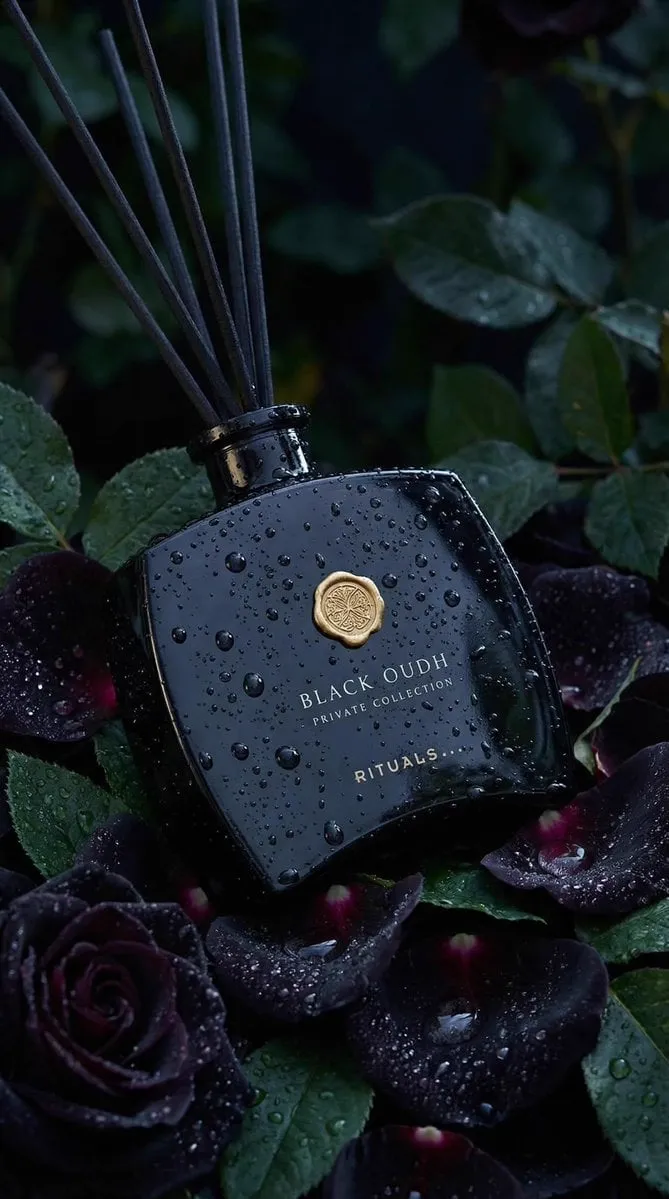
Product work rewards restraint. Specify the product, the surface, the light source, and one slow camera move. Avoid human characters unless necessary; hands and faces introduce failure modes you do not need. Texture words matter here: brushed metal, matte ceramic, condensation on glass. A single well-lit hero shot with a slow orbit often outperforms an ambitious multi-element scene.
Narrative and Character Scenes
Here, prompts should emphasize behavior and blocking rather than appearance, which stays in the character sheet. Describe where the character is in the frame, what they do with their hands, and where they look. Eye direction is surprisingly powerful: "she looks off-frame right, then back to the lens" produces readable performance beats that a generic action description never will.
Landscape, Establishing, and B-Roll
These shots are the easiest to generate well and the easiest to overcomplicate. Choose one dominant element, one weather condition, one light direction, and a slow, simple camera move. Atmospheric depth matters more than detail: mist, haze, and layering read as production value, and they hide the small inconsistencies that plague complex scenes.
Abstract and Motion-Graphics Transitions
Specify the motion geometry rather than the subject: liquid metal flowing across the frame, particles converging into a sphere, ink blooming in water. Name the palette and the speed. These prompts benefit from a slightly longer description of movement because motion is the entire subject.
Common Mistakes and How to Fix Them
Overloading the prompt. Beyond roughly 120 to 150 words, models start dropping details. If your prompt is a wall of text, cut adjectives before cutting structure.
Conflicting style words. "Photorealistic anime" produces neither. Pick a lane.
Describing emotion instead of behavior. Models render the physical, not the internal. Convert every emotion into an observable action.
Ignoring aspect ratio and framing. A vertical-first prompt in a horizontal frame crops badly. State the orientation explicitly.
Fighting the model. If a tool consistently fails at a specific motion, restructure the shot rather than issuing the same instruction louder. Two simpler shots usually beat one impossible one.
Never saving what worked. A prompt that produced a great frame is an asset. Copy it into a document with a note about why it worked before you move on.
A Repeatable Workflow From Script to Final Sequence
The process that holds up under deadline pressure looks like this. Write the script or beat sheet first, in shots, in plain language. Then build a global style block and a character or location sheet. Then prompt one shot at a time, diagnosing and isolating until each clip is acceptable. Then assemble in the editor, where you will discover that transitions matter more than you expected. Generate a few extra neutral B-roll clips to cover cuts that do not work.
Along the way, keep a prompt library. Organize it by category: lighting recipes, camera moves, texture blocks, character sheets, negative constraint lists. The library is the real output of a project, because it makes the next project faster.
Finally, budget your time honestly. Generation is fast; selection and iteration are not. Most projects spend more time reviewing clips than writing prompts, and planning for that reality keeps schedules realistic.
FAQ
How long should a video prompt be? Long enough to cover all six layers, short enough that none of them get buried. Sixty to one hundred twenty words is a practical range for most shots.
Should I write prompts in English? English has the most training data behind it and tends to be the most predictable. If you write in another language, test the same prompt in English and compare before committing.
Why does the same prompt give different results each time? Sampling randomness. Seeds help if your tool exposes them. If not, treat each generation as a variation and select rather than expecting determinism.
How many attempts should a shot take? Three to six for a well-structured prompt. If you are past ten, the prompt structure is the problem, not the model.
Do negative prompts actually work? They help with simple, concrete exclusions like text or lens flare. They are unreliable for complex concepts such as specific hand poses.
What makes AI video look amateur? Flat lighting, unmotivated camera drift, inconsistent color between shots, and prompts that describe mood instead of physical reality. Fix those four and the perceived quality jumps immediately.
Can I reuse one prompt across different tools? The structure transfers well; the specific vocabulary does not always. Keep the layers, adjust the style block per tool, and expect lens and texture terms to behave differently.
How do I handle dialogue? Describe performance and framing, generate the visual, and handle voice separately. Trying to produce lip-synced speech inside a general video prompt usually wastes iterations that are better spent on the shot itself.
