
Why Prompt Engineering Became a Brand Discipline
AI video generation stopped being a novelty somewhere around the point where anyone with a laptop could produce a gorgeous eight-second clip. The new bottleneck is not access. It is consistency. Plenty of creators can generate one beautiful shot. Very few can generate thirty shots that feel like they came out of the same studio, in the same week, without a five-person crew.
That gap is where prompt engineering becomes a brand skill rather than a technical trick. A prompt is no longer a throwaway sentence typed into a box. It is a production instruction, and like any production instruction it should be written down, versioned, reviewed, and handed to the next person who touches the project. When you treat prompts as brand assets, three things change.
First, quality stops depending on your mood. A freelancer, an editor, or a future version of you can reproduce the look because the look is described in precise language rather than remembered.
Second, iteration gets faster. When your visual signature lives in a shared library of blocks, testing ten hook variations takes an afternoon instead of a week.
Third, the feedback loop tightens. Retention data tells you which opening beat worked. Because you generated each beat from a named prompt, you know exactly what to change and what to keep.
Modern video models respond far better to context-rich, layered descriptions than to keyword lists. A prompt that says "cat, cinematic, 4k, viral" gives the model nothing to be consistent about. A prompt that describes a subject with identifying anchors, a single primary action, a specific lens, and a defined light direction gives you something you can repeat. This guide is about building that capability inside a content operation, whether you are a solo creator or a brand team shipping daily short-form.
The Anatomy of a High-Performance Video Prompt
Most disappointing generations are not caused by weak models. They are caused by prompts that try to say everything and therefore decide nothing. Structuring a prompt forces you to make choices a director would make: who is on screen, what they do, where the camera sits, and how the image feels.
The six building blocks
Every shot prompt can be assembled from six blocks. Keep them in this order and the model's attention lands where you want it.
- Subject — the person, product, or object, described with three identifying anchors. Not "a woman" but "a woman in her early thirties, short copper hair, oversized charcoal blazer."
- Action — one primary verb and, at most, one secondary verb. "Steps off a curb and glances left" is workable. "Steps off a curb, turns, laughs, opens an umbrella, and waves" is four shots crammed into one and will produce mush.
- Environment — location, time of day, weather, and background density. Specify whether the background is busy or clean; models default to visual noise when you leave it open.
- Camera — shot size, angle, movement, lens character, and frame rate. "Medium close-up, eye level, slow push in, 50mm, 24fps" is a complete instruction.
- Light and color — key light direction, contrast level, palette, and grade reference. Naming a color temperature is more reliable than naming a mood.
- Style and format — film stock or render style, grain, aspect ratio. Keep this block identical across an entire campaign.
A reusable prompt skeleton
Write your prompts as a filled-in template so nothing gets forgotten under deadline pressure.
[SHOT SIZE + ANGLE] of [SUBJECT with 3 anchors],
[PRIMARY ACTION], [SECONDARY ACTION if needed],
in [ENVIRONMENT + time of day + weather],
[CAMERA MOVEMENT] on a [LENS] at [FRAME RATE],
[LIGHT DIRECTION + contrast] with [PALETTE],
[MOOD] at a [TEMPO] pace,
[STYLE + grain + ASPECT RATIO]
Avoid: [negative list]
A filled example for a skincare brand's hero shot:
Extreme close-up, slightly low angle, of a glass dropper
releasing a single amber drop onto a matte ceramic dish,
slow motion at 120fps, on a 100mm macro lens,
soft window light from the left with deep shadow falloff,
warm sand and muted terracotta palette,
calm and precise, minimal set, no hands in frame,
photoreal, fine grain, 4:5
Avoid: text, logos, plastic surfaces, harsh specular highlights
Two rules save enormous time. Front-load the subject and action, because the first tokens carry the most weight. And never include two conflicting camera moves in one prompt. "Slow push in while orbiting" does not read as creative ambition; it reads as a broken instruction.
Build a Brand Prompt Bible
The single highest-leverage habit in AI video work is maintaining a prompt bible: one document that defines what your brand looks and sounds like in generated footage. It is boring to write and worth every minute.
Define the visual signature
Capture these decisions once, then paste them into every prompt as a fixed style block:
- Palette — three to five hex values, with one accent reserved for calls to action.
- Lens family — for example, 35mm and 85mm only, with macro reserved for product detail.
- Texture — grain amount, halation, contrast curve, or the deliberate absence of all three.
- Motion cadence — do you cut on movement or hold frames still? Are camera moves always slow, or does the brand permit whip pans?
- Editing rhythm — average shot length per format, transition rules, caption style.
- Sound identity — tempo range, instrument family, whether voiceover is warm, dry, or authoritative.
Store three reference frames beside each rule. A written rule plus a visual example removes almost all ambiguity when someone else picks up the project.
Lock characters, wardrobe, and props
Recurring characters fall apart when each prompt describes them slightly differently. Build a character sheet and reuse the description string verbatim, character for character, in every prompt where that person appears.
A useful character sheet includes: age range, build, hair color and length, one signature garment, two recurring props, gait or posture habit, and a canonical hero frame used as a reference image. Wardrobe continuity deserves its own line item, because audiences notice a jacket changing color between cuts far more than they notice a slightly different lighting setup.
When you work with a model that supports reference images or multi-image fusion, feed the hero frame alongside the text. Image guidance handles face and silhouette; text handles action and camera. Together they are dramatically more stable than either alone.
Hooks: Engineering the First Three Seconds
The opening beat decides whether anything else in your video matters. This is the part of the workflow where prompt engineering pays for itself, because hook variants are cheap to generate and expensive to get wrong.
Hook patterns that earn the scroll-stop
Each of these can be written as a short, reusable prompt formula.
Visual anomaly. Something in frame does not belong. "A pristine white kitchen, one chair balanced upside down on the counter, no people, camera locked off."
Mid-action open. Start inside a movement rather than at its beginning. "Hand already pulling a drawer open, motion blur, tight framing."
Transformation promise. Show the "after" for half a second, then cut back. "Finished product on a marble ledge, water still dripping, then hard cut to raw materials."
Direct address. A character looking into the lens and speaking. Requires strong facial fidelity and clean lip sync, so budget accordingly.
Numeric promise. A visible number in frame — three items, five mistakes, seven days. Typeface in frame beats a spoken number for silent autoplay.
Contrast pairing. Two incompatible textures or environments in consecutive shots. Neon against linen. Industrial against domestic.
Test hooks without paying for full production
You do not need finished sequences to learn which hook wins. Generate five two-second openings, cut them onto the same body, and run them as paid placements or as native tests. The winner is the one with the highest three-second hold rate, not the one you personally like most. Only after the opening earns its keep should you spend generation time on the remaining beats.
Narrative Arc in Short Form
Viral growth is not a single lucky upload. It is a repeatable structure that keeps viewers past the point where they usually leave. Short-form video rewards a four-beat arc, and each beat maps cleanly to a prompt family.
The four-beat skeleton
- Hook (0–3s): one striking image or one unfinished action. Confidence, not explanation.
- Escalation (3–12s): the stakes become specific. Show a problem, a process, or a build-up.
- Turn (12–20s): the reveal, reversal, or complication. This is where curiosity converts into retention.
- Payoff (20–30s): resolution with a visual signature — a logo treatment, a product in use, a final line of text.
For 15-second cuts, compress escalation and turn into a single beat. For 60-second cuts, split escalation into two stages so the rhythm does not flatten. Write the arc down before you write a single prompt; the prompts are easier to sequence when the beats already exist.
Prompt emotion through observable behavior
Abstract emotional words are weak instructions. "Sad" gives a model very little. Observable cues give it everything.
Instead of "sad," write "shoulders dropped, gaze lowered, slow blink, hands completely still." Instead of "excited," write "weight shifted forward, quickening steps, mouth open mid-word." Instead of "premium," write "slow deliberate hand movement, no fidgeting, camera movement under two seconds in duration." Emotion in generated video is behavior plus tempo. Describe both.
Model Selection and Shot Choreography
No single model is best at everything, and using the wrong one for a shot type is the most common reason teams conclude that AI video "is not there yet."
Match the model to the shot intent
- Talking humans and facial performance: prioritize models with strong face fidelity and integrated or companion lip-sync tools. Expect to generate short takes and cut around them.
- Action and complex motion: prioritize temporal coherence and physical plausibility. Keep prompts short and let motion verbs do the work.
- Product and tabletop macro: start from a real photograph with image-to-video. Realism is easier to preserve than to invent.
- Backgrounds, textures, and loops: use fast, inexpensive generation. These shots are never the reason someone stays, so do not over-invest.
- Dialogue-heavy scenes: generate each line separately, then assemble in the edit. Long continuous takes with speech are still the weakest area.
Keep continuity across shots
Continuity is engineered before generation, not fixed afterwards. Four habits carry most of the load:
- Paste the identical character description string into every prompt where the character appears.
- Reuse the identical lighting and palette block across a scene, changing only the action and camera lines.
- Maintain a shot list with scene and shot IDs, and name output files to match. Untraceable files are where consistency dies.
- Apply the final grade once, in the editor, across all shots. Letting each generated clip carry its own slightly different color cast makes a sequence look assembled from stock footage.
Iteration Loops and Metrics
Prompt refinement without measurement is just taste. Track a small set of numbers so you know whether a change helped.
Metrics that matter
- Three-second hold rate — the truest hook score.
- Average view duration and completion rate — whether the middle beats hold attention.
- Saves and shares per thousand views — the strongest signal of perceived value.
- Comment sentiment — are people talking about the brand or about the AI?
- Brand recall in post-campaign surveys — the only number that proves branding worked.
- Keep rate — usable clips divided by generated clips. Improving this cuts production time more than anything else.
- Cost per published second — the honest efficiency measure that includes failed generations.
Debugging weak outputs
When a generation misses, walk this checklist rather than rewriting the entire prompt:
- Two conflicting motion verbs in one sentence
- A camera move that is physically impossible for the described lens
- Subject described with fewer than three anchors
- A prompt longer than roughly 120 words, diluting attention
- Style references that contradict the palette block
- Model mismatch — a dialogue shot sent to an action-optimized model
- Aspect ratio specified twice with different values
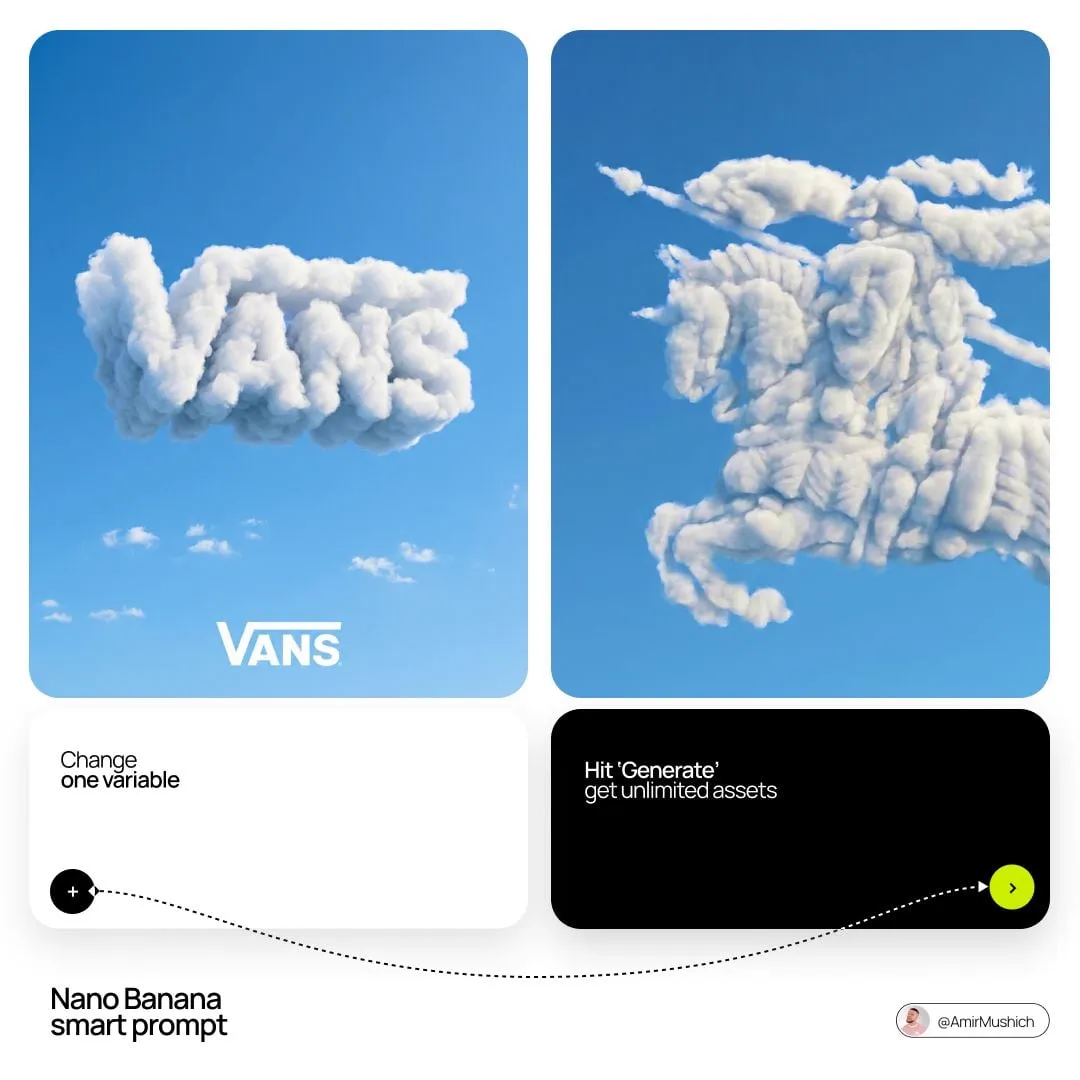
Fixing one variable at a time is slower per attempt and faster overall. Change two things at once and you learn nothing about either.
Common Mistakes and How to Avoid Them
Chasing every new model. Cap yourself at two or three generation tools per quarter. Tool-hopping resets your intuition and destroys continuity.
Rewriting prompts from scratch each time. Build blocks. Reuse them. The style block should be copy-pasted, not reinvented.
Overloading the first shot. A hook is one idea. Adding a second idea halves the impact of both.
Treating generation as the whole job. Editing, sound design, and captions still determine retention. Generated footage without a sound pass feels unfinished because it is.
Ignoring audio prompts. Ambience, tempo, and dialogue tone can be specified. Silent planning leads to generic sound beds.
Never documenting what worked. Keep a running log of prompts that produced top-performing videos, with the metrics attached. That log becomes your most valuable creative asset.
Letting the AI set the brand tone. Models drift toward a house style of their own. Your palette, lens, and tempo constraints are what keep the output yours.
Skipping the reference frame. When image guidance is available, using it is almost always faster than describing a look in words.
A Practical Workflow: From Brief to Published Cut
Here is a workflow that holds up under a weekly publishing schedule.
- Write the beat sheet first. Four beats, one sentence each, for a 30-second cut.
- Fill in the prompt skeleton for each shot using the brand style block.
- Generate hook variants. Five openings, same body, minimal cost.
- Test the hooks as paid placements or thumbnail tests. Pick by hold rate.
- Generate the winning sequence shot by shot, keeping character strings identical.
- Assemble in the editor. Cut for rhythm, then apply one unified grade.
- Add sound design and captions. Ambience first, music second, voice last.
- Publish, then log the metrics against the exact prompts used.
- Refine one variable per cycle. Palette, tempo, shot length — one at a time.
- Archive the winning prompts into the bible at the end of every month.
Run this loop three or four times and the workflow stops feeling like experimentation. It starts feeling like a production line that happens to be creative.
FAQ
How long should a video prompt be?
Most effective prompts land between 60 and 120 words. Below that you leave decisions to the model; above that attention dilutes and contradictions creep in. Use the skeleton to keep length disciplined.
Do I need a different prompt style for every model?
You need different length tolerances and different camera vocabulary, but your brand style block stays the same. Write the block once, then adapt the camera and action lines per model.
How do I keep a character consistent across many clips?
Three things together: an identical description string, a canonical reference image, and consistent lighting. Text alone drifts; image guidance alone drifts on action. Combined, they hold.
What is a realistic keep rate for generated clips?
Early on, expect a small fraction of generations to be usable. With a defined style block and shorter prompts, that improves substantially. Track it as a metric rather than guessing.
Should I write prompts in one language or several?
Write in the language your audience hears on screen. If captions and voiceover are in one language, keep prompt keywords in that language for tone, and keep technical camera terms in whichever language your team understands fastest.
How often should the brand prompt bible change?
Review quarterly. Between reviews, change one variable at a time and log the result. Constant rewriting prevents you from ever attributing performance to a cause.
Can this workflow scale to a team?
That is its main advantage. Written prompts, named files, and a shared reference library let several people produce footage that cuts together as if one person made it.
What matters most if I only fix one thing?
Specify the camera and light in every prompt. Those two blocks do more for perceived quality and brand consistency than any other part of the instruction.
