
Why Prompt Craft Is the Real Skill in AI Video Production
Every few months a new generative video system arrives with better motion, sharper detail, and longer shot lengths. The interfaces differ, the marketing differs, but the underlying job is identical: describe the shot you want clearly enough that a model renders something usable within a couple of attempts. That is why prompt craft has become the durable skill in AI video production. Models are replaceable. A well-built shot description is not.
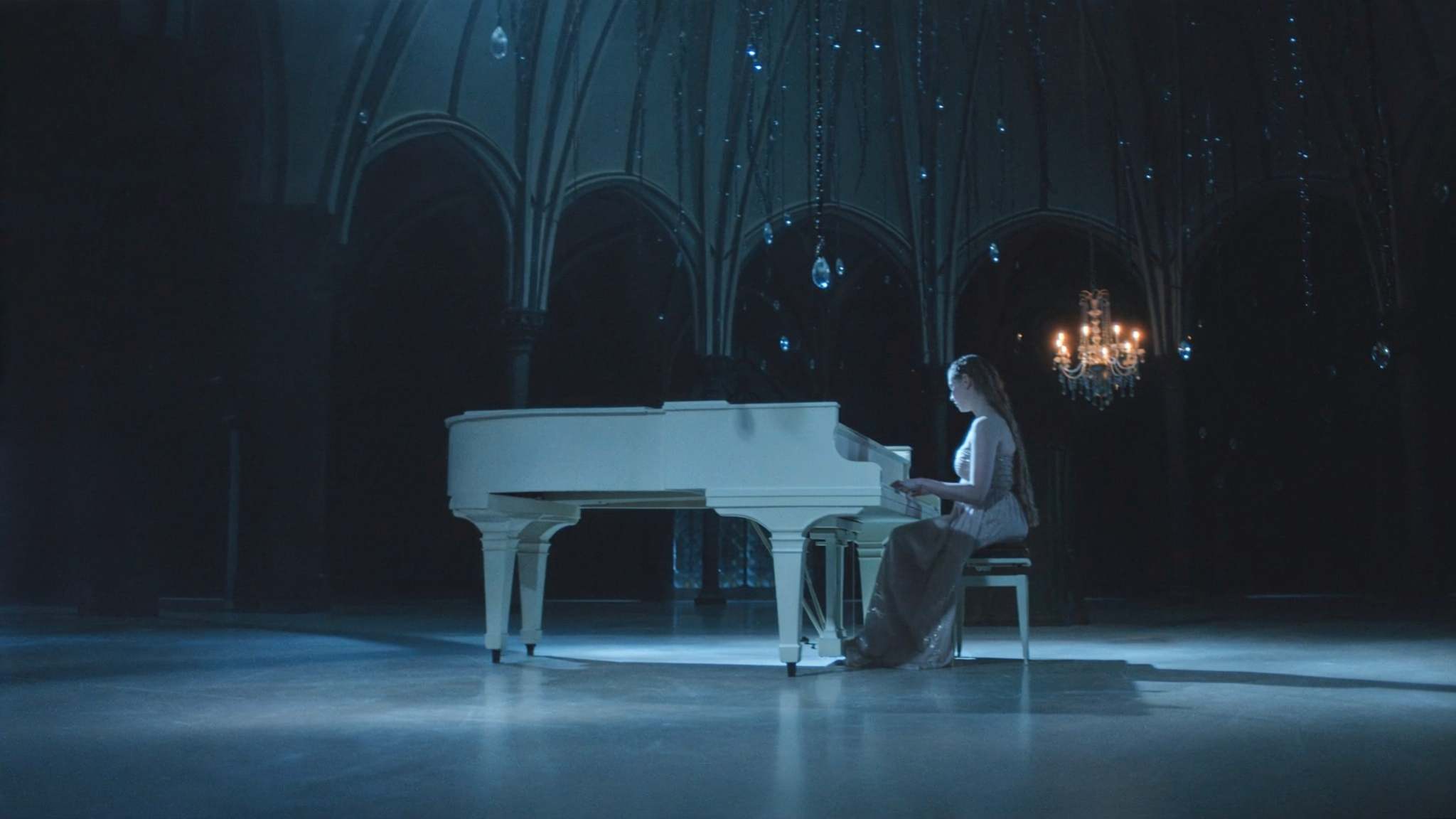
A video prompt is not a caption. A caption labels an image after the fact. A prompt is a compressed screenplay fragment, a shot-list entry, and a lighting plan rolled into one paragraph. If you write "a woman walking in a city at night, cinematic," you are asking the model to make dozens of decisions on your behalf, and it will make them inconsistently from generation to generation. If you write "wide shot, a woman in a charcoal wool coat walks toward camera along a wet cobblestone street, neon signage reflecting in puddles, 35mm lens, shallow depth of field, slow dolly-in at walking pace, cool cyan shadows with warm sodium highlights," you have taken most of those decisions back.
The practical difference shows up in the edit. Prompts that specify camera, light, and motion produce clips that cut together. Prompts that lean on mood adjectives produce beautiful isolated clips that refuse to sit in a timeline next to anything else. This guide covers structure, vocabulary, iteration workflow, model selection, and the failure modes that waste the most time.
The Anatomy of a Production-Grade Video Prompt
A reliable prompt has six layers. You do not have to write them in this order, but you should know which layer is missing when a generation goes wrong. When a clip looks flat, the problem is usually the light layer. When it feels static, the problem is the camera layer. When it feels generic, the style layer is too thin.
Subject and wardrobe
Describe who or what is on screen with one or two distinguishing details. Specificity beats superlatives: "a 40-year-old marine biologist in a salt-stained field jacket" gives the model more to work with than "a beautiful scientist." Wardrobe matters more than faces because clothing survives re-renders and keeps a sequence visually coherent.
Action and timing
Video models need a verb. Even a subtle one. "She kneels at the tide line, lifts a sample jar toward the light, pauses, then rises" gives the system a beginning, a middle, and an implied end. Add pacing words such as slowly, in one continuous motion, or with a brief hesitation. Avoid stacking three unrelated actions into a five-second shot; the model will compress them into mush.
Environment and atmosphere
Name the place, the time of day, and one atmospheric element. "Abandoned indoor swimming pool, late afternoon, dust suspended in shafts of light through broken skylights" is far more renderable than "creepy pool." Atmosphere is where weather, particles, haze, and background activity live. Keep background activity simple so it does not compete with the subject.
Camera and movement
This layer is the one most beginners skip and the one professionals never omit. State the shot size, the angle, and the movement in plain terms: wide shot, eye level, slow dolly-in at walking pace. Or: medium close-up, slight low angle, handheld with micro-jitter, gentle push in. One camera instruction per shot. Two competing moves produce wobble that reads as a rendering error rather than a creative choice.
Lens, light, and grade
Lens language tells the model how to render depth and distortion. "24mm wide angle with strong perspective" feels documentary; "85mm portrait lens, compressed background, creamy falloff" feels intimate. Lighting terms do the emotional work: soft overcast diffusion, hard single-source key, rim light from a window, practical neon mixed with moonlight. Finish with a grade: warm highlights and cool shadows, muted desaturated palette, high-contrast bleach bypass look.
Technical parameters
Lock the format before you fall in love with a clip. Aspect ratio, duration, frame rate feel, and motion intensity all belong here. A 9:16 vertical clip with the same prompt as a 2.39:1 anamorphic shot will frame the subject completely differently, so decide the delivery format first.
A complete prompt, assembled:
Medium wide shot, eye level, slow dolly-in at walking pace.
A woman in her late thirties, charcoal wool coat, dark hair tied back,
walks toward camera along a wet cobblestone street after rain.
European old town at night, neon signage reflecting in puddles,
light steam drifting from a vent in the background.
Hard rim light from a shop window camera-left, cool cyan shadows,
warm sodium highlights, 35mm lens, shallow depth of field.
Muted cinematic grade, subtle grain.
16:9, 8 seconds, 24 fps feel, natural motion, no camera shake.
Read that aloud and you can picture the shot. That is the test.
A Reusable Prompt Template You Can Iterate On
Professional prompt work is a testing loop, not a writing exercise. Build one template, then change a single variable per generation so you can attribute the difference to something real.
The template:
[shot size + angle] + [subject + wardrobe] + [action + pacing] + [environment + time of day + atmosphere] + [lighting] + [lens] + [grade] + [technical parameters]
The loop:
- Write a baseline prompt you would accept as "good enough" for the shot.
- Generate three variations that differ only in the camera layer.
- Pick the strongest framing, then run three more that differ only in lighting.
- Freeze the winning combination and reuse it as the style anchor for the rest of the sequence.
- Keep a prompt log: one line per generation, noting what changed and what improved.
- Only then start experimenting with style adjectives and grade.
Most creators invert this order. They start by stacking mood words, get a lucky result, and cannot reproduce it because they changed six things at once. Order of operations is the difference between luck and craft. Also keep a short list of negative instructions in every prompt: no text overlays, no warped hands, no extra limbs, no jump cuts, no flicker. Negative guidance is cheap insurance and varies less between models than positive style language does.
Keeping Style Consistent Across a Sequence
A single impressive clip is a demo. A sequence of clips that feel like they belong to the same film is a deliverable. That requires a style bible: five to eight exact phrases that never change between shots.
A workable style bible might read: "35mm film emulation, subtle halation in highlights, desaturated greens with warm skin tones, documentary naturalism, light 16mm grain, soft contrast in shadows." Copy that string verbatim into every prompt in the project. Do not paraphrase it. Models treat "muted film look" and "desaturated filmic grade" as different requests, and the drift compounds across ten shots until the sequence looks like a mood board rather than a film.
Two supporting techniques help:
- Reference frames. If a model supports image-to-video or image conditioning, generate one hero frame per scene and drive every shot in that scene from it. The reference does more for consistency than any adjective.
- Seed discipline. When a model exposes a seed, reuse it for all shots in a sequence and vary only the prompt content. This keeps texture and grain family resemblance intact.
Consistency is also a lighting problem. If shot one is overcast and shot two is golden hour, no amount of style tokens will make them match. Write a one-line lighting plan for the sequence and hold it steady unless the story requires a change.
Motion Control: Describing Movement a Model Can Actually Render
Motion is where AI video most often disappoints, and almost always because the prompt asked for too much. The rule is one primary motion per shot, with optional secondary motion that supports it.
Use concrete verbs with speed qualifiers: walks at a steady pace, slowly turns her head, lifts a hand toward the lens, wind pushes fabric left to right. Vague instructions like "dynamic energy" or "emotional movement" give the model nothing to simulate. Emotional intent belongs in the performance description, not the motion description: "she pauses, jaw tightening, before answering" is better than "she looks tense."
Practical motion rules:
- Match duration to complexity. A slow push-in reads well over eight seconds. A complex action with three beats needs ten seconds or a cut.
- Separate camera motion from subject motion. State them in different sentences so the model does not blend them into a single wobble.
- Watch physics boundaries. Liquids, cloth, fire, and crowds are the hardest elements. If your shot depends on them, budget more iterations.
- Keep motion intensity honest. If the model exposes a motion strength setting, high values amplify artifacts as readily as they amplify movement.
When a shot keeps failing, simplify rather than adding words. Cut the secondary motion, reduce the number of people on screen, and lock the camera to a static frame. A clean static shot beats a broken dynamic one every time.
Character Consistency and Reusable Assets
Recurring characters are the hardest consistency problem in generative video, and the solution is boring: a fixed description block.
Write three sentences describing your character and never change a word of them. Include age range, build, hair, one distinguishing feature, and wardrobe. Then use a placeholder-style name in every prompt so the model has a stable anchor: "MAYA, a woman in her early thirties, short copper hair, small scar above the left eyebrow, olive canvas jacket." Repeat that block verbatim across shots. Pronouns invite drift because the model has to infer who "she" is.
Add these habits:
- Lock wardrobe per scene. A jacket change between shots breaks continuity faster than a face change.
- Generate a character sheet first. Two or three reference stills from different angles give you something to condition on and something to check against.
- Do not describe camera and character in the same sentence. Keep the character block pure so it can be copy-pasted safely.
- Accept a costume change as a cut. If consistency keeps failing, write the sequence so the character changes clothes at scene boundaries. Audiences forgive a cut; they do not forgive a morphing face.
Choosing and Tuning a Model for the Shot
Different systems are good at different things, and matching the shot to the model saves more time than any prompt tweak. Rather than chasing a single best tool, keep two or three in rotation and route shots to them.
| Shot need | What to prioritize when choosing |
|---|---|
| Long, dialogue-adjacent takes | Maximum duration, stable pacing, lip and head motion fidelity |
| Fast action and impacts | Physics plausibility, motion coherence at high speed |
| Product and text on screen | Legibility of lettering, minimal warping on flat surfaces |
| Stylized animation | Style obedience, consistent line weight, palette loyalty |
| Realistic natural environments | Foliage, water, and crowd behavior, atmospheric depth |
| Vertical social edits | Native aspect ratio support, subject tracking in tall frames |
Once a model is chosen, tune within its dialect. Some systems respond well to comma-separated tag lists, others parse full sentences, and others weight early words more heavily than late ones. Run the same three test prompts on any new model before committing a project to it: a static portrait with lighting detail, a walking shot with camera motion, and a wide environmental shot. Those three tests reveal more than a feature page.
Also plan your iteration budget in time, not in hope. Assume the first attempt is a draft, the third is usable, and the sixth is good. Sequence your work so you are never waiting on one stubborn shot while everything else is finished.
Common Mistakes and How to Fix Them
Vague mood stacking. "Epic, cinematic, stunning, dramatic" tells the model nothing actionable. Fix: replace each adjective with a camera, lighting, or grade instruction.
Competing camera moves. "Dolly in while orbiting and zooming out" guarantees a distorted result. Fix: one move per shot, stated in one clause.
Inconsistent style strings. Small wording changes across shots cause visible drift. Fix: store your style bible in a text file and paste it verbatim.
Overstuffed action. Three story beats in a six-second clip produce a blur. Fix: one beat per clip and let the edit carry the rest.
Ignoring delivery format. Generating a widescreen masterpiece that must be cropped to vertical ruins composition. Fix: write the aspect ratio into the first line of the prompt.
No negative guidance. Unwanted artifacts appear repeatedly. Fix: append a short, stable negative list to every prompt.
Never logging results. Without a log, you cannot tell which change worked. Fix: one line per generation, listing the variable you changed.
Treating one good clip as a finished scene. Fix: generate the whole sequence before declaring success, then check continuity at the cut points.
An End-to-End Production Workflow
- Write the shot list in plain language. One row per shot: size, subject, action, location, duration. No AI vocabulary yet.
- Define the style bible and lighting plan. Five to eight style tokens, one lighting sentence per scene.
- Build the character block. Three fixed sentences per recurring character, plus reference stills.
- Assemble prompts from the template. Mechanical work, done in a batch so the structure stays identical.
- Run three model tests if you are on an unfamiliar system, then route each shot to the model best suited to it.
- Iterate one variable at a time, logging every generation until the shot is acceptable.
- Assemble a rough cut early. Editing reveals continuity problems faster than staring at individual clips.
- Repair only what the edit exposes. Do not polish shot twelve before you know whether shot twelve survives the cut.
FAQ
How long should a video prompt be?
Long enough to cover all six layers, short enough to read in one breath. Most professional prompts land between 40 and 90 words. If yours runs to 200 words, you are probably describing two shots.
Do I write prompts in sentences or keyword lists?
Test both on your current model. Many modern systems handle natural sentences well and reward grammatical clarity, while others respond better to comma-separated tags. Whichever wins, keep the order of layers consistent.
Why does my character change between shots even with the same description?
Usually because the description is not identical, or because clothing, lighting, and lens changed along with the scene. Lock the character block, lock the wardrobe per scene, and use a reference frame wherever the model supports one.
How many generations should a shot take?
Plan for three to six. Shots involving water, fire, crowds, or precise hand interaction can take more. If a shot passes ten attempts, simplify the shot rather than rewriting the prompt again.
Can I reuse one prompt across different models?
Reuse the structure, not the exact string. Keep your layer order and style bible, but expect to adjust phrasing, duration limits, and negative instructions for each system.
What is the fastest way to improve at prompting?
Keep a log and change one variable at a time. Ten logged experiments teach more than a hundred random generations, because they turn intuition into a repeatable process you can hand to a collaborator.
