

Why One-Shot Talking Heads Are Reshaping Remote Meetings
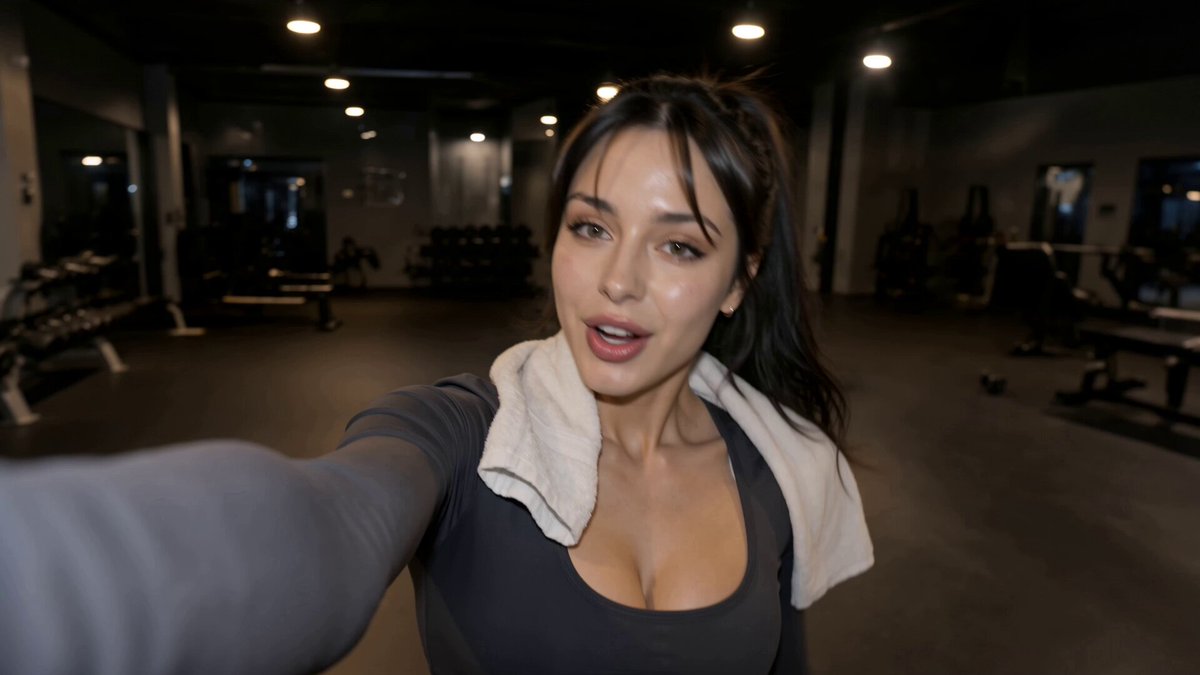
A talking-head model takes a single still photograph of a person and turns it into a moving, speaking face. Feed it an audio stream and it produces lip movement, blinks, micro-expressions, and head motion that track what is being said. When that whole loop runs faster than a human can notice, you get something that behaves less like a rendered video file and more like a live camera feed. That is the promise of real-time AI face synthesis, and it is why the technology keeps showing up in conversations about the future of video conferencing.
For most of the past decade, building a convincing digital double required a studio session, dozens of camera angles, and hours of training footage. The shift to one-shot methods changed the economics entirely. You no longer need a dataset of the person you want to animate — you need one well-lit frame. That single constraint removal is what makes personal avatars practical for everyday meetings rather than just for film production.
The practical result is a set of workflows that were not possible before: a presenter recording an async update without turning on a camera, a multilingual team member speaking in a language they do not fluently pronounce, a support engineer running a live demo with a stable, professional on-screen presence even from a hotel room with bad lighting. None of these are gimmicks. Each one solves a real friction point that remote teams complain about constantly.
This guide walks through how one-shot talking-head synthesis works, what a realistic real-time pipeline looks like, how to run it in an actual meeting without embarrassing yourself, and what to do when the mouth drifts out of sync or the face starts to melt.
How One-Shot Talking-Head Synthesis Actually Works
It helps to separate the pipeline into three layers, because each one fails in a different way and each one has different tuning levers.
Single-image face reconstruction
The core trick is that the model never truly "learns" the individual. Instead, it learns a general space of human faces — geometry, skin texture, lighting response, expression dynamics — and then, at inference time, projects your single reference frame into that space. The reference image acts as an identity anchor. Everything the model generates afterward is constrained to stay near that anchor.
This is why reference quality matters so much more than reference quantity. A sharp, front-facing photo with even lighting and a relaxed neutral expression gives the model a clean anchor. A blurry group photo cropped at an angle gives it a contradictory one, and the model will fight itself for the entire call. Meta-learning and few-shot fine-tuning help close the gap, but they cannot invent detail that was not captured.
The identity anchor is also what preserves character consistency across an entire session. Without it, small errors accumulate frame to frame and the face gradually drifts toward a generic average. With it, each generated frame is pulled back toward the reference, which is why the person on screen still looks like the same person after forty minutes.
Audio-to-visual synchronization
The second layer converts sound into visible articulation. The model analyzes the incoming audio, estimates the phonemes being spoken, maps them to visemes — the visible mouth shapes that correspond to those sounds — and then predicts the facial pose that would produce them. Good models do not stop at the mouth. They also drive jaw movement, cheek compression, eyebrow raises, and blink timing, because a face where only the lips move reads as uncanny almost immediately.
The hardest part is co-articulation. Real speech does not produce clean, discrete mouth shapes; it blends them. The "b" in "button" and the "b" in "bought" look different because the following vowel reshapes the lips before the consonant finishes. Models that treat phonemes as independent units produce a mechanical, puppet-like cadence. Models that predict continuous blends look natural even when the underlying audio is noisy.
Latency lives here too. Every millisecond spent analyzing audio and predicting the next frame is a millisecond of visible delay between the sound reaching the audience and the mouth moving. Under roughly 100 milliseconds of end-to-end delay, most viewers do not consciously notice. Past about 200 milliseconds, the mismatch becomes the thing people remember about the call.
GPU optimization and the infrastructure layer
Real-time synthesis is an infrastructure problem disguised as a graphics problem. Generating a single frame at meeting resolution is not hard; generating thirty to sixty of them per second, consistently, with headroom for the rest of your applications, is where engineering effort goes.
Useful optimizations include frame interpolation to raise perceived frame rate without generating every frame from scratch, temporal caching so that static regions of the face are not recomputed, resolution scaling that renders the face at full detail and the background at lower detail, and batching strategies that keep the GPU pipeline saturated instead of stalling between requests. On the serving side, the choice between local inference on a workstation GPU and remote inference on a cloud instance is really a choice between predictable latency and predictable cost. Local gives you the lowest jitter but locks you to one machine. Remote gives you flexibility but adds a network hop that you must budget for.
Choosing Your Setup: Decision Criteria That Actually Matter
Before you install anything, decide what you are optimizing for. The three common goals pull in different directions.
If you optimize for latency, prioritize a local GPU with sufficient VRAM, a wired network connection, and a reference image that is already cached and preprocessed. Avoid dynamic background replacement, which forces additional per-frame work. Accept slightly lower output resolution — 720p at a smooth frame rate reads better on a call than 1080p that stutters.
If you optimize for realism, spend your budget on the model side: temporal consistency handling, expression range, and a high-quality reference capture. Realism is usually limited by the reference image, not by the model's ceiling.
If you optimize for scale, meaning many sessions or many participants, think about GPU sharing, queueing, and whether each concurrent avatar needs its own dedicated slice of compute. A single workstation can typically drive one high-quality avatar comfortably; driving four simultaneously requires deliberate resource planning.
Hardware baseline, in practical terms: a modern discrete GPU with at least 8 GB of VRAM for 720p real-time work, 12–16 GB if you want headroom or higher resolution, a CPU that will not bottleneck audio preprocessing, and 16 GB of system RAM minimum. Storage speed matters less than people assume, but it does affect how quickly you can swap between reference images.
Software-wise, you want a pipeline that exposes its latency budget rather than hiding it, supports a standard virtual camera output so any conferencing app can consume it, and logs sync drift so you can diagnose problems after the fact instead of guessing during a call.
Running a Live Meeting: A Step-by-Step Workflow
Step 1: Capture a reference frame worth using
Set up a light source in front of the face, not behind it. Shoot at eye level. Keep the expression neutral and the mouth closed. Use the highest resolution you can, then crop to a head-and-shoulders frame. Check the eyes are sharp — if they are soft, every generated frame will inherit that softness. If the person wears glasses, decide up front whether to include them; removing them later is not something the model does gracefully.
Step 2: Prepare the audio path
Route your microphone through a noise suppressor before it reaches the synthesis engine. Models trained on clean speech degrade quickly on keyboard clatter and HVAC hum. Test the chain with a thirty-second recording before you trust it live. If you are dubbing or translating, generate the final audio track first and synthesize against that track, not against your live voice.
Step 3: Calibrate sync and expression range
Run a calibration clip that includes plosives, sibilants, and long vowels. Listen for drift and watch for over-articulation. Most tools expose a small number of parameters: expression intensity, smoothing, and sync offset. Raise intensity until the face stops looking flat, then back off one notch — slightly under-expressive reads better than theatrical.
Step 4: Rehearse with the virtual camera on
Join a test meeting with the avatar running and record it. Watch the recording, not the live preview. Live previews hide latency because your brain compensates for what it is seeing in real time; the recording does not lie. Look for lip drift, frozen eyes, and moments where the head pose locks in place.
Step 5: Have a fallback one keystroke away
Every real deployment needs an escape hatch. Bind a key that toggles the avatar off and returns to your camera or a static image. If the GPU gets starved by a screen share, or the model starts producing artifacts, you want to disappear gracefully rather than freeze mid-sentence.
Quality Control Checklist Before You Go Live
- Face is centered, eyes are sharp, and lighting is even across the forehead and cheeks.
- Mouth movement leads or matches audio within roughly 100 ms in a recorded test.
- Blink rate looks human — roughly every three to five seconds, not metronomic.
- Head pose shifts slightly during speech; a locked head reads as a still image with a moving mouth.
- Background is stable and does not shimmer between frames.
- Audio input is gated so that silence does not produce phantom mouth movement.
- Frame rate stays above 24 fps for the whole test recording, with no long stalls.
- The virtual camera is visible to your conferencing app before the meeting starts, not during.
Common Failure Modes and How to Fix Them
Lips drift progressively out of sync. This is almost always an audio buffering issue rather than a model issue. Reduce the audio buffer size, and if you are running remote inference, check whether the network is adding jitter. A fixed offset adjustment can hide a constant delay but will make a variable delay worse.
The face looks waxy or over-smoothed. Your reference image likely has heavy beauty filtering or was upscaled from a low-resolution source. The model cannot recover pore-level detail that was never there, so it smooths. Shoot a new reference without in-camera smoothing.
Identity drifts after several minutes. Temporal consistency is being lost. Check whether the pipeline is re-anchoring to the reference periodically, or ask the tool for an identity strength control. Lowering expression intensity often stabilizes identity as a side effect.
Frames stutter whenever you share your screen. The screen share encoder and the synthesis model are competing for the same GPU. Either move synthesis to a second GPU, cap the screen share frame rate, or drop avatar resolution during shares. Plan this before the call, not during it.
Mouth moves during silence. The voice activity detector threshold is too low. Raise the gate so background noise does not trigger articulation, and add a short hangover so the mouth finishes closing naturally instead of snapping shut.
Eyes look dead. Blink scheduling is too regular, or gaze is fixed. Look for a gaze stabilization option and, if the tool supports it, enable small involuntary eye movements.
Audio sounds fine but the face reads as uncanny. This is usually the expression layer, not the lips. Add eyebrow and cheek involvement, reduce jaw exaggeration, and check that your reference face is not smiling while the audio is delivering serious content. Emotional mismatch is a bigger uncanny trigger than imperfect lip shapes.
Consent, Disclosure, and Looking Like a Professional
A synthetic face of a real person is a sensitive object. Before you build one, get explicit permission from the person whose image you are using — in writing, with a clear description of where it will appear. If you are the subject, that is straightforward. If you are not, treat it as you would any other use of someone's likeness.
Disclosure is the second half of that. Many audiences are fine with a disclosed avatar and uncomfortable with an undisclosed one, even when the content is identical. A short line in the meeting invite or a label on the video tile removes the ambiguity entirely and costs nothing.
Design-wise, the most professional-looking avatars are the least ambitious ones. A straight-on framing, a simple background, moderate expression range, and natural blink timing outperform dramatic gestures. If the goal is to be trusted in a business conversation, subtlety is a feature.
Where This Technology Fits Best
Some scenarios benefit far more than others.
Asynchronous updates. Recording a project update no longer requires being camera-ready. You can draft the script, generate the audio, and produce a consistent presence across a whole series of updates, which makes internal content feel more polished without more production work.
Multilingual communication. When a message needs to reach several regions, synthesizing the same presenter across multiple audio tracks keeps the delivery consistent and avoids the awkwardness of a flat voice-over on top of a live recording.
Training and onboarding. Consistent avatars make repetitive instructional content easier to update — swap the script, regenerate the video, keep the presenter identical.
Camera-shy participants. For people who are uncomfortable on camera or who work from environments they would rather not broadcast, an avatar restores the eye contact and presence that a black square with initials destroys.
Accessibility. Consistent, well-lit, front-facing synthetic presenters with clear articulation can be easier to follow than a shaky handheld feed for viewers with hearing or vision differences.
Where it fits poorly: fast-moving brainstorming, high-stakes negotiation, and anything where spontaneity and visible emotion carry the message. Real faces convey hesitation, humor, and sincerity in ways synthesized ones still struggle to match.
Frequently Asked Questions
How many images do I actually need?
One, for one-shot methods. Two or three can help if you want to blend lighting conditions, but more reference images do not automatically improve quality and can confuse identity anchoring.
Can it run on a laptop?
Real-time synthesis at meeting quality generally wants a discrete GPU. Integrated graphics can run lighter models at low resolution, but expect compromises in frame rate or facial detail.
Will it work in every conferencing app?
If the tool exposes a standard virtual camera, yes. Some apps apply their own background effects or compression that can interact badly with synthetic output — test in the exact app you plan to use.
How do I reduce latency without losing quality?
Lower output resolution first, then reduce expression complexity, then move inference closer to the audio source. Those three changes usually recover more latency than any model swap.
Does it handle fast speech and interruptions?
Fast speech is handled well by modern models. Interruptions are harder, because the model needs to stop articulating mid-phoneme. A short release on the voice activity gate helps.
What is the single biggest quality factor?
The reference image. Every other improvement is incremental compared to the difference between a poorly lit photo and a well-lit one.
Is a synthetic presenter acceptable in client-facing meetings?
Increasingly, yes — especially when disclosed and when the content is informational. For relationship-building conversations, a real camera still wins.
How much GPU headroom should I leave?
Aim for roughly 30 percent free VRAM and GPU utilization that rarely sits at 100 percent for long stretches. Headroom is what prevents stutter during screen shares and unexpected system load.
