


Science fiction has always been the genre that pushes filmmaking to its limits. It demands impossible worlds, convincing physics, and a scale that often seems to mock the modest budgets of production teams. For decades, that ambition was made real by armies of artists, render farms, and enormous visual-effects budgets. The creative frontier has now moved. A growing share of what used to require huge infrastructure can be produced by a small team armed with generative tools, and this is quietly rewriting how science-fiction stories get told.
This article examines the new trends in science-fiction filmmaking and the role of artificial intelligence within them. We will look at how advanced generative models are reshaping visual production, how text-to-video has become a practical tool rather than a demo gimmick, and how the idea of an AI-driven directorial partner turns ambitious ideas into achievable projects. We will also touch on the technical infrastructure that makes it all possible and what it means for independent storytellers.
Genre as a laboratory for innovation
Science fiction has historically doubled as a laboratory for the film industry. Its need to visualize the impossible has driven innovation in everything from miniature effects to full-digital worlds. Because the genre constantly asks "what if," it forces every generation of tools to their limits and discovers their true capabilities in the process.
That pattern holds today, but with a difference. In the past, the tools were so expensive that only large studios could operate at the frontier. Now, the best generative systems are available to anyone with a capable computer and some patience, which means the laboratory is open to far more participants.
The practical consequence is a widening of who gets to make science fiction at all. A short film that once demanded a serious budget can now be prototyped, pitched, and even finished by a committed individual or a small team. Genre work, historically the preserve of the few, is becoming far more democratic.
The new capabilities of advanced generative models
The current generation of generative models is genuinely different from what came before. Early text-to-video produced short, unstable clips that read as sequences of images rather than coherent motion. The newest models have begun to grasp physics, preserving spatial and temporal consistency in ways that meet the expectations of a cinematic audience.
The most striking advances are in realism, motion fidelity, and the ability to hold a scene together. These models can simulate how light falls, how objects behave under gravity, and how a camera drifts through a world, all of which are the raw materials of believable science fiction.
This matters because it closes the gap between the idea and the image. When a tool can take a description of a floating city or a chase through a zero-gravity corridor and return footage that is close to what you imagined, the exploration phase of production becomes fast, cheap, and iterative instead of slow and expensive.
From text to picture to moving images
The most important transition in the past few years is from still-image quality to genuinely usable motion. Text-to-video has gone from a novelty to a legitimate production stage, capable of turning a written scene or a storyboard into usable footage.
For science fiction, this is transformative. Production designers and directors can now pre-visualize an entire sequence before any physical shoot, testing worlds, blocking, and camera movement on screen. This reduces risk dramatically: you can see the city, the lighting, and the pacing before committing real resources.
The same models increasingly accept an image as input, not just text. Image-to-video lets you lock a character or a location in a still and then animate it, which gives you continuity that pure text generation struggles to provide. Together, these capabilities form a practical pipeline for turning a script into a plausible moving picture.
Beyond video: combining and integrating images
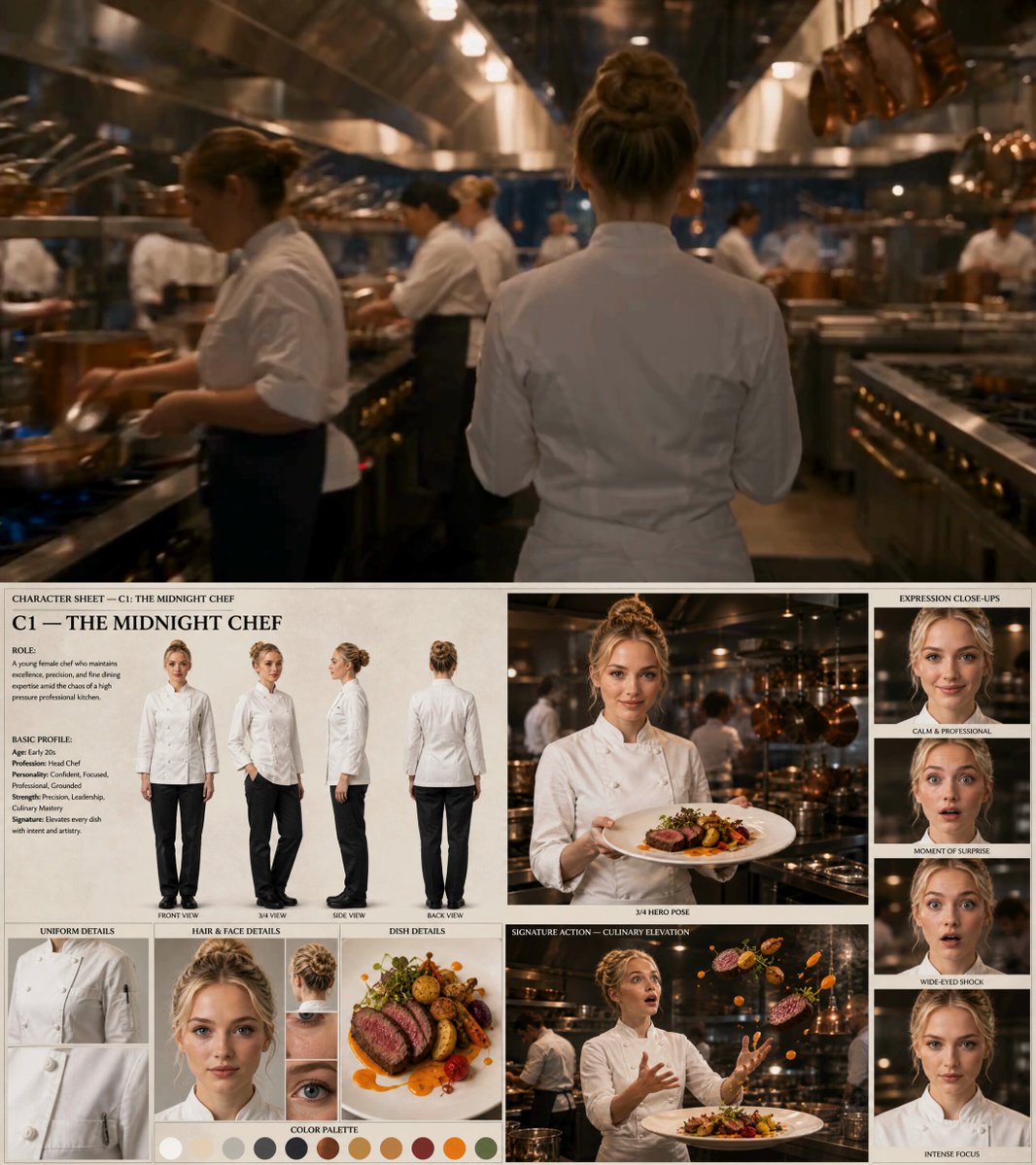
Modern workflows extend beyond a single video clip. The strength of the current tools is not just generating one shot, but combining many pieces into a coherent whole. Techniques that fuse multiple reference images let a team keep characters and locations consistent across an entire sequence, which is crucial for genre work with recurring elements.
This matters because a film is an accumulation of many consistent shots, not one spectacular moment. The ability to feed several references and get a unified identity back is what separates a collection of clips from a believable sustained world.
For independent filmmakers, this is a practical path to a finished project. You can lock your visual bible, keep every character and world stable, and then assemble sequences with confidence that the individual pieces will fit together. That is precisely the kind of reliability a low-budget production cannot afford to lose.
The AI director as a creative partner
One of the most intriguing developments is the rise of systems that act less like a rendering engine and more like a directorial partner. Instead of merely executing a single instruction, these tools take an idea, understand its intent, and guide the production through multiple decisions: which visual direction fits the mood, how to sequence shots, and how to iterate toward a result that matches the intention.
Thinking of AI as a creative partner, rather than just a tool, changes your approach to production. You brief it with the emotional and narrative goals of a scene, and it helps you explore options and refine toward something that communicates the story. The human remains the author, but the workflow becomes collaborative and much faster to iterate.
This is especially valuable under tight budgets and time. A small team that must produce a lot of content can lean on this kind of guidance to maintain quality and coherence without tripling headcount. It democratizes the "director's eye" that once came only with years of experience or a large crew.
The infrastructure that makes it possible
Underneath the creative magic is real engineering. The reason these workflows are as capable as they are is a robust technical layer: a modular backend that routes each request to the most suitable model, an efficient task manager that queues and schedules generations, and careful management of the graphics processing power that AI inference demands.
When you choose a platform, reliability is worth weighing as heavily as output quality. A system that scales during peaks, queues jobs without stalling, and manages scarce compute efficiently will give you faster turnaround and fewer dropped pieces than a more glamorous but unreliable alternative.
For teams that produce continuously, solid infrastructure is the difference between a pleasant workflow and a constant struggle. It is the unglamorous backbone that lets the creative side do its best work repeatedly, at volume, without burning resources.
What this means for small teams and independents
The convergence of affordable generative tools, reliable infrastructure, and directorial guidance is reshaping who can produce science fiction. A small team with a strong idea can now pre-visualize, prototype, and even finish work that previously demanded a major studio's budget.
The creative advantage for independents is significant. They can move quickly, experiment without fear of expensive reshoots, and iterate on visual language until it is right. The tools lower the barrier to entry, but they do not lower the bar for taste, story, and direction; those remain in the hands of the filmmaker.
The realistic advice is to start small. Build a visual bible for your world, lock your references, and prototype a single sequence end to end. Learn what each tool does best and assemble a workflow that plays to those strengths. Then expand, shot by shot, sequence by sequence, into the film you want to make.
Common pitfalls for genre filmmakers
A few habits protect you from wasting your advantage. The first is leaping to generate expensive shots before validating your world and character designs on cheap iterations. Lock the concept first, then spend on hero shots.
The second is ignoring consistency. Genre work lives or dies on coherent worlds, so maintain and respect your reference bible. Recurring characters and settings must remain stable or the audience stops believing.
The third is treating the AI as an oracle instead of a tool. Guide it with clear direction, story intent, and a defined visual language. The strongest results come when the human's vision is precise and the tool executes around it.
Finally, do not let the volume of possible iterations distract you from finishing. Endless variation is tempting, but the discipline to lock choices and move forward is what turns promising clips into a completed story.
A practical roadmap for an ambitious project
Here is a concrete way to translate the ideas in this article into a funded, achievable project, especially if your science-fiction ambitions outpace a big budget.
Start with a one-page idea you can hold in your head. Write the logline, the emotional tone, and the visual world in a few sentences. This becomes the north star every later decision checks against, and it keeps the project from sprawling into an unfinishable shape.
Next, build your visual bible before spending on renders. Generate or gather references for the world, the key locations, and the characters, and lock a consistent style for each. The visual bible is your anchor for continuity; without it, every scene risks drifting apart tonally. Take the time to make it consistent now, because it pays off constantly later.
Then prototype a single scene end to end. Choose one emotionally important moment, walk it through the full pipeline on low-cost tools: storyboard, text-to-video drafts, character references, one or two hero renders. A completed prototype proves the workflow, exposes the likely pain points, and gives you a teaser to share and build momentum around.
With the prototype in hand, design your production pipeline around what you learned. Decide which models you will use for drafts versus hero shots, who maintains the visual bible, and how each sequence gets reviewed against your north star. Finally, iterate outward from the prototype, sequence by sequence, locking choices as you go rather than endlessly re-exploring. That disciplined forward motion is what turns promising solo or small-team work into a finished film.
Frequently asked questions
Can generative video really handle a full science-fiction feature?
Handling an entire feature end to end is still ambitious, but the tools can absolutely produce finished sequences, establish worlds, and pre-visualize. Many projects now mix generative footage with traditional production.
Do I need a big team to use these tools well?
No. The tools are designed for individuals and small teams. The bigger challenge is direction and consistency, both of which you can manage with a clear visual bible.
How do I keep a world consistent across many scenes?
Build a reference library for each recurring location and character, and feed those references consistently during generation. Decide the style once and respect it throughout.
Is AI replacing the filmmaker?
No. The filmmaker's sensibility, story taste, and direction matter more than ever. The tools execute and accelerate; the vision still belongs to the storyteller.
What is the realistic budget to start experimenting?
You can start prototyping with free tiers and low-cost models. The economics favor iteration, so adopt a workflow that lets you test concepts cheaply before investing in hero renders.
The new frontier of science fiction
Science fiction has always stretched the medium, and it is doing so again, this time in a way that lowers the barrier for making it. Generative models have made impossible worlds visible to small teams, text-to-video has become a production tool rather than a spectacle, and reliable infrastructure plus directorial guidance keep ambitious projects on course.
The trend is clear: the tools will keep improving, and the frontier will keep moving. What stays constant is the value of a clear vision, a disciplined workflow, and the willingness to iterate. Those are exactly the strengths of independent storytellers. Armed with them, and with a capable stack of generative tools, a team of any size can now do what used to require a studio, and can tell the audacious science-fiction stories that the genre was always meant to let us imagine.
