
Why Short Product Ads Are a Different Craft
A short product ad is not a compressed version of a long one. It is a different format with different physics. The viewer is holding a phone, sound is often off for the first second, the thumb is already moving, and the algorithm is testing whether anyone stays past the second frame. You are not telling a story so much as winning a micro-decision: stop, or scroll.
That compression changes every production choice. A thirty-second spot can carry a narrative arc. A six-second cutdown carries one idea, one product, and one visual hook. If your concept needs a sentence of explanation before it becomes interesting, it is not a short ad yet.
AI changes the economics of this format dramatically, but not in the way most teams expect. It does not remove the need for a clear idea. It removes the friction between having an idea and seeing it move. Where a team once needed a shoot day, a location, a model, and an editing suite to test three concepts, they can now test thirty concepts before lunch. That shift matters more than any single generated clip.
The practical consequence: the bottleneck moves from production capacity to judgment. You will generate far more material than you can use, and the quality of your finished ad will depend on how ruthlessly you select, sequence, and cut.
What AI Actually Does in a Product Ad Pipeline
Before choosing tools, separate the pipeline into jobs. AI is excellent at some of them and unreliable at others, and knowing the difference saves hours.
Jobs AI handles well
- Concept exploration. Generating moodboards, lighting references, and lifestyle scenes that show what a direction could feel like before anyone commits budget.
- B-roll and texture. Hands opening packaging, liquid pouring, fabric moving, a product on a counter at golden hour, an abstract transition between two shots.
- Voiceover and music beds. Synthetic narration for scratch tracks and internal review, plus licensed or generated music that matches a tempo target.
- Versioning. Resizing, re-framing, re-voicing, and re-cutting the same core ad into dozens of variants for different placements and languages.
- Background replacement and cleanup. Fixing a distracting shelf in the frame, extending a set, or placing a product on a surface it was never actually photographed on.
Jobs that stay human
- Product truth. The label must be right, the cap must match, the color must be your color. Generated footage drifts, and consumers notice.
- Claims and compliance. Any statement about performance, ingredients, price, or results needs a human owner.
- Taste and rhythm. Deciding that a shot is beautiful but wrong for the edit is a judgment call no model makes for you.
A useful rule: let AI broaden your options, and let humans narrow them. Teams that invert this end up with a folder of impressive clips and no ad.
Choosing the Right Generation Approach
There is no single best model. There is a best approach for the shot you need right now.
Text-to-video
Best for atmosphere, abstract transitions, and lifestyle moments where no specific object must be exact. Prompt-driven generation gives you motion and light but limited control over fine detail, so treat outputs as candidates rather than finals.
Image-to-video
Best when you already have a real photograph of the product. You supply a clean hero frame, and the model adds camera motion, environmental movement, or a short performance around it. This is the workhorse approach for product ads because it preserves brand accuracy while still producing movement.
Hybrid compositing
Best for hero moments where the product must be flawless. Generate the environment, then composite your real product photography on top. You get the cinematic background without risking a mangled logo, and the result survives a zoom-in on a large screen.
Matching approach to product category
- Beauty and skincare: image-to-video for texture shots, macro liquid and cream behavior, soft directional light.
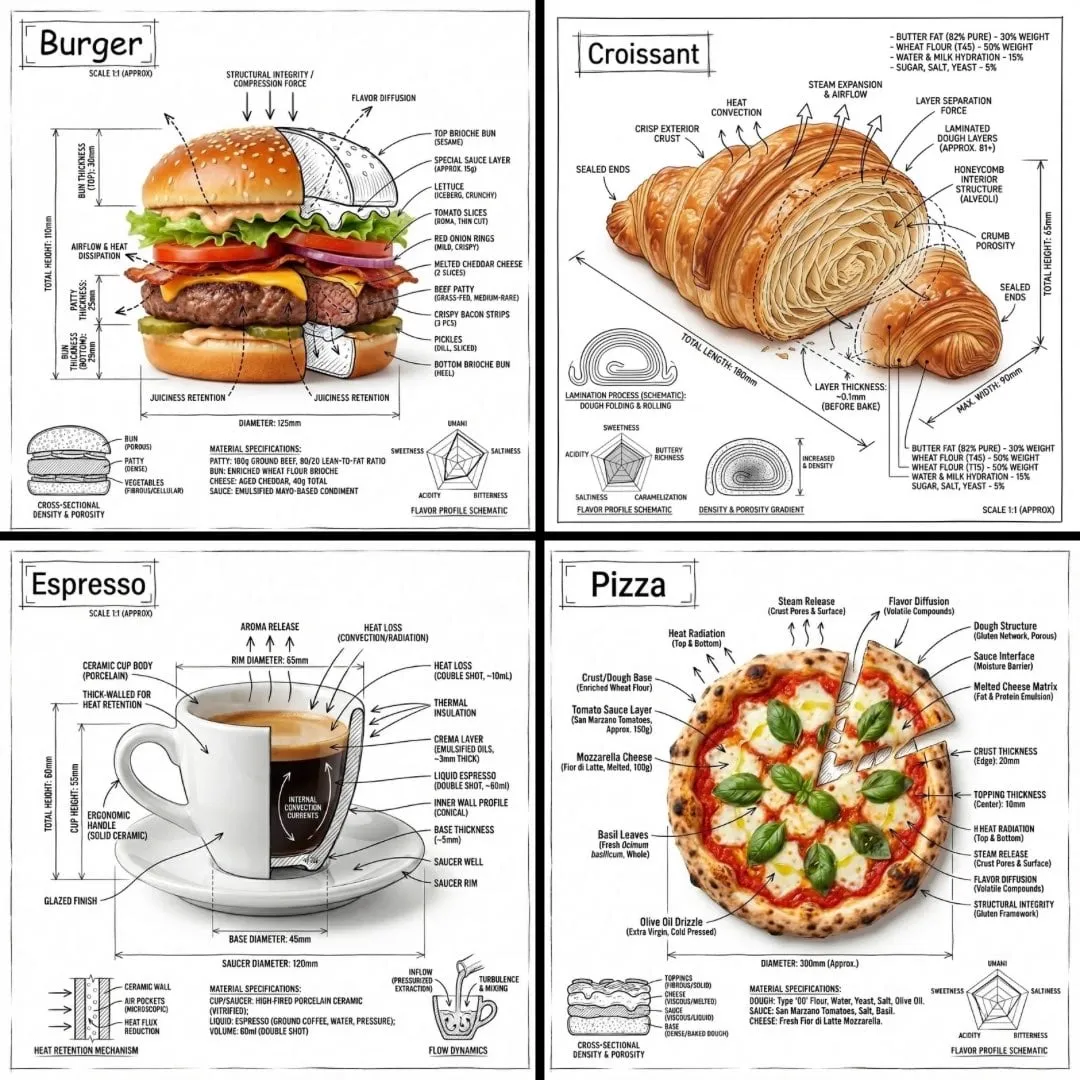
- Food and beverage: hybrid, because appetite appeal depends on real texture and condensation.
- Apparel: image-to-video for fabric movement, but expect to re-shoot anything where fit and drape carry meaning.
- Electronics and hardware: hybrid or pure compositing, since reflections, ports, and screen content are unforgiving.
- Services and software: text-to-video for metaphor and motion graphics, screen recordings for the actual interface.
A Step-by-Step Production Workflow
Step 1 — Write a conversion brief, not a script
Start with four lines: who sees this, what they believe now, what they should believe after, and the single action you want. Every creative decision downstream gets tested against those four lines. A brief that says "make it feel premium" is not a brief.
Step 2 — Storyboard in beats, not scenes
A fifteen-second ad usually has three beats: hook, proof, action. Sketch each beat as one sentence plus one visual reference. Do not storyboard twelve shots you cannot afford to generate well.
Step 3 — Generate and lock the hero shot
Generate your hook first. If the hook does not work, nothing else matters. Once you have a hook you believe in, freeze its look: lighting direction, lens feel, color temperature, motion speed. This becomes your visual contract for every other shot.
Step 4 — Build the sound before picture lock
Sound decides pacing more than picture does. Lay down a music bed with a clear drop or accent, then place your voiceover, then cut picture to that rhythm. Ads assembled to a beat feel intentional; ads assembled silently and scored later feel like slideshows.
Step 5 — Edit for the placement
Export a master, then produce platform-specific cutdowns. Re-frame rather than crop when possible: a 9:16 ad needs its subject centered, a 1:1 needs breathing room at top and bottom, and a 16:9 needs foreground interest.
Step 6 — Caption and ship
Most short ads are watched muted at some point. Burned-in captions with high contrast and a safe bottom margin are not optional. Keep text inside the safe area so platform UI does not cover your call to action.
Solving the Consistency Problem
Consistency is where most AI product ads fail. The product looks slightly different in every shot, the lighting changes direction, or the model's face changes between cuts. Fixing this is mostly about narrowing inputs.
Use reference images deliberately
Supply two or three reference frames: a clean product shot, a lighting reference, and a framing reference. Multiple references give the model a tighter target than a paragraph of adjectives.
Lock a visual contract
Write down five parameters and reuse them in every prompt: light direction, color temperature, lens length, camera height, and motion type. Copy-pasting these across prompts does more for consistency than any advanced technique.
Generate in batches from one seed
When a shot works, keep its seed and settings and make small changes rather than starting fresh. Iteration from a known-good state is faster than re-rolling from scratch.
Accept the compositing escape hatch
If the product keeps drifting, stop generating it. Generate the world, composite the real product. This is not a failure of the tool; it is the correct division of labor.
Prompt Patterns That Produce Usable Footage
Long poetic prompts rarely outperform structured ones. Describe the shot the way a camera department would.
A reliable template:
- Subject and action — what is in frame and what it is doing.
- Shot type — macro, close-up, medium, wide.
- Camera movement — static, slow push in, orbit, handheld follow.
- Lighting — soft window light from the left, hard rim light, overcast diffusion.
- Environment — kitchen counter, marble surface, studio seamless.
- Mood and pace — calm, energetic, clinical, warm.
- Constraints — no text, no logos, no extra hands, no reflections of people.
The constraint line is the most underused. Negative instructions prevent the majority of unusable outputs.
For image-to-video, keep the prompt short. You are describing motion and light, not rebuilding the scene. "Slow push in, gentle steam rising, warm side light, 24fps, minimal movement" will often beat three paragraphs of description.
Platform Cutdowns and Versioning
One ad is a hypothesis. Twelve versions are a test. Plan versioning from the start so it does not become a scramble.
The core variants worth building
- Hook swaps. Same body, three different first two seconds. This is the highest-leverage test in short-form advertising.
- Length cuts. Six seconds for reach, fifteen for consideration, thirty for retargeting audiences who already know you.
- Aspect ratios. Vertical, square, and landscape masters from the same source footage.
- Language and voice. Re-record narration and swap captions rather than rebuilding the edit.
- Offer alignment. Different end cards for different promotions without touching the middle.
Keeping versions cheap
Lock your edit structure early and treat the hook and end card as swappable modules. If every variant requires a fresh edit, you will ship three versions instead of twelve, and you will learn less.
Common Mistakes That Kill AI Product Ads
Chasing beauty over clarity. A gorgeous sequence that never shows the product clearly is a mood reel, not an ad.
Ignoring the first frame. Many viewers see only a still before deciding. Design the first frame as a poster, not as the beginning of a movement.
Overloading the timeline. Twelve cuts in eight seconds reads as chaos, not energy. Give each shot enough time to register.
Skipping sound design. Music alone is not sound design. Add a whoosh on transition, a subtle impact on the product reveal, and room tone so the mix does not feel sterile.
Trusting generated text. Never let a model render your price, claim, or logo. Add those in the edit as graphics.
Testing everything at once. If you change the hook, the music, and the offer simultaneously, you learn nothing about which one worked.
Forgetting the landing experience. A perfect ad that leads to a slow page wastes the click. Match the ad's promise to the first screen the viewer sees.
Measuring Performance and Iterating
Short-form metrics are noisy and fast. Focus on a small set of signals: three-second hold rate for hook quality, completion rate for pacing, click-through for offer relevance, and cost per result for overall efficiency.
Run tests one variable at a time, and give each enough volume to produce a readable signal. A hook that wins by two percentage points on a hundred impressions has told you nothing.
When a variant wins, do not simply scale it. Extract the reason. If a hook that opens mid-action wins, your next round of concepts should all open mid-action. Winning creative is a clue about audience psychology, not just a lucky asset.
Finally, keep a swipe file of your own results. Over a few months, a well-organized library of hooks, transitions, and end cards becomes more valuable than any individual generation tool, because it encodes what your specific audience responds to.
FAQ
Do I need a real product photo if I use AI?
For anything where the product must be recognizable and accurate, yes. Real photography anchors the ad and can be composited into generated environments. Fully generated product shots work for abstract categories but rarely survive scrutiny on branded goods.
How long should a short product ad be?
Six seconds for pure reach, fifteen for a hook plus proof, and thirty only when the viewer already has context. Start shorter than feels comfortable; length is easy to add and hard to justify.
Can AI replace a videographer entirely?
For lifestyle and atmospheric footage, often yes. For demonstrations, fit, texture, and anything that must be literally accurate, no. The best results come from combining real product footage with generated surroundings.
What is the fastest way to improve results?
Test more hooks. The first two seconds carry most of the performance variance in short-form advertising, and hooks are the cheapest thing to regenerate.
How many variants should I launch?
Three to five distinct hooks with a shared body is a strong starting point. More than that and you cannot attribute results clearly without significant spend.
Is captioned text always necessary?
Effectively yes. Muted autoplay is common, and captions raise comprehension and completion. Keep them inside platform safe areas and high contrast against the background.
How do I keep the brand looking consistent across shots?
Write a five-parameter visual contract, reuse it in every prompt, generate from locked seeds, and composite real product photography for hero frames. Consistency comes from constrained inputs, not from better adjectives.
