


Short-form video is no longer one channel among many; it is the channel where brands are built or ignored. The attention economy runs on scrolling, and the platforms that decide what millions of people see are dominated by vertical, fast, visually rich content. For brands, the question is not whether to publish short videos, but how to publish them consistently enough, consistently enough in style, and strategically enough that they actually grow the brand instead of adding to the noise. This guide breaks down the mechanics of engagement, the operational systems behind it, and the measurement habits that turn short video from a gamble into a growth engine.
Why Short Video Decides Brand Attention
The digital marketing landscape is defined by shorter attention spans and stricter content competition. Consumers decide in seconds whether to keep watching, and the platforms reward content that holds them. Short video is the format that fits this reality best: it is quick to consume, easy to share, and algorithmically favored because it generates the signals platforms care about, watch time, replays, shares, and comments.
The consequence for brands is that visibility without short-form presence is increasingly hard to achieve organically. A brand can buy attention, but sustained organic reach comes from content that the platforms themselves choose to distribute. That content must win on its own terms within the first seconds, and it must keep winning across every new post, because the algorithm evaluates each video as a new test.
The Three-Second Rule in Practice
The first three seconds decide most of the outcome. If the opening does not create curiosity, contrast, or an immediate promise, the viewer swipes, and the retention curve collapses before the video has a chance. Designing for those seconds is a discipline, not an accident.
Three techniques work reliably. First, open with a concrete question or a surprising visual that promises an answer. Second, start mid-action instead of warming up: begin with the interesting part of the scene, not the setup. Third, put the promise of the video in the first frame, so that the thumbnail and the opening reinforce each other.
Test your openings the way you test ads. Generate two or three variants of the first three seconds, publish the strongest, and review retention data afterwards. Over time you will develop an instinct for what your specific audience rewards.
Two supporting habits amplify the effect. Keep a swipe-proof template for the first three seconds of each format you use, and write the hook line before you write the script, not after. When the hook and the opening frame agree, the video gives the viewer a single clear promise, and single-promise openings consistently outperform layered ones.
Visual Consistency Across Volume
The hardest operational challenge in short video is keeping a recognizable brand identity across a high volume of posts. Publish fifty videos with different looks, and the audience does not connect them; the brand recognition that took years to build quietly erodes.
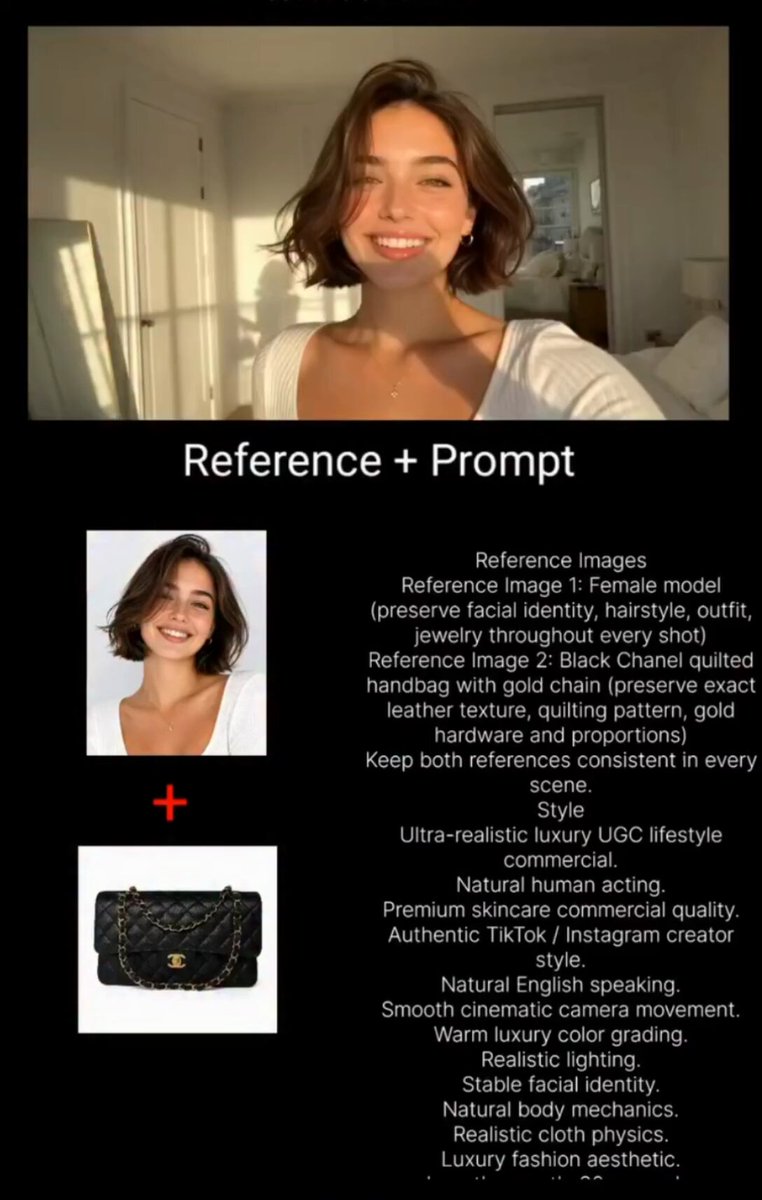
The solution is a visual system. Define a palette, a lighting mood, a set of recurring characters or presenters, and a signature way of using text and motion. Then make every production step enforce that system: reference images for faces and places, documented prompts, and standard templates for captions and lower thirds.
The tooling matters less than the discipline. Whether you use AI generation heavily or barely at all, the rule is the same: every video should look like it belongs to the same family. When viewers recognize your content before they see the logo, the system is working.
Audit your own feed every month with fresh eyes: scroll through the last ten videos and check whether they could belong to another brand. If they could, the system needs tightening before the audience notices.
Designing Loopable, Rewatchable Content
The algorithm treats replays as a strong quality signal, and the easiest way to earn replays is to design content that loops. A loopable video ends where it began, visually and rhythmically, so the viewer who watches to the end is pulled into watching again.
Design for the loop at the planning stage. Make the first and last frame compatible, keep the motion circular where possible, and build the audio so the beat returns to the top. A perfectly looped clip can double the effective watch time without adding a single frame.
Rewatchability goes beyond loops. Tutorials that viewers repeat, jokes with details hidden in the background, and content with layered information all reward a second viewing. When you plan a video, ask yourself what the viewer will notice the second time that they missed the first.
Trending Audio and Fast Adaptation
Audio is the fastest route to distribution on most short-video platforms. Trending sounds and songs are actively promoted, and using them signals to the algorithm that your content is current. But the window is short: a sound trends, peaks, and fades, often within days.
Build a process for fast adaptation instead of relying on individual luck. Spend a few minutes each day scanning what is rising, keep a short list of sounds that fit your brand voice, and have templates ready so you can produce a video that uses a trending track within hours, not weeks.
Speed matters, but fit matters more. Forcing a trending sound onto content where it makes no sense hurts both the video and the brand. The goal is to catch trends that genuinely match your message, and to be fast enough to matter when they do.
Using AI for Optimization and Tagging
The volume of short video production creates a second bottleneck: the operational work around the content itself. This is where AI pays for itself beyond generation. AI can draft captions in your brand voice, generate relevant hashtags from the content, suggest titles that match current search behavior, and even propose hooks optimized for the first seconds.
The key is to use AI for leverage, not for automation without judgment. Have the system propose, but keep a human editor deciding. The most effective workflow is a feedback loop: the AI drafts ten options, the editor picks and refines, and the pattern of what gets picked becomes the training signal for better drafts next time.
The same loop applies to performance data. Feed retention curves, comment themes, and share patterns back into your production brief, so that every new batch of content is informed by what the audience actually did with the last one.
Keep the human in the loop where judgment matters. AI is excellent at generating options at scale, but it is still weak at deciding what fits the brand voice in a specific cultural moment. The teams that get the best results treat AI as a very fast assistant, not as the final editor. They review, they reject, and they keep the patterns of what they accepted as the training signal for better drafts next time.
A Content Cadence That Compounds
Growth comes from consistency multiplied by improvement. Publishing one great video a month loses to publishing three good videos a week, because cadence builds the algorithm's trust and the audience's habit. The compounding effect only appears when the system runs long enough to learn from its own data.
Choose a cadence you can sustain for six months, not a sprint you can survive for two weeks. If three videos a week is realistic, plan for it; if one is realistic, plan for that, and let the quality bar rise as the system matures. The number matters less than the predictability.
Each batch should have a mix: some videos built for reach, some for conversion, some for community conversation. Reach content grows the audience, conversion content pays the bills, and conversation content deepens the relationship. A healthy cadence balances all three instead of chasing a single metric.
Choosing Your Production Approach: Live, Generated, or Hybrid
A recurring question is whether to film, generate, or combine both. The honest answer is that most successful brands run a hybrid, and the mix depends on the content type.
Live footage wins on credibility and human connection. A real presenter, a real office, a real product in hand: these build trust that generation cannot fully replace, especially for testimonials, leadership content, and anything where authenticity is the message. The cost is production time and the need for consistent lighting, sound, and location.
Generated content wins on volume, flexibility, and cost. You can produce product shots from any angle without a photoshoot, create backgrounds that do not exist, and iterate on styles without rebuilding a set. The risk is the uncanny middle: audiences are quick to notice inconsistency or the generic look of undirected generation.
The hybrid pattern works best: film the human elements that need trust, generate the scenes that need flexibility, and let each part cover the other's weakness. A filmed presenter in front of a generated background, or a generated product close-up cut into a live office scene, is a common and effective combination. Decide per video, not once for the whole brand, and document which mix works for which format.
Measuring Engagement Beyond Views
Views are a vanity metric when they stand alone. The metrics that matter are the ones that show what the audience did: completion rate, replays, saves, shares, comments, and the conversion actions that follow. A video with ten thousand views and no comments may be worth less than one with two thousand views and a hundred saves.
Build a simple dashboard that tracks these signals per video, per series, and per format. Look for patterns across weeks, not single posts: which hooks consistently hold, which formats drive saves, which topics generate comments. The patterns are the strategy; the individual numbers are just evidence.
Finally, close the loop with distribution. Short video does not live only on the platform where it was posted. Clips become email content, presentation openers, ad variants, and social proof. The brands that grow treat short video as a production system whose output feeds every channel, not as an isolated feed to fill.
FAQ
How many videos should a brand publish per week? Enough to sustain a predictable cadence. Three is a common target for teams with a small production system; one strong video with full distribution beats ten random ones.
Is AI generation necessary for short video? No, but it multiplies what a small team can produce. The priority is a consistent visual system and a repeatable workflow; AI is the accelerator, not the foundation.
How do I keep the brand recognizable across AI-generated content? With reference images, documented prompts, and standard templates. Consistency is a system, not a feature of any single tool.
Which metric should I watch first? Completion rate and saves. They tell you whether the content actually landed, which views never will.
How fast must I catch trending audio? Within the first days of a sound rising. Build a daily scanning habit and pre-made templates so you can publish while the trend is still climbing.
Is it better to film or generate everything? Neither. The hybrid approach wins for most brands: film the elements that need trust, generate the elements that need flexibility, and combine them deliberately per video.
How much AI is too much? When the audience starts noticing the generation instead of the message. If comments focus on the look of the video rather than its content, step the production back toward live footage and simpler visuals.
What is the fastest win for a brand starting from zero? Pick one consistent visual style, publish three videos a week for four weeks, and track completion and saves. The system matters more than any single video.
The brands that win with short video are not the ones with the best single video; they are the ones with the best system. A clear visual identity, a sustainable cadence, a fast adaptation process, and a measurement loop that feeds the next batch. The platforms will keep changing their algorithms, but the loop of publish, measure, learn, and repeat is the durable engine of brand growth.
